Spendor SP2: The British Classic That Defined Natural Sound
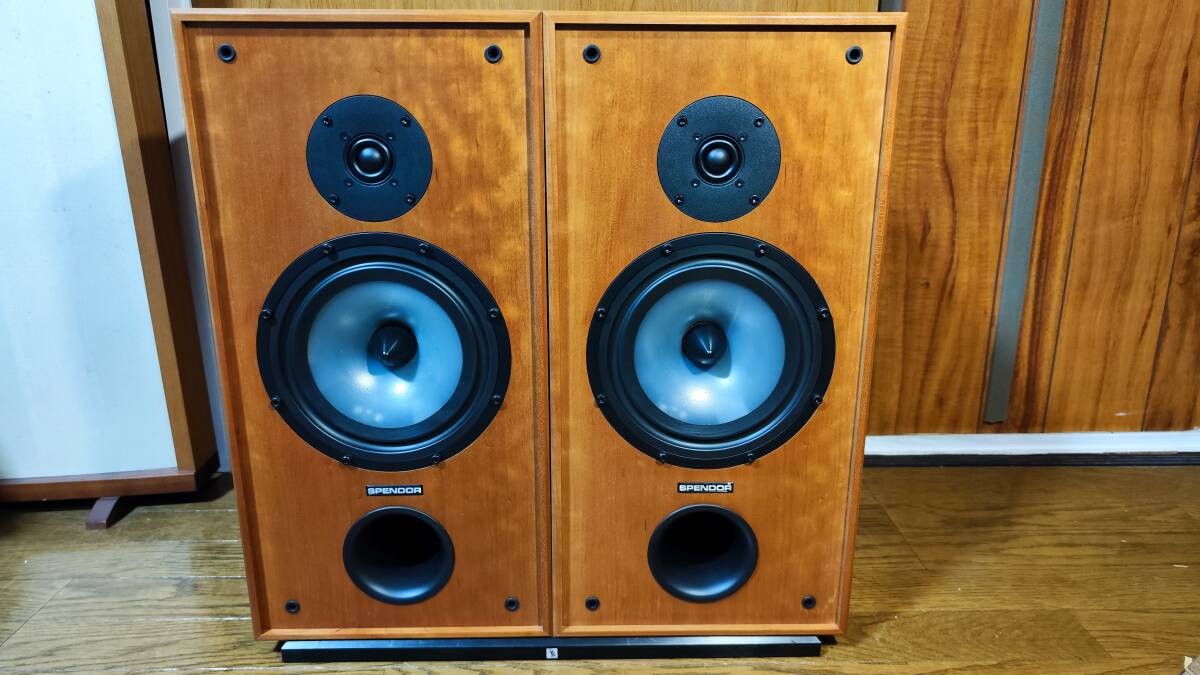
The Spendor SP2 is more than just a vintage loudspeaker—it’s a milestone in British audio history. Introduced in 1969 by Spencer Hughes, a former BBC engineer, the SP2 emerged from the same lineage as the legendary BBC monitor speakers that shaped the sound of British broadcasting. Designed with meticulous attention to time coherence and tonal accuracy, the SP2 became a benchmark for natural, uncolored sound reproduction during the golden era of hi-fi.
Spencer Hughes founded Spendor (a portmanteau of his first and last name) with the mission of bringing the sonic integrity of BBC studio monitors to the domestic listener. The SP2 was one of his earliest commercial designs and quickly gained acclaim for its faithful midrange, smooth tonality, and exceptional vocal realism. Unlike many of its contemporaries that leaned toward brightness or exaggerated bass, the SP2 prioritized balance and musicality—qualities that continue to resonate with audiophiles today.
Technical Specifications
| Specification | Detail |
| Model | SP2 |
| Manufacturer | Spendor Acoustics |
| Year Introduced | 1969 |
| Type | 2-way, passive, bookshelf loudspeaker |
| Driver Complement | 1 x 12" Bextrene bass/mid driver 1 x 1" soft dome tweeter |
| Crossover Frequency | ~1.7 kHz |
| Frequency Response | 45 Hz – 20 kHz |
| Sensitivity | 87 dB (1W/1m) |
| Nominal Impedance | 8 ohms |
| Recommended Amp Power | 20–70 watts |
| Enclosure Type | Acoustic suspension (sealed) |
| Dimensions (H×W×D) | 580 × 300 × 250 mm (22.8 × 11.8 × 9.8 in) |
| Weight | 18 kg (40 lbs) per cabinet |
| Finish Options | Walnut veneer, rosewood veneer |
Sound Characteristics and Performance
The Spendor SP2 is often described as having a "BBC sound"—a term audiophiles use to denote clarity, neutrality, and a midrange that feels disarmingly real. This character stems directly from its design heritage. The large 12-inch Bextrene-cone driver, derived from the BBC LS5/8 and LS5/9 monitors, delivers a slow, controlled roll-off in the bass and an exceptionally linear midrange. Bextrene, a lightweight and rigid plastic material, was favored by the BBC for its low resonance and excellent damping properties, resulting in minimal coloration.
Paired with a soft dome tweeter—unusual for its time, as many speakers used horn or metal dome designs—the SP2 avoids the harshness that plagued some early high-frequency units. The crossover is elegantly simple, using high-quality components to maintain phase coherence and ensure a seamless handoff between drivers.
Listeners often praise the SP2 for its ability to render voices and acoustic instruments with startling realism. String sections, jazz trios, and vocal performances are rendered with a natural timbre and spatial coherence that few speakers of its era could match. While not a bass powerhouse by modern standards, the sealed-box design provides tight, articulate low-end response that integrates beautifully with the midrange. The speaker’s 8-ohm impedance and 87 dB sensitivity make it compatible with a wide range of tube and solid-state amplifiers, though it benefits from quality partnering electronics that respect its transparency.
Notable Features and Innovations
The Spendor SP2 was groundbreaking in several ways:
- Bextrene Cone Technology: One of the first commercially available speakers to use the BBC-developed Bextrene driver, offering superior damping and reduced breakup modes compared to paper cones.
- Time-Coherent Design: Hughes prioritized time alignment between drivers, resulting in a coherent wavefront and precise imaging.
- Sealed Enclosure: The acoustic suspension design ensured tight bass control and eliminated port noise, though at the expense of ultimate low-frequency extension.
- Handcrafted Cabinet: Each SP2 was built with meticulous attention to detail, using high-density fiberboard (HDF) and real wood veneers, contributing to its low-resonance structure.
These features combined to create a speaker that was as much an engineering statement as a musical instrument. The SP2 wasn’t designed to impress with flashy specs—it was engineered to disappear, letting the music speak for itself.
Common Issues and Maintenance
As with any vintage audio equipment, the Spendor SP2 requires care and occasional restoration to perform at its best:
- Aging Bextrene Cones: While durable, the Bextrene cones can degrade over 40+ years, especially if exposed to UV light or high humidity. Signs include cracking or flaking at the surround. Re-coning by a specialist is often possible and recommended.
- Foam Surround Disintegration: Some later versions used foam surrounds, which are prone to rot. Original models used cloth-edged suspensions, which tend to last longer.
- Crossover Components: Capacitors and inductors may drift in value over time. A careful recapping using audiophile-grade parts can restore clarity and dynamics.
- Grille Fabric and Veneer: Original grilles may be frayed or discolored. Replacement fabrics and professional refinishing can restore aesthetic appeal.
Owners are advised to keep SP2s away from direct sunlight and moisture. Regular cleaning with a soft cloth and occasional inspection of driver integrity will help preserve their longevity.
Current Market Value and Collectibility
The Spendor SP2 has become a sought-after collector’s item, particularly among enthusiasts of vintage British audio. Well-maintained pairs in original condition can fetch between £1,500 and £3,000 on the secondary market, with prices rising for fully restored units or those with provenance.
Its collectibility stems not only from its sound but also from its historical significance. As one of the first commercial products from Spendor, the SP2 laid the foundation for a brand that continues to produce critically acclaimed speakers today. It represents a bridge between professional broadcast standards and domestic high fidelity.
While not as flashy as some of its contemporaries, the SP2 appeals to purists who value authenticity over spectacle. It’s a favorite among vinyl lovers, jazz aficionados, and anyone who believes that the best speakers don’t call attention to themselves.
Conclusion and Legacy
The Spendor SP2 is a quiet revolutionary. It didn’t dominate the market with power or size, but it earned lasting respect through its honesty and refinement. In an era increasingly obsessed with specifications and bass extension, the SP2 reminds us that the goal of high-fidelity audio is not to impress, but to connect—to bring the listener closer to the performance.
Its legacy lives on in every Spendor speaker that follows, from the compact BC1 to the modern A-line series. The principles Spencer Hughes championed—time coherence, low coloration, and natural tonality—remain at the heart of the brand’s philosophy.
For the vintage audio enthusiast, the SP2 is more than a speaker; it’s a piece of audio history. Whether used as a primary system or cherished as a collector’s gem, the Spendor SP2 continues to deliver a listening experience that is timeless in every sense.
eBay Listings


As an eBay Partner, we earn from qualifying purchases. This helps support our independent vintage technology research.
Related Models
- Spendor 7/1 (1975)
- Spendor 9/1 (1975)
- Spendor BC1/69 (1969)
- Spendor BC1 (1969)
- Spendor CLASSIC-1/2 (1979)
- Akai AM-2850 (1975)
- Akai AP-206 (1975)
- Nakamichi BX-1 (1985)
- Acoustic Research research-ar-17 (1978)
- Acoustic Research AR-19 (1994)