Spendor SP100 (S100): The Pioneering British Bookshelf Classic
In the mid-1970s, British hi-fi was undergoing a quiet revolution. While many manufacturers chased power, flash, and frequency extremes, a small group of engineers focused on a different ideal: natural, uncolored sound that faithfully recreated the timbre and timing of live music. At the heart of this movement was Spendor, a company founded by Spencer and Dorothy Hughes, and their groundbreaking loudspeaker, the Spendor SP100, also commonly referred to as the S100.
Introduced in 1976, the SP100 was not just another bookshelf speaker—it was a statement of philosophy. Designed by the late Dr. Spencer Hughes, a former BBC engineer, the SP100 embodied the principles of time coherence, controlled dispersion, and low coloration that had defined the BBC’s legendary studio monitors. Yet it brought those qualities into the domestic listening room with remarkable grace and accessibility.
Historical Context: From the BBC to the Living Room
Spencer Hughes had spent years working at the BBC Research Department, where he was instrumental in developing the LS3/5A and other iconic studio monitors. His deep understanding of driver behavior, cabinet design, and acoustic neutrality led him to found Spendor in 1969. The SP100, launched nearly a decade later, was one of the first Spendor models to fully express his vision for a commercially available speaker that retained the integrity of BBC monitor design while being optimized for home use.
The SP100 emerged during a golden era for British loudspeaker design, alongside contemporaries like the Harbeth HL5 and Rogers LS3/5A. But where others focused on miniaturization or portability, the SP100 offered a slightly larger, more full-bodied alternative—bridging the gap between compact monitor and floor-standing speaker.
Technical Specifications
| Specification | Detail |
| Model Name | Spendor SP100 (S100) |
| Type | 2-way, sealed-box bookshelf loudspeaker |
| Driver Configuration | 1 x 200mm (8") bass-mid driver, 1 x 25mm (1") soft-dome tweeter |
| Crossover Frequency | Approximately 2.5 kHz |
| Frequency Response | 60 Hz – 20 kHz (±3 dB) |
| Sensitivity | 86 dB (2.83V/1m) |
| Nominal Impedance | 8 ohms (compatible with most tube and solid-state amps) |
| Recommended Amplifier | 20–100 watts |
| Cabinet Finish | Real wood veneer (walnut, rosewood, teak) |
| Dimensions (H×W×D) | 380 × 230 × 240 mm (15 × 9 × 9.5 inches) |
| Weight | 10.5 kg (23 lbs) per speaker |
| Enclosure Type | Acoustic suspension (sealed) |
The SP100 used a custom-designed 8-inch bass-midrange driver with a doped paper cone and a well-damped rubber surround, derived from BBC research. The tweeter was a soft-dome unit, carefully matched to the mid-bass for smooth integration. The crossover was minimalist—first-order (6 dB/octave) for both drivers—ensuring time coherence and phase accuracy. This design choice was central to the SP100’s lifelike presentation, allowing transients and musical cues to arrive at the listener’s ear in perfect temporal alignment.
The cabinet was heavily braced and constructed from high-quality MDF with real wood veneers, available in classic British finishes like walnut and rosewood. The sealed (acoustic suspension) enclosure provided tight, controlled bass without the coloration often associated with ported designs.
Sound Characteristics and Performance
The Spendor SP100 was never about raw specs or bass slam. Its magic lay in tonal accuracy, midrange purity, and rhythmic coherence. Listeners consistently praised its ability to render voices and acoustic instruments with startling realism. A violin sounded like a violin; a piano like a piano—without the forwardness or brightness that plagued many competitors.
The midrange was lush and transparent, with a smooth, organic character that invited long listening sessions. The tweeter, while not hyper-detailed, delivered a natural, non-fatiguing top end that avoided sibilance and harshness. Bass extended down to around 60 Hz, which was respectable for a speaker of its size, though it benefited from placement near a wall or corner for added warmth.
One of the SP100’s standout qualities was its spacious and stable soundstage. Instruments were precisely placed, with excellent depth and layering. The time-coherent design meant that complex passages remained clear and unblurred, making the SP100 particularly well-suited to chamber music, jazz, and vocal recordings.
Notable Features and Innovations
- Time-Coherent Design: The first-order crossover ensured that both drivers operated in phase, preserving the timing of musical events.
- BBC-Inspired Drivers: The bass-mid and tweeter were developed using BBC research principles, emphasizing low distortion and controlled breakup modes.
- Minimalist Crossover: Few components meant fewer opportunities for signal degradation and phase shifts.
- High-Quality Cabinet Construction: The use of real wood veneers and internal bracing set it apart from mass-market speakers of the era.
- 8-Ohm Impedance: Made it easy to drive, even with lower-powered tube amplifiers popular at the time.
Common Issues and Maintenance
As with any vintage speaker, the Spendor SP100 can suffer from age-related wear. The most common issues include:
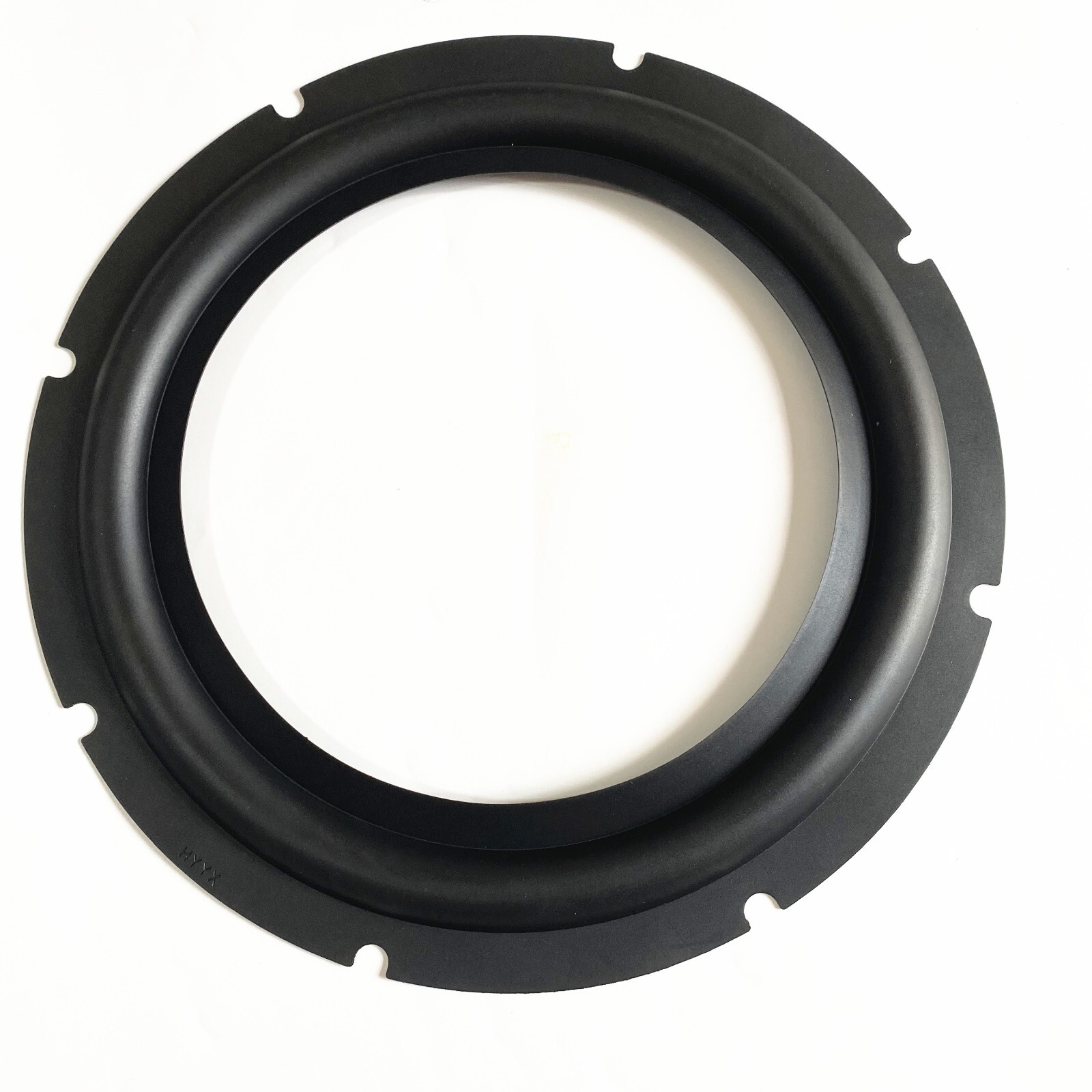
- Aging Foam Surrounds: The original foam used on the bass-mid driver can deteriorate over time, leading to flaking and loss of bass response. Re-foaming by a specialist is a common and effective restoration.
- Capacitor Drift: While the crossover is simple, electrolytic capacitors can dry out over decades. Replacing them with modern equivalents can restore clarity and balance.
- Tweeter Fatigue: Though durable, the soft-dome tweeter may lose sensitivity or develop a slight haze if exposed to high volumes over many years.
Fortunately, the SP100’s simple design makes servicing relatively straightforward. Parts and expertise are available through vintage audio specialists and Spendor-recognized restorers.
Current Market Value and Collectibility
The Spendor SP100 has developed a cult following among vintage audio enthusiasts. Well-maintained pairs in good cosmetic and sonic condition typically sell for $800–$1,500 USD, depending on finish, provenance, and restoration status. Original walnut or rosewood pairs in excellent condition command a premium, especially if they’ve been professionally refurbished.
While not as widely collected as the LS3/5A, the SP100 is increasingly recognized for its historical significance and sonic virtues. It represents a pivotal moment in British hi-fi—when the严谨 (rigor) of broadcast engineering met the passion of domestic audiophilia.
Conclusion and Legacy
The Spendor SP100 (S100) stands as a quiet giant in the history of loudspeaker design. It may not have the fame of some of its smaller siblings, but it embodies the core values that made British hi-fi revered worldwide: neutrality, coherence, and musicality.
Today, the SP100 remains a rewarding listen for those who value authenticity over hype. Paired with a quality tube amp or a classic solid-state receiver, it delivers a listening experience that feels timeless—warm without being veiled, detailed without being clinical. It’s a speaker that doesn’t draw attention to itself but instead disappears, leaving only the music.
For collectors, restorers, and music lovers alike, the Spendor SP100 is more than a vintage curiosity—it’s a testament to a design philosophy that still resonates. In an age of digital processing and artificial enhancements, the SP100 reminds us that sometimes, the most advanced technology is simply getting out of the way of the music.
eBay Listings


As an eBay Partner, we earn from qualifying purchases. This helps support our independent vintage technology research.
Related Models
- Spendor 7/1 (1975)
- Spendor 9/1 (1975)
- Spendor BC1/69 (1969)
- Spendor BC1 (1969)
- Spendor CLASSIC-1/2 (1979)
- Akai AM-2850 (1975)
- Akai AP-206 (1975)
- Nakamichi BX-1 (1985)
- Acoustic Research research-ar-17 (1978)
- Acoustic Research AR-19 (1994)