Spendor SP1: The Birth of British High-Fidelity
The Spendor SP1 stands as a cornerstone in the history of British loudspeaker design. Introduced in 1969 by Spencer Hughes, a former engineer at the BBC’s Research & Development department, the SP1 was not just a speaker—it was a philosophy made audible. Hughes was instrumental in developing the BBC’s iconic LS3/5A monitor, but when he founded Spendor (a portmanteau of his first name, Spencer, and his wife Dorothy’s), he sought to bring the BBC’s exacting standards of accuracy and neutrality to the domestic audiophile market. The SP1 was his first major product and quickly became a benchmark for natural, transparent sound reproduction.
Born during a golden era of British audio engineering, the SP1 emerged at a time when high-fidelity was transitioning from a niche hobby to a serious pursuit of sonic truth. Unlike many contemporaries focused on exaggerated bass or bright highs to impress in retail settings, the SP1 was designed for accuracy—faithfully reproducing what was on the recording, nothing more, nothing less. This commitment to neutrality, combined with exceptional build quality and thoughtful engineering, made the SP1 a favorite among discerning listeners, broadcasters, and recording studios alike.
Technical Specifications
| Specification | Detail |
| Model | SP1 |
| Manufacturer | Spendor Acoustics |
| Year Introduced | 1969 |
| Type | Passive, two-way bookshelf speaker |
| Driver Complement | 1x 7" bass-midrange, 1x 1" soft dome tweeter |
| Crossover Frequency | ~2.2 kHz |
| Frequency Response | 60 Hz – 20 kHz (±3 dB) |
| Sensitivity | 86 dB (1W @ 1m) |
| Nominal Impedance | 8 ohms |
| Recommended Amp Power | 20–50 watts |
| Enclosure Type | Sealed (acoustic suspension) |
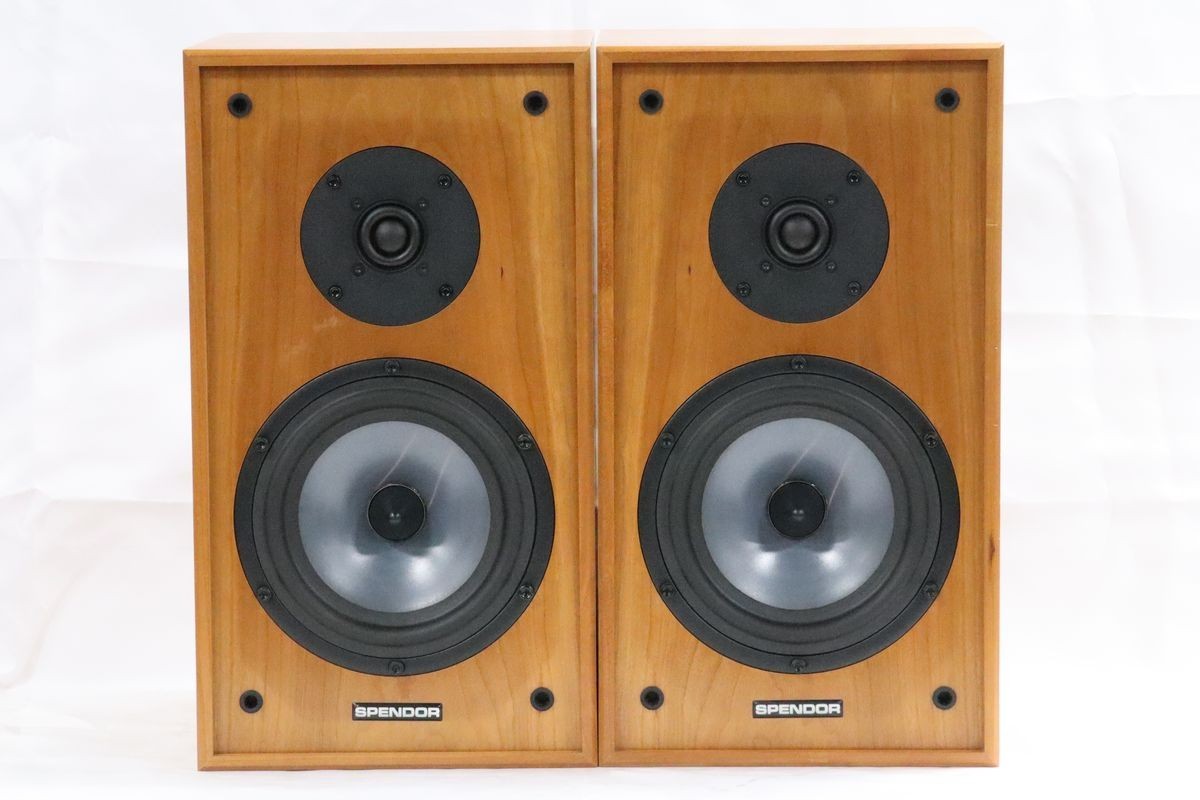
| Cabinet Finish | Walnut veneer, real wood construction |
| Dimensions (H×W×D) | 14.5" × 8.5" × 8.5" (37 × 22 × 22 cm) |
| Weight | 18 lbs (8.2 kg) per speaker |
Sound Characteristics and Performance
The Spendor SP1 delivers a sound that is best described as musical, natural, and uncolored. Thanks to its BBC lineage, the speaker avoids the common pitfalls of coloration and exaggerated frequency extremes. Its 7-inch bass-mid driver, crafted with a doped Bextrene cone, offers a smooth, controlled low end that extends surprisingly deep for a speaker of its size—down to around 60 Hz. While not a sub-bass powerhouse, the SP1 renders acoustic bass, cello, and male vocals with remarkable realism and presence.
The soft dome tweeter is a standout feature, providing a silky, non-fatiguing high end. Unlike the metal domes that became popular in later decades, the SP1’s tweeter avoids sibilance and harshness, making it ideal for long listening sessions. The crossover, designed with minimal components to preserve signal integrity, ensures a seamless handoff between drivers. The result is a coherent, well-integrated soundstage with excellent imaging and depth.
One of the SP1’s most praised qualities is its midrange clarity. Vocals are rendered with lifelike intimacy—listeners often remark on how effortlessly the SP1 conveys the emotion and nuance in a singer’s voice. This makes the speaker particularly well-suited to acoustic jazz, classical, and vocal-centric recordings.
Notable Features and Innovations
The SP1 was groundbreaking in several ways. First, it was among the earliest commercially available speakers to apply the BBC’s rigorous standards for studio monitors to a consumer product. Spencer Hughes brought his deep understanding of time coherence, driver matching, and cabinet damping to the SP1, ensuring it met the same performance criteria as professional monitors.
The sealed (acoustic suspension) cabinet design contributes to tight, accurate bass with excellent transient response. While less efficient than ported designs, the sealed box avoids the "one-note" boominess that can plague bass-reflex systems. The cabinet itself is constructed from high-quality plywood with extensive internal bracing and damping, minimizing resonance and coloration.
Another innovation was the use of a doped polyethylene terephthalate (Bextrene) cone for the bass-mid driver. This material offered superior damping characteristics compared to paper or metal cones, reducing breakup modes and distortion. The tweeter, too, was carefully selected for its smooth off-axis response, ensuring consistent sound quality even when not seated directly in front of the speakers.
Common Issues and Maintenance
As with any vintage equipment, the Spendor SP1 requires careful attention to maintain optimal performance. The most common issue is aging of the speaker’s foam or rubber surround on the bass-mid driver. After 40–50 years, these materials often degrade, leading to reduced bass response, rattling, or complete failure. Fortunately, reconing services specializing in vintage BBC-style drivers are available, and replacement surrounds can restore the SP1 to like-new condition.
The crossover components, while robust for their time, may also benefit from refurbishment. Electrolytic capacitors can dry out, and resistors may drift in value. A full recapping and inspection by a qualified technician can significantly improve performance and reliability.
Original SP1s are highly sought after, and many have been modified or "modernized" over the years. Purists recommend preserving originality where possible, especially with the drivers and cabinet. However, some owners opt for upgraded internal wiring or modern binding posts for improved connectivity.
Current Market Value and Collectibility
Today, the Spendor SP1 is a prized collectible. Well-maintained, original pairs in good cosmetic and sonic condition can command prices between $1,200 and $2,500, depending on provenance, finish, and restoration status. Fully restored examples with reconed drivers and refreshed crossovers often sell at the higher end of the range.
The SP1’s collectibility stems not just from its sound, but from its historical significance. As the first product from a brand that would go on to define British high-end audio, the SP1 represents the genesis of a legacy. It appeals to vintage audio enthusiasts, BBC monitor collectors, and those who appreciate understated elegance in both design and performance.
Conclusion and Legacy
The Spendor SP1 is more than a vintage speaker—it’s a milestone in audio history. Its marriage of BBC engineering rigor with domestic refinement set a new standard for what a loudspeaker could be. Quiet, unassuming in appearance, and devoid of marketing gimmicks, the SP1 speaks through its sound: honest, balanced, and deeply musical.
Its influence can be heard in every Spendor speaker that followed, from the BC1 to the modern A-line and Classic series. More broadly, the SP1 helped establish the British "house sound"—a preference for neutrality, timing, and tonal accuracy over flash and bravado.
For the modern audiophile, the SP1 offers a rare opportunity: to experience the roots of high-fidelity as it was envisioned by one of its most thoughtful pioneers. In a world of ever-increasing complexity, the SP1 remains a testament to the power of simplicity, precision, and purpose.
eBay Listings



As an eBay Partner, we earn from qualifying purchases. This helps support our independent vintage technology research.
Related Models
- Spendor 7/1 (1975)
- Spendor 9/1 (1975)
- Spendor BC1/69 (1969)
- Spendor BC1 (1969)
- Spendor CLASSIC-1/2 (1979)
- Akai AM-2850 (1975)
- Akai AP-206 (1975)
- Nakamichi BX-1 (1985)
- Acoustic Research research-ar-17 (1978)
- Acoustic Research AR-19 (1994)