Spendor SA1: The Quiet Innovator of British Hi-Fi
In the early 1970s, as the high-fidelity audio scene was rapidly evolving, a small British speaker company named Spendor emerged with a design that would quietly influence the course of loudspeaker engineering. The Spendor SA1, introduced in 1973, was not a flashy product by any measure—its understated appearance and compact dimensions belied a profound technical sophistication. Yet, it quickly earned a reputation among discerning audiophiles and recording engineers for its natural, uncolored sound and remarkable bass extension—especially for a speaker of its size.
Designed by Dudley Harwood, a former BBC engineer, the SA1 embodied the principles of British broadcast monitor design: neutrality, time coherence, and low coloration. Harwood had worked on the legendary BBC LS3/5A project, and while the SA1 predated that iconic model, it shared the same DNA—precision engineering, careful component selection, and a focus on accurate midrange reproduction.
The SA1 was Spendor’s first commercially available loudspeaker and represented a bold departure from conventional bass reflex designs. Instead of using a port to enhance low-frequency output, it employed a passive radiator system—a technique still relatively rare in consumer audio at the time. This design choice allowed for tighter, more controlled bass without the chuffing or turbulence associated with ported enclosures.
Technical Specifications
| Specification | Detail |
| Model | Spendor SA1 |
| Type | 2-way passive bookshelf speaker |
| Driver Complement | 1x 7" bass/midrange, 1x 1" soft dome tweeter |
| Crossover Frequency | ~2 kHz |
| Crossover Type | 2nd order (12 dB/octave) |
| Enclosure Type | Sealed with passive radiator |
| Passive Radiator | 7" diameter, tuned to extend bass response |
| Frequency Response | 50 Hz – 20 kHz (±3 dB) |
| Sensitivity | 86 dB (1W/1m) |
| Nominal Impedance | 8 ohms (compatible with most amplifiers) |
| Recommended Amplifier | 20–70 watts per channel |
| Dimensions (H×W×D) | 390 × 230 × 240 mm (15.4 × 9.1 × 9.4 in) |
| Weight | 10.5 kg (23.1 lbs) per cabinet |
| Finish Options | Walnut, rosewood, or black vinyl veneer |
| Production Years | 1973–1979 |
Sound Characteristics and Performance
The Spendor SA1 is often described as having a “BBC sound”—a warm yet transparent tonal balance that avoids harshness while maintaining clarity. Its midrange is particularly lauded for its natural timbre, making it ideal for vocal and acoustic recordings. The 7" polypropylene cone driver, sourced from the UK-based KEF, offered excellent linearity and low distortion, while the soft dome tweeter provided smooth high-frequency extension without sibilance.
Thanks to the passive radiator, the SA1 delivered bass that belied its compact size. While not a sub-bass powerhouse, it offered a remarkably taut and articulate low end down to around 50 Hz—more than sufficient for jazz, classical, and vocal-centric music. The absence of a port eliminated unwanted resonances, resulting in cleaner transient response and improved imaging.
One of the SA1’s most admired qualities is its ability to create a spacious, three-dimensional soundstage. When properly positioned—ideally away from walls and with a slight toe-in—the speakers produce a wide and stable stereo image, with precise instrument placement. This made them a favorite in both domestic listening rooms and professional environments, including small broadcast studios and mastering suites.
Notable Features and Innovations
The SA1’s use of a passive radiator was its most significant innovation. At a time when most compact speakers used bass reflex ports to boost low-end output, Spendor’s approach offered several advantages:
- Reduced air turbulence noise (no port chuffing)
- Tighter, more controlled bass response
- Greater design flexibility in cabinet tuning
The passive radiator acted as a mass-loaded diaphragm, resonating in sympathy with the main driver to extend bass response without requiring a port. This allowed Spendor to fine-tune the system’s low-frequency behavior with greater precision than a ported design would permit.
Another hallmark of the SA1 was its high-quality crossover network, built with film capacitors and air-core inductors—components chosen for their low distortion and reliability. The crossover was carefully optimized to ensure a seamless transition between drivers, preserving phase coherence and minimizing intermodulation distortion.
The cabinet itself was constructed from high-density fiberboard (HDF) with extensive internal bracing to minimize panel resonance. The front baffle was slightly curved to reduce diffraction, and the overall design prioritized acoustic neutrality over aesthetic flair.
Common Issues and Maintenance
As with any vintage speaker, the Spendor SA1 requires some attention to remain in optimal condition. The most common issues include:
- Aging foam surrounds on the bass/midrange driver: Original foam can degrade over time, leading to flaking and loss of bass response. Replacement with modern butyl rubber surrounds is a common and effective fix.
- Tweeter deterioration: While the soft dome tweeters were robust for their era, some units may exhibit reduced high-frequency output due to aging or oxidation. Re-coning or replacement with modern equivalents is possible.
- Crossover component drift: Capacitors can dry out or change value over decades. A full recapping of the crossover network is often recommended for long-term reliability and performance restoration.
- Cosmetic wear: The wood veneers, while beautiful, can show scratches or fading. Gentle cleaning and occasional waxing can preserve their appearance.
Fortunately, the SA1’s design is relatively simple, and many parts (especially the drivers) are still available through specialist vintage audio suppliers or can be cross-referenced with KEF equivalents.
Current Market Value and Collectibility
The Spendor SA1 is not as widely collected as some of its contemporaries—such as the LS3/5A—but it holds a special place among vintage speaker enthusiasts. Well-maintained pairs in good cosmetic and sonic condition typically sell for $800–$1,500 on the secondary market, depending on location and provenance.
What makes the SA1 particularly desirable is its historical significance: it was the first product from a brand that would go on to become a cornerstone of British hi-fi. Its engineering pedigree, connection to BBC design principles, and innovative use of passive radiator technology make it a compelling piece for collectors of vintage audio technology.
Additionally, because Spendor maintained strict quality control and used high-grade materials, original SA1s that have been properly restored can still deliver a listening experience that rivals many modern bookshelf speakers.
Conclusion and Legacy
The Spendor SA1 may not have been a commercial blockbuster in its day, but its influence on loudspeaker design—particularly in the UK—was profound. It demonstrated that compact speakers could deliver accurate, full-range sound without relying on ported designs, paving the way for future innovations in bass loading and cabinet engineering.
More than 50 years after its introduction, the SA1 remains a testament to the virtues of thoughtful, no-compromise design. It appeals to listeners who value musicality over flash, and to engineers who appreciate its transparent, uncolored reproduction. For those seeking a piece of British audio history that still performs beautifully today, the Spendor SA1 is a quiet masterpiece—one that speaks softly, but with authority.
eBay Listings
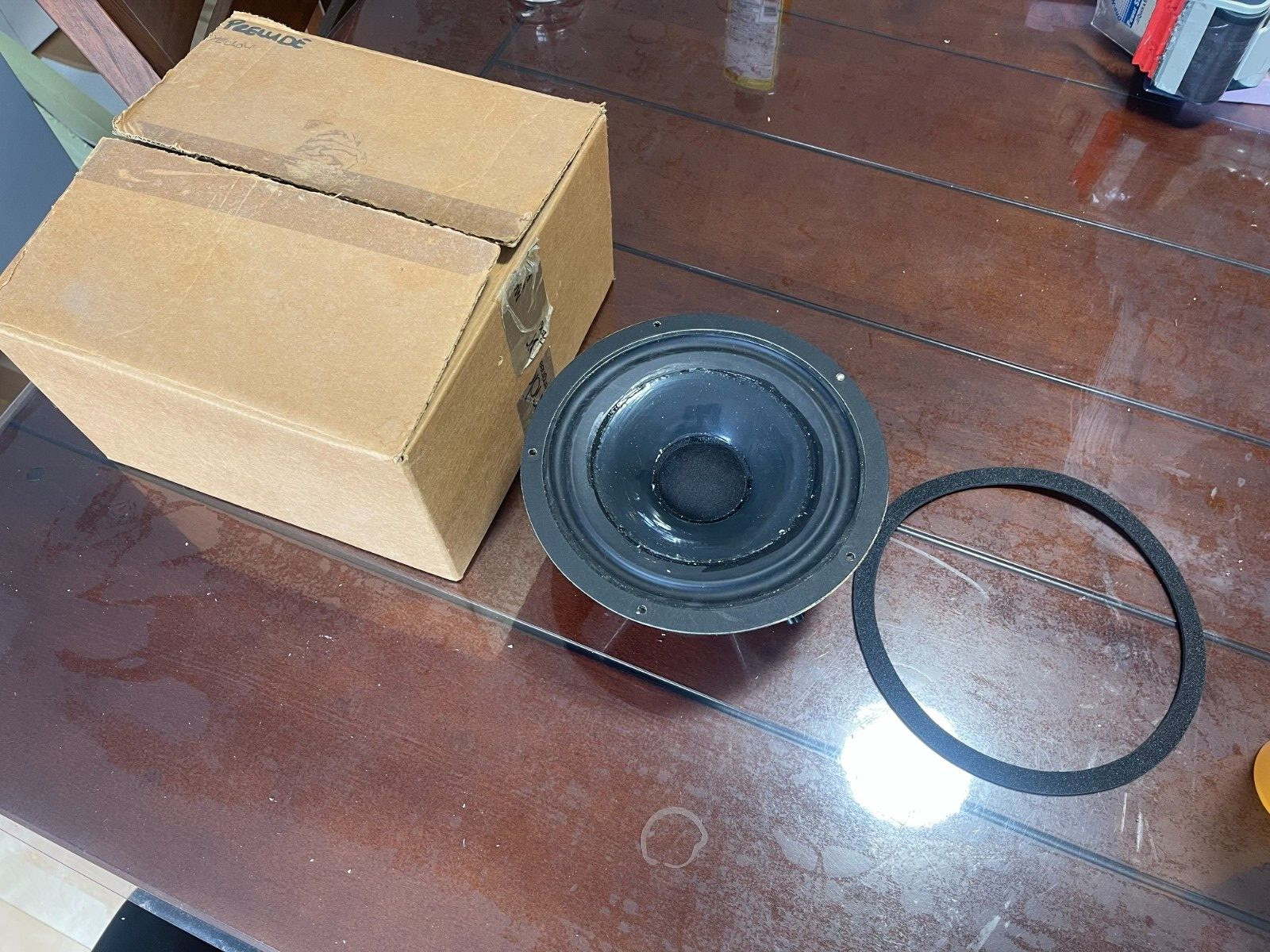
As an eBay Partner, we earn from qualifying purchases. This helps support our independent vintage technology research.
Related Models
- Spendor 7/1 (1975)
- Spendor 9/1 (1975)
- Spendor BC1/69 (1969)
- Spendor BC1 (1969)
- Spendor CLASSIC-1/2 (1979)
- Akai AM-2850 (1975)
- Akai AP-206 (1975)
- Nakamichi BX-1 (1985)
- Acoustic Research research-ar-17 (1978)
- Acoustic Research AR-19 (1994)