Spendor BC1: The Quintessential British Monitor
The Spendor BC1 stands as one of the most revered loudspeakers in the history of high-fidelity audio. Introduced in 1969 by Spencer Hughes, a former BBC engineer, the BC1 was not merely a commercial product—it was the physical embodiment of decades of BBC research into accurate, transparent sound reproduction. Designed initially as a nearfield monitor for broadcast use, the BC1 quickly transcended its utilitarian roots to become a cornerstone of the audiophile world, admired for its uncolored midrange, coherent tonality, and lifelike vocal reproduction.
Born from the BBC’s rigorous standards for studio monitors, the BC1 was directly inspired by the legendary LS3/5A, though it predates that more compact design. Spencer Hughes, working independently after his tenure at the BBC, applied the same design principles—careful driver selection, time-aligned crossover design, and meticulous cabinet construction—to create a speaker that delivered studio-grade accuracy in domestic settings. The “BC” in BC1 stands for "BBC," and the “1” signifies it as the first product from Spendor, a portmanteau of Spencer and Dorothy (his wife).
For audiophiles in the 1970s and beyond, the BC1 represented a rare balance: scientific precision married to musical warmth. Unlike many speakers of its era that leaned toward brightness or excessive bass, the BC1 offered a neutral, transparent presentation that revealed the true character of recordings without editorializing. Its influence on British speaker design cannot be overstated, setting a benchmark for naturalism that brands like Harbeth, KEF, and Linn would later pursue.
Technical Specifications
| Specification | Detail |
| Model | Spendor BC1 |
| Manufacturer | Spendor Acoustics, UK |
| Production Years | 1969–1980s (multiple variants) |
| Type | 2-way, sealed enclosure (infinite baffle) |
| Driver Configuration | 1x 7" bass-midrange, 1x 1" soft dome tweeter |
| Crossover Frequency | ~1.8 kHz |
| Crossover Type | 1st order (6 dB/octave), passive |
| Frequency Response | 60 Hz – 20 kHz (±3 dB) |
| Sensitivity | 86 dB (2.83V/1m) |
| Nominal Impedance | 8 ohms (minimum ~6 ohms) |
| Recommended Amp Power | 15–50 watts |
| Cabinet Finish | Teak or rosewood veneer, hand-built |
| Dimensions (H×W×D) | 440 × 240 × 190 mm (17.3 × 9.4 × 7.5 in) |
| Weight | 12 kg (26.5 lbs) per speaker |
The BC1’s design is deceptively simple. It uses a single 7-inch bass-midrange driver and a 1-inch soft dome tweeter, both custom-developed to meet BBC specifications. The bass-mid driver features a paper cone with a wide roll surround and a large magnet structure for improved control, while the tweeter is derived from the SEAS units used in BBC monitors. The sealed cabinet design ensures tight, fast bass response without port-induced resonances, contributing to its renowned transient accuracy.
The crossover is minimalist—first-order filters for both drivers—ensuring phase coherence and time alignment. This design choice is central to the BC1’s magic: because the drivers are in phase across the crossover point, the soundstage is exceptionally stable, with pinpoint imaging and a natural sense of space.
Sound Characteristics and Performance
The Spendor BC1’s sonic signature is best described as musical neutrality. It doesn’t shout, exaggerate, or euphonicize; instead, it presents music with a calm, effortless clarity that draws listeners in. Its midrange is often cited as one of the most natural ever captured in a loudspeaker—vocals sound present and intimate, as if the singer is in the room. Instruments like acoustic guitars, violins, and pianos are rendered with remarkable timbral accuracy.
Bass response is tight and articulate, though not deep by modern standards. The sealed cabinet rolls off gradually below 60 Hz, meaning the BC1 benefits from a room with supportive acoustics or careful placement near boundaries. However, what it lacks in extension it makes up for in timing and pitch definition—bass lines are clean and rhythmically precise.
The treble is smooth and detailed without being aggressive. The soft dome tweeter avoids the sibilance and fatigue common in metal domes of the era, making the BC1 an excellent choice for long listening sessions. Its dispersion is relatively wide, creating a generous sweet spot, though optimal performance is achieved with careful toe-in.
Paired with low-feedback tube amplifiers—such as classic models from Leak, Quad, or early Naim—the BC1 truly sings. Its 86 dB sensitivity means it won’t play extremely loud, but it responds beautifully to quality amplification in the 20–40 watt range. It’s a speaker that rewards good system matching and thoughtful setup.
Notable Features and Innovations
The BC1’s greatness lies in its adherence to engineering principles over marketing gimmicks. Its innovations were subtle but profound:
- BBC-Approved Components: Every driver and crossover part was selected for linearity and low distortion, not efficiency or cost.
- Time and Phase Coherence: The first-order crossover and driver alignment ensure that all frequencies arrive at the listener’s ear in phase, creating a cohesive, three-dimensional soundstage.
- Hand-Built Craftsmanship: Early BC1s were built in small batches with real wood veneers and meticulous attention to cabinet damping and bracing.
- Minimalist Design Philosophy: No grilles, no port tubes, no plastic trim—just a focus on acoustic integrity.
Common Issues and Maintenance
As with any vintage speaker, BC1s require care. Common issues include:
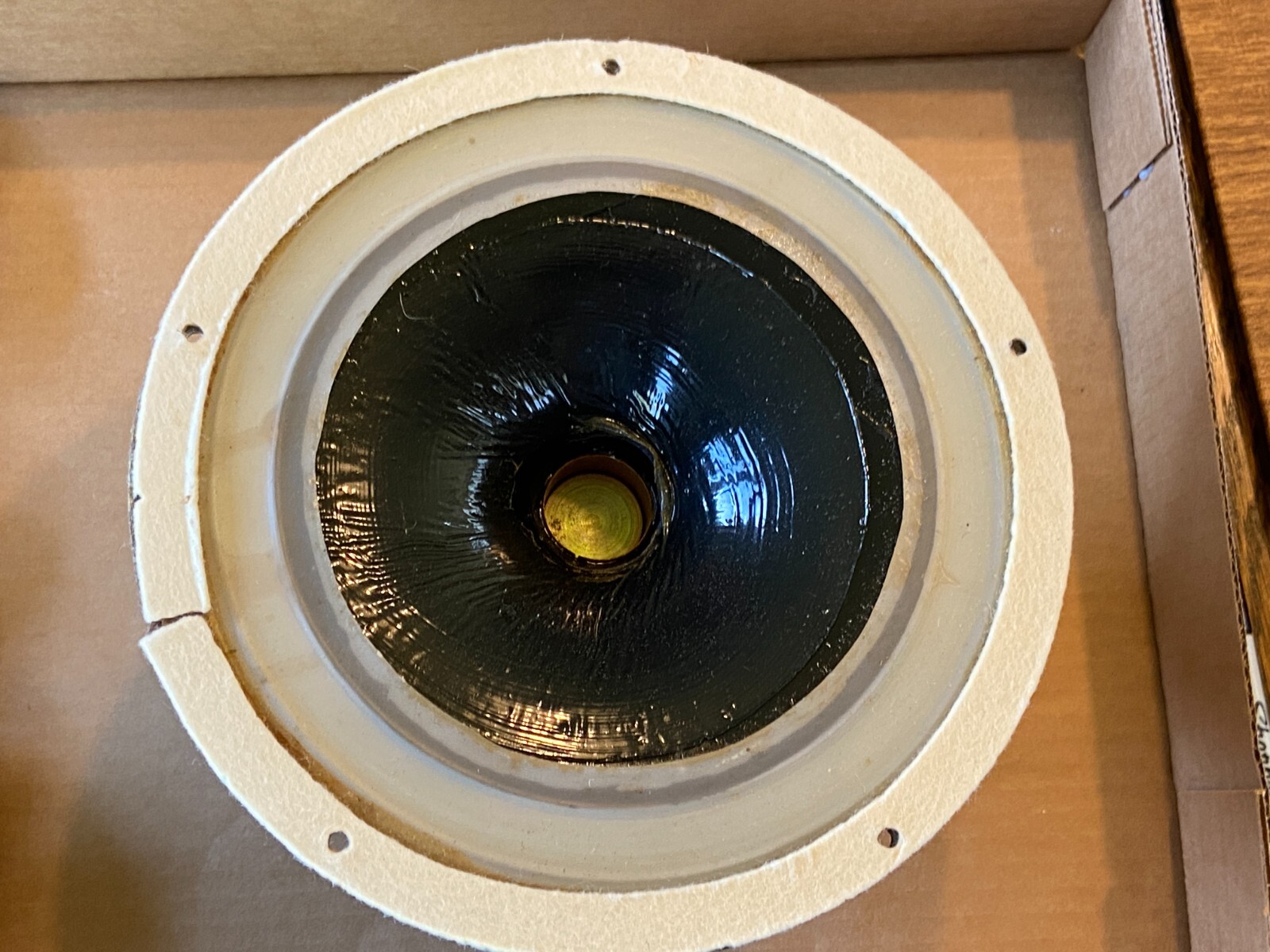
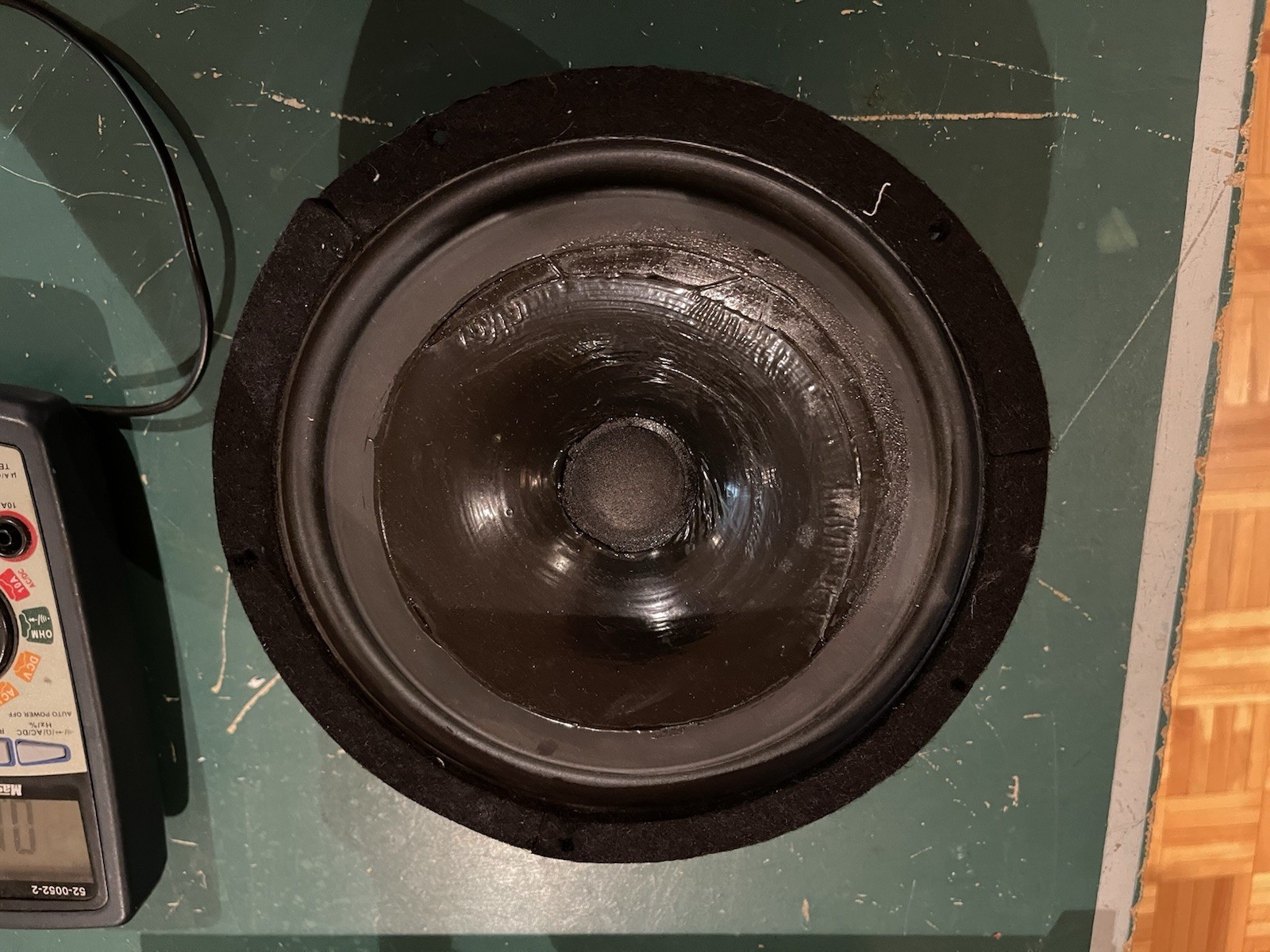
- Aging Foam Surrounds: The original foam on the bass-mid driver deteriorates over time, leading to flaking and loss of bass response. Re-foaming by a specialist is essential and can restore performance to near-original levels.
- Capacitor Drift: The crossover capacitors, typically paper-in-oil types, can degrade, causing a dull or unbalanced sound. Replacing them with modern equivalents (while preserving the original circuit topology) is often recommended.
- Tweeter Fatigue: While robust, the soft dome tweeters can suffer from age-related fatigue or damage from overdriving. Repairs or replacements using period-correct SEAS units are available.
- Cabinet Wear: Original teak and rosewood veneers may show scratches or fading. Gentle cleaning and occasional waxing help preserve their beauty.
Finding original, unmodified BC1s is increasingly rare. Many have been re-foamed or re-capped, but a well-restored pair can deliver performance that rivals modern high-end monitors.
Current Market Value and Collectibility
The Spendor BC1 is a highly collectible speaker, especially in original or professionally restored condition. Prices vary widely depending on condition and provenance:
- Unrestored, original pairs: $800–$1,500
- Fully restored (re-foamed, re-capped): $1,800–$2,800
- NOS (New Old Stock) or museum-grade: Up to $3,500+
They are particularly sought after in the UK, Japan, and among vintage audio enthusiasts worldwide. Their value continues to rise as supply dwindles and appreciation for BBC-derived designs grows.
Conclusion and Legacy
The Spendor BC1 is more than a loudspeaker—it’s a milestone in audio history. It represents a moment when broadcast engineering excellence met domestic hi-fi, creating a speaker that prioritized truth over spectacle. Its influence echoes through generations of British loudspeakers, and its sound remains relevant decades later.
For the listener who values musicality, coherence, and authenticity, the BC1 offers a rare window into the soul of a recording. It doesn’t impress with brute force or flashy specs; instead, it invites you to forget the equipment and simply listen. In an age of digital complexity, the Spendor BC1 stands as a timeless testament to the power of simplicity, precision, and passion.
eBay Listings


As an eBay Partner, we earn from qualifying purchases. This helps support our independent vintage technology research.
Related Models
- Spendor 7/1 (1975)
- Spendor 9/1 (1975)
- Spendor BC1/69 (1969)
- Spendor CLASSIC-1/2 (1979)
- Spendor CLASSIC-3/1 (1979)
- Akai AM-2850 (1975)
- Akai AP-206 (1975)
- Nakamichi BX-1 (1985)
- Acoustic Research research-ar-17 (1978)
- Acoustic Research AR-19 (1994)