Shure Beta 57
A supercardioid instrument mic that working engineers kept reaching for on snare, congas, and guitar amps — and a rare case where a manufacturer's ad copy and the people using the thing actually agreed.
Overview
The Beta 57 was the instrument half of Shure's Beta Series, launched alongside the Beta 58 vocal mic. Shure's own advertising positioned the pair around a single technical claim: true supercardioid polar patterns maintained across the entire frequency spectrum, not just at one reference point. That claim matters in the real world because pattern consistency is what buys you gain-before-feedback and side rejection on a loud stage — the difference between a mic that works in a rehearsal room and one that survives a rock club.
The Beta 57's reputation got built in the studio and on tour rather than in a spec sheet. Mix (October 1993, p.84) reported that on Paul Simon's "Born At The Right Time Tour," engineers spent rehearsal hours on placement and landed on the Beta 57 as the tool for bongos, bata, wood blocks, cowbells, and temple blocks — describing it as fast and accurate with a wide dynamic range, little low-end coloration, a strong midrange, and well-controlled high frequency response. That's a percussion endorsement from a tour with over a hundred inputs, thirty-four of them percussion. The same account singled out the mic's side rejection and isolation as the thing that made it work in a dense forest of close-miked gear.
Shure's marketing leaned hard on working engineers. Steve Folsom, sound engineer for Melissa Etheridge and John Hiatt, was quoted in both Recording-Engineer (September 1991, p.15) and Mix (March 1992, p.73) praising the Beta 57 for guitar amps — isolation without sacrificing warmth and tone. Treat that as advertising copy, because it is; the same quote ran in multiple books under Shure's sponsorship. But the percussion testimony above is a different kind of evidence: a specific tour, a specific input list, a specific set of instruments.
The mic turns up in studio mic lockers well after its introduction. A Mix (August 2001, p.180) piece reproducing the Dave Matthews Band input list shows a Beta 57 on snare top — one of the least forgiving positions in any kit, where a mic either handles transient snap and bleed or gets swapped out. Nightsky Studios in Waldorf, Maryland listed a Beta 57 alongside a 57A, 58, KSM32, SM57, SM81, and SM94 in its published mic inventory, per EQ (a studio profile chunk dated to the magazine's run). None of that is a lab measurement, but it's the kind of placement data that tells you more than a frequency-response plot.
Shure's own print advertising in EQ (January 1992, p.11) laid out a recommended drum kit: Beta 57 on snare, SM91 on kick, SM94 on hi-hat — the Beta slotted into the snare chair as a matter of course. A separate Shure ad in the same publication's pages called the Beta 57 "superb for snare, bongos and congas," which is marketing, but it lines up with what the Paul Simon tour engineers actually did with it.
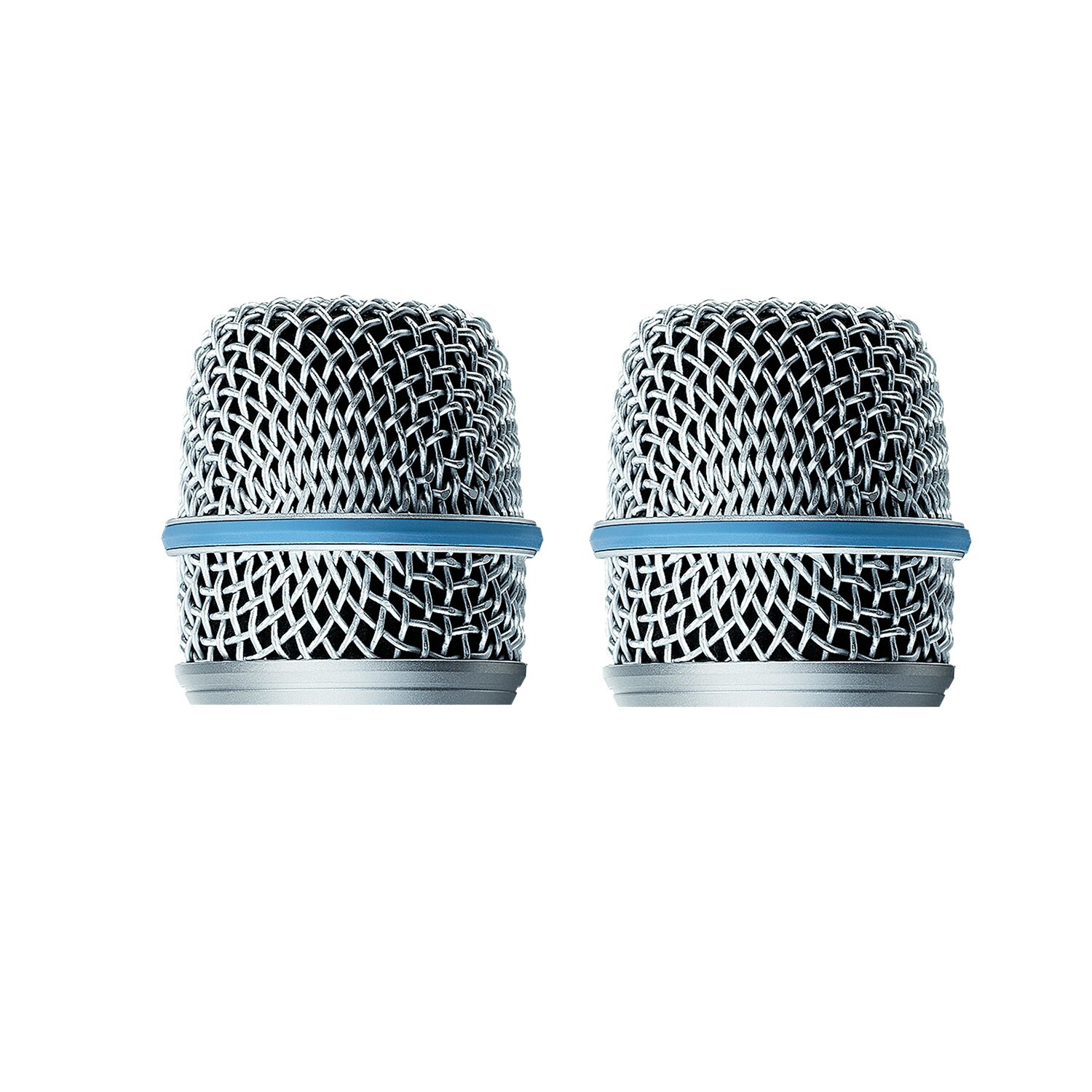
There was a rebate push in 2004 — Pro-Audio-Review (April 2004, p.2) advertised $15 back on the Beta 57, Beta 58, and Beta 87 between April 1 and May 31 of that year, which tells you the line was still moving units more than a decade after introduction and was being discounted to compete. Collectors should note the distinction between the original Beta 57 and the later Beta 57A; the two are separate models and the archive treats them separately. Parts and grilles for the original are the usual wear items on a mic that spent its life on drum risers.
eBay Listings


As an eBay Partner, we earn from qualifying purchases. This helps support our independent vintage technology research.