Shure Beta 56A
A compact supercardioid dynamic built to sit inches from a tom head, take a drumstick to the grille, and keep working.
Overview
The Shure Beta 56A is a high-output supercardioid dynamic microphone. The manual is blunt about what it's for: close miking of tom-toms and other percussion, plus guitar amplifiers, brass, and woodwinds. That's a narrow brief, and the Beta 56A is built around it. The manual calls the supercardioid pattern "extremely uniform." On a stage, a tight, consistent pattern buys gain before feedback, and the manual claims exactly that as the payoff, along with rejection of off-axis sound.
The mounting is what separates the Beta 56A from a generic instrument mic. The stand adapter is built into the body, adjustable and dynamically locking, with the XLR connector integrated into the same assembly. The manual notes the adapter keeps the microphone securely in place even if a drumstick strikes it. That tells you who Shure expected to be using it. There's no separate clip to lose and no thread to strip.
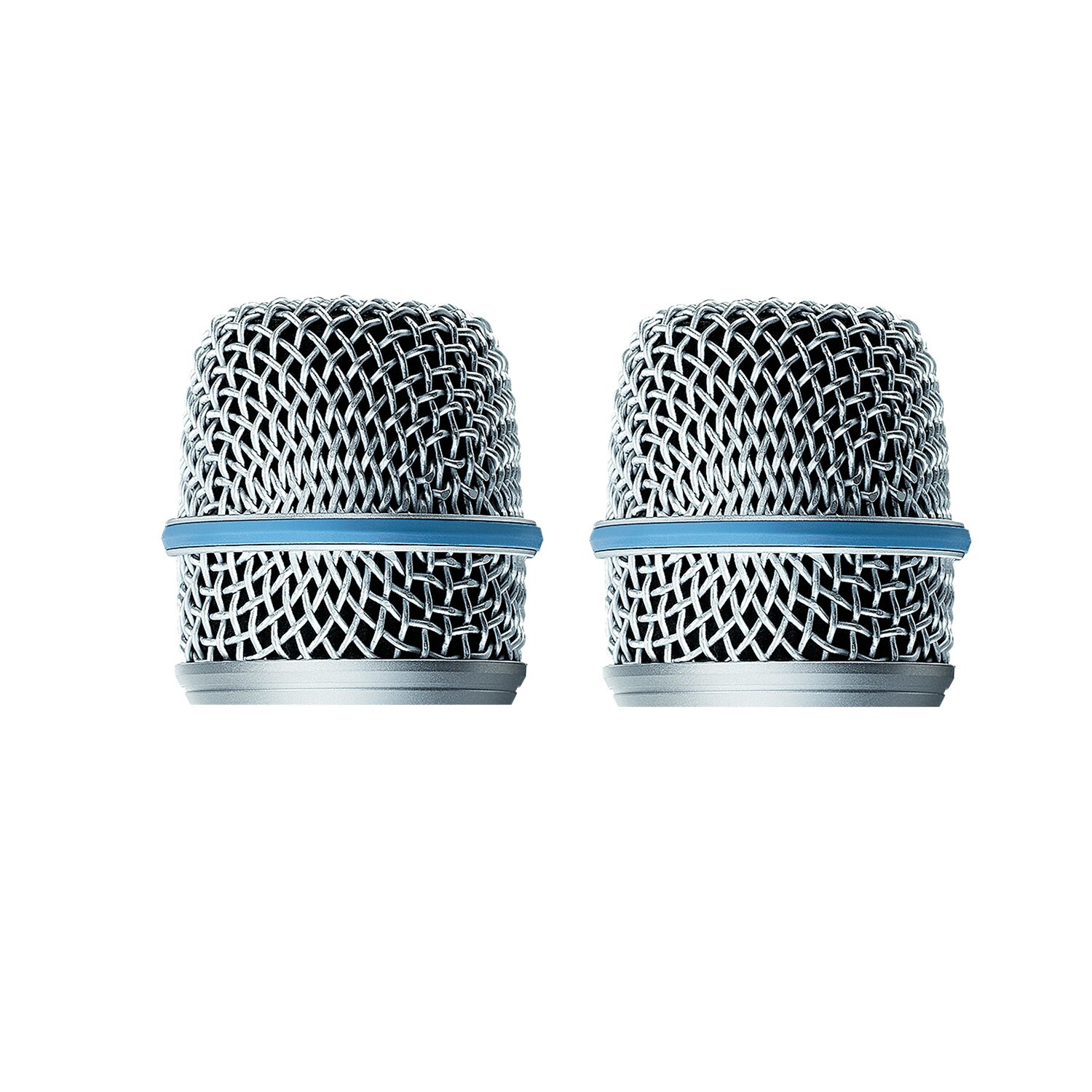
The rest of the package is a list of stage-survival features. A hardened steel mesh grille resists wear and abuse. A neodymium magnet provides high signal-to-noise ratio output. A pneumatic shock mount system is designed to minimize transmission of mechanical noise and vibration, which is the enemy of any mic clamped to a drum shell or a kick-drum hoop. The manual also notes the mic is minimally affected by varying load impedance.
Key Features
Supercardioid Pattern for Gain Before Feedback
The Beta 56A uses a supercardioid pickup pattern, and the manual stresses its uniformity rather than just its tightness. A pattern that stays consistent across the frequency range is what lets an engineer push a monitor level before the system rings. Shure's documentation frames the pattern as the primary tool for high gain before feedback and superior rejection of off-axis sound.
The manual also gives placement advice for the pattern's rear null. To maximize rejection of unwanted sound, stage monitors or P.A. loudspeakers should sit at roughly a 60-degree angle from the rear of the microphone, not directly behind it.
Integrated Locking Stand Adapter with XLR Connector
Instead of a clip that threads onto a stand, the Beta 56A carries its own adjustable, dynamically locking stand adapter, with the XLR connector built into the assembly. Shure's manual credits this with simplifying installation and providing greater flexibility, and notes the adapter holds the mic in place even when a drumstick catches it. Fewer parts to fail, and less hardware rattling around a gig bag.
Hardened Steel Mesh Grille
The grille is hardened steel mesh, specified by Shure as resistant to wear and abuse. A mic parked an inch above a snare head or clamped between toms is going to get hit, and the grille is the first thing between a drumstick and a diaphragm. The manual treats durability as a design requirement.
Neodymium Magnet and High Output
The Beta 56A uses a neodymium magnet, which Shure ties directly to a high signal-to-noise ratio at the output. Combined with the high-output dynamic design, that means less gain needed at the preamp. The manual also states the mic is minimally affected by varying load impedance, so it behaves predictably across different consoles and preamps rather than demanding a specific match.
Pneumatic Shock Mount System
Inside the body sits what Shure describes as an advanced pneumatic shock mount system, designed to minimize transmission of mechanical noise and vibration. On a tom mount or a kick drum, the mic is bolted to a resonating structure by definition. Anything the shock mount absorbs is rumble that never reaches the diaphragm. The manual lists it among the mic's core features.
Tailored Frequency Response
Shure describes the Beta 56A's frequency response as tailored, voiced to give drums, amplified instruments, and horns a studio-quality sound rather than a flat, measurement-friendly curve. The manual also addresses proximity effect directly. Unidirectional mics like the Beta 56A progressively boost low frequencies when placed very close to a source, and Shure notes that the Beta 56A's low-frequency response is progressively attenuated to compensate. The stated goal is better control and a more usable proximity effect when the mic is worked up close.
Historical Context
The Beta 56A sits within Shure's Beta line, a family the company's own advertising grouped together and marketed on construction, low handling noise, and high gain-before-feedback. A 2013 Mix-Magazine (April 2013, p.7) rebate promotion listed the Beta 56A alongside the Beta 57A, Beta 27, Beta 52A, Beta 91A, and the Beta 98 series in the instrument/drum tier of the lineup. That puts it as a drum and instrument specialist, apart from the vocal-oriented Beta 58A and Beta 87 models.
A 2001 Mix-Magazine (April 2001, p.164) live-sound roundup described a kit using the Beta 56A on snare top, with SM94s on hat, ride, and snare bottom and KSM-32s on overheads. A 2010 Mix-Magazine (October 2010, p.59) piece on a touring drummer's setup placed Beta 56A mics on ride and bongos, alongside KSM 27s on toms and a Beta 98 on cross stick.
eBay Listings
As an eBay Partner, we earn from qualifying purchases. This helps support our independent vintage technology research.