Sherwood S-8900A: The Forgotten Integrated Audio Controller of the Late 1970s
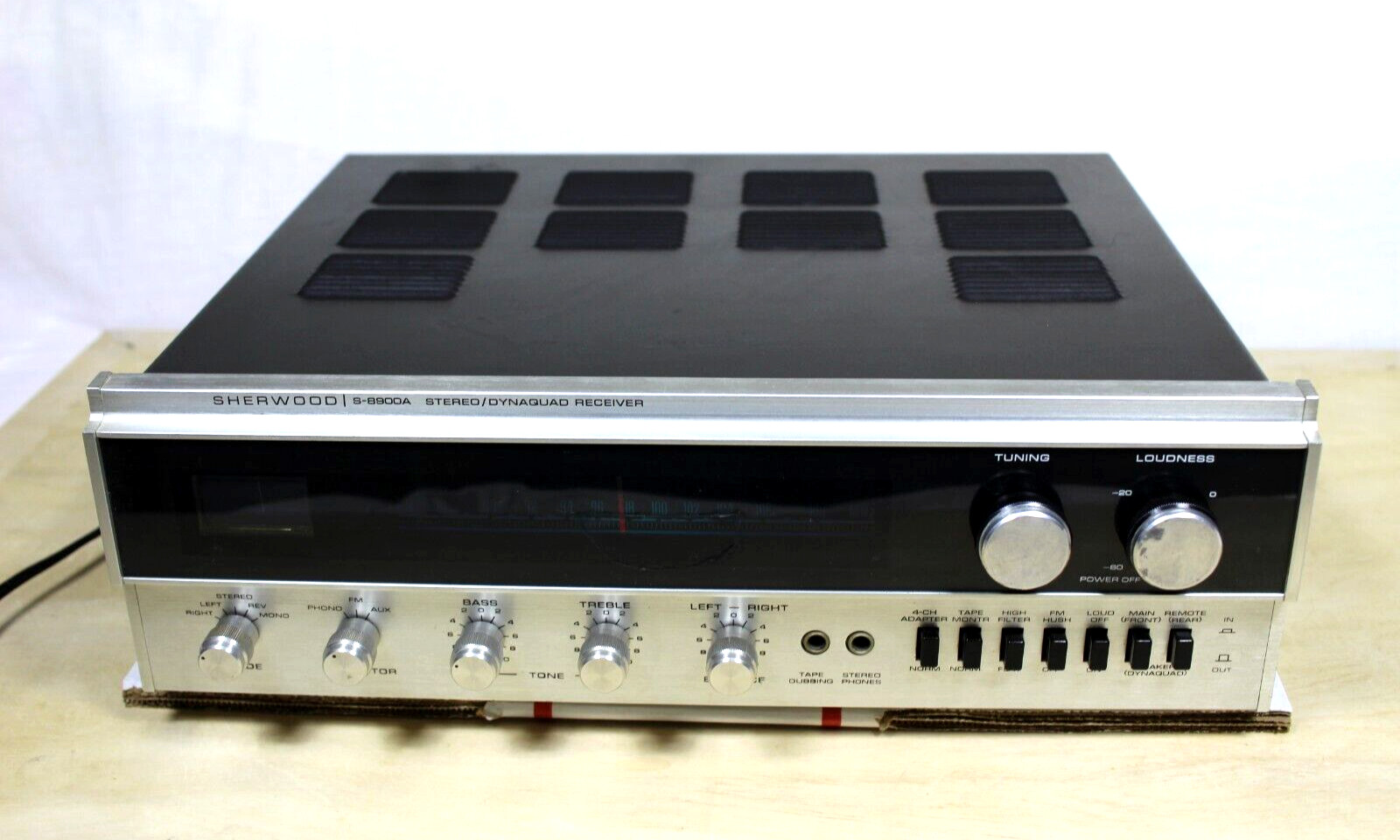
In the golden era of high-fidelity audio during the late 1970s, when brands like Pioneer, Marantz, and Sansui were capturing the spotlight with powerful receivers and luxurious separates, Sherwood quietly introduced a unique and underappreciated piece of audio engineering: the S-8900A. Unlike conventional receivers or amplifiers, the S-8900A defied easy categorization—occupying a niche as an integrated audio controller or system manager, combining a high-performance AM/FM tuner, preamplifier, and source selector in a single chassis. Designed for audiophiles who valued clean signal paths and modular system building, the S-8900A was a forward-thinking component that anticipated the modular separates trend of the 1980s.
Though not as widely recognized as its contemporaries, the Sherwood S-8900A stands out today as a rare and intriguing artifact of late-1970s audio design—valued by collectors and vintage audio enthusiasts for its build quality, sonic clarity, and unique role in a Sherwood system.
Technical Specifications
The S-8900A was not a power amplifier, so it does not carry power output ratings in watts per channel. Instead, it functioned as a line-level control center, designed to be paired with external power amplifiers. Its strength lay in its precision tuning, low-noise preamplification, and clean signal routing.
| Specification | Detail |
| Model | S-8900A |
| Manufacturer | Sherwood |
| Year of Release | 1978 |
| Category | Integrated Audio Controller / Preamp-Tuner |
| Tuner Bands | AM, FM (Stereo) |
| Tuning System | Analog dial with digital frequency counter (LED display) |
| IF Frequencies (FM) | 10.7 MHz |
| IF Frequencies (AM) | 455 kHz |
| Signal-to-Noise Ratio | >70 dB (FM, weighted) |
| Total Harmonic Distortion | <0.1% (preamp section) |
| Frequency Response | 20Hz – 20kHz (±0.5dB) |
| Input Impedance | 47kΩ (typical) |
| Output Impedance | 600Ω (pre-out) |
| Inputs | 3 Line-Level (RCA), Phono (MM) |
| Outputs | Main Out (RCA), Tape Out, Tuner Out |
| Power Supply | Internal linear transformer |
| Power Consumption | 35 watts |
| Dimensions (W×H×D) | 430 × 145 × 330 mm |
| Weight | 9.5 kg (approx. 21 lbs) |
| Finish | Brushed aluminum front panel, black or silver trim |
The S-8900A featured a striking LED digital frequency readout—a relatively advanced feature for 1978—giving it a modern, almost futuristic appearance compared to the analog dials common on most tuners of the era. This digital display enhanced tuning precision, especially on the FM band, where Sherwood implemented a quartz-locked PLL (Phase-Locked Loop) synthesis system for stable reception and minimal drift.
Sound Characteristics and Performance
The S-8900A was engineered with a focus on signal purity and transparency. As a preamp-tuner combo, it avoided the compromises of shared power supplies and internal crosstalk common in all-in-one receivers. Its preamplifier section used discrete transistor circuitry (no IC op-amps), contributing to a warm yet detailed midrange and extended highs.
FM reception was a standout feature. The tuner section offered excellent sensitivity and selectivity, capable of pulling in weak stations with clarity and minimal noise. The stereo separation was impressive for its time, typically exceeding 40 dB, which delivered a spacious and immersive soundstage. The AM band also performed well, with good image rejection and low hum—thanks to a well-shielded chassis and toroidal power transformer.
The phono stage was designed for moving magnet (MM) cartridges and provided a flat RIAA equalization curve with low noise. While not as refined as dedicated phono preamps of the era, it was more than capable for casual vinyl listening.
Overall, the S-8900A delivered a balanced, natural tonal balance—neither overly bright nor excessively warm—making it a versatile front-end for a wide range of power amplifiers and speakers.
Notable Features and Innovations
What set the S-8900A apart from other tuners and preamps of its time?
- Digital Frequency Display: One of the earlier consumer audio units to feature an LED readout, improving tuning accuracy and user experience.
- Modular Design Philosophy: Sherwood marketed the S-8900A as part of a modular system. It could be paired with Sherwood power amplifiers (like the M-7000 or M-8000 series) and speakers to create a high-end separates system.
- Tuner Output Jack: A rare feature that allowed users to connect the tuner section directly to another amplifier or recorder, useful for multi-room setups or archiving radio broadcasts.
- High Build Quality: The S-8900A featured a heavy-gauge steel chassis, gold-plated RCA jacks, and a robust rotary encoder for input selection—hallmarks of Sherwood’s commitment to durability.
Common Issues and Maintenance
Like all vintage electronics from the late 1970s, the S-8900A is prone to certain age-related issues:
- Dried-up Electrolytic Capacitors: The power supply and signal path capacitors may have degraded, leading to hum, low output, or channel imbalance. A full recapping is recommended for units that have been in storage.
- Failing LED Display: The digital frequency counter uses early LED technology, which can dim or fail over time. Replacement modules are rare, but individual LEDs can sometimes be resoldered or substituted.
- Worn Input Selector Switch: The rotary switch can develop crackling or intermittent contact. Cleaning with DeoxIT or replacing the switch may be necessary.
- Tuner Alignment Drift: Over decades, the FM front-end may require realignment for optimal sensitivity. This should be done by a technician with proper signal generators and alignment tools.
Regular maintenance—such as cleaning controls, checking solder joints, and ensuring proper ventilation—will help preserve the unit’s performance.
Current Market Value and Collectibility
The Sherwood S-8900A remains a rare find on the vintage audio market. It was never produced in the same volumes as mainstream receivers, and few units have survived in working condition. As of 2024, working examples typically sell for $150–$300, depending on cosmetic condition and functionality. Units with a fully operational LED display and clean tuning performance command higher prices.
While not yet a "blue-chip" vintage audio component like a Marantz 2270 or Sansui G-3300, the S-8900A is gaining attention among modular system collectors and those restoring complete Sherwood setups. Its unique blend of tuner, preamp, and system control makes it a compelling centerpiece for a period-correct 1970s high-fidelity rig.
Conclusion and Legacy
The Sherwood S-8900A may not have achieved the fame of its contemporaries, but it represents a bold and thoughtful approach to audio system design. At a time when integrated receivers dominated the market, Sherwood offered a more refined, modular alternative for discerning listeners. The S-8900A’s emphasis on signal integrity, precise tuning, and elegant functionality reflects the brand’s commitment to quality engineering.
Today, it stands as a quiet testament to an era when audio components were built to last—and when innovation wasn’t just about power, but about control, clarity, and craftsmanship. For the vintage audio enthusiast seeking something off the beaten path, the Sherwood S-8900A is a rewarding discovery: a forgotten controller that deserves a second listen.
eBay Listings


As an eBay Partner, we earn from qualifying purchases. This helps support our independent vintage technology research.
Related Models
- Sherwood S-7010A (1976)
- Sherwood S-7110A (1978)
- Sherwood S-7225A (1975)
- Sherwood RX-4109 (1976)
- Sherwood AI-1110 (1978)
- Luxman L-530 (1975)
- Luxman R-404 (1975)
- Luxman RV-371 (1975)
- Luxman SQ-38U (1975)
- Luxman T-14 (1972)