Sherwood S-8600A: The Forgotten Audiophile Preamplifier of the Late 1970s
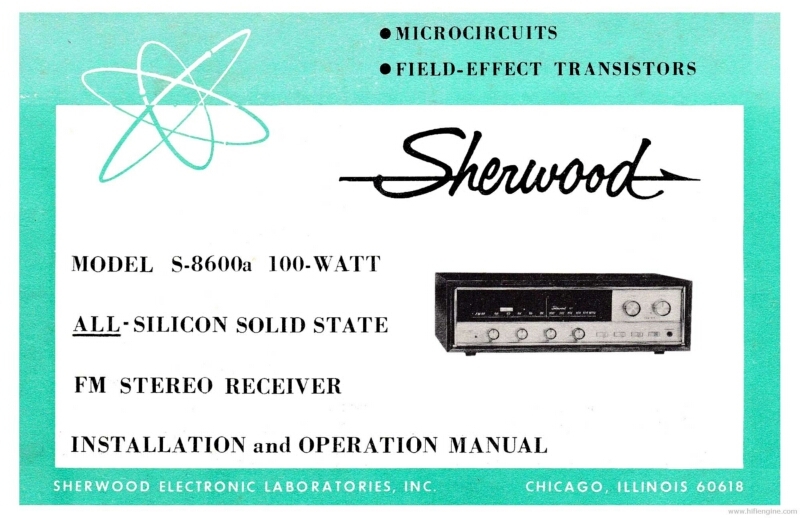
In the late 1970s, the high-fidelity audio market was a battleground of innovation, with Japanese manufacturers like Pioneer, Sansui, and Yamaha dominating headlines. Yet nestled among these giants was Sherwood—a brand with a quieter reputation but a strong commitment to quality, especially in the realm of preamplifiers. The Sherwood S-8600A, released in 1978, stands as one of the brand’s most sophisticated offerings from its analog heyday. Though not as widely celebrated as some of its contemporaries, the S-8600A has earned a cult following among vintage audio enthusiasts for its clean signal path, robust build quality, and thoughtful feature set.
Positioned as a high-end preamplifier, the S-8600A was designed for serious listeners who valued transparency, low noise, and precise control over their audio systems. Unlike integrated receivers that combined preamp and power amp sections, the S-8600A focused solely on the critical front-end duties: source selection, volume control, tone shaping, and signal routing. This specialization allowed Sherwood to implement audiophile-grade components and circuitry, making the S-8600A a compelling choice for those building separates-based systems during the golden age of analog audio.
Technical Specifications
The Sherwood S-8600A was engineered with precision and reliability in mind. While detailed service manuals are scarce today, surviving units and user reports confirm a solid set of specifications that were competitive with other high-end preamps of the era.
| Specification | Detail |
| Model | S-8600A |
| Year of Release | 1978 |
| Category | Preamplifier |
| Inputs | 4 line-level (RCA), 1 phono (MM), 1 tape |
| Outputs | Main out, Tape out, Tuner out |
| Frequency Response | 20Hz – 20kHz (+/-0.5dB) |
| Total Harmonic Distortion | < 0.05% (1kHz, rated output) |
| Signal-to-Noise Ratio | > 80dB (A-weighted) |
| Volume Control | Dual-gang potentiometer, stepped attenuator style |
| Tone Controls | Bass, Treble (±12dB at 100Hz/10kHz) |
| Balance Control | Yes |
| Power Supply | Internal linear transformer |
| Power Consumption | 35 watts |
| Dimensions (W×H×D) | 430 × 145 × 330 mm (17 × 5.7 × 13 in) |
| Weight | 9.5 kg (21 lbs) |
| Finish | Black or silver faceplate |
Notably, the S-8600A included both a moving magnet (MM) phono input and a dedicated tape loop, allowing for integration with turntables and cassette decks—essential components of a complete 1970s hi-fi system. The inclusion of a tuner output also suggests Sherwood anticipated its use in multi-component setups, possibly paired with a Sherwood or third-party FM tuner.
Sound Characteristics and Performance
The sonic signature of the Sherwood S-8600A is best described as neutral with a touch of warmth—a hallmark of well-designed analog preamps from this era. It avoids the clinical sterility of some later solid-state designs while steering clear of the exaggerated "tube-like" coloration that some audiophiles find fatiguing.
Users report a clean, detailed midrange that renders vocals and acoustic instruments with clarity and presence. The bass response is tight and well-controlled, with minimal bleed into the lower mids, thanks to effective power supply filtering and grounding. High frequencies are extended but not overly bright, making the S-8600A a forgiving match for lesser-quality recordings or brighter speakers.
One of the S-8600A’s strengths is its low noise floor. Even at high gain settings, especially with the phono stage engaged, background hiss is minimal. This makes it an excellent choice for vinyl enthusiasts who demand quiet playback between tracks. The dual-mono volume control ensures balanced channel output, and the stepped attenuator design (as opposed to a simple pot) contributes to precise, repeatable level adjustments.
Notable Features and Innovations
While Sherwood may not have been a pioneer in the same way as Nakamichi or Accuphase, the S-8600A incorporated several thoughtful design choices that elevated it above budget-tier preamps:
- Discrete Component Design: Unlike many mass-market preamps that used integrated op-amps throughout, the S-8600A relied on discrete transistor circuitry in critical signal paths, contributing to its dynamic range and clarity.
- High-Quality Potentiometers: The volume and tone controls used durable, low-noise components, reducing scratchiness and channel imbalance over time.
- Tape Monitor Function: A dedicated tape monitor switch allowed users to toggle between live and recorded sources, a feature prized by those who recorded albums to cassette.
- Dual-Level Input Sensitivity: The line inputs could accommodate both standard and high-output sources, increasing compatibility with a wide range of gear.
- Heavy-Duty Chassis: The thick steel chassis and weighted faceplate reduced microphonics and vibration, while also giving the unit a premium, substantial feel.
The front panel layout is clean and intuitive, with large, knurled aluminum knobs and clearly labeled switches. The blue LED power indicator (a rarity in the late '70s) adds a subtle touch of modernity, though some purists prefer the warmer glow of incandescent indicators.
Common Issues and Maintenance
Like any vintage electronic device, the Sherwood S-8600A benefits from periodic maintenance. While generally reliable, aging components can affect performance:
- Potentiometer Noise: The most common issue is crackling or channel imbalance when adjusting volume or tone controls. This is typically resolved by cleaning the potentiometers with contact cleaner, though replacement may be necessary in severe cases.
- Capacitor Aging: Electrolytic capacitors in the power supply and signal path may degrade over time, leading to hum, reduced bass response, or instability. A recapping by a qualified technician is recommended for units that have been powered off for decades.
- Oxidation on Switches: The input selector and tape monitor switches can develop oxidation, causing intermittent connections. Regular use and occasional cleaning help prevent this.
- Phono Stage Sensitivity: The MM phono stage, while competent, may not match the performance of modern standalone phono preamps. Audiophiles with high-output cartridges may prefer to bypass it entirely and use an external phono stage.
Despite these potential issues, the S-8600A’s modular design and accessible internal layout make servicing relatively straightforward for experienced technicians.
Current Market Value and Collectibility
The Sherwood S-8600A is not a rare unicorn, but it’s not commonly found either. Units in working condition typically sell for $150–$300 on the secondary market, depending on cosmetic condition, included accessories, and provenance. Fully restored models with recapped power supplies and cleaned controls may command slightly higher prices.
Collectibility remains moderate. While it lacks the name recognition of brands like Marantz or Harman Kardon, the S-8600A appeals to separates system builders and Sherwood loyalists who appreciate its understated elegance and solid engineering. Its value is likely to remain stable rather than skyrocket, but as interest in vintage preamps grows, the S-8600A could see renewed attention.
Conclusion and Legacy
The Sherwood S-8600A may not have made headlines in its day, but it represents the quiet excellence of a brand that prioritized function, durability, and sound quality over flash. In an era when many manufacturers cut corners to hit price points, Sherwood stayed true to audiophile principles with the S-8600A.
Today, it stands as a reliable, musical preamplifier that can hold its own in a vintage setup. Paired with a quality power amplifier and analog sources, it delivers a listening experience that is both authentic and deeply satisfying. For those exploring the world of separates or seeking a well-built preamp with character, the Sherwood S-8600A is a worthy contender—proof that sometimes, the best gear isn’t the loudest, but the one that lets the music speak for itself.
eBay Listings


As an eBay Partner, we earn from qualifying purchases. This helps support our independent vintage technology research.
Related Models
- Sherwood S-7010A (1976)
- Sherwood S-7110A (1978)
- Sherwood S-7225A (1975)
- Sherwood RX-4109 (1976)
- Sherwood AI-1110 (1978)
- Luxman L-530 (1975)
- Luxman R-404 (1975)
- Luxman RV-371 (1975)
- Luxman SQ-38U (1975)
- Luxman T-14 (1972)