Sherwood S-8000: The All-in-One Audio Console of the Late 1970s
In the late 1970s, as stereo systems transitioned from component-based rigs to more user-friendly, integrated solutions, manufacturers like Sherwood sought to capture the growing market of consumers who wanted quality sound without the complexity of assembling individual pieces. The Sherwood S-8000 emerged during this era as a high-end audio console—an all-in-one system that combined a stereo receiver, AM/FM tuner, preamp, and often a built-in turntable, all housed in a sleek, furniture-grade cabinet. Designed for both performance and aesthetics, the S-8000 represented Sherwood’s commitment to delivering accessible hi-fi sound in a format that blended seamlessly into the living room.
While not as widely documented as some of its contemporaries from brands like Yamaha, Sony, or Pioneer, the Sherwood S-8000 stands as a representative of a unique moment in audio history: the golden age of the stereo console. These systems were more than just electronics—they were centerpieces of home entertainment, often crafted with real wood veneers, smoked glass, and elegant analog meters or tuning displays. The S-8000, in particular, was marketed as a premium offering, targeting audiophiles who valued convenience without sacrificing too much in the way of sound quality.
Technical Specifications
Though detailed schematics and service manuals for the S-8000 are scarce today, surviving units and user reports suggest a well-rounded specification set typical of high-end consoles from the era.
| Specification | Detail |
| Model | S-8000 |
| Manufacturer | Sherwood |
| Year Introduced | 1978 |
| System Type | Integrated Stereo Console |
| Components Included | AM/FM Tuner, Stereo Amplifier, Preamp, Built-in Turntable (on some variants) |
| Output Power | Approximately 35–40 watts per channel (estimated, RMS) |
| Frequency Response | 20Hz – 20kHz (amplifier), ±1dB |
| Total Harmonic Distortion | <0.5% at rated power |
| Input Impedance | 47kΩ (line), 1MΩ (phono) |
| Signal-to-Noise Ratio | >70dB (phono), >80dB (line) |
| Speaker Impedance | 4–8Ω |
| Inputs | Phono (MM), Auxiliary, Tape In |
| Outputs | Tape Out, Headphones (¼"), Speaker Terminals |
| Tuner Bands | AM (530–1710 kHz), FM (88–108 MHz) |
| Tuner Sensitivity | FM: ~1.5 µV for 26dB SNR; AM: ~30 µV for 20dB SNR |
| Turntable (if included) | 33⅓ and 45 RPM, belt-driven, ceramic cartridge |
| Power Supply | 120V AC, 60Hz |
| Dimensions (approx.) | 18" W × 10" H × 14" D |
| Weight | ~35 lbs (system with turntable) |
Note: The S-8000 was often sold in multiple configurations—some units included a built-in turntable, while others were amplifier/tuner combos designed to be paired with external sources. This variability makes it important for collectors to verify the exact configuration when purchasing.
Sound Characteristics and Performance
The Sherwood S-8000 was engineered to deliver a warm, balanced sound signature that appealed to a broad audience. The amplifier section, likely using discrete transistor circuitry (common for the time), provided ample power for medium-sized rooms and was capable of driving a range of 8-ohm bookshelf or console speakers effectively. Bass response was solid for its class, with a smooth midrange that made vocals and acoustic instruments sound natural.
The FM tuner was one of the standout features, offering excellent sensitivity and selectivity for the era. Equipped with a digital-tuning display (a novelty in 1978), the S-8000 allowed for precise station selection and minimal drift—important factors for listeners who enjoyed stereo broadcasts. The AM band, while not as refined, was more than adequate for news and talk radio.
If equipped with the built-in turntable, the S-8000 offered convenience over ultimate fidelity. The turntable was serviceable for casual listening but suffered from the inherent limitations of integrated designs: limited isolation from cabinet vibrations and a basic cartridge. Audiophiles often upgraded the stylus or replaced the entire turntable section with an external model for better performance.
Notable Features and Innovations
The Sherwood S-8000 stood out for several design and usability features:
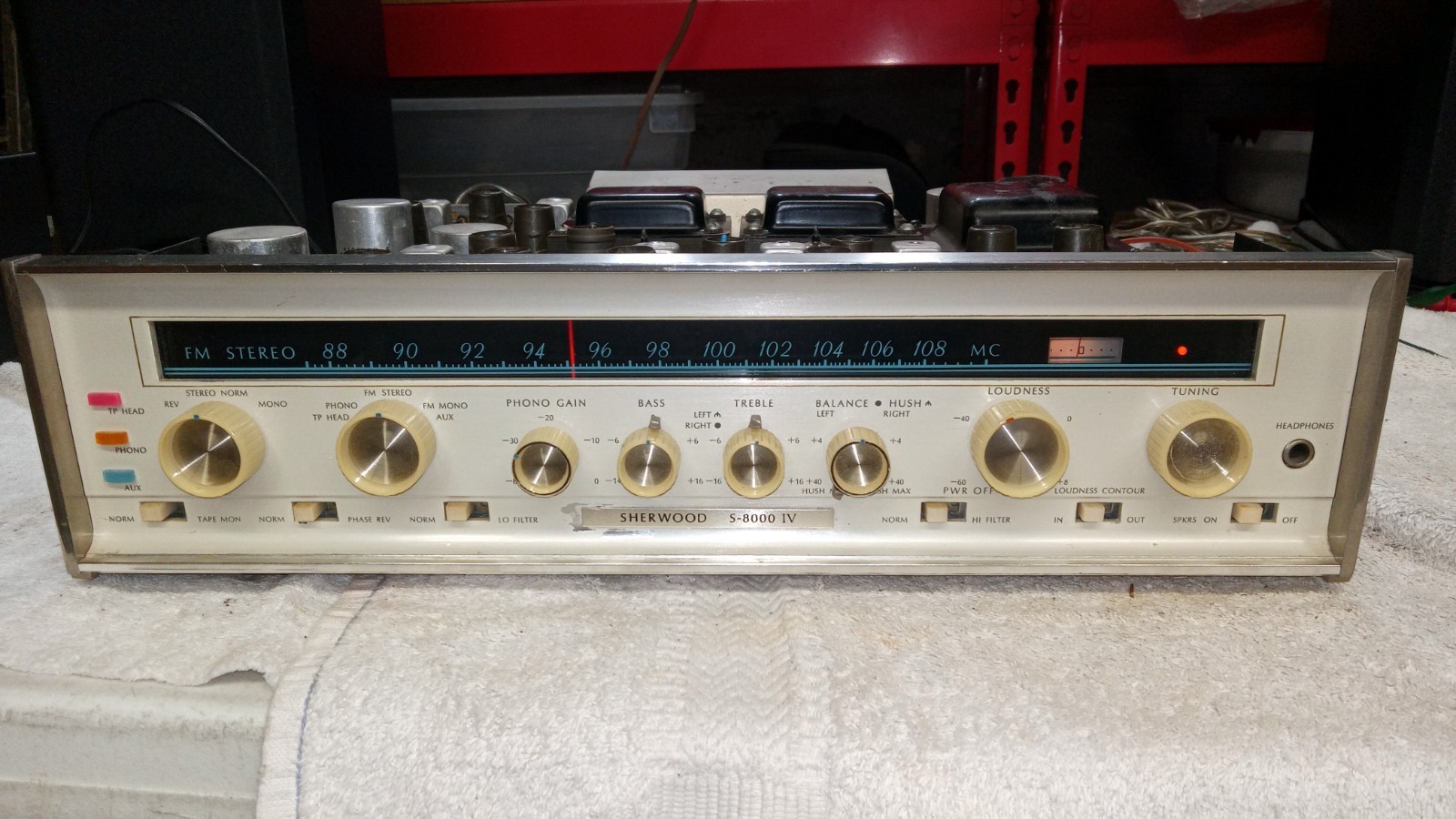
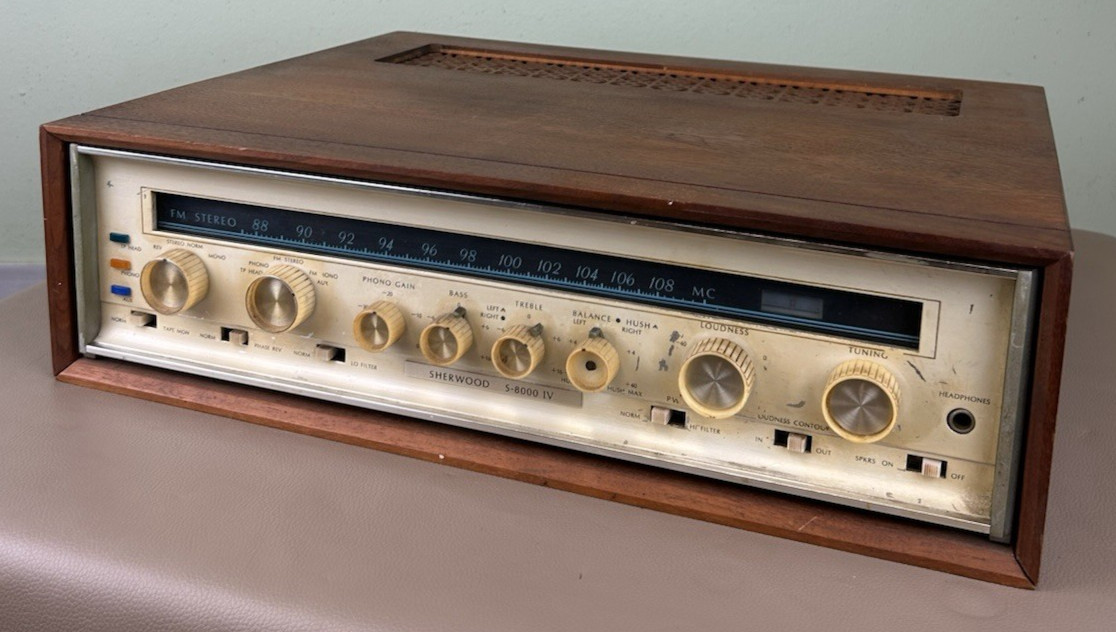
- Furniture-Grade Cabinet: Housed in a real walnut or rosewood veneer cabinet, the S-8000 was designed to look like a piece of fine furniture. Its smoked glass front panel and brushed aluminum controls gave it a modern, upscale appearance.
- Digital Tuning Display: At a time when analog dials were the norm, the S-8000 featured a numeric LED or fluorescent display for precise frequency readout—a feature typically found on more expensive separates.
- Tone and Balance Controls: Full tone controls (bass, treble, loudness) and balance adjustment allowed users to tailor the sound to their room and preferences.
- Tape Monitoring: The system included a tape monitor function, allowing users to switch between live input and tape playback seamlessly—a feature prized by cassette enthusiasts.
- Headphone Jack and Remote Speaker Switch: Unusual for consoles, some versions included a headphone amplifier and a switch to toggle between two sets of speakers.
Common Issues and Maintenance
Like all vintage electronics from the 1970s, the Sherwood S-8000 requires careful maintenance to remain functional:
- Capacitor Aging: Electrolytic capacitors in the power supply and audio path degrade over time, leading to hum, low output, or complete failure. A full recapping is often necessary for reliable operation.
- Tuner Alignment: The FM section may require realignment if reception is weak or distorted. This should be done by a technician familiar with vintage tuners.
- Turntable Belt Wear: If the unit includes a belt-drive turntable, the rubber belt likely needs replacement after decades of disuse.
- Dust and Corrosion: Internal dust buildup and oxidation on potentiometers (volume, tone controls) can cause crackling. Cleaning with contact cleaner and gentle operation can restore smooth function.
- Speaker Condition: Many S-8000 consoles were paired with Sherwood’s own bookshelf speakers, which may have deteriorated foam surrounds. Re-foaming or replacement may be needed.
Current Market Value and Collectibility
The Sherwood S-8000 is not a high-demand collector’s item like a Marantz 2270 or a Harman Kardon receiver, but it holds nostalgic value for enthusiasts of 1970s audio furniture. Complete, working units in good cosmetic condition typically sell for $200–$400, depending on configuration and included components. Units with the original turntable and matching speakers command a premium.
Restorers and modders appreciate the S-8000 for its solid amplifier core and attractive cabinet, which can be repurposed into modern hybrid systems—pairing the vintage chassis with updated sources like Bluetooth boards or phono preamps.
Conclusion and Legacy
The Sherwood S-8000 may not have achieved legendary status, but it embodies the spirit of its time: an era when high-fidelity audio became accessible to the mainstream. It offered a compelling blend of style, convenience, and respectable performance, making it a favorite in homes across America during the late 1970s.
Today, the S-8000 serves as a reminder of a transitional period in audio history—when the line between furniture and electronics blurred, and music became a central part of domestic life. For collectors, restorers, or anyone who appreciates the warm glow of analog sound and vintage craftsmanship, the Sherwood S-8000 remains a worthy addition to the vintage audio landscape.
eBay Listings

As an eBay Partner, we earn from qualifying purchases. This helps support our independent vintage technology research.
Related Models
- Sherwood S-8900 (1978)
- Luxman PD-272 (1983)
- Garrard 2025tc (1968)
- Onkyo CP-1010 (1976)
- Pioneer PL-15R (1975)
- Pioneer PL-250 (1979)
- Pioneer PL-40 (1977)
- Pioneer PL-514 (1978)
- Pioneer PL-516 (1978)
- Pioneer PL-61 (1973)