Sherwood S-7100A: The All-in-One Console That Defined 1970s Home Audio
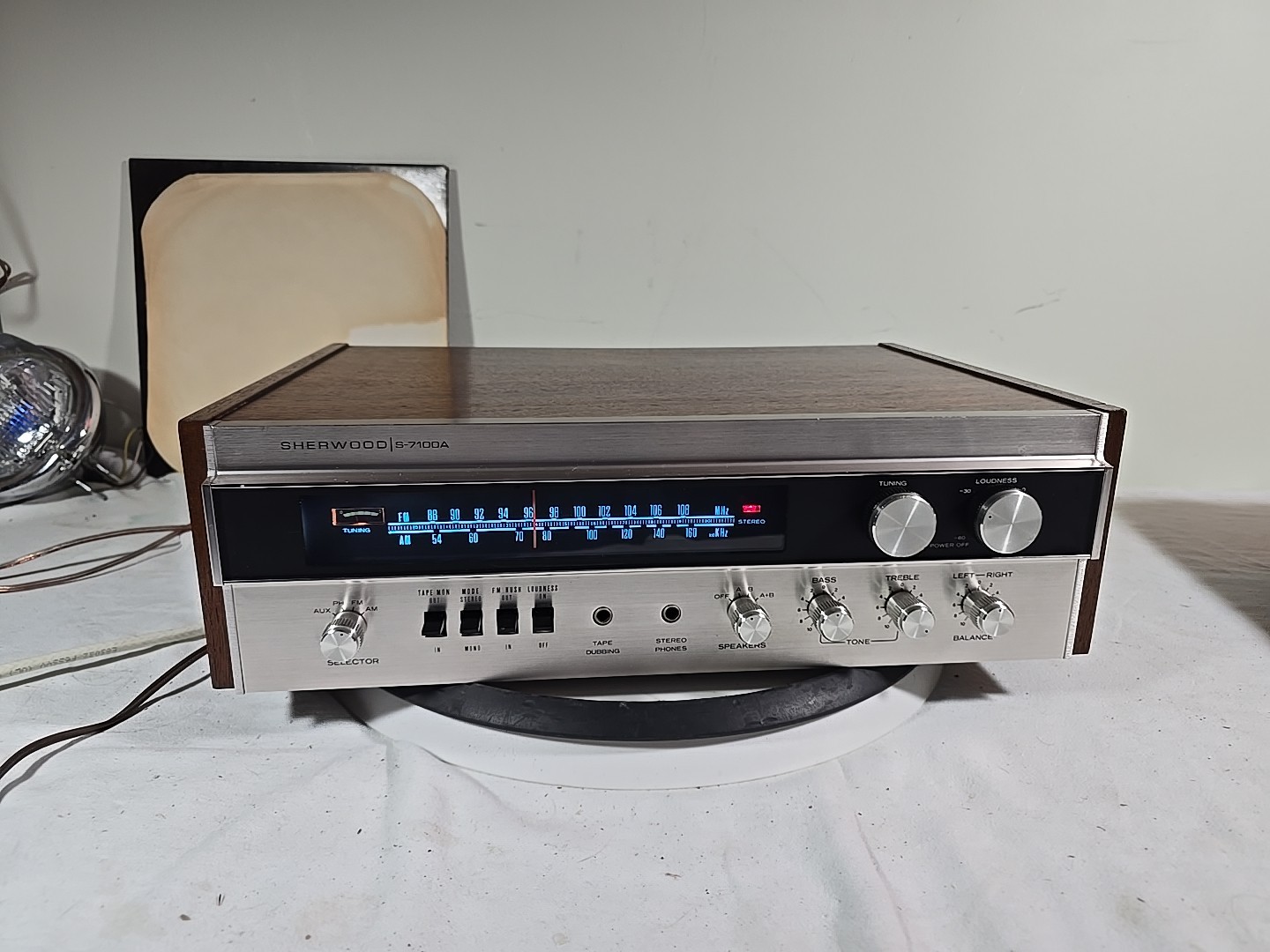
In the mid-1970s, when home audio systems were transitioning from bulky, component-by-component setups to more integrated and user-friendly designs, Sherwood introduced the S-7100A—a sophisticated audio console that captured the spirit of its era. Unlike traditional separates, the S-7100A was a self-contained integrated audio system, combining an AM/FM tuner, dual-cassette transport (in some variants), preamplifier, power amplifier, and often a built-in speaker system or connections for external speakers. It represented a bold step toward convenience without entirely sacrificing audio fidelity, appealing to both casual listeners and aspiring audiophiles who wanted quality sound in a sleek, space-saving package.
Sherwood, a brand with roots tracing back to the 1930s, had built a reputation by the 1970s for producing reliable, well-engineered audio equipment that offered excellent value. The S-7100A was part of their premium console lineup, designed not just for performance but also as a furniture-grade centerpiece for the living room. Housed in a rich walnut-veneered cabinet with a smoked glass front panel and brushed metal accents, the S-7100A was as much a statement of style as it was of sonic capability.
While not as widely documented as separates from brands like Pioneer or Marantz, the S-7100A holds a quiet cult following among vintage audio enthusiasts who appreciate its holistic design, warm analog sound, and the nostalgic charm of 1970s audio engineering.
Technical Specifications
| Feature | Specification |
| Model | Sherwood S-7100A |
| Year Introduced | 1975 |
| Type | Integrated Audio Console |
| Tuner | AM/FM with analog tuning dial and signal meter |
| Amplifier Output | Approximately 25W per channel (RMS, 8Ω) |
| Frequency Response | 20Hz – 20kHz (±2dB) |
| Total Harmonic Distortion | <0.8% at full power |
| Inputs | Auxiliary, Tape In, Phono (MM) |
| Outputs | Tape Out, Speaker Terminals (A/B optional) |
| Cassette Decks | Dual cassette (in most configurations) |
| Speaker System | Often paired with 2-way bookshelf or console speakers (model-dependent) |
| Power Supply | 120V AC, 60Hz |
| Dimensions (approx.) | 18" W × 7" H × 14" D |
| Weight | 35 lbs (unit only, without speakers) |
Note: Exact specs may vary slightly depending on regional versions and speaker configurations.
Sound Characteristics and Performance
The Sherwood S-7100A delivers a sound signature that is quintessentially 1970s analog—warm, smooth, and slightly forgiving. The integrated amplifier, while not as powerful or dynamically agile as high-end separates of the era, provides ample output for medium-sized rooms. Its ~25 watts per channel (measured at 8 ohms) is sufficient to drive efficient bookshelf or console speakers to satisfying listening levels.
The FM tuner is a standout feature, offering solid reception with good selectivity and a sensitive front-end design for its time. The analog tuning dial, complete with a luminous signal strength meter, provides a tactile and visual experience that modern digital tuners can’t replicate. AM reception is respectable, with decent noise filtering for the era.
The dual cassette decks (where equipped) typically feature a basic level of functionality—record/playback, microphone input, and sometimes auto-reverse on the second deck. Tape playback quality is surprisingly good for a console unit, with a clear midrange and acceptable high-frequency extension, though bass can sometimes lack tightness due to the limitations of compact tape mechanisms and head alignment.
One of the S-7100A’s strengths is its cohesive soundstage. Because the entire signal path—from tuner to amplifier—is designed and tuned as a single system, there’s a natural synergy that can be missing in mismatched separates. The result is a balanced, easy-to-listen-to presentation that excels with vocal jazz, classic rock, and acoustic recordings.
Notable Features and Innovations
The S-7100A was engineered with user convenience in mind. Key features include:
- Integrated Design: All core audio functions in one chassis—no need for external receivers, tuners, or tape decks.
- Tone Controls with Loudness Compensation: Bass and treble adjustments with a loudness contour switch to enhance low and high frequencies at lower volumes.
- Dual Cassette Capability: Allows for easy tape dubbing, a highly desirable feature before digital media.
- Phono Input (MM): Direct turntable connectivity without needing a separate preamp.
- A/B Speaker Switching: Some models allow switching between two pairs of speakers.
- Furniture-Quality Cabinet: Designed to blend into home decor, often with real wood veneer and soft-close doors.
While not packed with the cutting-edge tech of high-end separates, the S-7100A’s thoughtful integration made it a practical and elegant solution for the average consumer who wanted good sound without complexity.
Common Issues and Maintenance
Like any vintage electronics from the 1970s, the Sherwood S-7100A requires some attention to remain in good working order:
- Capacitor Aging: Electrolytic capacitors in the power supply and audio circuits degrade over time, leading to hum, low output, or amplifier failure. A full recapping is often recommended for units that have been dormant.
- Tape Head Wear and Alignment: If equipped with cassette decks, heads may be worn or misaligned. Demagnetizing and cleaning are essential; realignment may be needed for optimal playback.
- Tuning Dial Stiffness: The mechanical tuner can become sticky due to dried lubricants. A careful cleaning and relubrication of the tuning mechanism can restore smooth operation.
- Oxidized Controls: Pots and switches develop crackling due to oxidation. Contact cleaner (applied carefully) can often resolve this.
- Speaker Foam Rot: If the system includes original speakers, the foam surrounds on the woofers are likely perished. Re-foaming or reconing is usually necessary.
Despite these potential issues, the S-7100A is generally well-built with accessible service points and a service manual that can still be found online, making it a rewarding restoration project for DIY enthusiasts.
Current Market Value and Collectibility
The Sherwood S-7100A is not a high-value collector’s item like a Marantz 2270 or a Sansui G-3300, but it holds steady appeal among vintage console collectors and those restoring period-accurate living rooms. Complete, working units in good cosmetic condition typically sell for $150–$300, depending on included speakers, tape functionality, and cabinet condition.
Units with matching Sherwood speakers—often 6.5" two-way designs with modest sensitivity—command a premium. Fully restored models with recapped electronics and refurbished tape decks can fetch higher prices, especially if marketed as “plug-and-play” vintage systems.
While not a performance powerhouse by modern standards, the S-7100A’s charm lies in its authentic 1970s aesthetic and all-in-one simplicity. It’s increasingly sought after by retro audio fans, YouTubers, and interior designers looking to add vintage flair to modern spaces.
Conclusion and Legacy
The Sherwood S-7100A may not have the legendary status of some separates from the golden age of hi-fi, but it represents an important chapter in audio history—the rise of the integrated console as a mainstream home entertainment solution. It offered solid performance, elegant design, and remarkable convenience at a time when home audio was becoming more accessible to the average household.
Today, the S-7100A stands as a testament to analog warmth and mid-century design. Whether used as a functional music system, a restoration project, or a stylish retro centerpiece, it continues to deliver a listening experience that’s both nostalgic and genuinely enjoyable. For those who appreciate the craftsmanship and character of 1970s audio, the Sherwood S-7100A is a quietly impressive piece of vintage tech worth rediscovering.
eBay Listings


As an eBay Partner, we earn from qualifying purchases. This helps support our independent vintage technology research.
Related Models
- Sherwood S-7010A (1976)
- Sherwood S-7110A (1978)
- Sherwood S-7225A (1975)
- Sherwood RX-4109 (1976)
- Sherwood AI-1110 (1978)
- Luxman L-530 (1975)
- Luxman R-404 (1975)
- Luxman RV-371 (1975)
- Luxman SQ-38U (1975)
- Luxman T-14 (1972)