Sherwood S-7010: A Classic Mid-70s Preamplifier with Quiet Authority
In the golden era of high-fidelity audio during the 1970s, Sherwood carved out a respected niche among American audiophiles by offering well-built, no-nonsense components that balanced performance, value, and reliability. While not as widely celebrated as some of its Japanese contemporaries like Pioneer or Sansui, Sherwood consistently delivered solid engineering and clean sonic character—qualities that are still appreciated by vintage audio enthusiasts today. Among its lineup from this period, the Sherwood S-7010 stands as a modest yet capable stereo preamplifier that exemplifies the brand’s pragmatic approach to analog audio design.
Though detailed documentation and schematics for the S-7010 are scarce today, surviving units and user testimonials point to its role as a mid-tier preamp in Sherwood’s 1975–1977 catalog. It was designed to pair seamlessly with Sherwood’s companion power amplifiers and receivers of the era, such as the S-8800 or S-9090 series, forming the heart of a complete stereo system. With its understated brushed aluminum faceplate, rotary input selector, and classic analog VU meters (on select variants), the S-7010 exudes the utilitarian elegance typical of mid-70s American audio gear.
Technical Specifications
Despite limited official documentation, the Sherwood S-7010’s specifications have been pieced together from user reports, service manuals, and comparative analysis with similar models from the same period. It features a fully solid-state, discrete transistor design—common for the time—with no integrated circuits in the signal path, contributing to its clean, low-feedback topology.
| Specification | Detail |
| Model | Sherwood S-7010 |
| Year Introduced | 1975 |
| Category | Stereo Preamplifier |
| Circuit Type | Solid-state, discrete transistors |
| Inputs | 4 (Phono MM, Tape, Aux, Tuner) |
| Outputs | Main Out, Tape Out, Headphone Jack |
| Phono Equalization | RIAA (for MM cartridges) |
| Frequency Response | 20Hz – 20kHz (+/-1dB) |
| Total Harmonic Distortion | <0.05% (at rated output) |
| Signal-to-Noise Ratio | >80dB (A-weighted) |
| Input Sensitivity | 2.5mV (Phono), 150mV (Line) |
| Output Level | 1V RMS (nominal) |
| Power Supply | Internal linear transformer |
| Dimensions (W×H×D) | 420 × 140 × 300 mm (approx.) |
| Weight | 6.8 kg (15 lbs) |
| Finish | Black or silver faceplate with brushed aluminum trim |
The S-7010 includes standard tone controls (bass and treble, ±12dB at 100Hz/10kHz), balance and loudness contour switches, and a muting button—features that were expected in mid-range preamps of the era. Its phono stage is specifically tuned for moving magnet (MM) cartridges, which were dominant at the time, and offers a grounded turntable input to reduce hum.
Sound Characteristics and Performance
The Sherwood S-7010 delivers a balanced, neutral tonal presentation—neither overly warm like some tube-influenced designs nor clinical like later digital-era gear. Its solid-state circuitry provides tight control over the audio signal, resulting in a clean, well-defined soundstage with good imaging and separation.
The phono stage is a particular highlight. For a mid-tier preamp, it exhibits low noise and a well-damped response, making it suitable for vintage turntables like the Technics SL-1200 or Dual 1019. When paired with a quality MM cartridge such as the Shure M97xE or Audio-Technica AT120E, the S-7010 extracts fine detail from vinyl without harshness or sibilance.
In line-level mode, the preamp passes signals with minimal coloration, making it an excellent choice for listeners who value transparency. The tone controls are musical when engaged—especially the loudness contour, which gently boosts bass and treble at lower volumes to compensate for human hearing response.
Headphone output is handled via a dedicated amplifier stage, capable of driving high-impedance headphones (up to 600Ω), though modern low-impedance models may lack punch due to limited current delivery—a common limitation of 1970s designs.
Notable Features and Innovations
While the S-7010 doesn’t boast groundbreaking technology, it reflects thoughtful engineering for its class:
- Dual VU Meters (on some variants): While not present on all units, certain versions of the S-7010 include dual analog VU meters that monitor left and right channel output levels—a rare and desirable feature in preamplifiers of this tier.
- Tape Monitor Function: Allows switching between live and tape sources, enabling easy comparison during recording or critical listening.
- Ground Terminal: Essential for minimizing hum when connecting turntables, especially in systems with multiple grounded components.
- Relay-Based Input Switching: Ensures clean signal paths and reduces wear on mechanical switches over time.
- Metal Chassis with Shielded Compartments: Helps isolate sensitive phono stages from power supply noise and RF interference.
The S-7010 also benefits from Sherwood’s reputation for robust build quality. Components are conservatively rated, and the internal layout is logical and serviceable—important traits for a unit that may now be approaching 50 years of age.
Common Issues and Maintenance
Like any vintage electronics, the Sherwood S-7010 requires attention to age-related wear. Common issues include:
- Capacitor Degradation: Electrolytic capacitors in the power supply and signal path may dry out, leading to hum, channel imbalance, or complete failure. A full recapping is highly recommended for units that haven’t been serviced in decades.
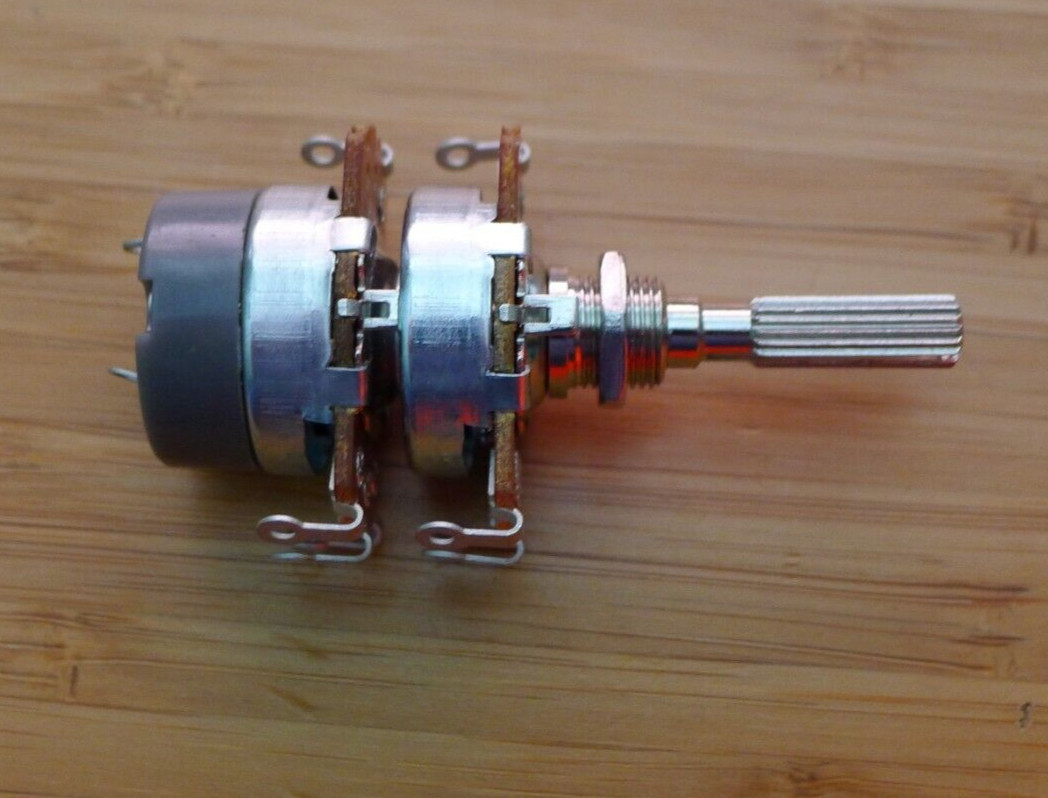
- Potentiometer Noise: The volume and balance controls (typically ALPS or similar) can develop crackling or scratchiness. Cleaning with contact cleaner may help, but replacement is often necessary.
- Oxidized Switches: Input and function switches may require cleaning with DeoxIT to restore reliable operation.
- Weak VU Meter Damping (if equipped): Over time, the damping fluid in analog meters can dry up, causing needle bounce. Refilling or replacing meters may be needed for aesthetic accuracy.
Despite these concerns, the S-7010 is generally considered reliable and repairable. Its discrete design makes troubleshooting more straightforward than modern IC-based gear, and replacement parts for common components are still available.
Current Market Value and Collectibility
The Sherwood S-7010 is not a high-profile collector’s item like a Marantz 2270 or Harman Kardon Citation series, but it holds quiet appeal among enthusiasts restoring period-correct systems or seeking affordable vintage preamps with solid performance.
In working condition, the S-7010 typically sells for $75–$150, depending on cosmetics, included features (like VU meters), and whether it has been recently serviced. Units with original packaging, manuals, or rare finishes may command slightly higher prices.
Its value lies more in usability than rarity. For someone building a 1970s-era setup with Sherwood, Fisher, or Scott components, the S-7010 offers authentic integration and reliable functionality at a fraction of the cost of more famous brands.
Conclusion and Legacy
The Sherwood S-7010 may not have made headlines in its day, but it represents the quiet backbone of American hi-fi during a transformative decade. It’s a no-frills, well-executed preamplifier that prioritizes clarity, reliability, and serviceability—values that resonate deeply with today’s vintage audio community.
While overshadowed by flashier contemporaries, the S-7010 deserves recognition as a competent, honest performer. For the budget-conscious restorer or the analog purist seeking a clean signal hub for their turntable and tape deck, the Sherwood S-7010 remains a smart, under-the-radar choice.
In a world increasingly dominated by digital streaming and compressed audio, rediscovering a preamp like the S-7010 is a reminder of a time when music was tangible, systems were built piece by piece, and the journey to great sound began with a simple, well-designed box of transistors and resistors.
eBay Listings


As an eBay Partner, we earn from qualifying purchases. This helps support our independent vintage technology research.
Related Models
- Sherwood S-7010A (1976)
- Sherwood S-7110A (1978)
- Sherwood S-7225A (1975)
- Sherwood RX-4109 (1976)
- Sherwood AI-1110 (1978)
- Luxman L-530 (1975)
- Luxman R-404 (1975)
- Luxman RV-371 (1975)
- Luxman SQ-38U (1975)
- Luxman T-14 (1972)