Sherwood RX-733: A Forgotten Workhorse of 1970s Analog Audio
In the golden age of high-fidelity audio during the 1970s, brands like Sherwood carved out reputations by delivering solid-performing, affordably priced components that brought quality sound into the homes of everyday music lovers. While not as widely celebrated today as some of its Japanese contemporaries—like Pioneer, Sansui, or Yamaha—the Sherwood RX-733 stands as a quiet testament to American audio engineering of the era. As an integrated amplifier released around 1975, the RX-733 offered a balanced mix of performance, features, and reliability, making it a dependable centerpiece for many modest stereo systems of its time.
Though Sherwood never quite achieved the cult status of some of its peers, the brand was known for building no-nonsense equipment with clean, functional designs and competent audio circuitry. The RX-733 fits squarely within that tradition. It wasn’t designed to win awards or break new ground, but rather to deliver consistent, warm analog sound with enough power to drive popular bookshelf and floor-standing speakers of the 1970s.
Technical Specifications
The Sherwood RX-733 was positioned as a mid-tier integrated amplifier, offering a modest but respectable power output and a straightforward feature set suitable for stereo enthusiasts who valued simplicity and reliability.
| Specification | Detail |
| Model | RX-733 |
| Year Introduced | 1975 |
| Manufacturer | Sherwood Electronics |
| Type | Integrated Amplifier |
| Power Output | 35 watts per channel (RMS, 8Ω) |
| Total Harmonic Distortion | <0.5% (at full power) |
| Frequency Response | 20Hz – 20kHz (+/-1dB) |
| Input Sensitivity | 2.5mV (MM), 150mV (Line) |
| Input Impedance | 47kΩ (Line), 1MΩ (MM) |
| Output Impedance | 8Ω (minimum recommended) |
| Tone Controls | Bass, Treble (±12dB at 100Hz/10kHz) |
| Inputs | 2x Line, 1x Phono (MM) |
| Outputs | Tape Out, Preamp Out |
| Speaker Outputs | Dual binding posts (A/B) |
| Dimensions (W×H×D) | 17" × 5.5" × 13.5" |
| Weight | 22 lbs (10 kg) |
| Power Supply | 120V AC, 60Hz |
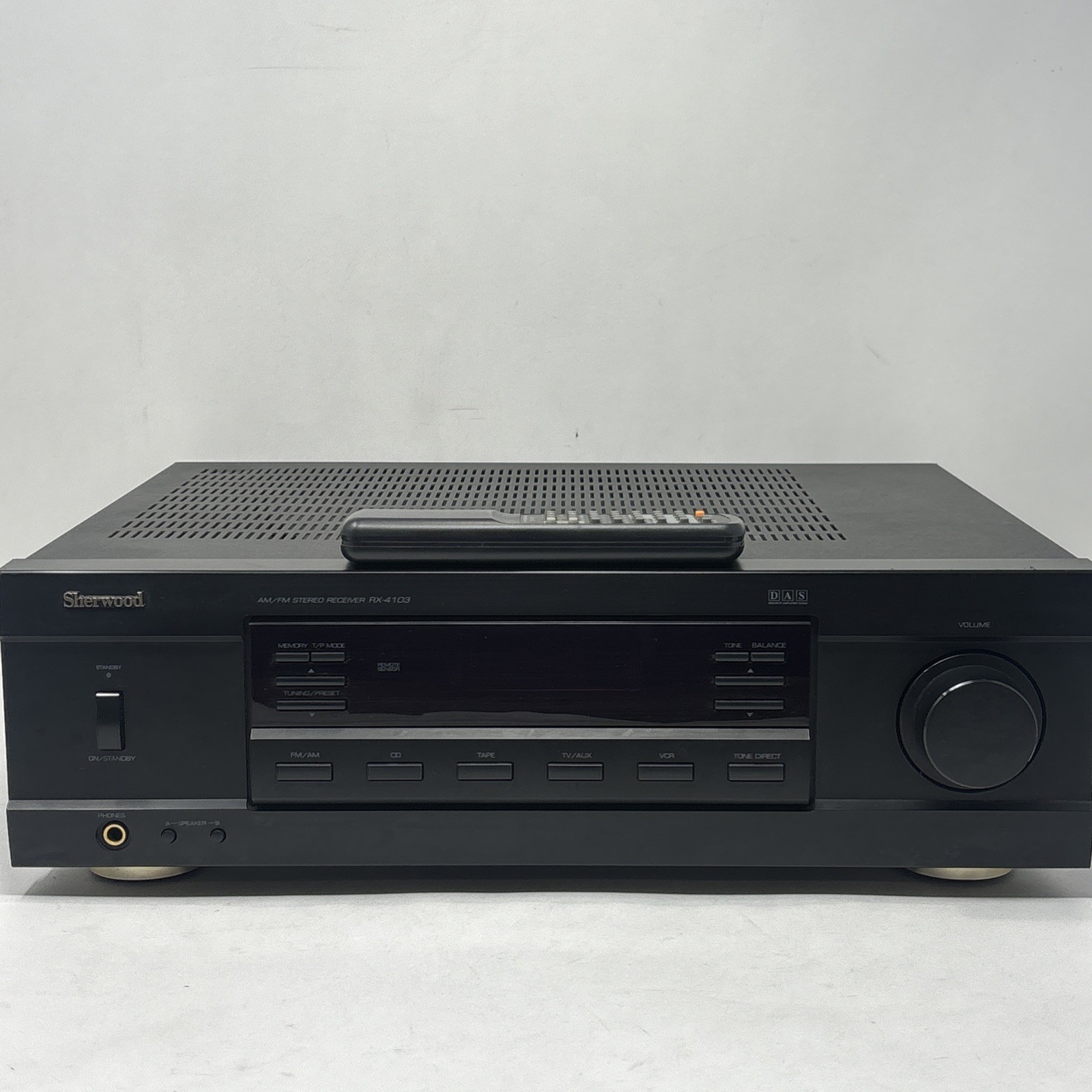
The RX-733 featured a dual-mono preamp design with discrete transistor circuitry—common for the era—and avoided the use of integrated circuits in critical signal paths, which many audiophiles of the time believed contributed to a more natural sound. Its build quality was solid, with a steel chassis, a brushed aluminum front panel, and a classic VU meter display flanking the central power knob. The meters, while primarily decorative, added a touch of visual flair and helped users monitor output levels during playback.
Sound Characteristics and Performance
The Sherwood RX-733 delivers a warm, smooth sound signature typical of mid-1970s American amplifiers. It lacks the ultra-detailed, clinical precision of later high-end Japanese models, but instead offers a musical, forgiving presentation that pairs well with a wide range of acoustic and vocal recordings.
Bass response is firm and well-controlled for a 35-watt amplifier, though it begins to compress with demanding speaker loads or at high volumes. The midrange is where the RX-733 truly shines—vocals are rendered with clarity and presence, and instruments like acoustic guitar and piano retain their natural timbre. High frequencies are rolled off slightly, avoiding harshness but sacrificing some air and sparkle compared to more transparent designs.
This amplifier works best with efficient speakers (88dB or higher sensitivity) and in medium-sized listening rooms. While not ideal for large spaces or bass-heavy modern recordings, it excels at reproducing classic rock, jazz, and classical music with a relaxed, engaging character.
Notable Features and Design
The RX-733’s front panel is minimalist yet functional, with large rotary knobs for volume, balance, bass, and treble, and a row of input selector buttons. The inclusion of both A and B speaker outputs allows for flexible speaker switching—ideal for listeners who wanted to use different pairs in the same room or switch between zones.
One of the more distinctive features is the dual VU meters, which, while not as precise as true peak-reading meters, add a retro aesthetic and give a visual indication of signal dynamics. The amplifier also includes a tape monitor function, allowing users to switch between live input and tape playback—a hallmark of 1970s stereo design.
The rear panel is cleanly laid out, with gold-plated RCA jacks and sturdy binding posts for speaker connections. The phono input is specifically designed for moving magnet (MM) cartridges, requiring a separate preamp or step-up transformer for use with moving coil (MC) cartridges.
Common Issues and Maintenance
Like many vintage amplifiers of its age, the Sherwood RX-733 can benefit from a careful inspection and servicing before regular use. Common issues include:
- Capacitor degradation: Electrolytic capacitors in the power supply and signal path may have dried out over time, leading to hum, reduced performance, or even failure. Replacing these (a process known as recapping) is often recommended.
- Tone control scratchiness: The potentiometers for volume and tone controls can develop noise due to oxidation. Cleaning with contact cleaner may help, but replacement is sometimes necessary.
- Bias drift: If the output transistors are not properly biased, the amplifier may run too hot or produce distorted sound. A technician should check and adjust bias during servicing.
- Dust and corrosion: Decades of storage can lead to dust buildup and oxidation on connectors. Cleaning the chassis, jacks, and controls improves reliability.
Despite these age-related concerns, the RX-733 is generally reliable when maintained. Its discrete transistor design is less prone to catastrophic IC failure than later models, and replacement parts are still available through vintage audio suppliers.
Current Market Value and Collectibility
The Sherwood RX-733 is not a highly sought-after collector’s item, but it holds a quiet appeal among enthusiasts of vintage American audio gear. Units in good working condition typically sell for $75 to $150, depending on cosmetics and functionality. Fully restored models with recapped power supplies and cleaned controls may command slightly higher prices, especially if paired with original accessories or documentation.
While it lacks the exotic appeal of Japanese receivers from the same era, the RX-733 offers excellent value for listeners seeking a no-frills, analog-powered amplifier for a secondary system or a retro-themed setup. Its understated design blends well with vintage turntables and tape decks, making it a solid choice for period-accurate restorations.
Conclusion and Legacy
The Sherwood RX-733 may not have made headlines in its day, nor does it dominate vintage audio forums today. Yet, it represents an important segment of the 1970s audio market: affordable, well-built amplifiers that brought high-fidelity sound to the middle class. It’s a product of its time—solid, honest, and unpretentious.
For the modern audiophile, the RX-733 offers a gateway into the warm, organic sound of analog electronics without breaking the bank. With a little care and maintenance, it remains a capable performer, especially when paired with efficient speakers and analog sources like turntables or cassette decks.
In an era where vintage audio is often defined by rare Japanese receivers and high-powered behemoths, the Sherwood RX-733 reminds us that great sound doesn’t always come from the most famous names. Sometimes, it comes from a modest amplifier that simply did its job—well, quietly, and for decades.
eBay Listings


As an eBay Partner, we earn from qualifying purchases. This helps support our independent vintage technology research.
Related Models
- Sherwood S-7010A (1976)
- Sherwood S-7110A (1978)
- Sherwood S-7225A (1975)
- Sherwood RX-4109 (1976)
- Sherwood AI-1110 (1978)
- Luxman L-530 (1975)
- Luxman R-404 (1975)
- Luxman RV-371 (1975)
- Luxman SQ-38U (1975)
- Luxman T-14 (1972)