Sherwood RX-4103: The Unsung Workhorse of 1970s Hi-Fi
In the golden era of analog audio, when hi-fi systems adorned living rooms and turntables spun vinyl with reverence, brands like Sherwood carved out reputations for delivering solid, no-frills performance at accessible price points. Among their mid-tier offerings of the 1970s, the Sherwood RX-4103 stands as a quiet achiever—an integrated amplifier that may not have made headlines, but earned loyalty through reliability, clean design, and warm, musical sound.
Released in 1976, the RX-4103 arrived during a period of rapid innovation in consumer audio. Transistorized amplifiers were replacing tube designs, and manufacturers were racing to offer higher power ratings, improved signal-to-noise ratios, and sleeker aesthetics. Sherwood, known for its pragmatic engineering and value-focused lineup, positioned the RX-4103 as a dependable centerpiece for modest to mid-range stereo systems. While it never reached the cult status of contemporaries like the Pioneer SX series or the Yamaha B-100, the RX-4103 has quietly gained appreciation among vintage audio collectors who value consistency and sonic warmth over flash.
Technical Specifications
The Sherwood RX-4103 is an all-transistor, dual-channel integrated amplifier, combining a preamplifier and power amplifier in one chassis. It was designed to pair seamlessly with turntables, AM/FM tuners, and early cassette decks—common components of the era’s stereo racks.
| Specification | Detail |
| Model | RX-4103 |
| Year Introduced | 1976 |
| Manufacturer | Sherwood Electronics |
| Type | Solid-state integrated amplifier |
| Power Output | 35 watts per channel (RMS, 8Ω) |
| Total Harmonic Distortion | <0.5% (at full power) |
| Frequency Response | 20Hz – 20kHz (+/-1dB) |
| Input Sensitivity | 2.5mV (phono), 150mV (line) |
| Input Impedance | 47kΩ (line), 47kΩ with 100pF (phono) |
| Output Impedance | 8Ω minimum load |
| Signal-to-Noise Ratio | >70dB (A-weighted, line input) |
| Tone Controls | Bass, Treble (±12dB at 100Hz/10kHz) |
| Inputs | 2x Line, 1x Phono (MM), 1x Tape In |
| Outputs | 1x Tape Out, Speaker A/B |
| Power Supply | Linear transformer, dual rectifiers |
| Dimensions (W×H×D) | 17" × 5.5" × 13" (432 × 140 × 330 mm) |
| Weight | 22 lbs (10 kg) |
| Finish | Black or woodgrain vinyl laminate |
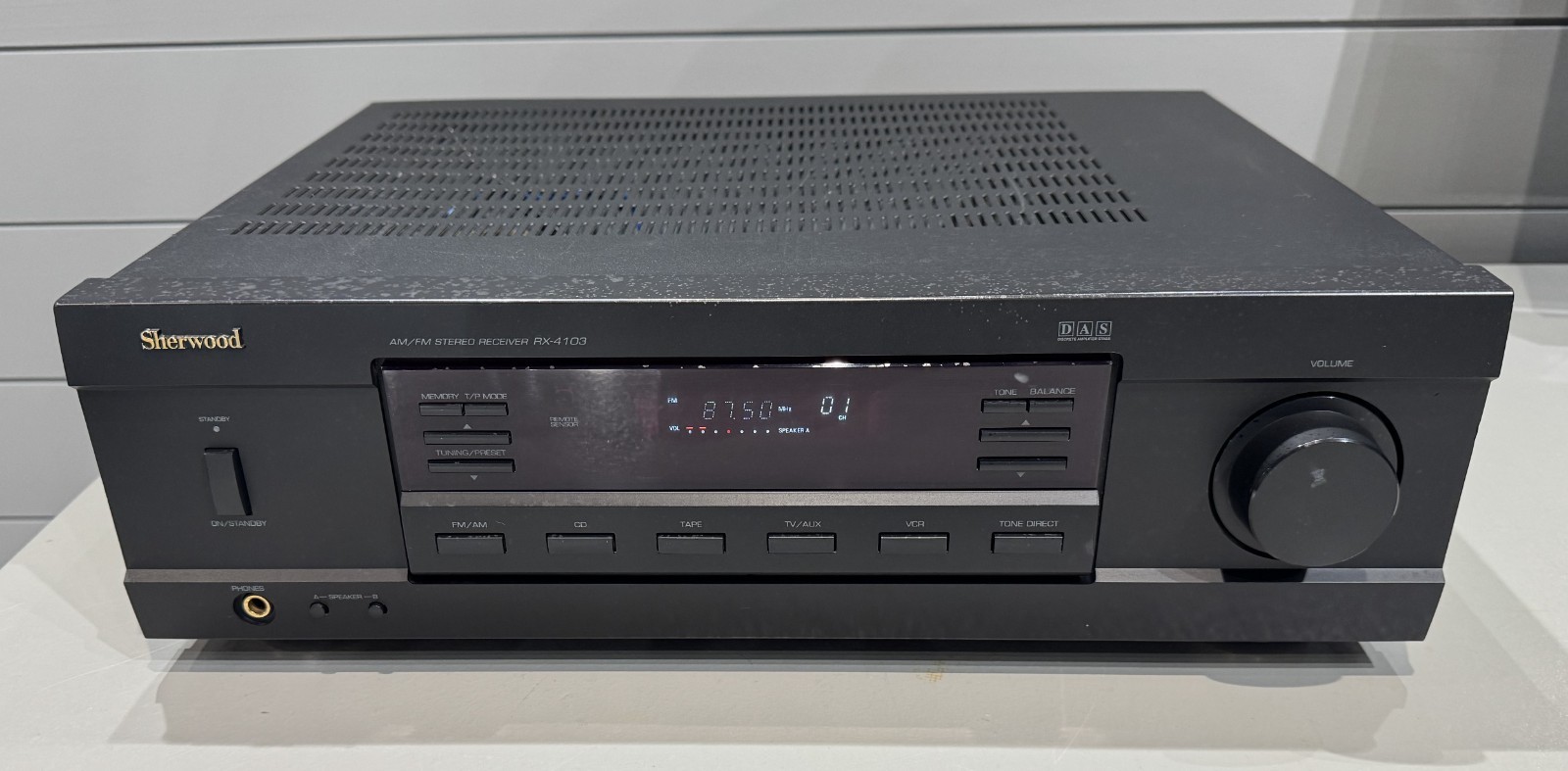
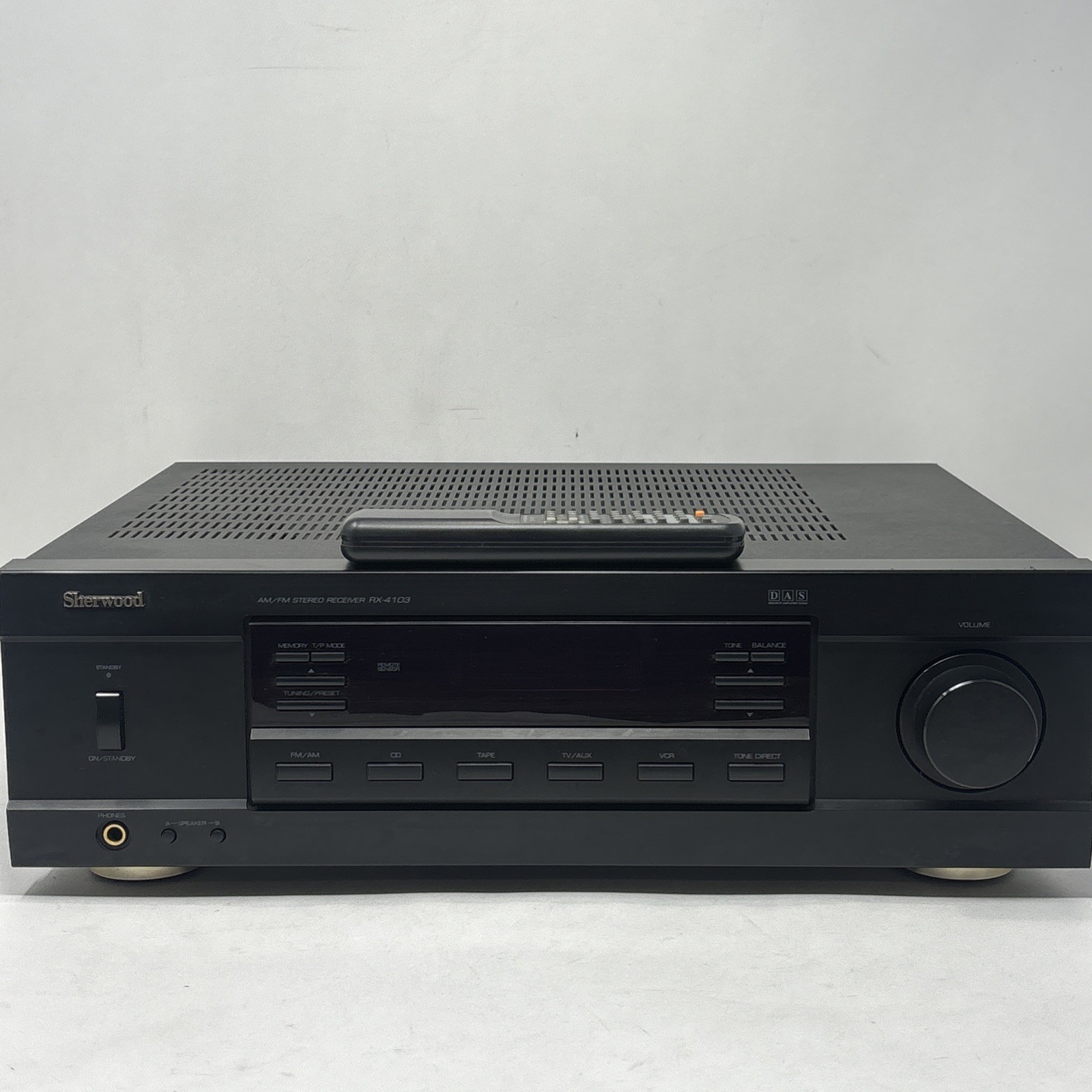
The RX-4103 features a dual-level input selector (Normal and Boost), useful for driving lower-output sources, and includes a convenient tape monitoring loop. Its front panel is minimalist—featuring a large central volume knob, source selector, and tone controls flanked by balance and loudness buttons. The rear panel is well-organized, with gold-plated RCA jacks and push-button speaker terminals, a thoughtful touch for the time.
Sound Characteristics and Performance
The Sherwood RX-4103 delivers a sound signature typical of well-designed mid-1970s solid-state amplifiers: clean, balanced, and slightly warm. It lacks the aggressive brightness of some later transistor amps, instead offering a smooth midrange that complements vocals and acoustic instruments beautifully. Bass response is tight and controlled, though not particularly deep or punchy by modern standards—perfect for bookshelf speakers of the era like the AR-3a or Advent 300.
With a rated output of 35 watts per channel into 8 ohms, the RX-4103 is best suited for efficient speakers (87dB+ sensitivity). It won’t drive demanding floorstanders to concert levels, but in a medium-sized room with well-matched speakers, it provides ample dynamics and clarity. The phono stage, designed for moving magnet (MM) cartridges, is quiet and musical, with a well-implemented RIAA equalization curve—making it a great choice for vinyl lovers building a vintage turntable setup.
Notable Features and Innovations
While not groundbreaking, the RX-4103 includes several thoughtful features that reflect Sherwood’s user-centric design philosophy:
- Dual Speaker Outputs (A/B): Allows connection of two pairs of speakers, switchable from the front panel—ideal for multi-room listening or A/B comparisons.
- Tape Monitor Function: Lets users toggle between live input and recorded tape output, essential for cassette dubbing.
- Loudness Compensation: Engages bass and treble boost at low volumes to counteract human hearing limitations.
- Boost Input Mode: Increases gain for weak sources, a handy feature before preamp buffers became standard.
- Sturdy Build Quality: The RX-4103 features a heavy-gauge steel chassis, quality potentiometers, and a large toroidal-style transformer, contributing to long-term reliability.
Though lacking advanced protection circuits or discrete output stages found in higher-end models, the RX-4103’s simplicity enhances its longevity—fewer components mean fewer points of failure.
Common Issues and Maintenance
Like any 45-year-old electronics, the Sherwood RX-4103 benefits from careful inspection and preventive maintenance:
- Capacitor Aging: Electrolytic capacitors in the power supply and signal path may have dried out, leading to hum, channel imbalance, or reduced performance. Replacing these (recapping) is often the first step in restoration.
- Dirty Controls: The volume and tone pots can develop crackles or dropouts. Cleaning with contact cleaner (e.g., DeoxIT) usually resolves this; replacement is recommended if wear is severe.
- Bias Drift: Output transistors may drift out of spec, causing overheating or distortion. A technician should check and adjust bias during servicing.
- Rubber Components: If the unit includes a rubber belt (unlikely in this model), it should be inspected, though the RX-4103 has no moving parts beyond switches.
With proper care, the RX-4103 can operate reliably for decades. Its straightforward circuitry makes it a favorite among DIY audio restorers.
Current Market Value and Collectibility
The Sherwood RX-4103 is not a high-value collector’s item, but it holds steady appeal among budget-conscious vintage audio enthusiasts. As of 2024:
- Working Condition: $75–$125 USD
- Cosmetically Flawed or Non-Working: $30–$60
- Fully Restored with Recapped PSU: $150–$180
Its value lies in functionality and charm, not rarity. It’s often found on eBay, thrift stores, or estate sales—frequently overlooked in favor of flashier brands. However, those who give it a second look are often rewarded with a capable, character-rich amplifier that brings vintage music to life.
Conclusion and Legacy
The Sherwood RX-4103 may not have won awards or graced the covers of hi-fi magazines, but it represents the heart of 1970s audio: accessible, dependable, and musically satisfying. In an age when high fidelity was becoming democratized, Sherwood delivered a product that brought quality sound to everyday listeners.
Today, the RX-4103 serves as an excellent entry point into vintage audio. It pairs beautifully with classic turntables like the Dual 1218 or Technics SL-1200, and its warm, analog character enhances the listening experience in a way modern digital gear often lacks. For the restorer, it’s a rewarding project. For the casual listener, it’s a nostalgic centerpiece.
While Sherwood may not have achieved the legendary status of some Japanese contemporaries, the RX-4103 stands as a testament to the brand’s commitment to value and performance. It’s not flashy—but sometimes, the quiet ones are the most rewarding to rediscover.
eBay Listings


As an eBay Partner, we earn from qualifying purchases. This helps support our independent vintage technology research.
Related Models
- Sherwood S-7010A (1976)
- Sherwood S-7110A (1978)
- Sherwood S-7225A (1975)
- Sherwood RX-4109 (1976)
- Sherwood AI-1110 (1978)
- Luxman L-530 (1975)
- Luxman R-404 (1975)
- Luxman RV-371 (1975)
- Luxman SQ-38U (1975)
- Luxman T-14 (1972)