Sherwood RA-1240R: A Solid Performer from the 1970s Analog Era
In the mid-1970s, the high-fidelity audio market was booming. Consumers were increasingly investing in home stereo systems, and manufacturers like Sherwood were stepping up to meet the demand for affordable yet capable components. The Sherwood RA-1240R, introduced around 1975, stands as a representative of this golden era—a time when analog warmth, mechanical reliability, and straightforward functionality defined the audiophile experience.
While not as widely celebrated as contemporaries from Marantz, Pioneer, or Sansui, the Sherwood RA-1240R carved out a quiet reputation among budget-conscious enthusiasts who valued clean power, solid construction, and a no-frills approach to amplification. As an integrated amplifier, it combined a preamplifier and power amplifier in a single chassis, making it an ideal centerpiece for modest to mid-range stereo systems of its time.
Sherwood, an American brand with roots dating back to the 1930s, had by the 1970s established itself as a provider of accessible audio equipment. The RA-1240R reflects this philosophy—engineered for reliability and sonic competence without the premium price tag. Though detailed service manuals and schematics are scarce today, surviving units and user reports suggest a design focused on durability and musicality, with a sound signature typical of its era: warm, smooth, and forgiving of lesser recordings.
Technical Specifications
The Sherwood RA-1240R was designed to deliver balanced performance across a range of speaker types and source components. While not a high-powered beast by modern standards, its 40 watts per channel into 8 ohms provided ample headroom for most living room environments and efficient bookshelf or floor-standing speakers of the period.
| Specification | Detail |
| Model | RA-1240R |
| Year Introduced | 1975 |
| Manufacturer | Sherwood |
| Type | Integrated Amplifier |
| Output Power | 40W per channel (8Ω, RMS) |
| Total Harmonic Distortion | <0.1% (1kHz, rated power) |
| Frequency Response | 20Hz – 20kHz (+/-0.5dB) |
| Input Sensitivity | 2.5mV (MM), 150mV (Line) |
| Input Impedance | 47kΩ (Line), 1MΩ (MM) |
| Output Impedance | 8Ω minimum load |
| Tone Controls | Bass, Treble (±12dB at 50Hz/15kHz) |
| Inputs | 3 Line, 1 Phono (MM) |
| Outputs | Tape Out, Preamp Out, Speaker A/B |
| Speaker Impedance | 8Ω (minimum) |
| Power Supply | Linear Transformer, Dual Rail |
| Dimensions (W×H×D) | 17" × 5.5" × 13" |
| Weight | 22 lbs (10 kg) |
| Finish | Black or Woodgrain Vinyl (side panels) |
The amplifier employed discrete transistor circuitry—common for the era—with no integrated circuits in the signal path, contributing to its reputation for clean, analog sound. Its phono stage was designed specifically for moving magnet (MM) cartridges, reflecting the dominance of vinyl in the 1970s. The inclusion of both Tape Out and Preamp Out jacks allowed for system expansion, such as adding a graphic equalizer or external power amplifier.
Sound Characteristics and Performance
The RA-1240R delivers a sound that many vintage audio enthusiasts describe as "musical" and "engaging." With a slightly warm tonal balance, it softens the harshness that can sometimes plague digital recordings or poorly mastered vinyl, making it an excellent match for bright speakers or less-than-ideal listening environments.
Bass response is tight and well-controlled for a 40W amplifier, with enough authority to drive efficient speakers like the AR-3a, KLH Model Eight, or Advents without strain. The midrange is clear and present, ideal for vocal-centric genres like jazz, folk, and classic rock. Treble is smooth, avoiding the sibilance that can plague some transistor amps of the period.
One of the RA-1240R’s strengths is its low noise floor. When properly maintained, the phono stage is quiet, with minimal hum or hiss—impressive for a mid-tier unit. Its channel separation and stereo imaging are respectable, creating a believable soundstage that belies its modest price point.
Notable Features and Innovations
While the RA-1240R doesn’t boast radical innovations, it includes several thoughtful design elements:
- Dual Speaker Outputs (A/B): Allows switching between two pairs of speakers, useful for multi-room setups or comparing speaker performance.
- Tape Monitoring: Enables users to listen to the tape input independently, useful for dubbing or monitoring recordings.
- Solid Build Quality: Heavy steel chassis, quality potentiometers, and a robust power transformer suggest attention to longevity.
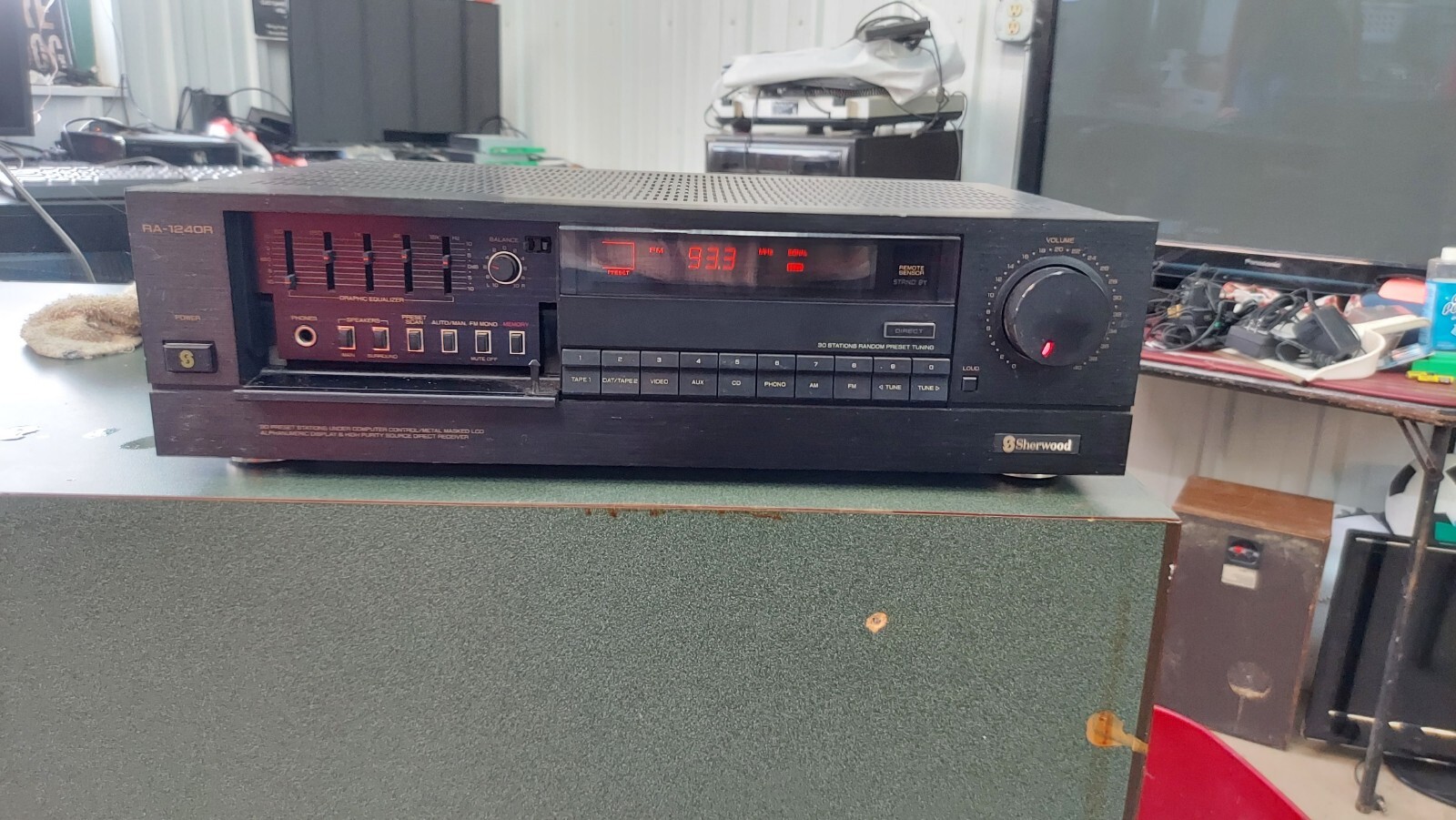
- Simple, Intuitive Layout: Large, clearly labeled knobs and a clean front panel make operation straightforward—no cryptic menus or digital displays here.
The RA-1240R also features a sturdy aluminum faceplate with recessed controls, giving it a professional appearance that belied its budget-friendly positioning. The cooling is passive, relying on convection rather than fans, ensuring silent operation.
Common Issues and Maintenance
Like all vintage electronics, the Sherwood RA-1240R benefits from periodic maintenance. Common issues include:
- Capacitor Aging: Electrolytic capacitors in the power supply and signal path may dry out over time, leading to hum, reduced output, or channel imbalance. Replacing these (a process known as "recapping") is often the first step in restoring vintage gear.
- Dirty Pots and Switches: Volume and tone controls can develop crackling or dropouts. Contact cleaner (e.g., DeoxIT) can help, though severe cases may require potentiometer replacement.
- Bias Drift: In transistor amps, output transistor bias can shift, causing distortion or overheating. A technician should check and adjust bias during servicing.
- Phono Stage Sensitivity: Some users report weak phono gain. This can often be corrected with a higher-output MM cartridge or a dedicated phono preamp.
Despite these potential issues, the RA-1240R is generally considered reliable. Its simple circuitry makes troubleshooting accessible to hobbyists, and replacement parts are still available through vintage audio suppliers.
Current Market Value and Collectibility
The Sherwood RA-1240R is not a high-collectibility item like a Marantz 2270 or Sansui AU-9900, but it holds steady appeal among entry-level vintage audio enthusiasts and DIY restorers. Units in good working condition typically sell for $75 to $150, depending on cosmetics and functionality.
Fully restored models with new capacitors and cleaned controls may fetch slightly more, especially if paired with matching Sherwood components (such as the RF-1240 tuner or TA-1240 tuner). Its value lies more in usability than rarity—this is a "use it, not display it" amplifier.
That said, interest in Sherwood gear has grown modestly in recent years, fueled by online communities and YouTube restoration channels. As more listeners rediscover the charm of 1970s analog sound, the RA-1240R is gaining recognition as a capable, honest performer.
Conclusion and Legacy
The Sherwood RA-1240R may not have made headlines in its day, but it represents the quiet backbone of the 1970s stereo revolution—affordable, dependable, and sonically satisfying. It wasn’t trying to win awards; it was built to bring music into homes with clarity and warmth.
Today, it serves as an excellent entry point into vintage audio. For under $150, a restorer can bring a RA-1240R back to life and enjoy a piece of audio history that still holds its own against modern budget amplifiers. Its straightforward design, solid build, and musical character make it a worthy addition to any analog setup.
In an age of digital precision and streaming convenience, the Sherwood RA-1240R reminds us of a simpler time—when turning a large volume knob, dropping the needle on a vinyl record, and hearing music flow from warm-sounding electronics was all the magic anyone needed.
eBay Listings



As an eBay Partner, we earn from qualifying purchases. This helps support our independent vintage technology research.
Related Models
- Sherwood S-7010A (1976)
- Sherwood S-7110A (1978)
- Sherwood S-7225A (1975)
- Sherwood RX-4109 (1976)
- Sherwood AI-1110 (1978)
- Luxman L-530 (1975)
- Luxman R-404 (1975)
- Luxman RV-371 (1975)
- Luxman SQ-38U (1975)
- Luxman T-14 (1972)