Sherwood AD-260: The Forgotten Analog Audio Enhancer of the Late 1970s
In the golden era of analog audio, when high-fidelity home stereo systems were reaching new heights of performance and accessibility, manufacturers like Sherwood carved out reputations by offering innovative, feature-rich electronics at competitive prices. While Sherwood is best remembered for its receivers and amplifiers of the 1970s and 1980s, the company also ventured into specialized audio processing with devices like the Sherwood AD-260—a compact yet sophisticated analog audio processor designed to refine the listening experience, particularly in tape-based systems.
Though not as widely documented as flagship receivers or turntables of the era, the Sherwood AD-260 holds a unique place in vintage audio history. Marketed as an audio dynamics processor or enhancer, the AD-260 was engineered to address common shortcomings in analog tape playback—such as muffled highs, low-level hiss, and inconsistent dynamic range—by applying real-time signal conditioning. It served as a bridge between basic preamplification and the emerging world of audio optimization, offering audiophiles and casual listeners alike a way to extract greater clarity and presence from their cassette and reel-to-reel sources.
Technical Specifications
The Sherwood AD-260 was a standalone signal processor, typically used between a source component (like a tape deck) and a receiver or amplifier. It operated entirely in the analog domain and featured discrete circuitry designed for minimal signal degradation.
| Specification | Detail |
| Model | AD-260 |
| Manufacturer | Sherwood |
| Year Introduced | 1978 |
| Type | Analog Audio Processor |
| Primary Function | Dynamic range enhancement, noise reduction, tonal shaping |
| Inputs | 2 x RCA (Line-level) |
| Outputs | 2 x RCA (Line-level) |
| Frequency Response | 20Hz – 20kHz (±1dB) |
| Total Harmonic Distortion | <0.05% at 1kHz |
| Signal-to-Noise Ratio | >80dB (A-weighted) |
| Power Supply | Internal AC adapter (12V DC) |
| Dimensions (W×H×D) | 17" × 1.75" × 10" |
| Weight | 5.5 lbs |
| Finish | Black textured vinyl wrap with silver faceplate accents |
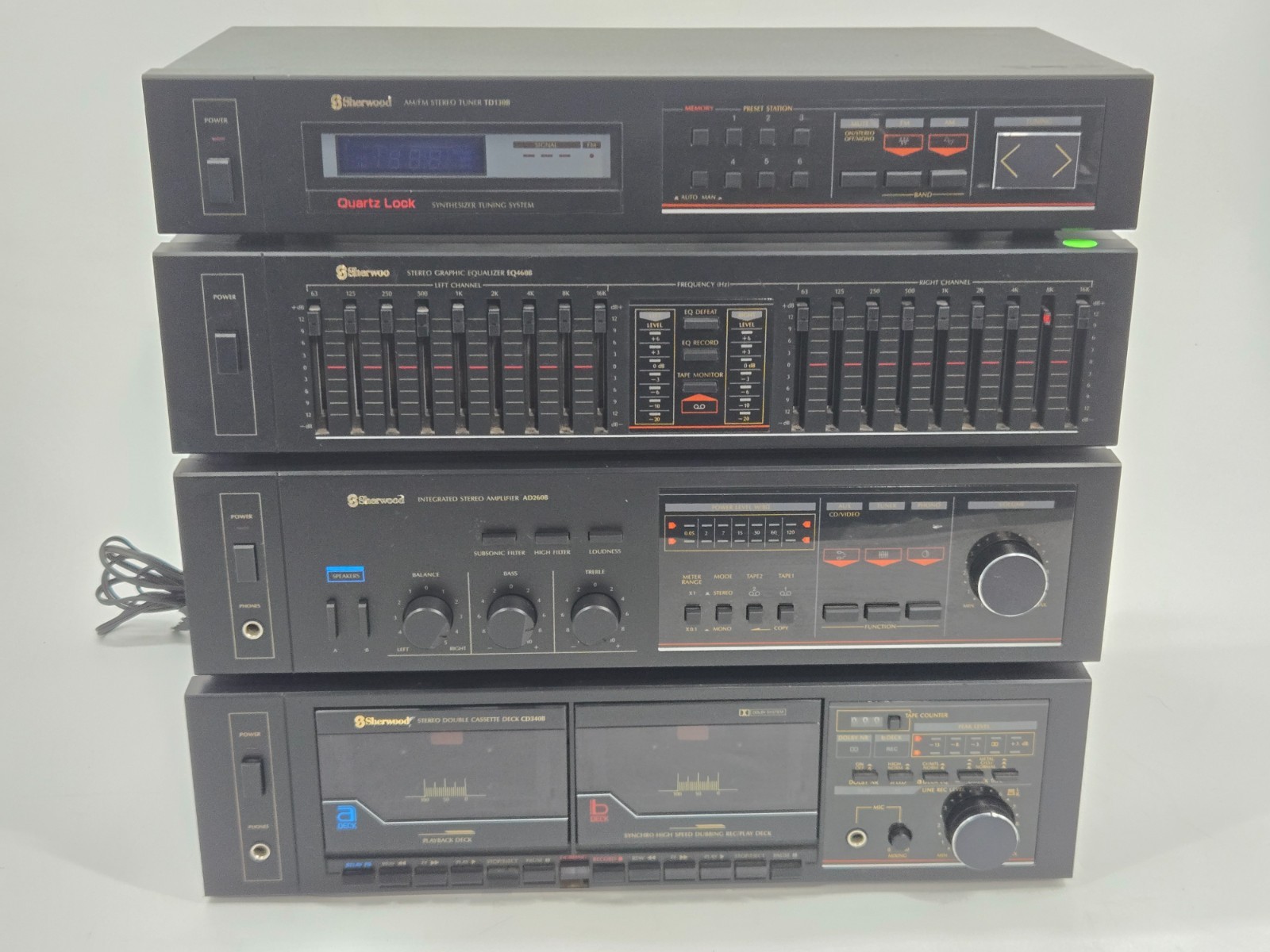
The unit featured a minimalist front panel with a power switch, dual VU meters for input/output level monitoring, and a series of rotary controls governing its core processing functions. Despite its utilitarian appearance, the build quality was consistent with mid-tier Sherwood electronics of the period—solid, reliable, and designed for long-term use.
Sound Characteristics and Performance
The Sherwood AD-260 was not a preamp or equalizer in the traditional sense, but rather a dynamic processor aimed at improving the perceived fidelity of analog recordings. Its primary sonic contributions came through three key functions:
1. Dynamic Enhancement: The AD-260 applied subtle compression and expansion to balance soft and loud passages, making quiet details more audible without overwhelming peaks. This was especially effective with lower-quality cassette recordings, where dynamic range was often compromised.
2. High-Frequency Restoration: Tape hiss and dullness were common complaints in the cassette era. The AD-260 included a gentle treble boost circuit that targeted the 8–12kHz range, restoring "air" and presence to vocals and acoustic instruments without introducing harshness.
3. Noise Reduction Simulation: While not a true Dolby or dbx system, the AD-260 employed a form of adaptive filtering that reduced background noise during quiet passages. It worked best when paired with tapes recorded at higher levels, where the signal-to-noise ratio was already favorable.
In practice, the AD-260 delivered a noticeable improvement in clarity and punch, particularly when used with mid-grade cassette decks or radio recordings. It didn’t transform poor sources into high-fidelity experiences, but it did make well-recorded tapes sound more vibrant and engaging. Audiophiles who valued natural tonality might have found its processing slightly artificial when overused, but when set conservatively, the enhancements were transparent and musically satisfying.
Notable Features and Innovations
While the Sherwood AD-260 wasn’t a technological marvel like the Dolby units of the time, it offered several thoughtful features for its class:
- Dual VU Meters: These allowed users to monitor signal levels and ensure optimal gain staging, reducing the risk of distortion or underutilization.
- Defeat Switches: Each processing function (bass, treble, dynamics) could be bypassed independently, enabling A/B comparisons and preserving the original signal when desired.
- Low-Noise Circuitry: Sherwood emphasized clean amplification, using shielded internal wiring and regulated power delivery to minimize interference.
- Compact Integration: Designed to fit alongside other components, the AD-260 could easily be added to existing systems without requiring major reconfiguration.
Its most innovative aspect was its holistic approach: rather than focusing on a single problem (like hiss), it addressed multiple aspects of tape playback degradation in one unified package. This made it a practical solution for listeners who wanted better sound without investing in high-end tape decks or complex equalization systems.
Common Issues and Maintenance
As with any vintage electronics from the late 1970s, the Sherwood AD-260 is now over four decades old, and potential buyers should be aware of common age-related issues:
- Capacitor Degradation: Electrolytic capacitors in the power supply and signal path may have dried out, leading to hum, reduced output, or channel imbalance. A full recapping is recommended for units that have been in storage.
- Potentiometer Noise: The rotary controls can develop crackling or scratchiness over time. Cleaning with contact cleaner often helps, but replacement may be necessary for heavily worn units.
- Power Adapter Failure: The original external power supply is a common point of failure. Modern replacements with the correct voltage and polarity are readily available but must be verified before use.
- Dust and Oxidation: Internal dust buildup can affect performance. A careful cleaning of connectors and circuit boards by a qualified technician can restore reliability.
Despite these concerns, the AD-260 is generally robust. Its simple design and lack of microprocessors make it easier to repair than later digital processors. With basic maintenance, a working unit can provide years of service.
Current Market Value and Collectibility
The Sherwood AD-260 is a rare find today. It was never a mass-market product, and few units have survived in working condition. As of 2024, it occasionally appears on eBay, Reverb, or vintage audio forums, typically priced between $75 and $150, depending on condition and included accessories.
Collectibility remains niche. It doesn’t command the attention of vintage receivers or tube gear, but it appeals to:
- Tape enthusiasts restoring cassette-based systems
- Audio tinkerers interested in analog signal processing
- Sherwood collectors completing brand-specific collections
Its value lies more in functionality than nostalgia. For those building period-accurate 1970s setups or seeking analog alternatives to digital upscaling, the AD-260 offers a genuine piece of audio history with practical utility.
Conclusion and Legacy
The Sherwood AD-260 may not be a household name, but it represents an important chapter in the evolution of consumer audio processing. At a time when tape was king and fidelity limitations were a daily reality, devices like the AD-260 empowered listeners to take control of their sound. It wasn’t a magic box, but a thoughtful tool—engineered to extract the best from imperfect sources using the analog technology of its day.
Today, the AD-260 stands as a quiet testament to Sherwood’s commitment to accessible audio innovation. While overshadowed by more glamorous components, it remains a rewarding discovery for vintage audio explorers. For those willing to restore and integrate it into a classic system, the Sherwood AD-260 delivers not just enhanced sound, but a tangible connection to the analog ingenuity of the late 1970s.
eBay Listings


As an eBay Partner, we earn from qualifying purchases. This helps support our independent vintage technology research.
Related Models
- Sherwood HP-2000 (1978)
- Sherwood S-3000 (1975)
- Sherwood AD-5250 (1978)
- Sherwood AI-2210 (1979)
- Sherwood AX-7R (1978)
- Akai AM-2850 (1975)
- Akai AP-206 (1975)
- Nakamichi BX-1 (1985)
- Acoustic Research research-ar-17 (1978)
- Acoustic Research AR-19 (1994)