Scott LT-112B
A kit tuner that its own maker's advertising treated as the equal of the factory-wired version - and a period reviewer called it one of the finest FM tuners available, kit or no kit.
Overview
Most kit gear means a compromise. You save money, and you give up something in alignment, cosmetics, or both. The Scott LT-112B is the rare kit that Scott itself positioned against its own factory-wired product. It was an FM stereo tuner kit, one of several kit models the company offered alongside amplifiers like the LK-60 and LK-72B. Scott's kit literature made the pitch directly. The same conservatively rated, factory-tested parts went into the kits as into the wired components, and the circuitry was the company's time-tested design, reworked so that a few hours of home assembly would land you at factory performance. The kit instructions went through an unusual pre-testing process. Drafts were hand-colored and handed to a consumer panel of doctors, office workers, students and people who had never built a kit before. They returned the completed units and their notes to the Scott engineering department. Typical figures from those consumer-built units were then used to set the specifications.
That origin explains why the LT-112B has a reputation out of proportion to how much documentation survives. The build itself was deliberately undemanding. The circuit boards arrived prewired and aligned, so the builder's six or seven hours went almost entirely into mechanical assembly and the power-supply and control wiring. On a lot of tuner kits every coil and IF can is your problem. Here the hard part was done at the factory, and you were doing final assembly, not alignment.
Underneath the kit packaging was a serious piece of Scott engineering. The company's literature describes a wide-band design: an IF bandwidth of about 250 kHz, compared against narrow-band tuners running under 100 kHz, paired with a 2½ mHz detector. That is more than twice the bandwidth of many competing tuners. Scott's reasoning, spelled out in the manual, is that wide IF and detector bandwidth translate into low distortion and better stereo performance, and that the wide-band ratio detector yields a more favorable capture ratio. You can take or leave a manufacturer's word on its own design philosophy, but this architecture is why the LT-112B was marketed as a broadcast monitor rather than a budget kit.
Two period publications left the most useful record. Audio (November 1968, p.74) profiled the LT-112B as an FM Stereo Tuner Kit and praised its appearance, noting a gold and charcoal-brown dress panel offset by a subdued dial-glass area with soft-blue numerals, a tuning knob at the upper right, and a dual-calibrated meter facing the user. HiFI/Stereo (September 1967, p.40) dug into the building experience and measured frequency response at +2, −4 dB from 30 to 15,000 Hz. It has a deliberate high-frequency rolloff above 15 kHz to filter out the 19 kHz and 38 kHz multiplex pilot tones, which kept whistle and noise out of tape recordings made off stereo FM. The archive has no independent bench report beyond that, no production figures, and no service literature.
Key Features
Pre-Wired, Pre-Aligned Circuit Boards
The single most important fact about building an LT-112B is that you didn't have to align it. The boards came prewired and aligned from the factory, which put the kit's total build time at approximately six to seven hours. Per HiFI/Stereo (September 1967, p.40), nearly all of that went into mechanical assembly plus power-supply and control wiring. This is the opposite of the traditional kit experience, where the builder is expected to own or borrow a signal generator and sweep the IF strip by hand. Scott's manual warns that no attempt should be made to align the tuner without extensive experience and laboratory equipment, and that a repairman without the right gear can seriously damage the unit. The kit design sidesteps that problem for the original builder entirely.
Wide-Band IF and 2½ mHz Detector
Scott's manual describes the LT-112B's IF bandwidth as about 250 kHz, contrasted with narrow-band tuners at less than 100 kHz, feeding a 2½ mHz detector. The company's stated rationale is that the wider and more linear the detector's bandwidth, the more nearly perfect the extraction of audio from the carrier. A wide-band ratio detector also produces a more favorable capture ratio, the measure of how completely a weaker signal on the same frequency is rejected. The detector stage is a ratio detector rather than a Foster-Seeley discriminator, a choice Scott credits with providing additional limiting.
Output Stage and Multiplex Filtering
The output audio amplifier board carries two channels, each a feedback pair with the FM 75-microsecond de-emphasis network built into the feedback loop. For 100% modulation, the signal arriving from the ratio detector is roughly 150 millivolts. It is reduced to about 40 millivolts through the multiplex section, then brought back up to about 1.2 volts by the audio amplifiers. That is enough to drive most preamps or power amplifiers directly. The output impedance of the complete board is a low 5,000 ohms, which allows long cables. Scott notes that the impedance rises as the level controls are turned down, and that in power amplifiers with shorting-type inputs, slight cross-talk between tuner and phono inputs may appear when the level controls are fully clockwise. On each output sits an M-derived filter with notches at 19 kHz and 38 kHz, acting as a low-pass filter. It is the same filtering that shows up in the measured response as the deliberate rolloff above 15 kHz.
Gold and Charcoal-Brown Panel
Audio (November 1968, p.74) singled out the LT-112B's cosmetics, describing a rich-looking gold and charcoal-brown dress panel offset by a subdued dial-glass area with soft-blue numerals, a tuning knob at the upper right, and a dual-scale calibrated meter. The review's point was that the finished kit did not look home-built. That was exactly the claim Scott's kit literature made when it promised the kit would be the equal of a factory-wired component.
Historical Context
The LT-112B sat within a Scott kit lineup that also included amplifiers like the LK-60 and LK-72B. The model appears alongside Scott receivers, amplifiers, and tuners in period specification sheets, for example the rundown in HiFI/Stereo (October 1966, p.20). It was not a stripped-down loss leader but part of a full catalog of kit and wired components sold side by side.
The archive does not have production dates. No source in the record states a production run for the LT-112B, and the "c. 1966-1969" range that appears in some metadata is an approximation, not a documented fact. The dated evidence points are the period reviews, HiFI/Stereo in September 1967 and Audio in November 1968. They bracket the model's active press coverage but say nothing about when the line began or ended. Treat any specific production window with suspicion.
Collectibility & Value
Market data for the LT-112B is thin and skewed. The four eBay listings captured for this model are all titled "HH SCOTT LT-112B FM Tuner Parts" and all priced identically at $14.95. That reads as a single seller's parts lot rather than four independent data points. The visible market is parts, not working tuners. Anyone shopping for an LT-112B should expect to see far more chassis, panels, and loose boards than complete, functioning units.
The archive has no documented common failure points, no maintenance or repair procedures, and no spare-parts availability information beyond the parts listings themselves. The one owner complaint on record is a 1971 reader letter describing distant stations sounding excessively noisy in stereo while coming in fine in mono. That is the classic weak-signal stereo threshold problem, not a fault unique to this model. Buyers should evaluate any LT-112B on condition and completeness, because no reliable price guide exists.
eBay Listings
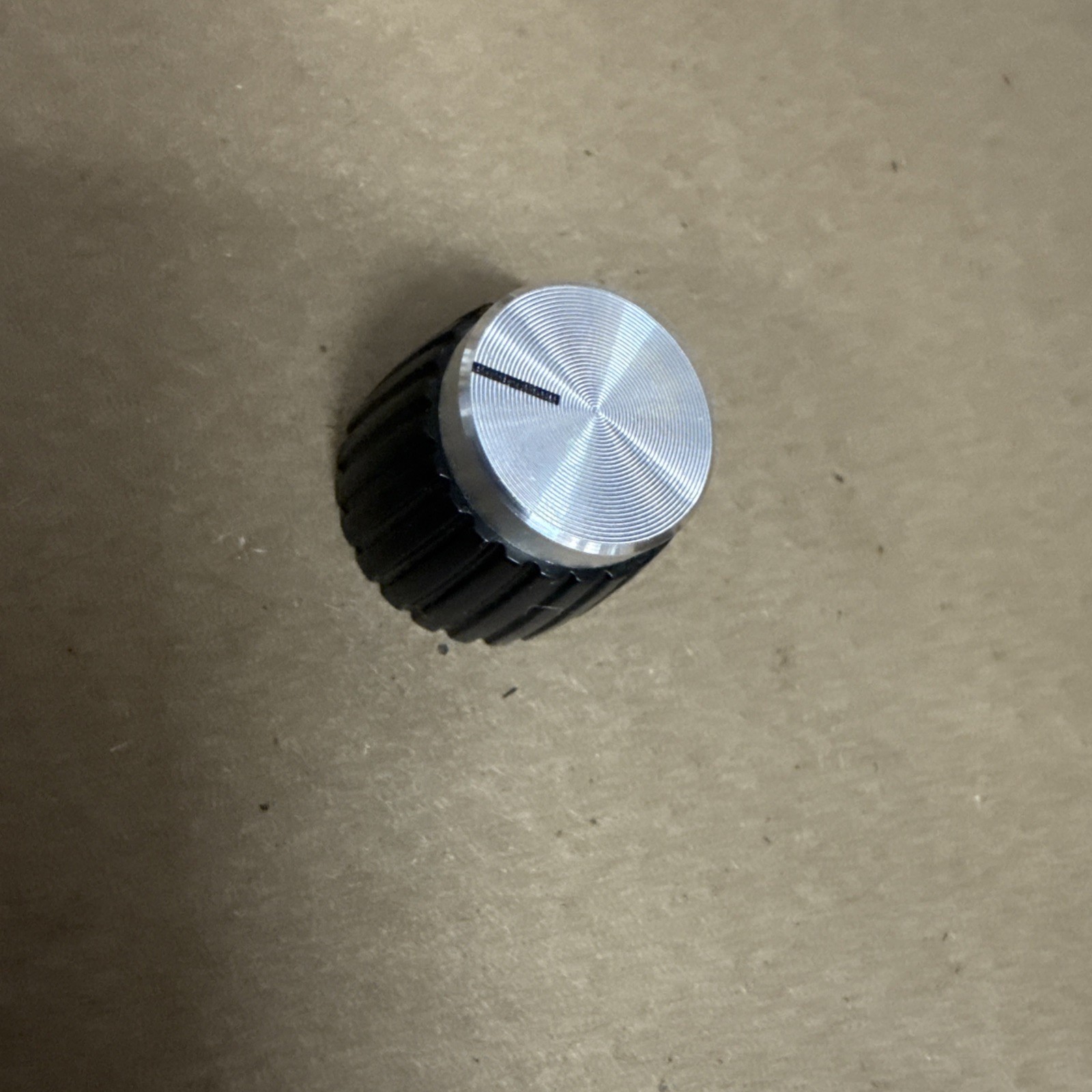


As an eBay Partner, we earn from qualifying purchases. This helps support our independent vintage technology research.
Related Models
- Scott 110-FM
- Scott 311-FM
- Scott 330-AM
- Scott LT-110 (c. 1962–1965)
- Scott T-33S
- Kenwood KR 3200 (1973-1975)
- Kenwood KR 3400 (1977-1979)
- Kenwood KR 4070 (1977-1979)
- Kenwood KR 4200 (1975-1977)
- Marantz 1515 (1976-1978)