Scott 99D (1964)
The Scott 99D is a vintage vacuum tube preamplifier introduced in 1964 by H.H. Scott, Inc., a company renowned for its commitment to high-fidelity audio engineering during the golden era of analog electronics. Though less widely known than some of its contemporaries from Marantz or McIntosh, the Scott 99D has earned a devoted following among audiophiles and vintage audio collectors for its exceptional sound quality, elegant design, and engineering integrity.
Historical Context and Design Philosophy
H.H. Scott, founded by Hermon Hosmer Scott in the late 1940s, quickly established a reputation for combining scientific rigor with musical sensibility. The company was among the first to apply rigorous measurement techniques to audio equipment design, ensuring low distortion, wide frequency response, and high stability. The 99D, released in 1964, represents the culmination of Scott’s tube-era philosophy: transparency, linearity, and reliability.
The 99D was positioned as a high-end preamplifier in Scott’s lineup, designed to pair with equally refined power amplifiers such as the 299 or 210 series. It was part of a broader ecosystem of Scott components that emphasized modular compatibility and sonic coherence. The 99D replaced earlier models like the 98D, offering refinements in circuit layout, power supply filtering, and user interface.
Technical Specifications and Circuit Design
The Scott 99D is a dual-mono, all-tube preamplifier featuring a fully balanced differential input stage followed by an unbalanced output stage. It employs a total of six vacuum tubes: four 12AX7 dual-triode tubes for voltage amplification and two 6X4 rectifiers for the power supply. The use of differential amplification in the input stage contributed to excellent common-mode noise rejection, a rarity in consumer preamplifiers of the era.
Key specifications include:
- Frequency Response: 10 Hz – 100 kHz (±0.5 dB)
- Total Harmonic Distortion: Less than 0.1% at rated output
- Input Sensitivity: 150 mV for rated output
- Output Voltage: 2 V RMS maximum
- Input Impedance: 1 MΩ (adjustable on some versions)
- Output Impedance: 600 Ω
- Channel Separation: Better than 60 dB at 1 kHz
- Signal-to-Noise Ratio: Greater than 80 dB (A-weighted)
- Power Supply: Tube-rectified, multi-stage RC filtering for low ripple
The 99D features three line-level inputs (labeled Phono, Tuner, and Auxiliary), each with individual level controls. The phono stage is specifically designed for moving magnet cartridges and includes switchable equalization for both 78 RPM and 33⅓/45 RPM records, accommodating a wide range of vintage vinyl. The RIAA equalization network is passive and precision-tuned, contributing to a warm yet detailed sound signature.
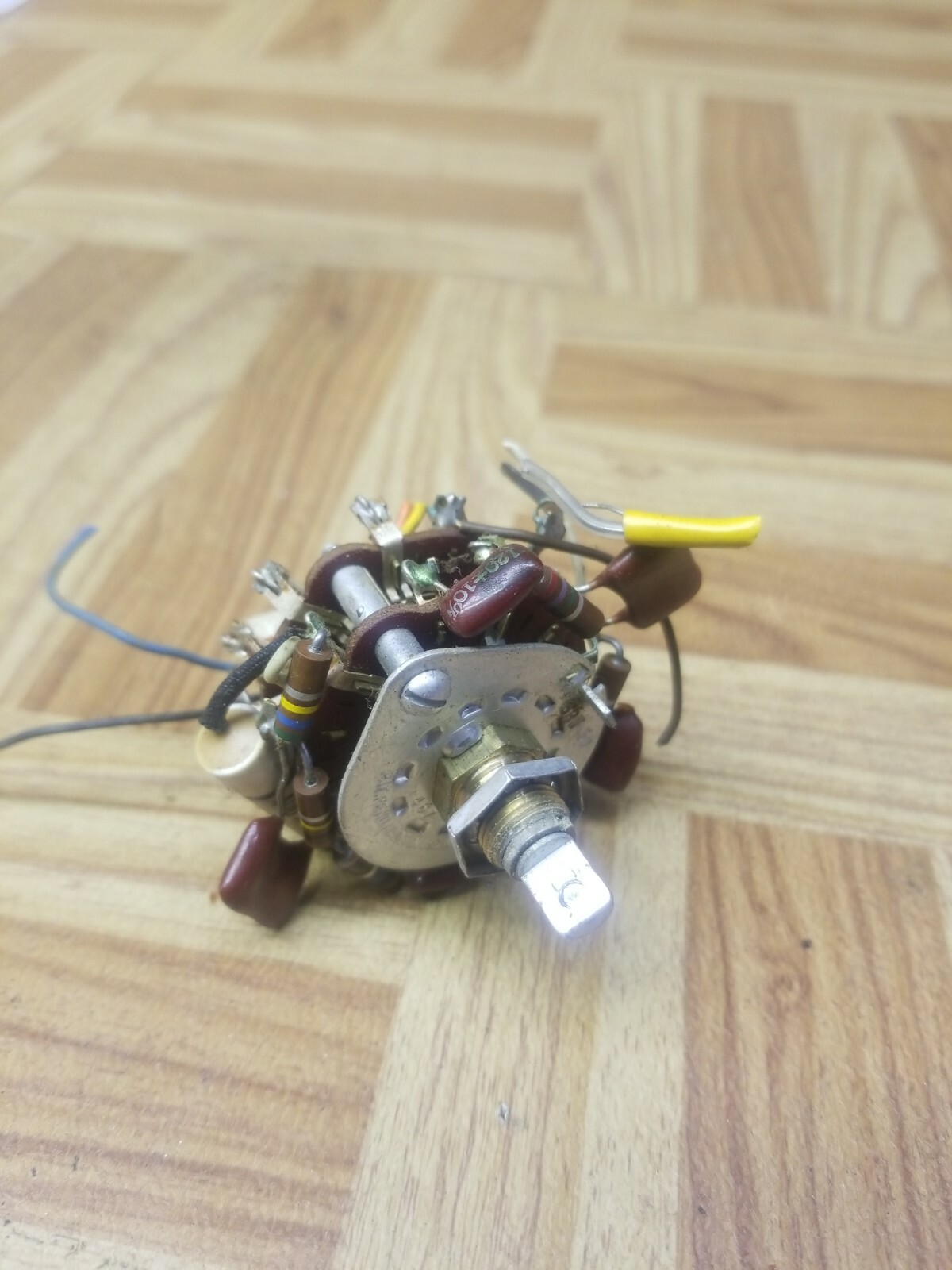
A unique feature of the 99D is its stepped attenuator volume control, which uses a precision rotary switch and resistor ladder network rather than a potentiometer. This design ensures precise channel balance and long-term reliability, as it avoids the wear and channel imbalance common in potentiometers over time.
The front panel includes a large VU meter, which can be switched to monitor either input or output levels. This feature, rare in preamplifiers, reflects Scott’s engineering-oriented ethos and appeals to users who value technical feedback.
Build Quality and Aesthetic
The Scott 99D is housed in a heavy-gauge steel chassis with a brushed aluminum front panel, black enamel side cheeks, and a clear plexiglass top cover that allows a view of the tubes and internal components—a design hallmark of Scott’s premium models. The layout is clean and functional, with large, clearly labeled knobs and switches that convey a sense of precision and durability.
The internal construction is point-to-point wired with high-quality components, including paper-in-oil capacitors, carbon composition resistors, and custom-wound transformers. The power transformer and output transformer are potted to reduce microphonics and hum, contributing to the unit’s low noise floor.
Dimensions: 17.5" W × 7" H × 10" D
Weight: Approximately 22 lbs (10 kg)
Sound Characteristics
The Scott 99D is celebrated for its rich, full-bodied midrange, extended highs, and tight bass control—qualities that make it exceptionally well-suited for jazz, classical, and vocal recordings. Its tube-based design imparts a slight harmonic richness without sacrificing clarity, offering a balance between warmth and accuracy that many modern solid-state preamplifiers struggle to match.
Users often describe the 99D’s sound as “effortless” and “organic,” with a spacious soundstage and excellent instrument separation. The phono stage, in particular, is praised for its ability to extract detail from vinyl without harshness, making it a favorite among analog enthusiasts.
Legacy and Collectibility
By the late 1960s, the market began shifting toward solid-state electronics, and Scott eventually phased out its tube models. The 99D was discontinued around 1967, succeeded by solid-state designs like the 399. As a result, the 99D has become a sought-after collector’s item, especially in working condition with original tubes and minimal wear.
Today, original Scott 99D units in good condition can command prices ranging from $800 to $1,500, depending on provenance, cosmetics, and functionality. Restorations are common, with many technicians replacing aging capacitors and upgrading power supplies while preserving the original circuit topology.
The 99D’s influence can be seen in modern high-end preamplifiers that emphasize balanced design, precision attenuation, and low distortion. While few contemporary manufacturers use tube rectifiers or differential input stages in consumer gear, the 99D remains a benchmark for what analog preamplification can achieve.
Conclusion
The Scott 99D is more than just a vintage preamplifier—it is a testament to a time when audio engineering was both a science and an art. Its meticulous design, superb build quality, and enduring sonic excellence have secured its place in the pantheon of classic American hi-fi. For collectors, restorers, and audiophiles alike, the 99D offers not only exceptional sound but also a tangible connection to the legacy of H.H. Scott and the golden age of vacuum tube audio.
eBay Listings


As an eBay Partner, we earn from qualifying purchases. This helps support our independent vintage technology research.
Related Models
- Scott 200B (1960)
- Scott 210E (1956)
- Scott 222C (1972)
- Scott 233 (1972)
- Scott 260 (1964)
- Luxman L-530 (1975)
- Luxman R-404 (1975)
- Luxman RV-371 (1975)
- Luxman SQ-38U (1975)
- Luxman T-14 (1972)