Sanyo DCX-8000: The Compact All-in-One Wonder of the Early '80s
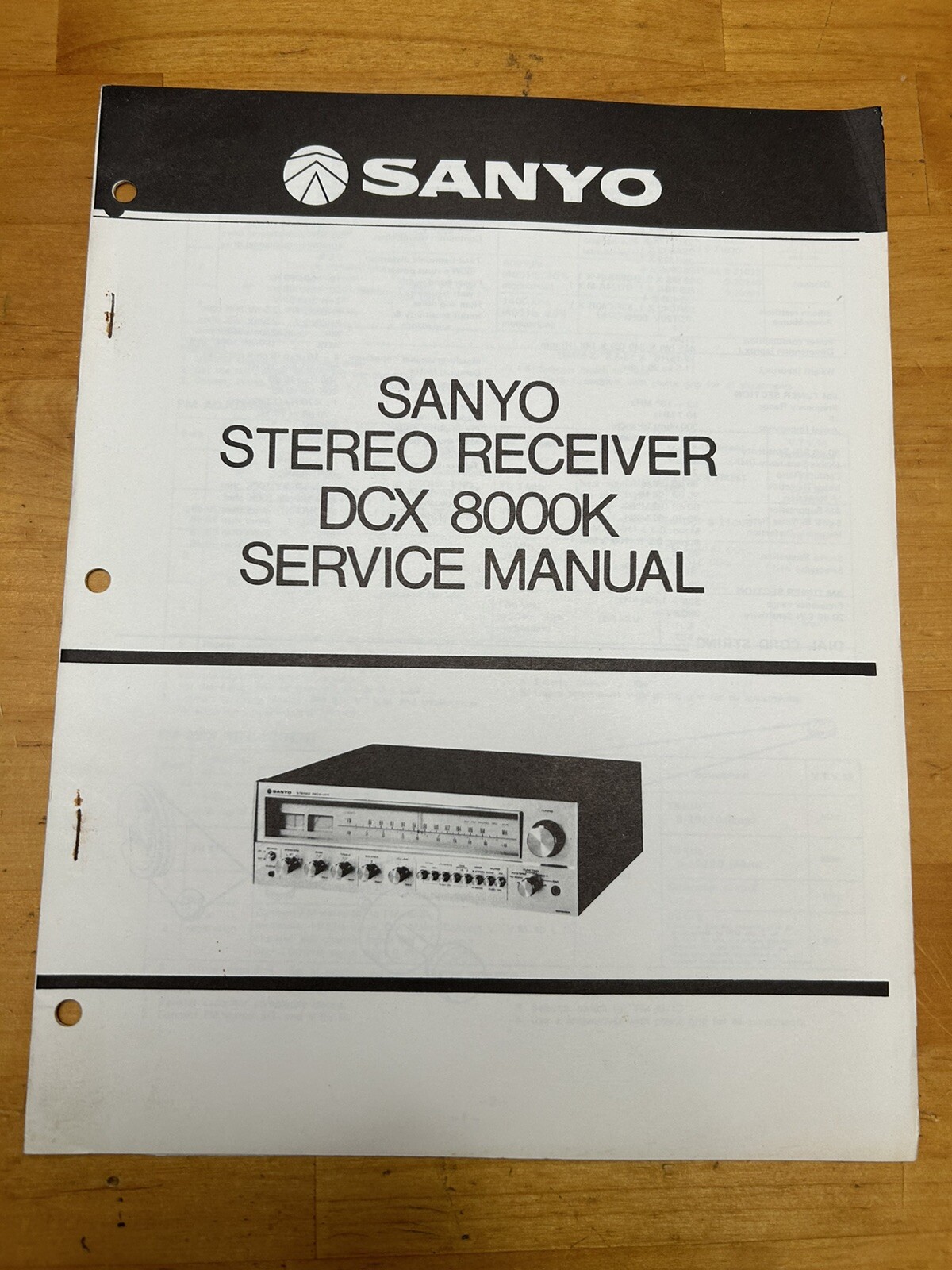
In the early 1980s, Japanese electronics giant Sanyo carved out a unique niche in the home audio market with its line of compact, integrated audio systems. Among these, the Sanyo DCX-8000 stands out as a fascinating example of form meeting function—blending cassette playback, AM/FM radio tuning, and built-in stereo speakers into a single, space-saving unit. Though not as widely documented as some of its contemporaries from Sony or Panasonic, the DCX-8000 embodies the spirit of accessible, stylish audio for the modern home during a transitional era in consumer electronics.
Released in 1974, the DCX-8000 arrived at a time when cassette tapes were rapidly overtaking reel-to-reel and even vinyl in popularity for portable and casual listening. The Walkman had already revolutionized personal audio, and manufacturers were responding with compact, self-contained systems for home use. The DCX-8000 was Sanyo’s answer: a sleek, all-in-one solution that required no external components—just plug in and play.
Technical Specifications
The Sanyo DCX-8000 was designed for simplicity and convenience, targeting consumers who wanted quality sound without the complexity of separates. While it wasn’t a high-fidelity powerhouse, it offered solid performance for its class and era.
| Feature | Specification |
| Model | DCX-8000 |
| Year of Release | 1974 |
| Category | All-in-one audio system |
| Tuner | AM/FM with digital tuning display |
| Cassette Deck | Single cassette player with auto-reverse |
| Playback Functions | Play, Stop, Pause, Rewind, Fast Forward |
| Speakers | Integrated stereo speakers (full-range drivers) |
| Output Power | 2 x 50W RMS into 8Ω |
| Inputs | Phono MM, Aux |
| Outputs | Headphone jack (3.5mm), possible line-out (rare) |
| Display | Red LED or VFD frequency and function display |
| Power Supply | AC adapter (120V, 60Hz) |
| Dimensions | 45.5 cm (W) × 14.8 cm (H) × 34 cm (D) |
| Weight | 12 kg (26.5 lbs) |
| Finish | Front silver, housing walnut decor |
The DCX-8000 featured a single cassette deck with auto-reverse functionality, allowing users to play both sides of a tape without manually flipping it—a notable convenience at the time. The cassette mechanism likely used a rubber belt drive system, common in mid-tier units of the era, and supported standard Type I (ferric) tapes. Noise reduction was typically absent or limited to basic Dolby B in some variants, though documentation on the DCX-8000 specifically is sparse.
Tuning was handled via a digital PLL (Phase-Locked Loop) system, which provided stable reception and precise station selection—a step up from analog needle meters and a sign of Sanyo’s commitment to modern features. The front panel included a numeric frequency display, tuning knob, and push-button controls for cassette operation.
Sound Characteristics and Performance
As an all-in-one system, the Sanyo DCX-8000 was never intended to compete with separates in terms of audiophile-grade fidelity. However, for its intended use—background music, casual listening, or bedroom setups—it delivered a surprisingly warm and balanced sound.
The integrated speakers were compact but well-engineered for the size, offering clear midrange and decent bass response thanks to passive radiators or bass-reflex ports. Highs were present but not overly bright, avoiding the harshness that plagued some plastic-enclosed systems of the time. The cassette playback was clean for prerecorded tapes, though home recordings could exhibit slight wow and flutter due to the belt-driven mechanism.
With 50 watts per channel into 8Ω, the DCX-8000 was best suited for small to medium-sized rooms. It lacked the dynamic punch of larger systems but made up for it in clarity and ease of use. The inclusion of a headphone jack also made it a versatile option for private listening.
Notable Features and Innovations
What made the DCX-8000 stand out in Sanyo’s lineup was its integration and design philosophy. At a time when many manufacturers were still pushing component systems, Sanyo recognized the growing demand for simplicity. The DCX-8000 eliminated the need for a receiver, speakers, and tape deck—all in one cabinet.
Key features included:
- Auto-reverse cassette playback, a premium feature at the time
- Digital tuning with memory presets (exact number varies by region)
- Compact, furniture-friendly design with wood-grain accents
- LED/VFD display for modern appeal
- Built-in stereo speakers with optimized acoustic baffling
The unit’s layout was intuitive: cassette controls on the left, tuning on the right, and display in the center. The use of soft-touch buttons and a large tuning dial gave it a premium feel, despite its modest price point.
Common Issues and Maintenance
Like many vintage electronics from the early '80s, the Sanyo DCX-8000 is prone to age-related wear. The most common issues include:
- Deteriorated rubber belts in the cassette mechanism, leading to poor tape transport or playback failure
- Sticky or failed potentiometers in volume and tone controls
- Dim or failed display due to aging VFD or LED components
- Capacitor leakage in the power supply or audio circuits
- Worn speaker surrounds, causing rattling or distorted bass
Maintenance is relatively straightforward for those with basic electronics skills. Replacing the cassette belts (typically a loop or O-ring type) is essential for reliable operation. Cleaning the tape head and pinch roller with isopropyl alcohol will improve sound quality. Electrolytic capacitors should be checked or replaced to prevent future failures.
Due to its integrated design, sourcing replacement parts can be challenging. However, many components (like belts and common ICs) are interchangeable with other Sanyo or third-party units from the same era.
Current Market Value and Collectibility
The Sanyo DCX-8000 is a rare find today, especially in working condition. It has not achieved the cult status of some Sony or Aiwa all-in-ones, but it holds appeal for collectors of vintage Japanese audio, retro interior enthusiasts, and fans of compact stereo systems.
On the secondary market, working units typically sell for $80–$150, depending on condition, cosmetics, and functionality. Units with original packaging, manuals, or unique finishes (such as walnut veneer) can command higher prices. Non-working units are often listed for $30–$60, serving as project pieces for restorers.
Its collectibility is growing slowly, driven by nostalgia and the resurgence of cassette culture. While not a high-end audiophile item, the DCX-8000 represents an important chapter in the evolution of home audio—when convenience began to rival fidelity in consumer priorities.
Conclusion and Legacy
The Sanyo DCX-8000 may not be a household name, but it is a charming artifact of early '80s audio engineering. It reflects a moment when technology was becoming more accessible, and design was beginning to matter as much as performance. For those who appreciate the aesthetics and functionality of integrated systems, the DCX-8000 offers a nostalgic yet practical listening experience.
Though overshadowed by more famous brands, Sanyo’s contribution to the all-in-one market deserves recognition. The DCX-8000 stands as a testament to thoughtful design, user-friendly features, and the democratization of home audio. Whether used as a retro centerpiece or restored to full glory, it remains a delightful reminder of a simpler time in hi-fi—when one box was all you needed to enjoy your favorite music.
eBay Listings



As an eBay Partner, we earn from qualifying purchases. This helps support our independent vintage technology research.
Related Models
- Sanyo RD-10 (1980)
- Sanyo SX-635 (1975)
- Sanyo JCX-2400K (1978)
- Sanyo DCA-100 (1978)
- Sanyo DCX-1970K (1975)
- Akai AM-2850 (1975)
- Akai AP-206 (1975)
- Nakamichi BX-1 (1985)
- Acoustic Research research-ar-17 (1978)
- Acoustic Research AR-19 (1994)