Sanyo DCA-650: The Quintessential 1970s Compact Audio System
In the mid-1970s, as stereo audio began to move from the domain of dedicated audiophiles into mainstream living rooms, manufacturers like Sanyo responded with innovative, space-saving all-in-one systems. The Sanyo DCA-650, introduced around 1975, stands as a charming example of this era—a compact, self-contained audio solution that brought convenience and modern design to a growing consumer market. While not a high-power receiver or a separates component stack, the DCA-650 captured the spirit of its time: accessible, stylish, and functional.
Though detailed technical documentation and service manuals for the DCA-650 are scarce today, surviving units and user recollections paint a clear picture of its role in the evolution of home audio. It was part of Sanyo’s broader push into the compact stereo market, competing with offerings from Sony, Panasonic, and Sharp. Unlike the towering consoles of the 1960s or the high-end separates from brands like Pioneer and Marantz, the DCA-650 was designed for apartments, dorm rooms, and secondary listening spaces where space and simplicity mattered more than raw performance.
Technical Specifications
The Sanyo DCA-650 is best categorized as a compact all-in-one stereo system, integrating several key components into a single chassis. While exact power output figures are not widely documented, its design suggests modest amplification suited for small rooms and efficient bookshelf speakers.
| Specification | Detail |
| Model | DCA-650 |
| Manufacturer | Sanyo Electric Co., Ltd. |
| Year Introduced | 1975 |
| Category | Compact All-in-One System |
| Tuner | AM/FM with analog dial and tuning knob |
| Audio Source | Built-in cassette deck (single play) |
| Amplifier | Integrated stereo amplifier (estimated 10–15W per channel) |
| Speaker Outputs | Dual binding posts or spring clips for passive speakers |
| Inputs | Auxiliary input (likely RCA, mono or stereo) |
| Outputs | None documented (likely no record out or preamp out) |
| Power Supply | AC mains powered (120V, 60Hz for North American models) |
| Dimensions (approx.) | 14" W × 6" H × 10" D |
| Weight | ~12 lbs (5.4 kg) |
| Finish Options | Woodgrain vinyl wrap, black or silver faceplate accents |
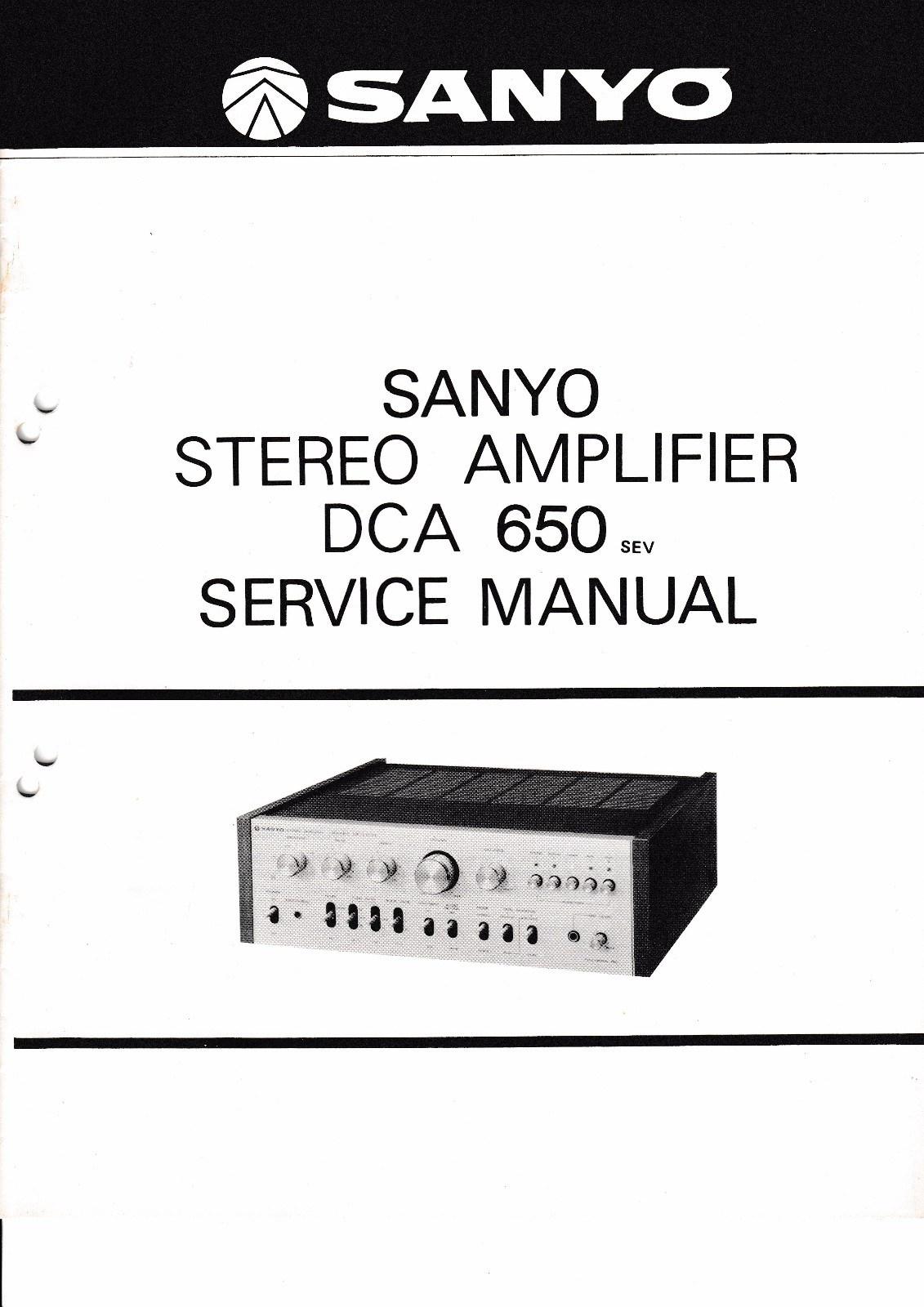
The front panel features a classic 1970s aesthetic: a horizontally aligned layout with a large analog tuning dial on the left, a cassette well in the center, and basic control knobs for volume, tone (bass/treble), balance, and power. The cassette deck supports playback only—no recording capability—indicating its role as a playback companion for pre-recorded tapes, which were gaining popularity at the time.
Sound Characteristics and Performance
The DCA-650 was never intended to rival high-fidelity separates, but it delivered respectable sound for its size and era. The integrated amplifier provides warm, slightly rounded tonality, typical of mid-tier Japanese electronics from the 1970s. Bass response is modest, limited by the small internal power supply and lack of deep filtering, but sufficient when paired with efficient 8-ohm bookshelf speakers.
The FM tuner performs adequately under strong signal conditions, with analog tracking providing a tactile, if imprecise, tuning experience. The AM band is serviceable for news and talk radio but suffers from typical mid-range congestion and limited fidelity. The cassette playback mechanism uses a rubber pinch roller and capstan drive system—common for the time—but lacks Dolby noise reduction or high-bias tape support, limiting dynamic range and increasing tape hiss on lower-quality tapes.
Overall, the sound is clean and listenable, with a mid-forward character that makes vocals and acoustic instruments stand out. It lacks the depth and separation of higher-end systems, but for casual listening to pop, rock, or jazz from the 1970s, the DCA-650 delivers a nostalgic and engaging experience.
Notable Features and Innovations
What made the DCA-650 stand out in its market segment was its integration and user-friendliness. At a time when many households still used mono record players or AM-only radios, the DCA-650 offered:
- Stereo FM reception with visual tuning
- Cassette playback of the increasingly popular music format
- Simple, intuitive controls for non-technical users
- Compact footprint that fit easily on shelves or desks
It also reflects Sanyo’s engineering pragmatism—using cost-effective components without sacrificing basic reliability. The use of a single cassette transport (playback-only) reduced complexity and manufacturing costs, while the inclusion of tone controls allowed users to tailor the sound to their preferences or compensate for less-than-ideal speakers.
Another subtle innovation was the modular internal layout, which made service and repairs more accessible than in fully sealed units. Technicians could remove the top cover to access the tuner, amplifier board, and tape mechanism—important for a consumer product expected to last several years.
Common Issues and Maintenance
Like all vintage electronics from the 1970s, the Sanyo DCA-650 requires some care to remain functional today. Common issues include:
- Deteriorated rubber components: The cassette deck’s pinch roller and drive belt (if present) often harden or crumble after decades. These should be replaced with modern equivalents.
- Capacitor aging: Electrolytic capacitors in the power supply and audio circuits may leak or lose capacitance, leading to hum, low output, or no power. A full recap is recommended for long-term reliability.
- Tuner misalignment: The AM/FM tuner may drift or lose sensitivity over time. Realignment with a signal generator is possible but requires technical skill.
- Dirty controls and switches: Volume, tone, and input knobs can develop crackling due to oxidation. Contact cleaner can help, but potentiometers may need replacement if worn.
- Speaker terminal corrosion: Spring clips or binding posts may corrode, especially if used in humid environments. Cleaning with isopropyl alcohol restores conductivity.
Regular cleaning, gentle use, and proper storage will help preserve the DCA-650’s appearance and function. Avoid playing tapes in the deck without servicing first—stuck rollers or seized motors can damage tapes or the mechanism.
Current Market Value and Collectibility
The Sanyo DCA-650 is not a high-demand collector’s item like a vintage Revox or Nakamichi, but it holds nostalgic and aesthetic appeal for enthusiasts of 1970s design and compact audio systems. Units in working condition with original finish and minimal wear typically sell for $75–$150 on auction and resale sites.
Fully restored models—especially those with recapped power supplies, replaced rubber parts, and cleaned mechanics—can fetch higher prices, particularly when paired with matching Sanyo speakers (if such a set existed). The DCA-650 is also popular in retro-themed setups, where its woodgrain finish and analog dials complement vintage furniture and mid-century decor.
Its value lies more in historical significance and charm than in audio performance. For collectors of Japanese electronics or all-in-one systems, the DCA-650 represents a snapshot of how audio technology became democratized in the 1970s.
Conclusion and Legacy
The Sanyo DCA-650 may not have made audiophile headlines, but it played an important role in bringing stereo sound into everyday homes. As a compact, integrated system, it bridged the gap between basic radios and full separates, offering a taste of modern audio technology at an accessible price.
Today, it serves as a reminder of a time when design, convenience, and affordability shaped the direction of consumer electronics. While it lacks the power and precision of high-end gear, the DCA-650 delivers something equally valuable: warmth, simplicity, and a direct connection to the past.
For vintage audio enthusiasts, restorers, or fans of 1970s culture, the Sanyo DCA-650 is a delightful piece of audio history—one that still sings softly, decades after its debut.
eBay Listings
As an eBay Partner, we earn from qualifying purchases. This helps support our independent vintage technology research.
Related Models
- Sanyo DCX-2500K (1978)
- Sanyo DCA-1400 (1975)
- Sanyo DCA-1600X (1975)
- Sanyo DCA-200 (1975)
- Sanyo DCA-300 (1975)
- Luxman L-530 (1975)
- Luxman R-404 (1975)
- Luxman RV-371 (1975)
- Luxman SQ-38U (1975)
- Luxman T-14 (1972)