Sanyo DCA-1600X: The Forgotten All-in-One Audio Gem
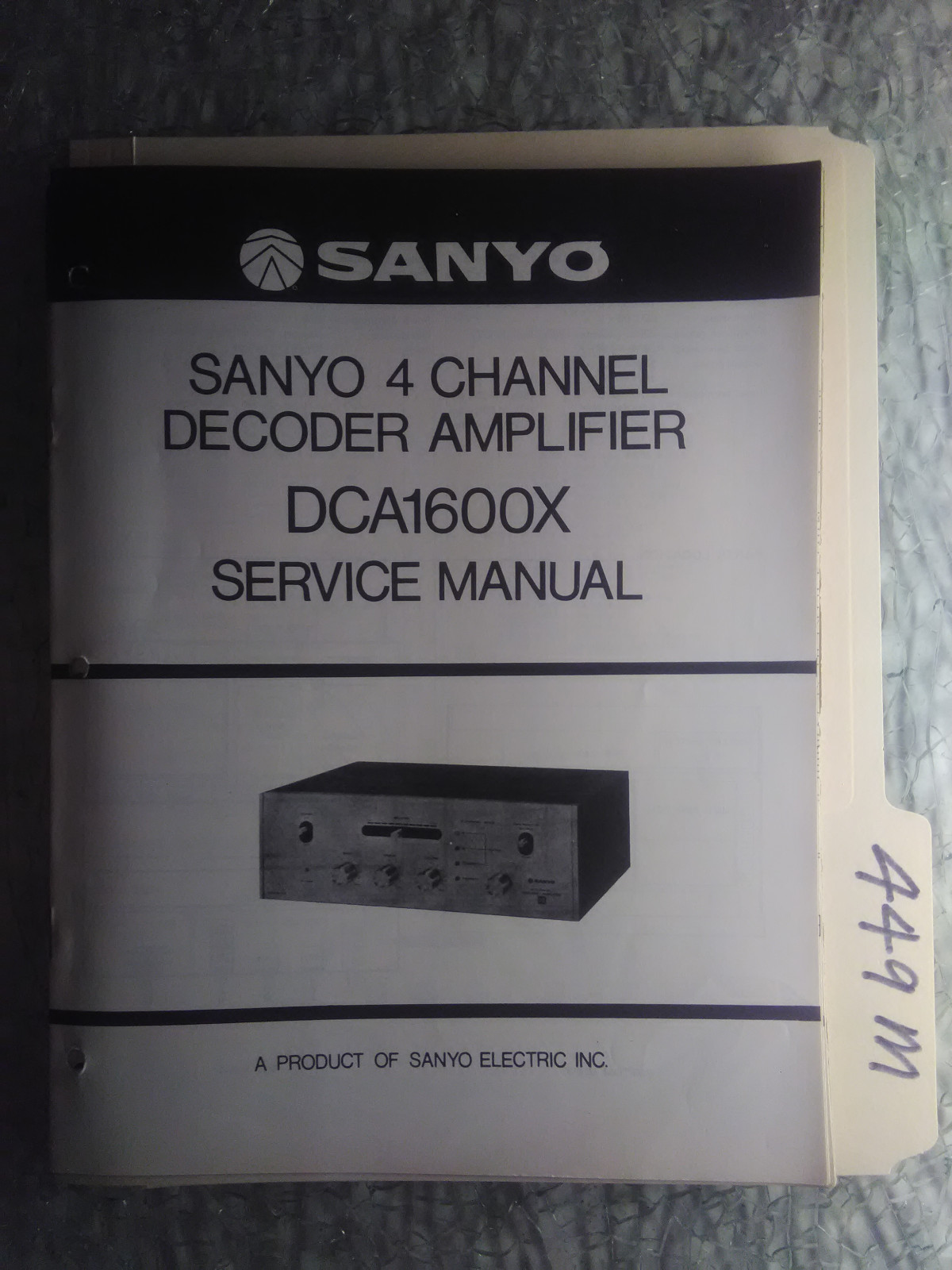
In the mid-1970s, Japanese electronics manufacturers were locked in a race to bring high-fidelity audio into the average household. While brands like Pioneer, Sony, and Yamaha grabbed headlines with high-powered receivers and turntables, Sanyo pursued a different path—compact, integrated audio systems that combined multiple components into sleek, user-friendly packages. One such model, the Sanyo DCA-1600X, stands as a curious and increasingly rare artifact from this era: a self-contained audio system that blended tuner, cassette deck, and amplifier into a single chassis. Though not widely documented, the DCA-1600X represents an important moment in consumer audio history—the dawn of the "all-in-one" concept that would later evolve into modern micro systems.
A Snapshot of the 1970s Audio Landscape
By 1975, cassette technology was gaining serious traction. Once considered a medium for voice recording, cassettes were being embraced for music playback thanks to advancements in tape formulation and Dolby noise reduction. At the same time, AM/FM tuners were standard in any respectable audio setup, and integrated amplifiers were simplifying home stereo systems. Sanyo, already known for its affordable yet reliable electronics, capitalized on this trend by offering compact systems that required minimal setup—perfect for dorm rooms, small apartments, or secondary living spaces.
The DCA-1600X was not a high-end audiophile component, but rather a practical, stylish solution for listeners who wanted decent sound without the complexity of separate components. It arrived during a transitional period when stereo systems were moving from bulky, modular designs toward more compact, integrated units—a shift that would accelerate through the 1980s.
Technical Specifications
While detailed service manuals and schematics for the DCA-1600X are scarce today, surviving units and user reports allow us to piece together its core specifications:
| Feature | Specification |
| Model | Sanyo DCA-1600X |
| Year of Release | 1975 |
| Category | Integrated Audio System |
| Tuner | AM/FM with analog tuning dial |
| Cassette Deck | Single cassette player with auto-reverse |
| Amplifier Output | ~10–15W per channel (estimated, RMS) |
| Speaker Impedance | 8Ω (nominal) |
| Inputs | Auxiliary input (likely 3.5mm or RCA) |
| Outputs | Speaker terminals (spring clip or binding post) |
| Power Supply | AC 120V, 60Hz (North American version) |
| Dimensions (approx.) | 43 cm (W) × 14 cm (H) × 30 cm (D) |
| Weight | ~7.5 kg (16.5 lbs) |
| Finish | Black or woodgrain vinyl laminate |
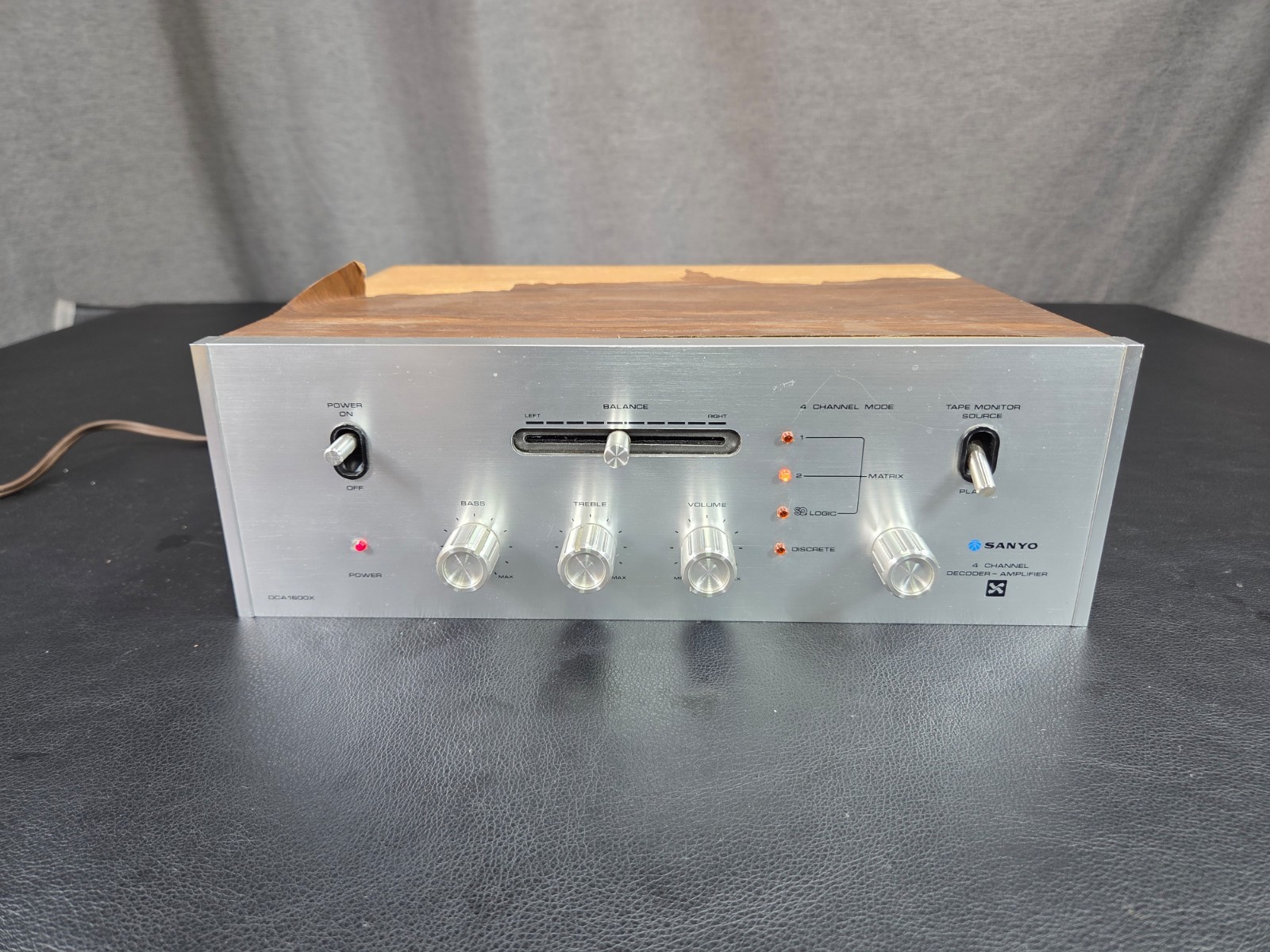
The DCA-1600X featured a symmetrical front panel layout: the cassette deck occupied the lower right, with transport controls including play, stop, rewind, and fast-forward. The left side housed the AM/FM tuner with a large analog dial and tuning meter, while the center section included volume, balance, bass, and treble controls. Some variants may have included a loudness contour switch and input selector.
Sound Characteristics and Performance
By modern standards, the DCA-1600X delivers modest audio performance—but for its time and form factor, it was quite capable. The integrated amplifier provides enough power to drive small bookshelf speakers efficiently, offering a warm, slightly mid-forward sound signature typical of Japanese electronics from the era. Bass response is adequate but not deep, while highs are smooth, if a bit rolled off.
The cassette deck, while not on par with high-end Nakamichi or TEAC models, performs respectably. With basic noise reduction (possibly Dolby B on later production runs), it delivers clear playback suitable for pre-recorded tapes or home dubs. The auto-reverse function was a notable convenience, allowing uninterrupted playback of both sides of a tape—a feature still considered premium in the mid-70s.
FM reception is average, with decent sensitivity in urban areas but susceptible to interference in weaker signal zones. The analog tuning meter provides a satisfying visual feedback, though precise station alignment requires patience.
Overall, the DCA-1600X is best appreciated as a "good enough" system that prioritized convenience and build quality over audiophile-grade fidelity. It was never meant to compete with separates, but rather to offer a complete, cohesive listening experience in one box.
Notable Features and Innovations
What makes the DCA-1600X stand out among its peers is its thoughtful integration. At a time when many all-in-one systems sacrificed build quality for cost savings, Sanyo maintained a relatively robust construction. The chassis is metal-reinforced, and the front panel features tactile knobs and a clear display window.
Key features include:
- Auto-reverse cassette mechanism: A convenience feature that was still emerging in consumer decks.
- Dual functionality: Combines tuner, amplifier, and tape deck without requiring external components.
- Compact footprint: Designed for space-conscious users, fitting easily on shelves or desks.
- User-friendly interface: Intuitive layout with minimal setup required—ideal for non-technical users.
Though it lacks advanced features like direct-drive tuning or quartz digital display (which would appear later), the DCA-1600X exemplifies Sanyo’s philosophy of accessible, reliable technology.
Common Issues and Maintenance
Like any 50-year-old electronics, surviving DCA-1600X units require careful attention. Common issues include:
- Deteriorated rubber parts: The cassette deck’s pinch roller and drive belts often harden or crack. Replacement with modern equivalents is essential for proper tape transport.
- Capacitor aging: Electrolytic capacitors in the power supply and audio circuits may leak or dry out, leading to hum, distortion, or failure to power on.
- Tuner misalignment: Over time, the AM/FM sections can drift out of calibration, reducing reception quality.
- Dirty controls: Potentiometers for volume and tone controls can develop crackling noises due to oxidation. Contact cleaner can help, but replacement may be necessary.
Restoration is feasible for hobbyists with basic soldering skills. Finding original parts is difficult, but generic replacements (such as 8mm belts and standard capacitors) are widely available. Cleaning the tape heads and capstan with isopropyl alcohol is also recommended for optimal cassette performance.
Current Market Value and Collectibility
The Sanyo DCA-1600X is a rare find today. It was never a mass-market blockbuster like the Sony CFS series or the Panasonic RS-8000, and few units have survived in working condition. As of 2024, untested units in fair cosmetic condition occasionally appear on eBay or Japanese auction sites for $50–$100. Fully restored models in excellent condition with clean electronics and responsive mechanics can fetch $150–$250, especially if paired with original speakers or remote controls (though the DCA-1600X likely did not include a remote).
Collectibility is niche but growing. Enthusiasts of vintage Japanese audio, retro design, or compact stereo systems are beginning to appreciate the DCA-1600X as a representative of Sanyo’s mid-tier innovation. Its blend of functionality, aesthetics, and historical context makes it a compelling addition to a curated vintage audio collection.
Conclusion: A Quiet Pioneer of Integration
The Sanyo DCA-1600X may not have made waves in its day, but in hindsight, it represents an important step in the evolution of home audio. It bridged the gap between the modular separates of the early 1970s and the all-in-one systems that would dominate the 1980s. While overshadowed by more famous brands and models, the DCA-1600X deserves recognition for its thoughtful design, solid build, and role in bringing stereo sound to everyday listeners.
Today, it stands as a charming relic—a testament to an era when technology was becoming more accessible, and music could be enjoyed without a rack full of components. For the vintage audio enthusiast, the DCA-1600X isn’t just a machine; it’s a piece of audio history, quietly waiting to be rediscovered.
eBay Listings


As an eBay Partner, we earn from qualifying purchases. This helps support our independent vintage technology research.
Related Models
- Sanyo DCX-2500K (1978)
- Sanyo DCA-1400 (1975)
- Sanyo DCA-200 (1975)
- Sanyo DCA-300 (1975)
- Sanyo DCA-301 (1978)
- Luxman L-530 (1975)
- Luxman R-404 (1975)
- Luxman RV-371 (1975)
- Luxman SQ-38U (1975)
- Luxman T-14 (1972)