Sansui P M7 (1980-1982)
Specifications
| Feature | Specification |
| Year of Production | 1980-1982 |
| Power Specifications | 40W per channel into 8Ω (stereo) |
| Impedance | 4-16Ω |
| Sensitivity | Unknown |
| Key Features | DC power amplifier design, direct-coupled circuitry, dual power supplies, low negative feedback, high slew rate, independent left/right channel construction, gold-plated RCA inputs, walnut side panels |
Historical Significance
The Sansui P M7 wasn't just another amplifier—it was a statement. Born in the golden era of analog high fidelity, this compact powerhouse stood at the heart of Sansui’s elite DC series, a line that defined the brand’s engineering ambition in the early 1980s. Stripped of tone controls and signal manipulation, the P M7 pursued one goal: pure, uncolored amplification. Its design philosophy was radical for its time—direct-coupled circuitry, minimal feedback, and a rigidly symmetrical layout that treated each channel like a standalone amplifier. For audiophiles who believed the best sound was no sound—meaning no added coloration—this was the real deal.
Sound Signature
Transparent. Controlled. Alive. The P M7 delivers a listening experience that feels effortless—crisp highs, a neutral midrange, and bass that’s tight without being lean. There’s no warmth added for comfort, no softening of edges for politeness. Instead, it reveals recordings as they were captured, with a clarity and dynamic punch that still impresses today. Its high slew rate ensures transients snap with precision, while the independent channel design keeps stereo imaging locked in place. This isn’t an amp that flatters—it reveals. And in the right system, that honesty becomes its greatest strength.
Maintenance and Restoration Tips
After four decades, the P M7 demands attention—but rewards it generously. Electrolytic capacitors are the first suspects; they often need replacing to restore stability and prevent DC offset. Speaking of which: always check and recalibrate DC offset during servicing. The protection relay, while robust, can develop contact oxidation—clean it carefully to avoid speaker damage on startup. The original Sansui transistors are famously durable, but if failure occurs, sourcing matched replacements is crucial for maintaining channel balance. A full recapping and bias check can bring a tired unit back to its original poise—and given its build quality, it’s almost always worth the effort.
Collectibility and Market Value
- Market Value: $300-$600 depending on condition and cosmetic appearance
- Collectibility Rating: 7/10
eBay Listings
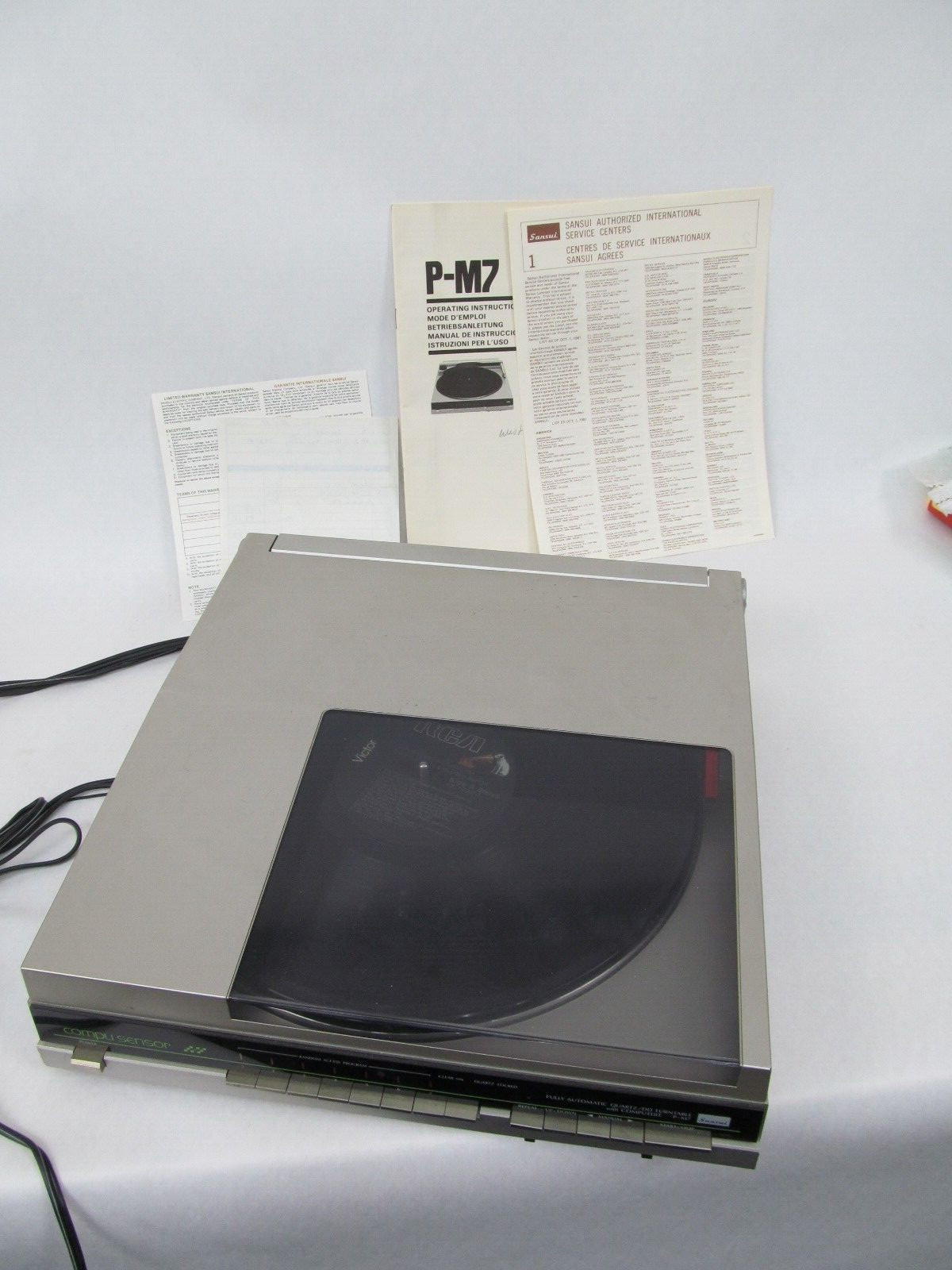


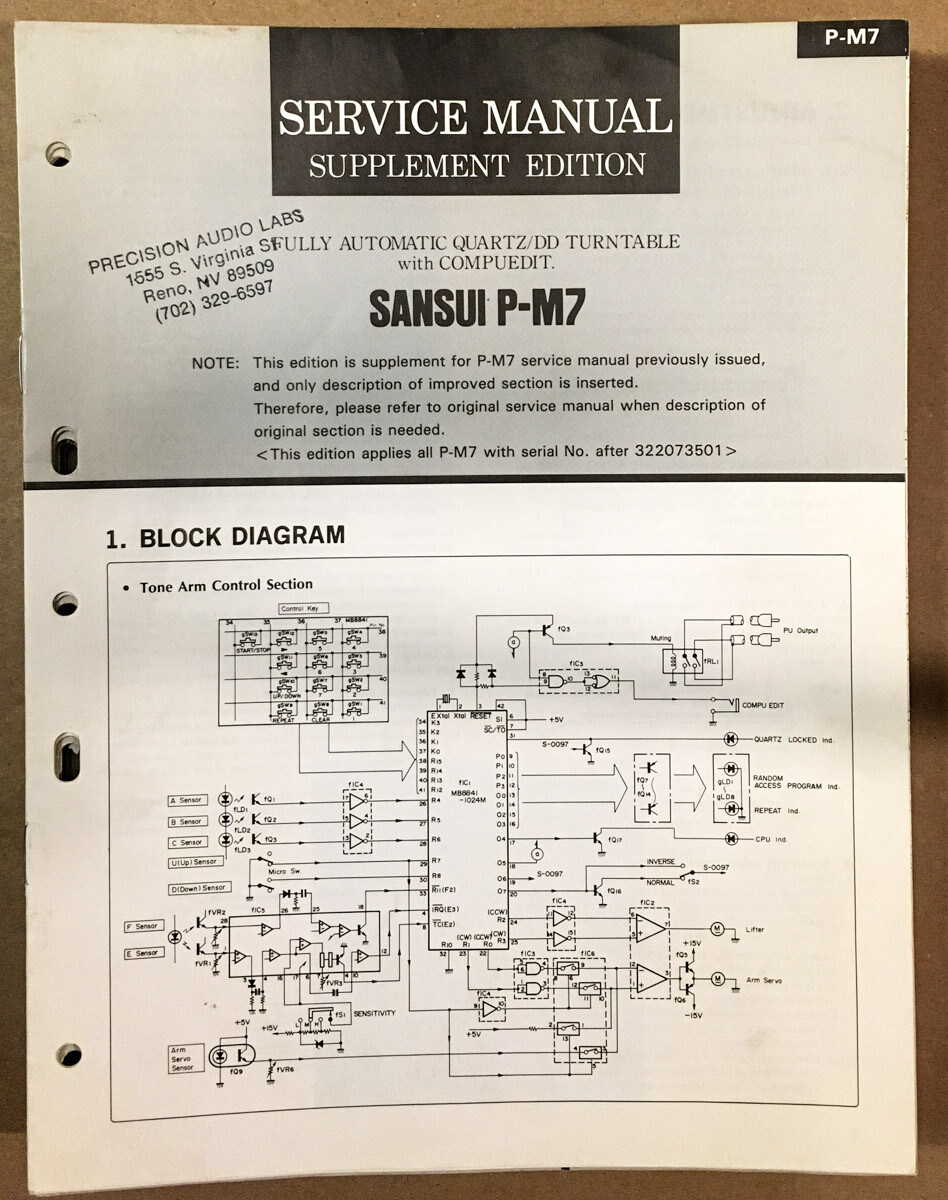
As an eBay Partner, we earn from qualifying purchases. This helps support our independent vintage technology research.
Related Models
- Sansui PM C100 (Unknown)
- Sansui 6060 (1975-1977)
- Sansui 551 (1973-1975)
- Sansui AU 555 (1968-1971)
- Sansui CA 3000 (1974-1977)
- Akai AM-2850 (1975)
- Akai AP-206 (1975)
- Nakamichi BX-1 (1985)
- Acoustic Research research-ar-17 (1978)
- Acoustic Research AR-19 (1994)