Sansui 4000 (1969–1971)
The deep, punchy bass and airy midrange that made this receiver a cult favorite among those who actually listen
Overview
Turn it on, and the Sansui 4000 doesn’t just play music—it exhales it. There’s a fullness in the lower registers, a warmth in the vocals, and a sense of ease in the highs that feels more like a tube amp than a solid-state receiver from 1969. It’s not clinical. It’s not sterile. It’s not trying to disappear. It’s there, present, like a well-worn armchair in a dimly lit room where you can actually hear the room. That’s the Sansui magic, and the 4000 is one of the earliest models to bottle it.
At 45 watts per channel—measured at 1000Hz with one channel driven, not the more demanding both-channels-driven spec—it won’t shake your walls like later 1970s monsters, but what it lacks in brute power it makes up for in musical coherence. The midrange is where it sings: voices sound natural, almost intimate, with a clarity that doesn’t come across as etched or fatiguing. This isn’t a receiver built for specs-sheet bragging rights. It was built for long listening sessions, for records that pull you in rather than punch you in the chest. And it does that job with a quiet confidence that still impresses decades later.
Positioned just below the more powerful 5000 in Sansui’s lineup, the 4000 wasn’t the flagship, but it was the sweet spot for many collectors. It shared the same sonic DNA—the deep, dynamic bass response and lush tonality that set Sansui apart from the more neutral, sometimes clinical sound of contemporaries like Yamaha or Pioneer—but at a slightly more accessible price point. It’s the kind of receiver that vintage audio newbies stumble upon and immediately wonder why it isn’t talked about more. The answer? It just doesn’t need the hype. It sounds too good to be ignored, and too honest to be oversold.
Specifications
| Manufacturer | Sansui Electric Co., Ltd.; Tokyo |
| Production Years | 1969–1971 |
| Original Price | 1,865.00 DM |
| Power Output | 45 watts per channel (one channel driven, 1000Hz) |
| Power Output (Total) | 90 watts (undistorted) |
| Frequency Response | 20–20,000 Hz (both channels driven) |
| Inputs | 2 Phono, AUX, Tape |
| Wave Bands | Broadcast (BC) and FM |
| IF Frequency | 455/10700 kHz |
| Transistors | 45 |
| Integrated Circuits | 4 |
| Power Type | Alternating Current (AC), 100–250 Volt |
| Weight | 32 lb (14.528 kg) |
| Dimensions (WHD) | 18.5 x 7 x 14 inch (470 x 178 x 356 mm) |
| Case Material | Wooden case |
| Speaker Requirements | External speakers required |
Key Features
The Sansui Sound: Deep, Dynamic, and Unapologetically Musical
What separates the 4000 from its peers isn’t just its spec sheet—it’s its character. While many solid-state receivers of the era leaned toward a lean, precise, sometimes cold presentation, the 4000 went the other direction. It delivers bass with real weight and authority, not just extension. Kick drums hit with impact, and basslines feel grounded, not just present. This isn’t bloated or loose bass—it’s tight, punchy, and well-controlled, a hallmark of Sansui’s early solid-state designs. Combine that with an open, airy midrange, and you’ve got a receiver that doesn’t just reproduce music—it invites you into it.
The topology, as one owner put it, “lends itself to deep, punchy bass and dynamics that tend to give goosebumps.” That’s not marketing fluff. It’s what happens when you power up a pair of efficient vintage speakers and let the 4000 do its thing. It doesn’t shout. It doesn’t glare. It just makes music sound effortless, even on complex passages. This is the kind of receiver that makes you forget you’re listening to vintage gear and just lets you enjoy the record.
Build and Design: Walnut Veneer, Multicolored Tuner Lights, and Real Heft
Look at it, and the 4000 doesn’t scream “high-end.” No flashy meters, no chrome faceplate, no digital readouts. What it has is substance. The wooden cabinet—often walnut veneer—gives it a warm, furniture-like presence that fits in a living room, not just a gear rack. The front panel is clean, with large, tactile knobs that feel substantial under your fingers. The tuning dial, with its multicolored signal strength indicator, is a small joy to watch as you dial in a station—owners report it being both functional and beautiful, a rare combo in vintage gear.
Inside, it’s built like a tank. With 45 transistors and 4 ICs, it’s a dense circuit board layout by late-’60s standards. The weight—32 pounds—tells you this isn’t a budget build. It’s serious hardware, with a power supply and chassis that suggest Sansui wasn’t cutting corners. That heft also helps with vibration damping, contributing to a cleaner soundstage. It’s not flashy, but it’s honest. And in a world full of receivers that look the part but don’t deliver, that honesty matters.
Historical Context
The Sansui 4000 arrived at a pivotal moment. The late 1960s were a turning point in consumer audio—tube gear was fading, solid-state was rising, and Japanese manufacturers were starting to challenge the dominance of Western brands. Sansui, already respected for its tube amplifiers like the AU-70 and AU-111, was making its case as a leader in solid-state design. The 4000 was part of that push, a receiver that proved transistors could sound warm, musical, and dynamic—not just reliable and compact.
It competed with early solid-state offerings from Marantz, Pioneer, and Sony, but with a distinct sonic signature. Where Marantz leaned toward refinement and Pioneer toward neutrality, Sansui went for emotional engagement. The 4000 wasn’t trying to be the most accurate—it was trying to be the most involving. And in that, it succeeded. It was also part of a broader trend: the integrated receiver as the centerpiece of the home audio system. With built-in AM/FM tuner, phono stage, and power amp all in one box, it offered convenience without sacrificing too much in performance—especially for the price.
The 4000 was succeeded by a wave of more powerful models—the 5000, the 7070, the legendary G-series—but it laid the groundwork. It was one of the first Sansui receivers to showcase what would become their signature sound: rich bass, smooth mids, and a sense of musical flow that made you want to keep listening. It may not have the wattage or the fame of later models, but in the lineage of Sansui’s golden era, it’s a crucial chapter.
Collectibility & Value
Despite its reputation among those who’ve heard it, the Sansui 4000 doesn’t command the sky-high prices of a 9090DB or a G-9000. That’s partly because it’s not as rare, and partly because it’s not as powerful. But it’s also underrated in the broader vintage market, which tends to favor flashier, more powerful models. That makes the 4000 a quiet bargain for someone who values sound over specs.
On the market, working units in good condition typically sell between $200 and $450. Fully restored examples with recap jobs and clean tuners can fetch $500–$700, especially if they come with the original wooden case. Units listed as “untested” or “for parts” often go for under $200, but beware: these can be money pits if the capacitors are original. And with a 1969–1971 production run, they almost certainly are.
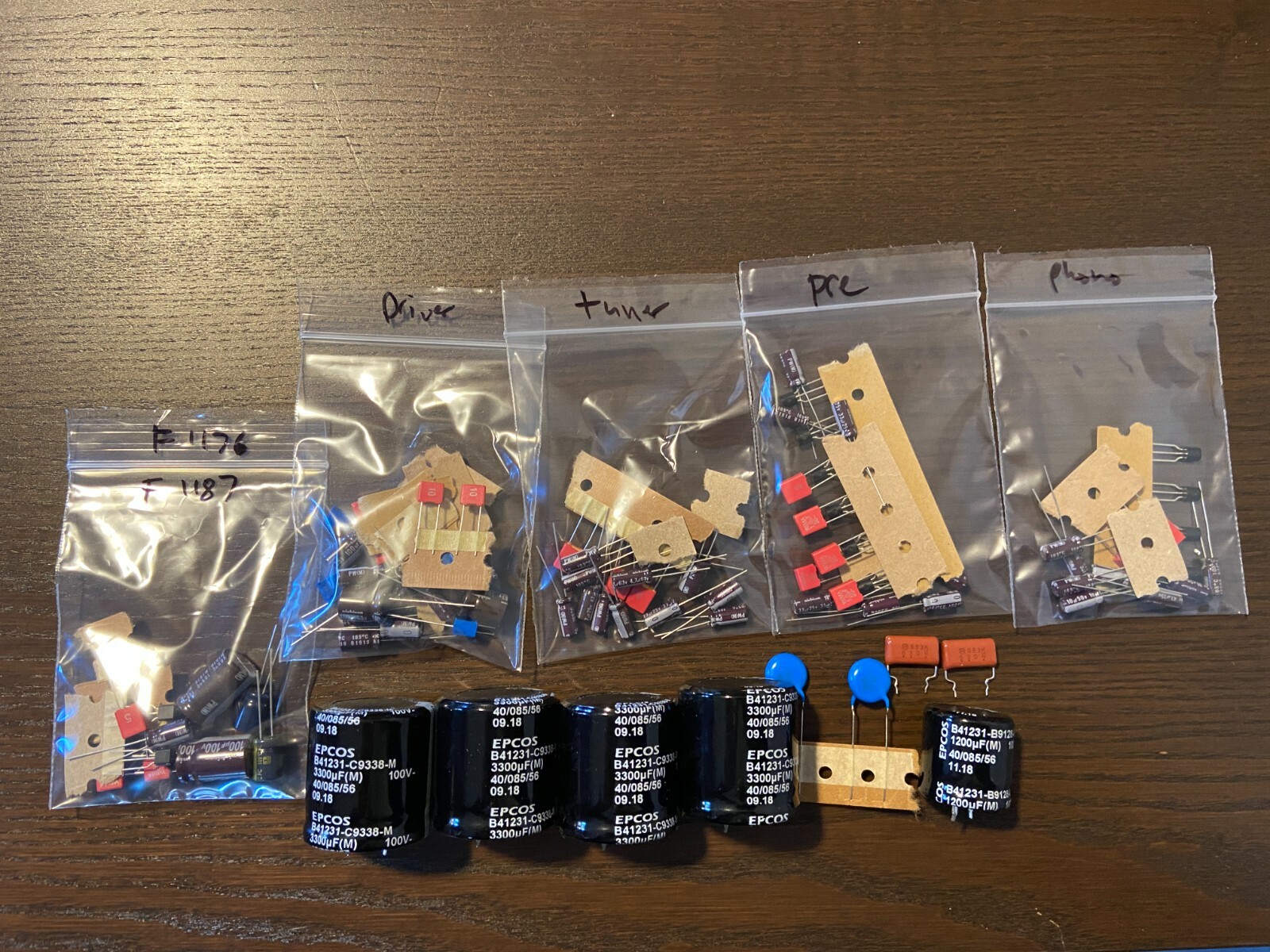
The most common failure points are predictable for a 50-year-old receiver: dried-out electrolytic capacitors, dirty potentiometers, and failing power supplies. The tuning lights—those colorful signal strength indicators—are also prone to burnout, though replacement kits are available. Owners report that the switches, especially the input selector, can become flaky over time and may need cleaning or replacement. The service manual is widely available, and the circuit is well-documented, making repairs feasible for a competent technician.
If you’re buying, power it on first. Listen for hum, channel imbalance, or distortion at low volumes. Check that the tuner locks onto stations cleanly and that the phono input has proper gain—some users report weak output if the preamp stage is degraded. And if the lights are out, don’t assume it’s just bulbs; it could be a power supply issue. A full recap is almost always worth it, not just for reliability but for restoring the full sonic potential. This isn’t a receiver that sounds its best with tired, leaky caps.
eBay Listings


As an eBay Partner, we earn from qualifying purchases. This helps support our independent vintage technology research.