Rogers STUDIO-1A: The Quintessential British Bookshelf Speaker of the 1970s
In the golden era of British hi-fi during the 1970s, few names carried the prestige and sonic credibility of Rogers. Known for their meticulous attention to detail, handcrafted cabinets, and a warm, musical tonal balance, Rogers loudspeakers became a favorite among discerning audiophiles and recording engineers alike. Among their most beloved models was the Rogers STUDIO-1A, a compact bookshelf speaker that punched far above its weight in terms of sound quality and build integrity. Though not as widely documented as some of its contemporaries, the STUDIO-1A has earned a quiet but enduring reputation as a classic of British speaker design.
Historical Context
Introduced around 1975, the Rogers STUDIO-1A emerged during a period when British speaker manufacturers like Quad, Spendor, and KEF were defining a new standard in high-fidelity reproduction. Rogers, originally founded in the late 1950s by Dick Dickson, had already established a reputation for producing monitors used in professional recording studios—hence the "STUDIO" moniker in the model name. The STUDIO-1A was designed as a compact, two-way passive loudspeaker intended for both domestic listening and nearfield monitoring applications.
Its design philosophy emphasized natural tonality, low coloration, and time-coherent performance, aligning with the British "laid-back" sonic signature that contrasted with the more aggressive, forward sound of some American and later Japanese designs. The STUDIO-1A was often used in conjunction with high-quality valve or early solid-state amplifiers, forming the heart of many mid-tier audiophile systems throughout the UK and Europe.
Technical Specifications
| Specification | Detail |
| Type | 2-way, passive bookshelf speaker |
| Driver Configuration | 1 x 8" bass/midrange, 1 x 1" dome tweeter |
| Frequency Response | 55 Hz – 20 kHz (±3 dB) |
| Sensitivity | 87 dB (1W/1m) |
| Nominal Impedance | 8 ohms |
| Crossover Frequency | 3.2 kHz |
| Enclosure Type | Acoustic suspension (sealed) |
| Cabinet Finish | Real walnut veneer, black ash available |
| Dimensions (H×W×D) | 38 cm × 23 cm × 25 cm (15" × 9" × 10") |
| Weight | 10.5 kg (23 lbs) per speaker |
| Recommended Amp Power | 20–70 watts |
The STUDIO-1A utilized a relatively large 8-inch bass/midrange driver for a speaker of its size, constructed with a paper cone and a well-damped rubber surround. This driver was paired with a soft-dome tweeter, likely sourced from a reputable European supplier such as SEAS or Audax, known for smooth high-frequency reproduction without harshness. The crossover network, while not overly complex, was carefully tuned to ensure a seamless blend between drivers and time alignment, contributing to the speaker’s coherent imaging.
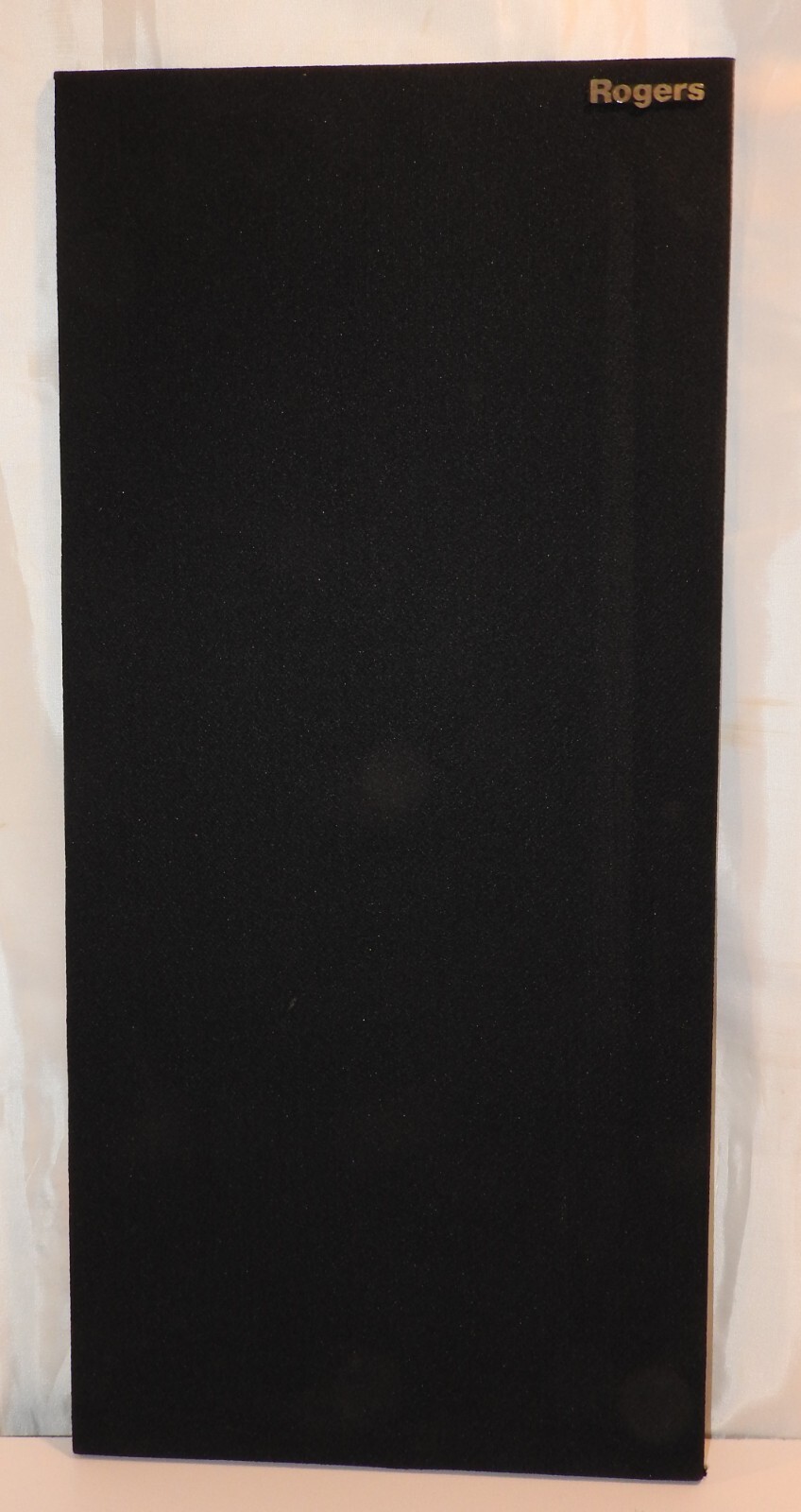
The cabinet was built from high-density particleboard with extensive internal bracing and a thick front baffle to minimize resonance. The use of real walnut veneer gave the STUDIO-1A a warm, elegant appearance that complemented traditional living rooms and listening spaces of the era. The front baffle was often covered in a removable black fabric grille, though many enthusiasts today prefer to run them "grille-off" for improved clarity.
Sound Characteristics and Performance
The Rogers STUDIO-1A is best described as a musical, refined, and balanced loudspeaker. It does not aim for clinical precision or extreme bass extension, but instead delivers a natural, organic presentation that many find emotionally engaging.
- Midrange: The standout feature of the STUDIO-1A is its lush, transparent midrange. Vocals and acoustic instruments are rendered with remarkable realism and presence. The 8-inch driver handles the midband with authority, avoiding the thinness often associated with smaller bookshelf designs.
- Treble: The soft-dome tweeter offers a smooth, non-fatiguing high end. While not the most detailed or extended by modern standards, it avoids sibilance and harshness, making the STUDIO-1A ideal for long listening sessions.
- Bass: Thanks to its acoustic suspension (sealed) design, the bass is tight, controlled, and well-integrated, though it rolls off gradually below 60 Hz. It won’t rattle walls, but it provides a solid foundation for jazz, classical, and vocal-centric music.
- Imaging and Soundstage: The STUDIO-1A produces a well-focused stereo image with good depth and separation. When properly positioned and paired with quality electronics, it creates a surprisingly spacious soundstage that belies its compact size.
Notable Features and Innovations
While not a technically radical design, the STUDIO-1A incorporated several thoughtful engineering choices:
- Time-coherent crossover: Emphasis was placed on phase alignment, ensuring that sound from both drivers reaches the listener at the same time, enhancing imaging accuracy.
- Hand-built construction: Each pair was assembled with care, often in small batches, reflecting Rogers’ commitment to quality over mass production.
- Studio heritage: The "STUDIO" designation wasn’t mere marketing—Rogers had genuine ties to the professional audio world, and the STUDIO-1A benefited from that lineage in terms of neutrality and reliability.
Common Issues and Maintenance
As with any vintage speaker, the Rogers STUDIO-1A may require some care after 40+ years of use:
- Aging foam surrounds: The most common issue is deteriorated foam on the bass/mid driver. Over time, foam disintegrates, leading to flapping or no bass response. Fortunately, foam replacement kits are available from specialist restoration services and can be installed with moderate DIY skill.
- Crossover component drift: Electrolytic capacitors in the crossover may dry out or leak, altering tonal balance. Replacing these with modern equivalents can restore original performance.
- Cabinet wear: While the walnut veneer is durable, older units may show scratches, fading, or edge damage. Gentle polishing can revive the finish, but refinishing should be done carefully to preserve vintage value.
It’s recommended to inspect the drivers and crossover if purchasing a used pair. Many STUDIO-1As have been well-maintained by passionate owners, and a restored pair can deliver performance that rivals modern equivalents.
Current Market Value and Collectibility
The Rogers STUDIO-1A is not a rare unicorn, but it is increasingly sought after by vintage audio enthusiasts, particularly in the UK and Europe. Pairs in good cosmetic and working condition typically sell for £250–£450, with fully restored units commanding higher prices.
Collectibility is driven by:
- British hi-fi heritage
- Warm, musical sound signature
- Classic wood finish and timeless design
- Compatibility with vintage amplifiers (e.g., Leak, NAD, Linn, or early Naim)
While not as iconic as the Spendor BC1 or Quad ESL-57, the STUDIO-1A holds a respected place in the pantheon of 1970s British speakers.
Conclusion and Legacy
The Rogers STUDIO-1A may not have made headlines with flashy technology or celebrity endorsements, but it represents the quiet excellence of British hi-fi engineering in the 1970s. Designed for accuracy, musicality, and longevity, it remains a compelling choice for listeners who value tonal balance, craftsmanship, and emotional engagement over raw specifications.
Today, the STUDIO-1A stands as a testament to an era when speakers were built to last, sonically tuned by ear, and finished with pride. For the vintage audio enthusiast, restoring and enjoying a pair of STUDIO-1As is not just about nostalgia—it’s about experiencing a timeless approach to sound reproduction that still resonates in the modern listening room.
If you're lucky enough to find a well-preserved pair, give them a listen with a good tube amp and some vinyl. You might just discover why the quiet ones sometimes say the most.
eBay Listings



As an eBay Partner, we earn from qualifying purchases. This helps support our independent vintage technology research.
Related Models
- Rogers LS1 (1976)
- Rogers LS5 (1975)
- Rogers Ravensbourne Speaker System (1970)
- Rogers BBC-Studio-Monitor (LS3/6) (1975)
- Rogers CADET (1972)
- Akai AM-2850 (1975)
- Akai AP-206 (1975)
- Nakamichi BX-1 (1985)
- Acoustic Research research-ar-17 (1978)
- Acoustic Research AR-19 (1994)