Rogers Ravensbrook Speaker System: A Forgotten Gem of British Hi-Fi
In the golden era of British hi-fi during the 1970s, Rogers stood as one of the most respected names in loudspeaker design. Known for their association with the legendary LS3/5A monitor developed for the BBC, Rogers also produced a range of in-house speaker systems that balanced performance, aesthetics, and engineering integrity. Among these was the Rogers Ravensbrook Speaker System—a lesser-known but refined passive loudspeaker that, while not as celebrated as its LS3/5A cousin, embodies the understated elegance and sonic warmth characteristic of British speaker design from that period.
Though detailed documentation on the Ravensbrook is scarce today, surviving units and collector anecdotes suggest it was aimed at the discerning audiophile seeking high-fidelity sound in a compact, furniture-grade enclosure. Likely produced in limited numbers during the mid-1970s, the Ravensbrook reflects Rogers’ commitment to quality materials, careful crossover design, and tonal neutrality—hallmarks of the brand’s reputation.
Technical Specifications
| Specification | Detail |
| Manufacturer | Rogers (UK) |
| Model | Ravensbrook Speaker System |
| Production Years | Circa 1975–1979 |
| Type | 2-way passive bookshelf speaker |
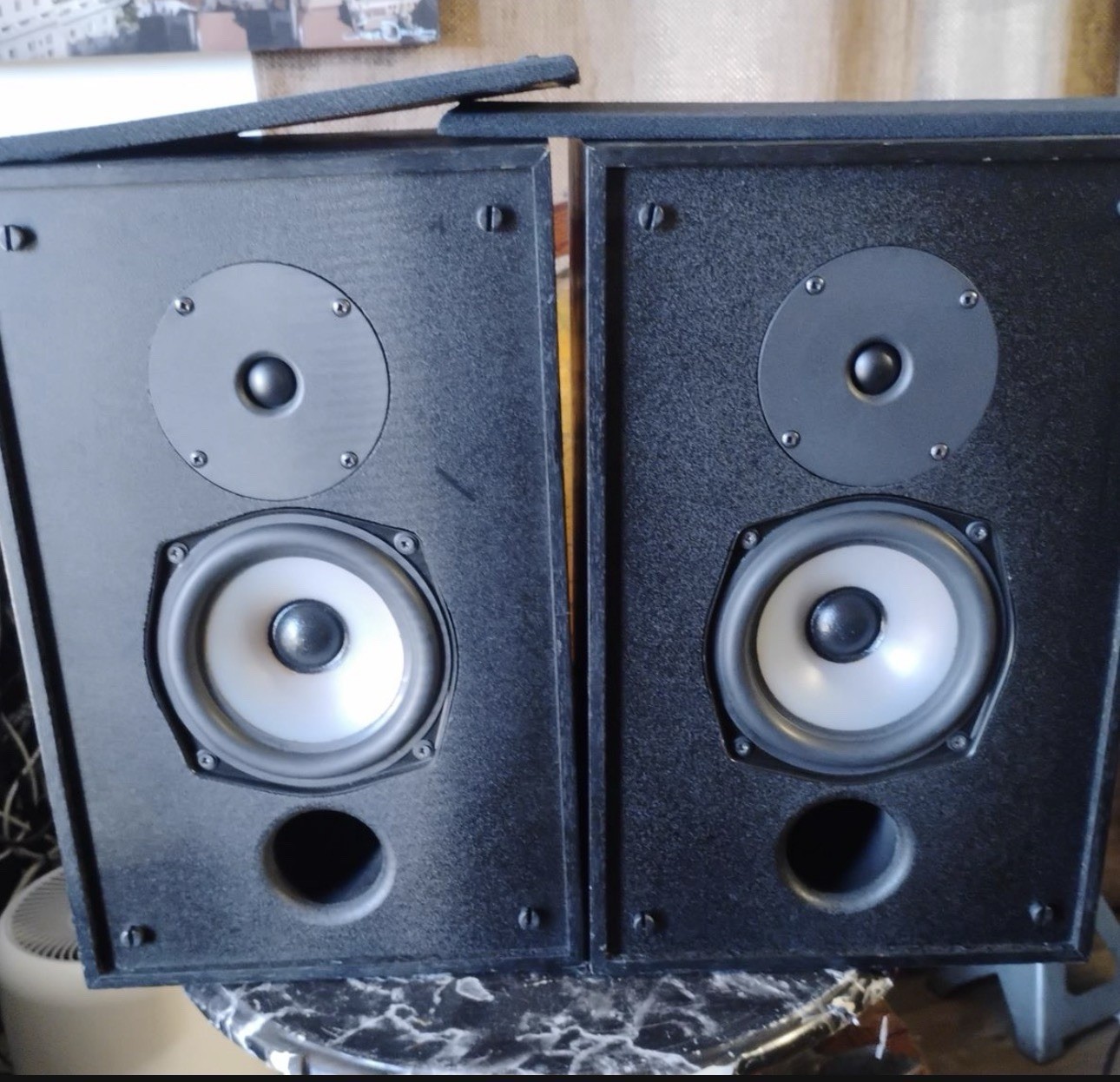
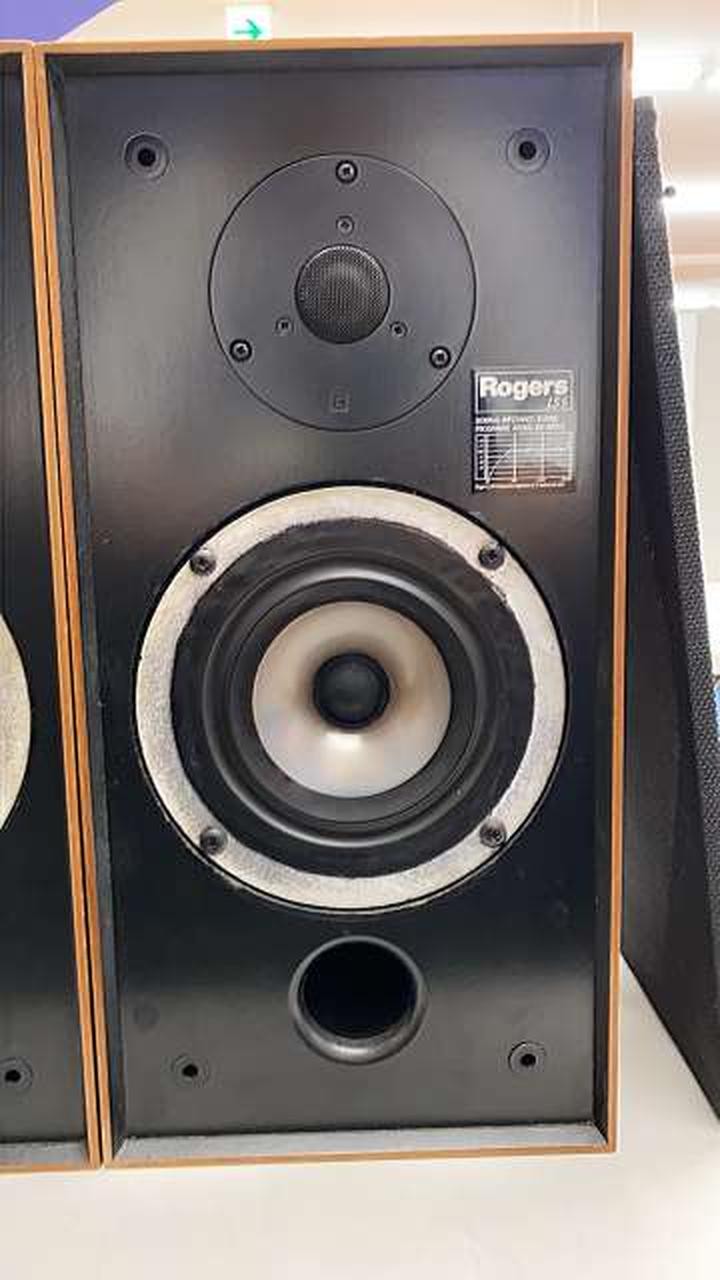
| Driver Configuration | 1 x 8" bass-mid driver, 1 x 3/4" dome tweeter |
| Crossover Frequency | ~3.5 kHz (estimated) |
| Frequency Response | 55 Hz – 20 kHz (approximate) |
| Sensitivity | 86 dB (1W/1m) |
| Nominal Impedance | 8 ohms |
| Recommended Amp Power | 20–60 watts |
| Enclosure Type | Acoustic suspension (sealed) |
| Cabinet Finish | Walnut veneer with real wood trim |
| Dimensions (H×W×D) | 38 cm × 22 cm × 20 cm (15" × 8.7" × 7.9") |
| Weight | 9 kg (19.8 lbs) per speaker |
| Grille | Removable black fabric magnetic grilles |
The Ravensbrook employed a classic two-way design with a single 8-inch bass-midrange driver and a small dome tweeter, crossed over via a second-order network. The sealed (acoustic suspension) cabinet design ensured tight, controlled bass response, albeit with limited deep extension—typical of compact speakers of the era. The use of an 8-ohm nominal impedance made it compatible with a wide range of tube and solid-state amplifiers popular in the 1970s, from Leak and Quad to early NAD and Luxman models.
Sound Characteristics and Performance
The sonic signature of the Rogers Ravensbrook is best described as musical, balanced, and unobtrusively detailed. Unlike the forward, analytical sound of some contemporary American designs, the Ravensbrook leans into the British tradition of tonal realism and midrange clarity.
The midrange is where the Ravensbrook truly shines. Vocals and acoustic instruments are rendered with natural warmth and presence, making it an excellent choice for jazz, classical, and vocal-centric recordings. The 8-inch driver provides commendable body and authority for a speaker of its size, though it doesn’t attempt to reproduce sub-bass frequencies. Bass is tight and well-damped thanks to the sealed cabinet, but listeners expecting room-shaking low end should consider pairing it with a period-appropriate subwoofer or opting for larger floorstanders.
The tweeter delivers smooth, non-fatiguing highs with a slight softness on transients—this is not a speaker that emphasizes "sparkle" at the expense of comfort. While high-frequency extension is adequate (up to 20 kHz), it lacks the airy brilliance of later ribbon or metal-dome designs. However, this gentle top end contributes to the speaker’s fatigue-free listening experience, ideal for long sessions with vinyl.
Imaging is surprisingly good for a speaker of its era. With proper placement and room setup, the Ravensbrook can produce a stable soundstage with decent depth and instrument separation, though it doesn’t project as holographically as the LS3/5A. It performs best when positioned away from rear walls and angled slightly toward the listener.
Notable Features and Design
The Ravensbrook’s design reflects the craftsmanship values of 1970s British hi-fi. The cabinet is constructed from high-density fiberboard (HDF) or multi-ply wood, finished in a rich walnut veneer with real wood edging—giving it the appearance of fine furniture rather than audio equipment. This attention to aesthetics made it a favorite in living rooms where hi-fi systems were expected to blend with home decor.
The crossover network uses high-quality components for the time, including polypropylene capacitors and air-core inductors, carefully tuned to ensure smooth driver integration. Rogers’ engineering team paid close attention to time alignment and phase coherence, even if not formally marketed as such at the time.
One unique aspect of the Ravensbrook is its modular binding post design, which accepts bare wire, spades, or banana plugs—a rare feature in mid-tier speakers of the 1970s. This flexibility suggests Rogers intended the speaker for a range of system pairings, from modest setups to higher-end separates.
Common Issues and Maintenance
As with any vintage speaker system, the Rogers Ravensbrook is susceptible to age-related wear. The most common issues include:
- Aged foam surrounds: The original foam used on the bass driver deteriorates over time, leading to flaking and loss of bass response. Replacement with modern butyl rubber surrounds is highly recommended.
- Capacitor drift in the crossover: Electrolytic capacitors in the crossover may have dried out, altering tonal balance. Replacing these with modern equivalents can restore original performance.
- Tweeter degradation: While the dome tweeters are generally robust, some units may exhibit reduced high-frequency output due to diaphragm fatigue or corrosion on the terminals.
- Cabinet finish wear: The walnut veneer can show scratches or fading, especially in sunlight. Gentle polishing with non-silicone furniture wax can revive the luster.
Restoration is feasible thanks to the speaker’s relatively simple design and parts compatibility with other Rogers and BBC-inspired drivers. Enthusiasts often source replacement foam kits from specialist suppliers in the UK and Europe.
Current Market Value and Collectibility
The Rogers Ravensbrook remains a rare and under-the-radar collectible. It does not command the premium prices of the LS3/5A, but its value has slowly increased among vintage audio enthusiasts who appreciate its craftsmanship and musical character.
In good original condition, a pair of Ravensbrooks typically sells for £300–£500 in the UK, depending on restoration status and cabinet quality. Fully restored units with upgraded surrounds and refreshed crossovers may fetch up to £650. In North America and Europe, prices are similar when adjusted for shipping and import costs.
While not a mainstream collector’s item, the Ravensbrook appeals to those building period-correct 1970s British systems or seeking an alternative to more common designs like the Wharfedale L10 or Harbeth HL5/8. Its scarcity adds to its charm—finding a matched pair in good condition is a minor triumph.
Conclusion and Legacy
The Rogers Ravensbrook Speaker System may not have achieved the legendary status of the LS3/5A, but it represents a thoughtful, well-executed design from a golden age of British hi-fi. It offers a warm, engaging sound, elegant cabinetry, and solid engineering—all hallmarks of Rogers’ philosophy.
For the vintage audio enthusiast, the Ravensbrook is more than just a speaker—it’s a window into a time when hi-fi was about musical enjoyment, not just technical specifications. Restored and properly paired with a quality tube or solid-state amplifier, it delivers a listening experience that remains emotionally compelling decades later.
Though overshadowed by its more famous siblings, the Ravensbrook deserves recognition as a quiet achiever in Rogers’ storied lineup—a speaker that speaks softly, but with authority.
eBay Listings


As an eBay Partner, we earn from qualifying purchases. This helps support our independent vintage technology research.
Related Models
- Rogers LS1 (1976)
- Rogers LS5 (1975)
- Rogers Ravensbourne Speaker System (1970)
- Rogers BBC-Studio-Monitor (LS3/6) (1975)
- Rogers CADET (1972)
- Akai AM-2850 (1975)
- Akai AP-206 (1975)
- Nakamichi BX-1 (1985)
- Acoustic Research research-ar-17 (1978)
- Acoustic Research AR-19 (1994)