Rogers LS5: The Compact BBC-Inspired Classic from the Heart of British Hi-Fi
In the golden era of British loudspeaker design during the 1970s, few names carried the quiet prestige of Rogers. Known for their close ties to the BBC's rigorous broadcast monitor standards, Rogers crafted a lineage of speakers that balanced accuracy, musicality, and elegant engineering. Among these, the Rogers LS5 stands as a compact yet significant entry in the company’s catalog—a bookshelf speaker designed for discerning listeners who valued clarity and neutrality without the footprint of a floorstander.
Though often overshadowed by its larger siblings like the legendary LS3/5A (which Rogers later became licensed to produce), the LS5 carved out its own niche as an affordable, BBC-inspired alternative for smaller listening environments. While not an official BBC monitor like the LS3/5A or LS5/8, the LS5 drew heavily from the same design philosophy: controlled directivity, time coherence, and a flat frequency response tailored for critical listening.
Historical Context: Rogers and the BBC Monitor Legacy
Rogers, founded in 1947 by Jim Rogers, began as a small British manufacturer with a passion for high-fidelity sound reproduction. Their reputation grew significantly in the 1970s when they secured a license to manufacture the LS3/5A, one of the most iconic studio monitors ever made. This association with the BBC Research & Development department gave Rogers instant credibility in the audiophile world.
The LS5, introduced around 1975, was not an officially sanctioned BBC design, but it clearly followed the same engineering ethos. It was aimed at listeners who wanted BBC-style sonic neutrality in a more compact and cost-effective package. At a time when many manufacturers were chasing high sensitivity and booming bass, Rogers stayed true to the BBC’s philosophy of accuracy over exaggeration.
Technical Specifications
| Specification | Detail |
| Model Name | Rogers LS5 |
| Type | 2-way passive bookshelf speaker |
| Driver Configuration | 1 x 210mm (8.3") woofer, 1 x 34mm (1.3") Audax dome tweeter |
| Sensitivity | 87 dB (1W/1m) |
| Nominal Impedance | 8 ohms |
| Crossover Frequency | ~3.5 kHz |
| Crossover Type | 3rd order (18 dB/octave) |
| Enclosure Type | Bass-reflex (ported) |
| Dimensions (HxWxD) | 460 x 275 x 285 mm |
| Weight | 12 kg per speaker |
| Recommended Amp Power | 30 – 100 watts |
| Finish Options | Walnut, rosewood, olive (real-wood veneer) |
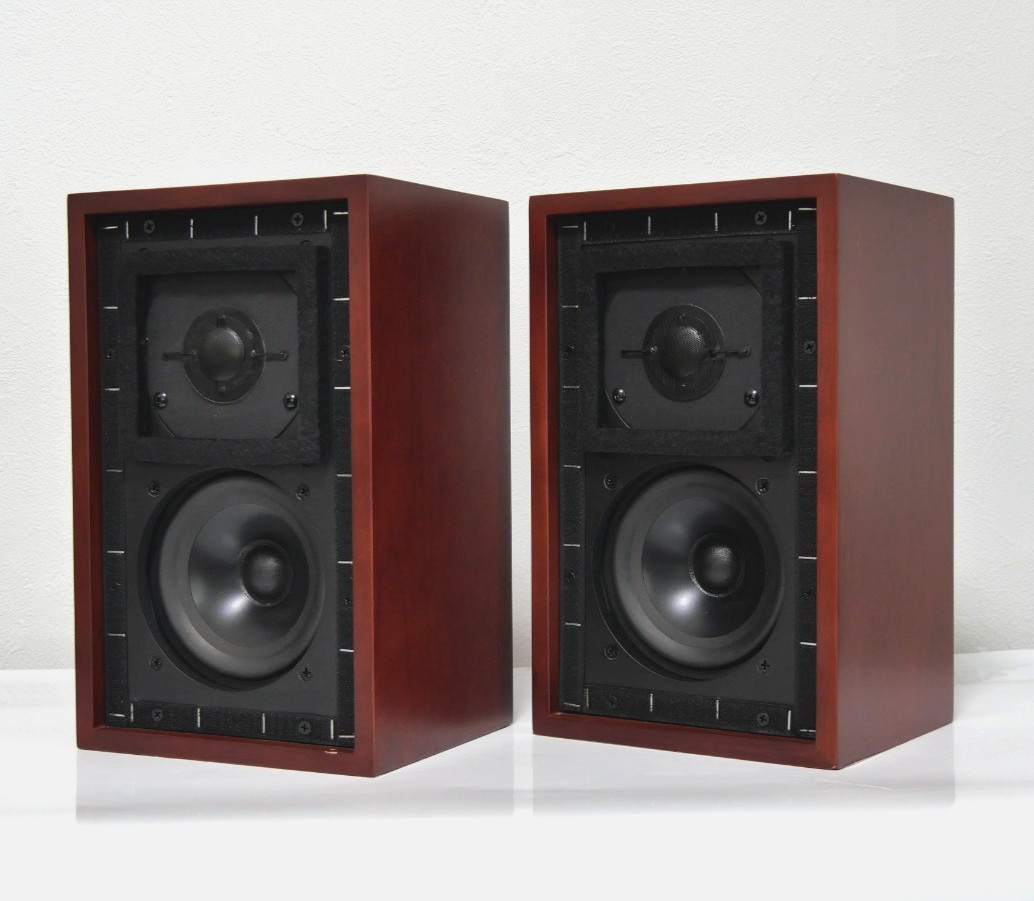
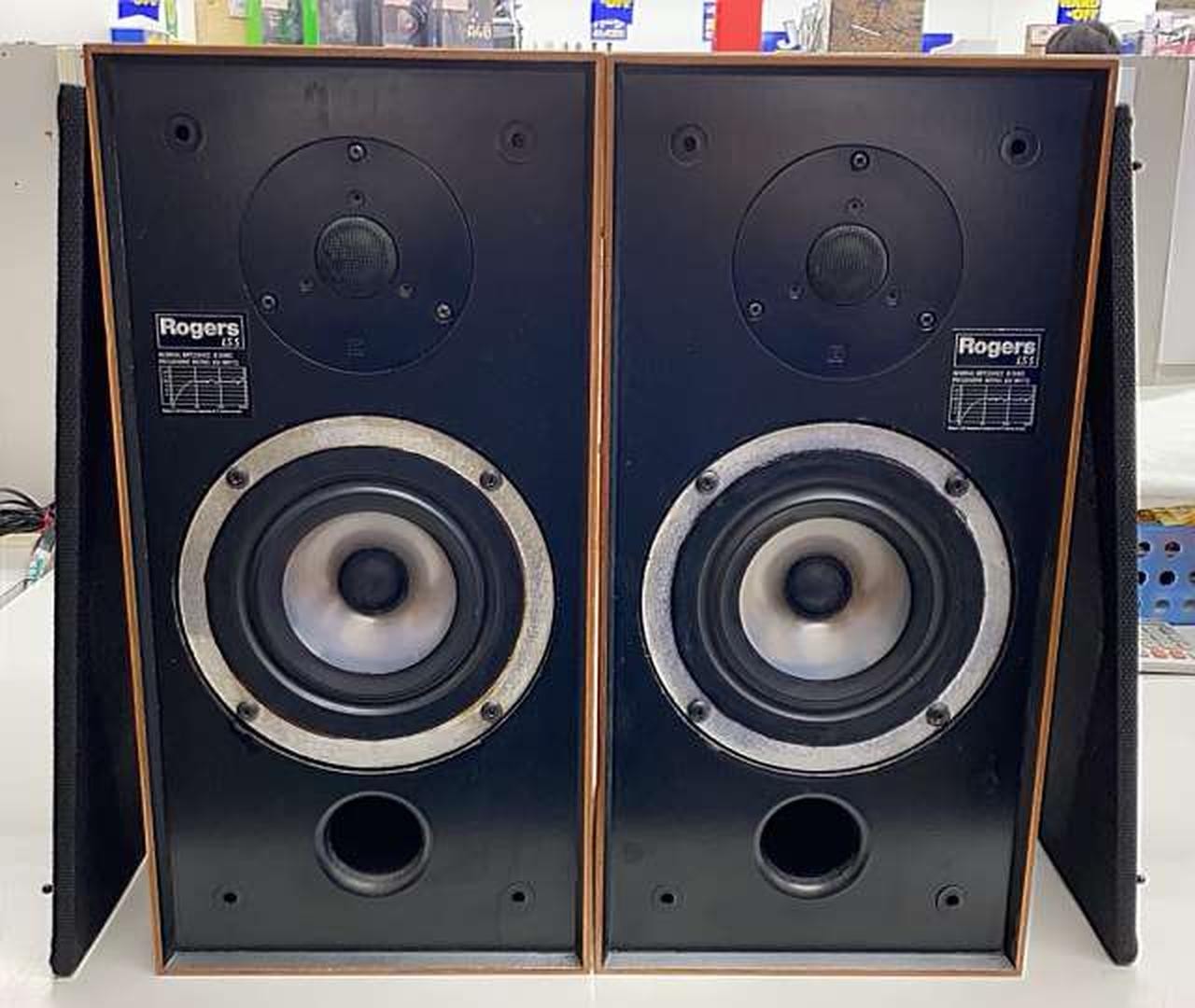
The LS5 employed a modest but well-executed driver complement. The 150mm bass-mid cone was typically made from treated paper with a rubber surround, offering good transient response and low coloration. The small fabric dome tweeter was designed to deliver smooth, non-fatiguing highs—critical for long listening sessions. The sealed cabinet design ensured tight, controlled bass, albeit with limited extension compared to ported designs.
Sound Characteristics and Performance
The Rogers LS5 was never about raw power or deep sub-bass—it was about clarity, timing, and tonal accuracy. In a well-set-up system, the LS5 delivered a remarkably balanced and transparent sound that made it ideal for vocal-centric music, chamber ensembles, and acoustic recordings.
The midrange was its strongest suit: natural, uncolored, and rich in detail. Male and female vocals were rendered with lifelike presence, making the LS5 a favorite for jazz and singer-songwriter genres. The tweeter, while not as extended as later designs, avoided harshness and sibilance, contributing to a relaxed yet engaging listening experience.
Bass response, limited by the small sealed cabinet and modest driver size, rolled off below 60 Hz. However, what it lacked in depth it made up for in tightness and integration. There was no bloated mid-bass or one-note boom—just clean, articulate low-end that worked well with efficient tube amplifiers of the era.
The LS5 also exhibited excellent imaging and soundstage, a hallmark of BBC-derived designs. Instruments were precisely placed, and the speaker created a stable, three-dimensional listening window even in modestly sized rooms.
Notable Features and Design Philosophy
What set the Rogers LS5 apart was its no-nonsense engineering. Unlike many contemporary speakers that prioritized cosmetic flair or exaggerated frequency response, the LS5 was built for accuracy. Key features included:
- Point-source-like driver alignment: The tweeter was mounted close to the mid-bass unit to improve time coherence.
- High-quality crossover components: Rogers used film capacitors and air-core inductors where possible, minimizing signal degradation.
- Damped cabinet construction: Though not as heavily braced as the LS3/5A, the LS5’s cabinet was well-damped to reduce resonance.
- Neutral voicing: Designed to be a “straight wire with gain,” letting the recording speak for itself.
The compact size and attractive wood-veneer finishes made the LS5 a natural fit for living rooms, studies, or secondary listening spaces—offering serious sound without dominating the decor.
Common Issues and Maintenance
As with any vintage speaker, the Rogers LS5 requires attention to aging components:
- Aging foam surrounds: Many surviving pairs suffer from perished foam on the bass-mid drivers. Re-foaming is a common and worthwhile restoration.
- Tweeter degradation: The fabric dome may become brittle or discolored, though failure is less common than in metal domes.
- Crossover component drift: Capacitors can dry out over time, affecting tonal balance. Replacing them with modern equivalents can restore original performance.
- Cabinet wear: The vinyl veneer can peel or scratch. While not structural, cosmetic restoration improves resale value.
Finding original replacement parts can be challenging, but the LS5 shares some driver and crossover similarities with other BBC-inspired designs, making sympathetic upgrades feasible.
Current Market Value and Collectibility
The Rogers LS5 is not as collectible as the LS3/5A, but it holds a quiet appeal among vintage audio enthusiasts, especially in the UK. Well-restored pairs typically sell in the £150–£300 range, depending on condition and provenance.
While not a high-value collector’s item, the LS5 is appreciated for its authentic BBC-era sound at a modest price. It’s a great entry point for those exploring vintage British speakers without investing in rarer, more expensive models.
Its value lies more in musical enjoyment than in investment potential. For listeners who appreciate neutral, detailed sound and compact form, the LS5 remains a compelling choice.
Conclusion: A Humble Classic with Lasting Appeal
The Rogers LS5 may not have the fame of the LS3/5A, but it embodies the same British hi-fi virtues: restraint, accuracy, and musical honesty. It was never meant to impress with volume or bass weight, but to reveal the truth in a recording with grace and precision.
For vintage audio lovers, the LS5 offers a genuine slice of 1970s British speaker design—a compact monitor built for critical listening, not showmanship. With proper care and restoration, it can still hold its own in modern systems, especially when paired with low-feedback tube amplifiers or high-quality solid-state gear.
If you’re seeking a speaker that values clarity over spectacle, the Rogers LS5 deserves a listen. It’s a quiet classic—unassuming in appearance, but rich in heritage and musical integrity.
eBay Listings

As an eBay Partner, we earn from qualifying purchases. This helps support our independent vintage technology research.
Related Models
- Rogers LS1 (1976)
- Rogers Ravensbourne Speaker System (1970)
- Rogers BBC-Studio-Monitor (LS3/6) (1975)
- Rogers CADET (1972)
- Rogers LS2 (1978)
- Akai AM-2850 (1975)
- Akai AP-206 (1975)
- Nakamichi BX-1 (1985)
- Acoustic Research research-ar-17 (1978)
- Acoustic Research AR-19 (1994)