Rogers LS1: The Quintessential British Bookshelf Classic
In the pantheon of vintage loudspeakers, few models evoke the same reverence among audiophiles as the Rogers LS1. Introduced in the early 1980s, this compact bookshelf speaker emerged during a golden era of British hi-fi design, heavily influenced by the rigorous standards of the BBC. The LS1 was not just another speaker—it was a statement of sonic purity, engineering integrity, and understated elegance. Revered for its natural midrange, articulate vocals, and uncolored tonal balance, the Rogers LS1 remains a sought-after gem for vintage audio enthusiasts and purists who value transparency over flash.
Historical Context: The BBC Legacy and British Hi-Fi
The 1970s saw a surge in high-fidelity speaker design across the UK, largely driven by the BBC’s need for accurate studio monitors. Engineers at the BBC developed a series of reference loudspeakers—such as the LS3/5A, LS5/8, and others—designed for critical listening in broadcast environments. These designs emphasized neutrality, controlled dispersion, and consistency, and they quickly became benchmarks for consumer audio.
Rogers, a British company founded in 1947 by Jim Rogers, entered this scene with a clear mission: to bring BBC-grade sound quality to the home listener. While not an official BBC-licensed design like the LS3/5A, the LS1 was unmistakably inspired by the same design philosophy. It employed similar driver technology and cabinet construction principles, aiming for a flat frequency response and minimal coloration.
The LS1 was part of Rogers’ early lineup and helped establish the brand’s reputation for building speakers that combined technical rigor with musicality. Though overshadowed in fame by the LS3/5A, the LS1 carved out its own niche among discerning listeners who appreciated its slightly larger cabinet and broader dynamic range.
Technical Specifications
| Specification | Detail |
| Model | Rogers LS1 |
| Type | 2-way bookshelf speaker |
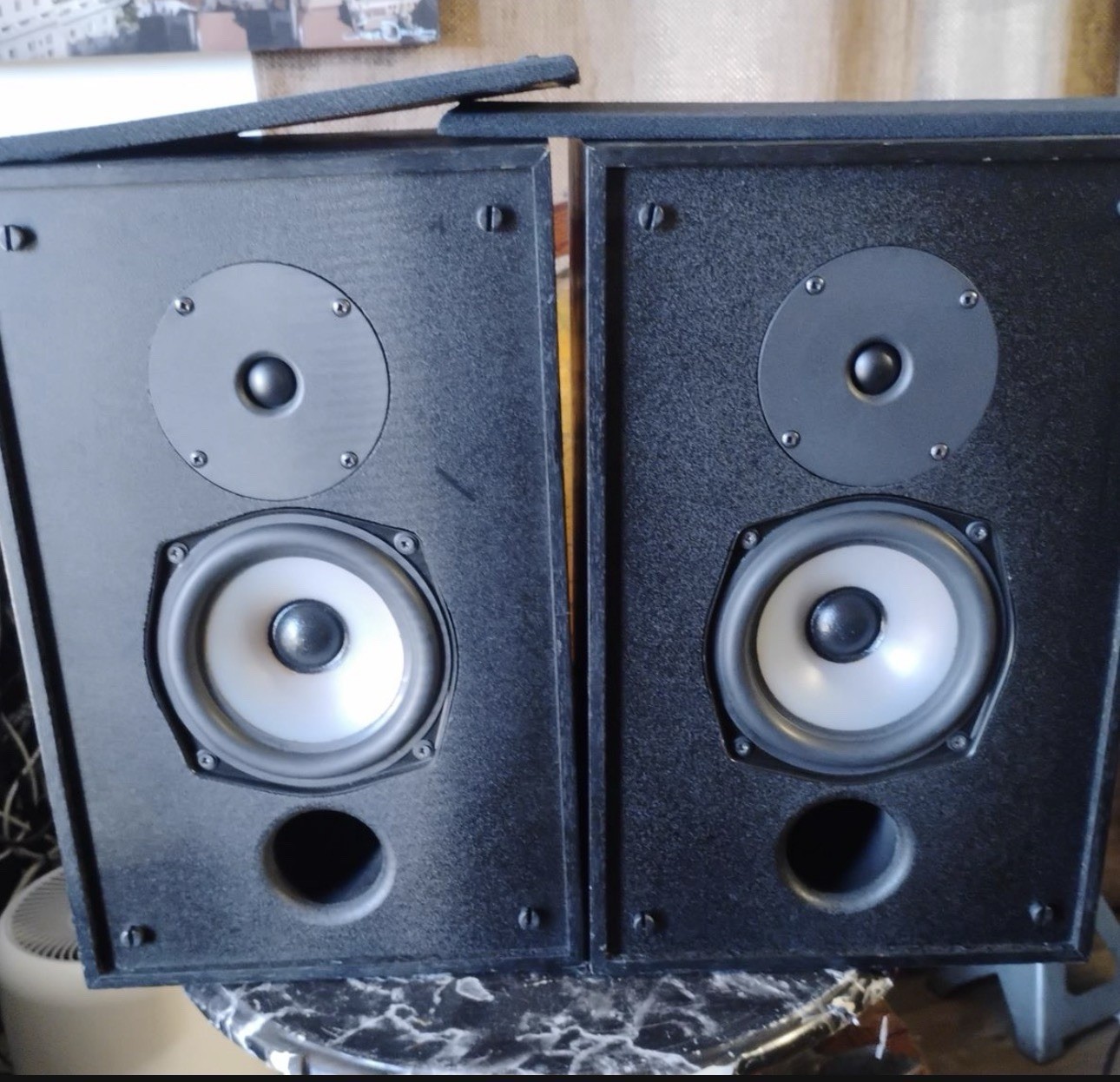
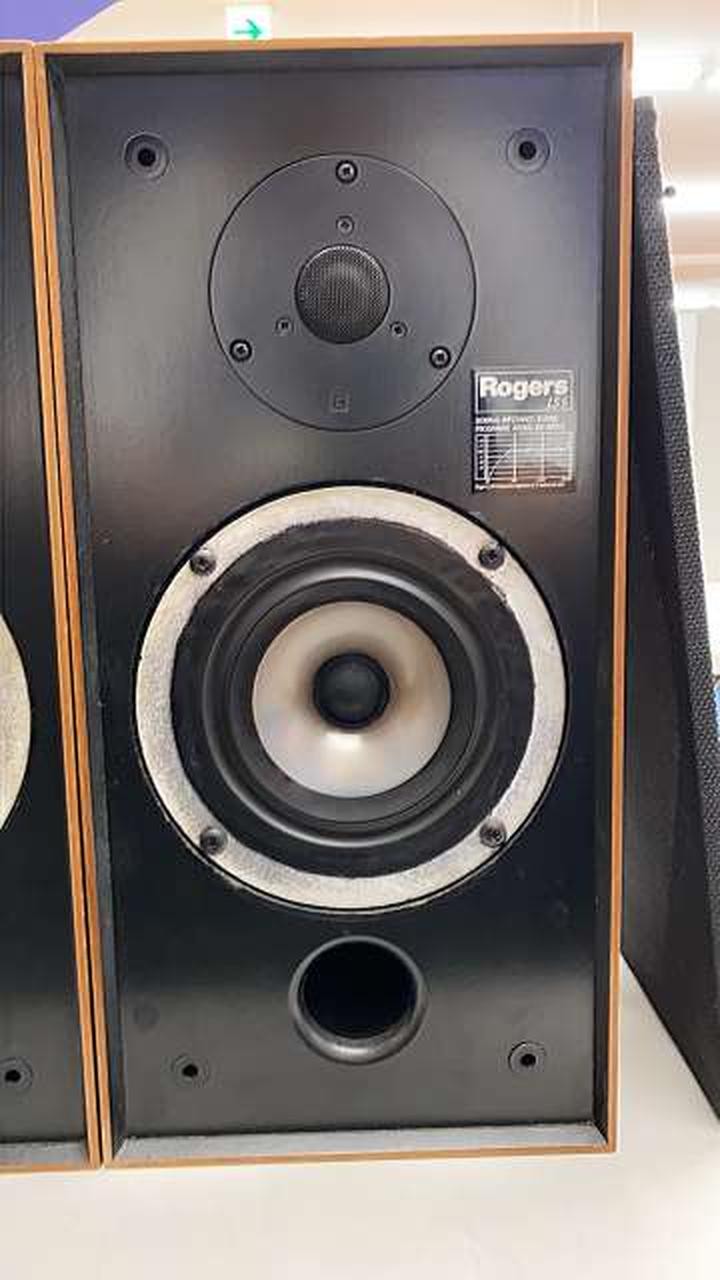
| Driver Configuration | 1 x 5" bass/midrange, 1 x 1" soft dome tweeter |
| Frequency Response | 75 Hz – 20 kHz (±3 dB) |
| Sensitivity | 87 dB (2.83V/1m) |
| Nominal Impedance | 6Ω |
| Recommended Amp Power | 50–100 watts |
| Crossover Frequency | ~3.5 kHz |
| Cabinet Material | High-density particle board |
| Dimensions (H×W×D) | 300 × 195 × 195 mm |
| Weight | 4.76 kg per speaker |
| Finish Options | Walnut, rosewood, black ash veneers |
The LS1 features a relatively simple but effective two-way design. The 7-inch bass/midrange driver, constructed with a paper cone and doped surround, is paired with a 1-inch soft dome tweeter—unusual for its time, as many contemporaries used metal domes or horns. This combination contributed to a smoother, less fatiguing high-frequency response.
The crossover network is modest but well-executed, using high-quality components for the era. The cabinet, constructed from dense MDF with internal bracing, minimizes resonance and panel vibration—hallmarks of serious speaker design. The front baffle is slightly curved, reducing diffraction effects, and the overall aesthetic is restrained, with real wood veneer finishes that age gracefully.
Sound Characteristics and Performance
The Rogers LS1 delivers a sound that is best described as refined, balanced, and deeply musical. It doesn’t shout or dazzle with bass slam or sparkle; instead, it reveals detail with composure and coherence.
- Midrange: The LS1’s greatest strength lies in its midrange. Vocals are rendered with startling clarity and natural timbre. Whether it’s a jazz crooner, a classical tenor, or an acoustic folk singer, the LS1 presents the human voice with uncanny realism.
- Treble: The soft dome tweeter offers a smooth, non-aggressive high end. While not as extended as some modern tweeters, it avoids the harshness that plagues many vintage metal domes. Cymbals and string harmonics are rendered with delicacy rather than glare.
- Bass: With a 7-inch driver and modest cabinet volume, bass extension is limited to around 60 Hz. It’s not deep or powerful by modern standards, but it’s tight, well-controlled, and integrates seamlessly with the midrange. The LS1 benefits from placement near a rear wall or in a bookshelf to reinforce lower frequencies.
- Soundstage and Imaging: Despite its compact size, the LS1 projects a spacious and well-defined soundstage. Instruments are precisely located, and the speaker has a remarkable ability to disappear sonically, leaving behind a three-dimensional listening experience.
The LS1 works best with low-to-moderate power amplifiers—especially tube amps or classic solid-state designs from the 70s and 80s. Its 86 dB sensitivity means it won’t play extremely loud, but it rewards careful system matching with nuanced, engaging sound.
Notable Features and Innovations
While not revolutionary on paper, the LS1 stands out for its thoughtful engineering and adherence to broadcast-grade principles:
- BBC-inspired voicing: Though not an official derivative, the LS1 clearly follows the BBC’s “monitor” ethos—prioritizing accuracy over excitement.
- Soft dome tweeter: A forward-thinking choice in an era dominated by metal domes, contributing to long-term listening comfort.
- High-quality cabinet construction: The use of MDF, internal bracing, and constrained-layer damping was advanced for a mid-tier speaker at the time.
- Neutral crossover design: Minimal phase shift and smooth driver integration ensure coherent sound across the frequency spectrum.
Common Issues and Maintenance
Like all vintage speakers, the Rogers LS1 is susceptible to age-related wear:
- Aging foam surrounds: The original foam on the bass/mid driver often perishes after 40+ years, leading to flapping or no bass output. Re-foaming is a common and recommended restoration.
- Tweeter degradation: While more durable than metal domes, the soft dome can still suffer from oxidation or physical damage. Some owners upgrade to modern equivalents for improved reliability.
- Crossover components: Capacitors and inductors may drift in value over time. Replacing electrolytic capacitors and upgrading film capacitors can restore original performance.
- Cabinet finish: Original veneers may show wear, but they can often be refinished or gently restored with appropriate wood care products.
Finding original replacement parts can be challenging, but the LS1’s popularity ensures a small but active community of restorers and technicians.
Current Market Value and Collectibility
The Rogers LS1 is not as widely collected as the LS3/5A, but it has a loyal following. Well-restored pairs typically sell for £300–£600 in the UK, depending on condition, finish, and provenance. Original, unmodified examples in excellent condition command higher prices, especially those with rare finishes.
While not a “blue chip” collectible like some BBC monitors, the LS1 is increasingly recognized for its historical significance and sonic virtues. Its value is likely to rise slowly as vintage speaker interest grows.
Conclusion: A Hidden Gem of British Hi-Fi
The Rogers LS1 may not have the fame of its BBC cousins, but it deserves a place in the vintage audio hall of fame. It represents a moment when British engineering, broadcast standards, and musical passion converged to create something truly special.
For the listener who values clarity, natural timbre, and understated elegance, the LS1 remains a compelling choice—even in today’s world of high-tech audio. It’s not a speaker for those chasing bass or volume, but for those who want to hear into the music, to connect with the performance on an emotional level, the Rogers LS1 is a timeless companion.
In a world of ever-louder, flashier audio gear, the LS1 whispers instead of shouts—and in that whisper, you’ll hear the soul of vintage British hi-fi.
eBay Listings


As an eBay Partner, we earn from qualifying purchases. This helps support our independent vintage technology research.
Related Models
- Rogers LS5 (1975)
- Rogers Ravensbourne Speaker System (1970)
- Rogers BBC-Studio-Monitor (LS3/6) (1975)
- Rogers CADET (1972)
- Rogers LS2 (1978)
- Akai AM-2850 (1975)
- Akai AP-206 (1975)
- Nakamichi BX-1 (1985)
- Acoustic Research research-ar-17 (1978)
- Acoustic Research AR-19 (1994)