Revox B780 (1980)
Seventeen kilograms of Swiss receiver that looks like it escaped from a broadcast rack - and tunes like it too.
Overview
Pick one up and the first thing you notice is the mass. At 17 kg and measuring 452 x 151 x 420 mm, the B780 sits on the shelf like a piece of laboratory equipment. Studer built it in Switzerland as part of the B7xx series. The finish is grey or silver depending on the run, and it does nothing to hide the engineering-first attitude underneath. This receiver would rather be accurate than pretty, and it mostly manages both.
The identity question trips people up. The archive's own documentation calls the B780 a high-fidelity preamplifier with an integrated quartz-locked FM/AM tuner. Other sources - hifi-wiki, audiog.com, classicreceivers.com, and the secondhand listings - call it a receiver outright. The B739 is a companion model described as the tuner-preamplifier version without a power amplifier, which argues that the B780 does include amplification and supports the receiver classification. Either way, it arrived in 1980 and stayed in production through 1984. It was one of the first consumer components to combine microprocessor control with quartz-synchronized tuning. Analog signal path, digital brain.
It isn't a mass-market box. Recording studios and radio stations that specified Studer gear for their master tapes and broadcast chains were the reference audience, and the B780 was pitched at the home listener who wanted that same standard. Audio (May 1980, p.63) noted that matching the B780's digital synthesis tuning manually would require a professional-grade manual tuner. That was high praise when quartz tuning was still a novelty in domestic gear. The B739 variant shares the chassis and most of the circuitry, minus the output stage, and the two were covered by a single combined service manual.
Key Features
Quartz PLL Synthesized FM Tuning
The tuner is the reason most collectors seek this one out. A quartz phase-locked loop synthesized system locks onto stations with a stability that mechanical tuners of the era couldn't match. The front end backs it up. The signal path runs through a second RF amplifier stage and a second band-pass filter into a balanced mixer, with a passive IF filter built from eight tunable circuits. Tuning voltage for the varactors in the band-pass filters comes from the frequency synthesizer board. The published FM sensitivity figure is 1.5 µV at 50 dB quieting, which helps when you're pulling a weak classical station out of a crowded dial. Station memory is part of the package, and Dolby FM noise reduction is on board. It never caught on broadly, but it was serious kit in 1980.
Motorized Volume Control and Microprocessor Interface
The front panel's party trick is a motorized volume potentiometer, run by the same microprocessor that handles the tuning system. Twist the knob and a motor turns it for you. That sounds gimmicky, but level settings become repeatable and precise in a way a plain pot never quite manages. The trade-off is mechanical complexity. Collectors report that wear in the motorized volume mechanism is one of the more common service items, and aging ICs or dried lubricants can leave the control sluggish or dead. The microprocessor also enables the remote power-on function, though only via the "Power On Kit" from the B710 tape deck, so it's a system feature rather than a standalone convenience.
Dual Regulated Power Supplies
Two separate regulated supplies feed the B780 - one for the analog audio circuits, one for the digital control and tuning sections. Digital hash from the microprocessor and synthesizer stays out of the audio path. The amplifier section is rated at 80 watts per channel into 8 ohms, with 110 watts per channel into 4 ohms, both channels driven, per DIN 45500. Some secondhand listings quote 2 x 150 watts, which the manufacturer documentation does not support, so treat the higher figure with suspicion. Maximum power consumption is 550 watts. Signal-to-noise is quoted at 73 dB for the phono MM input and 90 dB for line. Those are respectable numbers, and they explain why the B780 stays quiet even with efficient speakers.
Phono Stage and Input Complement
The MM phono stage is a proper one: 3.0 mV sensitivity at 47 kOhm and 220 pF, with a maximum input voltage of 160 mV before overload. That headroom helps if you're running a high-output cartridge or a hot recording. Around the back you get connections for two tape decks, two line sources, and the phono input, plus two tape record outputs at 135 mV into 47 kOhms. There are four line-level RCA inputs in total, along with tape monitoring and dubbing capability, preamp outputs, and a headphone jack. The headphone output exists but has never been the reason anyone bought one. Tone controls are switchable, so you can bypass them and keep the signal path as short as the design allows.
Fluorescent Display and Chassis
A high-contrast fluorescent display with adjustable brightness handles frequency readout. It's more legible than the LED arrays of the period often were, and it's also the component most likely to fail. The tubes dim with age and eventually give out, though replacement solutions exist. The chassis is heavy-duty, the internal layout uses high-grade components, and the overall look lands somewhere between hi-fi and test bench. Some owners find that austere and others find it exactly right.
Historical Context
The B780 landed in 1980, when analog audio was still the standard but digital control was starting to change what a front panel could do. It slots into the B7xx series alongside the B77 and A77 tape decks, and the shared design language is deliberate - the receiver was meant to sit in a system built around Revox tape machines. The line ran until 1984, and the B739 stripped-down variant was sold alongside it for listeners who already had a power amplifier. For a few years, the B780 was one of the few ways to get microprocessor control and quartz-synchronized tuning in a domestic component. The broadcast pedigree behind the Studer name gave it credibility that Japanese receivers of the same era had to earn the hard way.
Collectibility & Value
Fully functional B780s in good cosmetic condition typically trade in the $400-$800 range, with clean, recently serviced examples at the top of that band. The collectibility sits around 7/10. It's valued more for engineering integrity than nostalgia, and while it isn't as rare as some boutique Japanese receivers, the Swiss build and professional orientation keep demand steady. Recent European listings have included a unit in Switzerland at CHF 350 and a fully overhauled example in Germany at €580.
The failure points are well documented. Degraded electrolytic capacitors in the power supply are the classic problem, especially in units that sat unused for years. The motorized volume mechanism wears. The fluorescent display dims or fails. Aging ICs and dried lubricants can leave the whole control system sluggish or unresponsive. The advice from long-term owners is consistent: power the unit periodically rather than letting it sit, clean jacks and switches with contact cleaner, keep it in a dry and temperature-stable environment, and budget for professional servicing before putting it into extended use. Spare parts do circulate. VU meters, power amplifier boards, processor boards, front panel trim, and even a plug-and-play Bluetooth option board for the tuner section show up for sale with some regularity, which is more than can be said for a lot of 1980 receivers.
eBay Listings

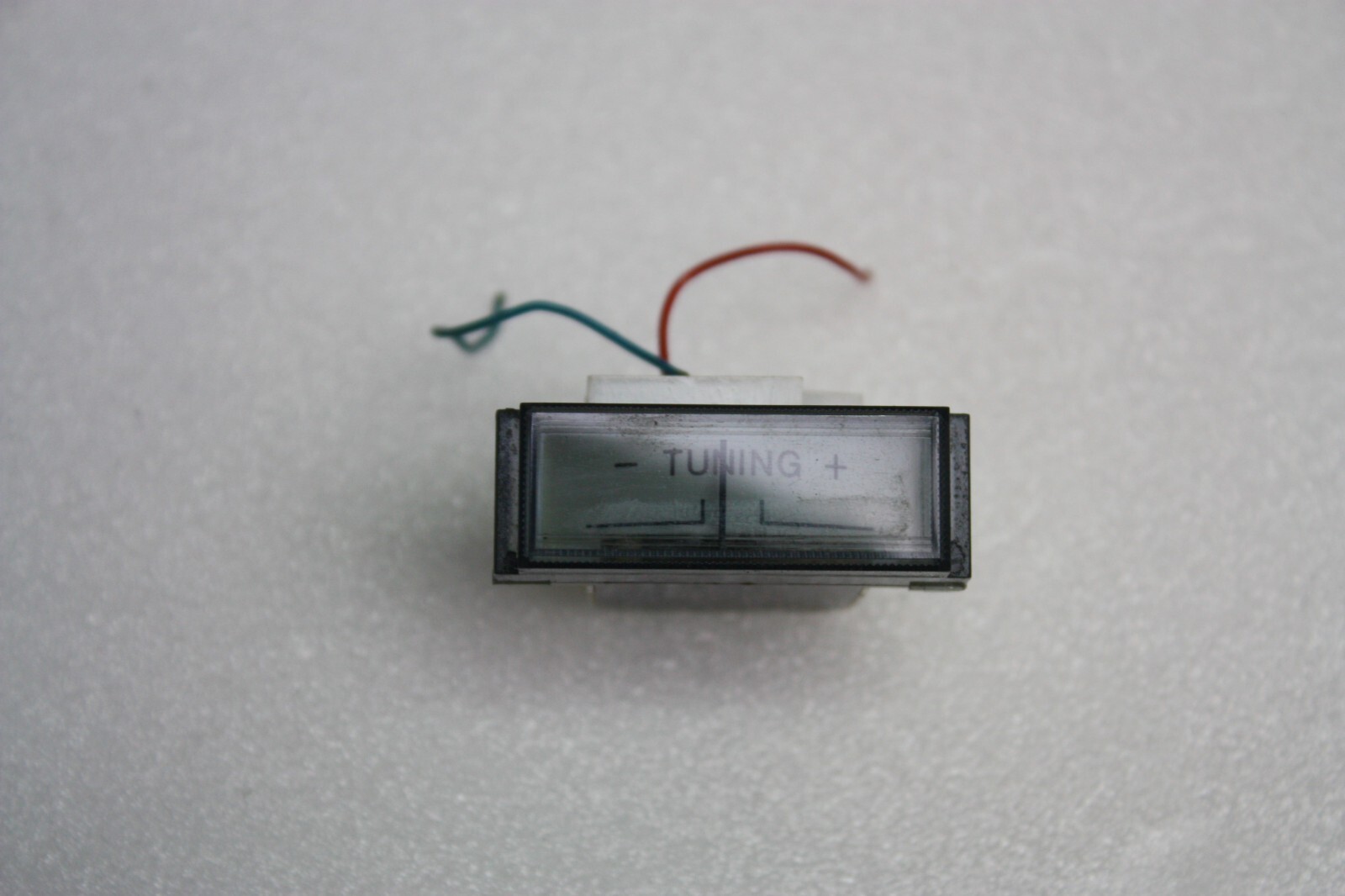


As an eBay Partner, we earn from qualifying purchases. This helps support our independent vintage technology research.
Related Models
- Revox A740
- Revox G36 (1967)
- Eico 3150 (1967)
- Fisher CUSTOM-ELECTRA-I (K-14/K-15) (1957)
- Fisher CUSTOM-ELECTRA IV (E33/E44) (1960)
- Akai AM-2400 (1978)
- Akai AM-2600 (1977)
- Akai AM-2650 (1975)
- Akai AM-2850 (1975)
- Akai AM-32 (1978)