Realistic STA-85: The Affordable Workhorse of 1970s Hi-Fi
In the golden era of analog audio, when vacuum tubes were giving way to solid-state electronics and stereo systems were becoming household staples, RadioShack’s Realistic brand emerged as a key player in bringing accessible hi-fi to the American consumer. Among its lineup of turntables, speakers, and tuners, the Realistic STA-85 stands as a representative example of mid-tier 1970s integrated amplifier design—modest in ambition, but solid in execution. While not a legendary name like Marantz or Sansui, the STA-85 carved out a quiet reputation for reliability, clean amplification, and value-conscious performance.
Released around 1975, the STA-85 was marketed through RadioShack stores and catalogs as a complete solution for stereo enthusiasts who wanted good sound without the premium price tag. It was part of a broader strategy by Tandy Corporation to offer a full ecosystem of audio gear under the Realistic name, often designed in collaboration with or manufactured by third-party OEMs—common practice at the time.
Though detailed service manuals and original marketing brochures for the STA-85 are scarce today, surviving units and user recollections paint a picture of a no-frills, dual-channel integrated amplifier that delivered what it promised: dependable power, basic functionality, and a clean, uncolored sound signature typical of mid-1970s solid-state design.
Technical Specifications
The STA-85 was built during a transitional period in amplifier technology—fully solid-state, with discrete transistor circuitry and no digital components. It featured a straightforward layout designed for ease of use and serviceability, a hallmark of consumer electronics from that era.
| Specification | Detail |
| Model | Realistic STA-85 |
| Year Introduced | 1975 |
| Manufacturer | Tandy Corporation (under Realistic brand) |
| Type | Solid-state integrated amplifier |
| Power Output | 45 watts per channel (RMS, 8Ω) |
| Total Harmonic Distortion | <0.5% (1kHz, rated power) |
| Frequency Response | 20Hz – 20kHz (+/-1dB) |
| Input Sensitivity | 5mV (phono), 150mV (line) |
| Input Impedance | 47kΩ (line), 47kΩ with 100pF (phono) |
| Output Impedance | 8Ω minimum load |
| Signal-to-Noise Ratio | >70dB (A-weighted) |
| Tone Controls | Bass, Treble (±12dB at 100Hz/10kHz) |
| Inputs | 2x Line, 1x Phono (MM) |
| Outputs | Tape Out, Tape In, Preamp Out, Speaker A/B |
| Speaker Connections | Dual binding posts (A/B selectable) |
| Power Supply | Linear transformer, dual rectifiers |
| Dimensions | 17" W × 5.5" H × 13" D |
| Weight | 22 lbs (10 kg) |
The amplifier used a dual-mono power supply design with separate rectification for left and right channels, a thoughtful touch for its price point, helping to reduce crosstalk and improve channel separation. Its front panel featured a large central volume knob, flanked by tone controls, source selector, and a prominent VU meter—offering a satisfying visual feedback of audio dynamics, a feature audiophiles of the era appreciated.
Sound Characteristics and Performance
The STA-85 delivers a sound profile typical of mid-tier 1970s solid-state amplifiers: clean, neutral, and well-controlled, with a slight emphasis on clarity over warmth. It lacks the lush harmonic richness of tube amplifiers or the punchy dynamics of high-end Japanese receivers, but it holds its own with accurate midrange reproduction and decent stereo imaging.
Its phono stage, designed for moving magnet (MM) cartridges, is competent for casual listening but may lack the refinement and low-noise performance of higher-end preamps. Users often report better results when pairing the STA-85 with efficient bookshelf speakers in the 86–90 dB range, such as the Realistic Concert Series, AR-3ax, or KLH Model Eight.
At its rated 45 watts per channel into 8 ohms, the STA-85 provides ample power for small to medium-sized rooms. It handles dynamic peaks reasonably well, though it may show strain with demanding speaker loads or at very high volumes. Overall, it’s a transparent amplifier—what you hear is largely determined by the source and speakers, not the amp itself.
Notable Features and Innovations
While not groundbreaking, the STA-85 included several thoughtful features for its time and price:
- Dual Speaker Outputs (A/B): Allowed users to switch between two pairs of speakers, useful for multi-room setups.
- Tape Monitor Function: Enabled easy recording by routing input signals to tape outputs.
- Preamp Output: Permitted future expansion with an external power amplifier.
- VU Meter: Added both visual appeal and functional feedback on signal levels.
- Front-Panel Input Selector: Simple rotary knob with clear labeling, typical of the era’s user-centric design.
The build quality is utilitarian but robust. The steel chassis, heavy transformer, and through-hole components suggest longevity, especially when compared to modern lightweight electronics. The faceplate is brushed aluminum with simple labeling, and the overall aesthetic fits well in a 1970s stereo console or custom rack.
Common Issues and Maintenance
Like all vintage electronics, the STA-85 benefits from periodic maintenance. Common issues include:
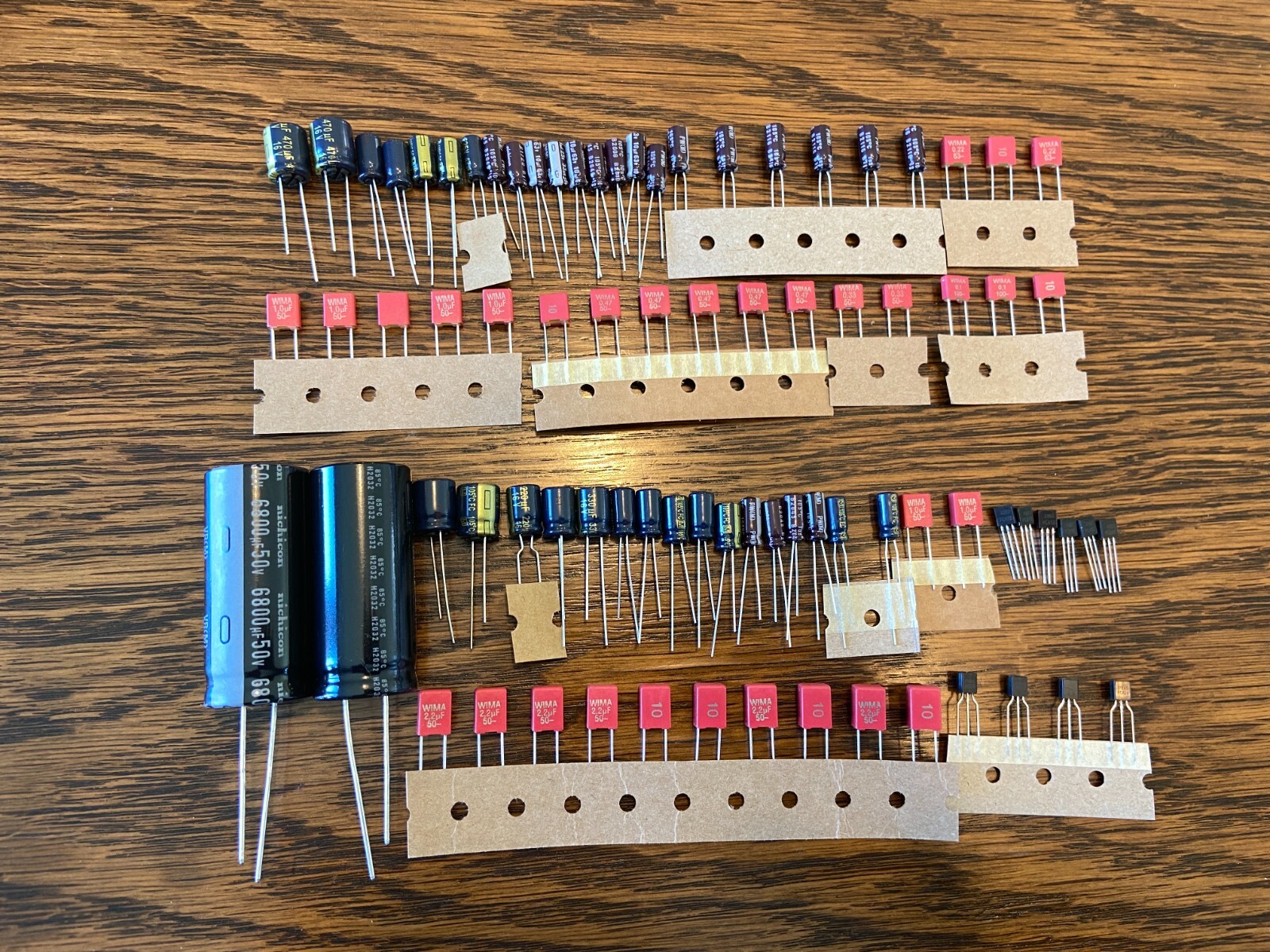
- Capacitor Aging: Electrolytic capacitors in the power supply and signal path may dry out over time, leading to hum, reduced output, or channel imbalance. Replacing these (recapping) is often the first step in restoration.
- Dirty Pots and Switches: The volume and tone controls can develop crackling due to oxidation. Contact cleaner (e.g., DeoxIT) can help, but potentiometer replacement may be necessary in severe cases.
- Weak VU Meter: The meter movement can become sluggish or stuck. Gentle cleaning and recalibration may restore function.
- Binding Post Corrosion: Speaker terminals may oxidize; cleaning with contact spray and tightening ensures good connections.
Because service documentation is rare, troubleshooting often relies on community knowledge and generic solid-state amplifier repair principles. The STA-85’s simple circuit design, however, makes it a relatively accessible project for DIY enthusiasts.
Current Market Value and Collectibility
The Realistic STA-85 is not a high-demand collector’s item, but it has a quiet following among vintage audio hobbyists, RadioShack nostalgists, and budget-conscious restorers. Units in working condition typically sell for $75–$150, with pristine, fully serviced examples reaching up to $200.
Its value lies more in functionality than rarity. Unlike sought-after Japanese receivers from Sansui, Pioneer, or Yamaha, the STA-85 doesn’t boast exotic specs or legendary sound. However, it represents an important chapter in American consumer audio history—democratizing hi-fi during a pivotal decade.
Restored STA-85 units are often used in retro setups, paired with vintage turntables and speakers to recreate the classic 1970s listening experience. Its lack of surround decoding or digital inputs makes it irrelevant for modern home theater, but for pure analog stereo, it remains a viable and satisfying choice.
Conclusion and Legacy
The Realistic STA-85 may not be a star of the vintage audio world, but it embodies the spirit of accessible, reliable hi-fi that defined an era. It wasn’t designed to win awards—it was built to work, day after day, in living rooms across America.
Today, it serves as a reminder that great sound doesn’t always require a legendary name or a high price. With proper care, the STA-85 continues to deliver honest, unpretentious audio performance, making it a worthy addition to any collection of vintage gear—especially for those who appreciate the history of how ordinary people experienced music in the analog age.
For the tinkerer, the nostalgic, or the budget-minded audiophile, the Realistic STA-85 is more than just a RadioShack relic—it’s a functional piece of audio history, quietly amplifying the past, one clean note at a time.
eBay Listings


As an eBay Partner, we earn from qualifying purchases. This helps support our independent vintage technology research.
Related Models
- Realistic STA-16 (1975)
- Realistic STA-7 (1973)
- Realistic STA-800 (1975)
- Realistic STA-850 (1975)
- Realistic STA-235B (1975)
- Luxman L-530 (1975)
- Luxman R-404 (1975)
- Luxman RV-371 (1975)
- Luxman SQ-38U (1975)
- Luxman T-14 (1972)