Realistic STA-80: The Workhorse Amplifier from RadioShack’s Golden Era
In the mid-1970s, as stereo audio systems became increasingly accessible to the average American household, RadioShack emerged as a key player in bringing affordable yet capable audio equipment to the masses. Under its house brand Realistic, the company offered a wide range of components—from turntables and speakers to receivers and amplifiers—that allowed budget-conscious consumers to build full stereo systems without sacrificing too much in performance. Among these offerings, the Realistic STA-80 stands out as a solid example of what made the Realistic brand so popular: dependable engineering, clean design, and excellent value.
Though not as legendary as some of the high-end Japanese receivers of the era, the STA-80 carved out a quiet reputation as a no-frills, solid-state stereo power amplifier that delivered consistent performance for its time. It was designed to be the muscle behind a stereo setup—pairing well with Realistic preamps, tuners, or even third-party components—and remains a nostalgic favorite among vintage audio enthusiasts who appreciate its simplicity and reliability.
Technical Specifications
The STA-80 was introduced around 1975 as part of Realistic’s push into the growing home stereo market. It was positioned as a mid-tier amplifier, offering more power than entry-level models but without the advanced features or premium build of high-end units from brands like Pioneer or Sansui.
| Specification | Detail |
| Model | Realistic STA-80 |
| Manufacturer | Tandy Corporation (RadioShack) |
| Year Introduced | 1975 |
| Type | Solid-state stereo power amplifier |
| Power Output | 40 watts per channel (RMS, 8Ω) |
| Total Harmonic Distortion | <0.5% (at full power) |
| Frequency Response | 20Hz – 20kHz (+/-1dB) |
| Input Sensitivity | 250mV for rated output |
| Input Impedance | 47kΩ |
| Speaker Impedance | 8Ω minimum |
| Inputs | 2x RCA (Left/Right) |
| Outputs | Dual binding posts (A/B optional on some variants) |
| Dimensions (approx.) | 17" W × 6" H × 13" D |
| Weight | 18 lbs |
| Power Supply | 120V AC, 60Hz |
The amplifier used a dual-channel design with discrete transistor circuitry—common for the era—and featured a robust toroidal-style power transformer housed in a heavy-gauge steel chassis. The front panel was minimalist, with a central power switch, blue power indicator light, and left/right channel gain knobs. The rear panel included gold-plated RCA inputs and dual sets of binding posts, allowing users to drive two pairs of speakers if desired.
Sound Characteristics and Performance
The STA-80 was not designed to be a sonic showstopper, but it delivered a clean, balanced sound that held up well against more expensive competition. With 40 watts per channel into 8 ohms, it provided ample power for medium-sized rooms and efficient bookshelf or floor-standing speakers of the 1970s.
Its sound signature was neutral and transparent, avoiding the overly warm coloration of some tube-influenced designs or the harshness that plagued cheaper solid-state amps. Bass response was tight and controlled, while the midrange remained clear—ideal for vocals and acoustic instruments. Highs were detailed without being sibilant, making the STA-80 well-suited for a wide range of music, from classic rock and jazz to classical and folk.
While it lacked the dynamic punch and micro-detail retrieval of higher-end contemporaries, the STA-80 performed admirably within its class. When paired with quality source components—such as a Realistic PT-3000 turntable or a Harman Kardon tuner—it could form the backbone of a very respectable mid-70s stereo system.
Notable Features and Innovations
Though modest in features, the STA-80 included several thoughtful design elements:
- Dual Speaker Outputs: Allowed switching between two sets of speakers or running them simultaneously, a useful feature for multi-room listening.
- Gain Controls per Channel: Enabled fine-tuning of channel balance, helpful when using mismatched speakers or dealing with room acoustics.
- Overload Protection: Built-in circuitry helped prevent damage from short circuits or overheating, increasing longevity.
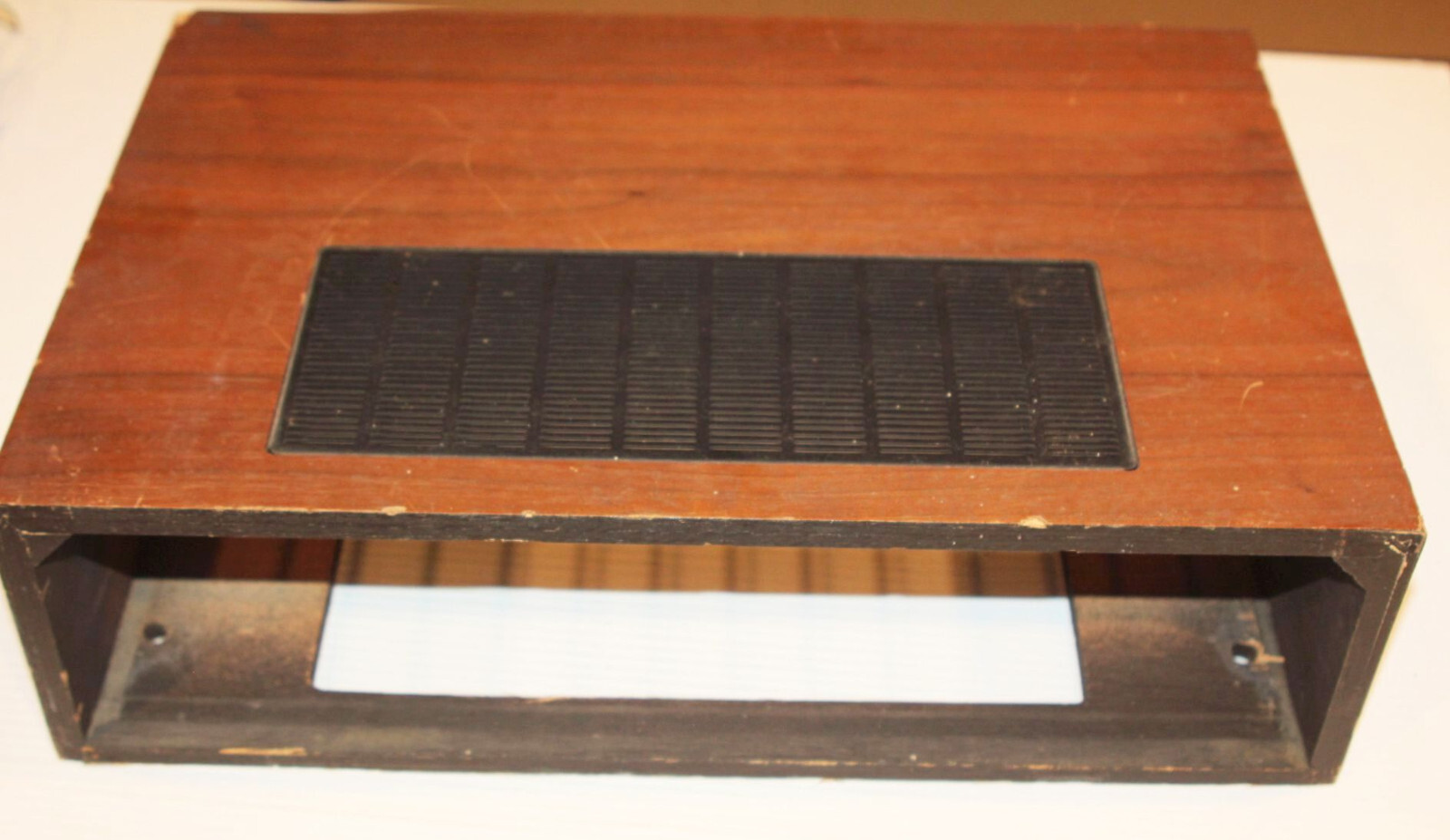
- Ventilated Top Panel: Aluminum heat sinks and ventilation slots aided in thermal management, reducing the risk of thermal shutdown during extended use.
One of the STA-80’s biggest strengths was its modularity. It was intended to be part of a system, not a standalone all-in-one receiver. This allowed users to mix and match components based on budget and preference—a philosophy that RadioShack heavily promoted in its catalogs and in-store displays.
Common Issues and Maintenance
Like many amplifiers of its era, the Realistic STA-80 can develop issues after decades of dormancy. However, it is generally considered reliable and repairable due to its simple, serviceable design.
Common problems include:
- Capacitor Aging: Electrolytic capacitors in the power supply and signal path may dry out or leak, leading to hum, distortion, or failure to power on. Replacing these is a standard restoration step.
- Dirty Pots and Switches: The channel gain controls can become noisy over time. Cleaning with contact cleaner often resolves crackling or channel imbalance.
- Dust and Corrosion: Units stored in basements or garages may suffer from dust buildup or terminal corrosion. A thorough cleaning and inspection are recommended before powering up.
- Fuse Issues: The internal fuse may blow if the amp has been stored improperly or subjected to voltage spikes. Checking and replacing the fuse (with the correct rating) is essential.
Because the STA-80 uses common transistors and standard components, replacement parts are generally available. Its service manual—though rare—can sometimes be found in online vintage audio archives, making DIY repairs feasible for hobbyists.
Current Market Value and Collectibility
The Realistic STA-80 is not a high-value collector’s item, but it holds a quiet appeal among vintage audio enthusiasts, DIY restorers, and RadioShack memorabilia collectors. In working condition, it typically sells for $75 to $150, depending on cosmetics and functionality. Units with original packaging, manuals, or matching-number components may fetch slightly more.
While not as sought-after as rare Japanese receivers, the STA-80 represents an important chapter in American consumer electronics history. It embodies the democratization of hi-fi audio during the 1970s, when companies like RadioShack brought quality sound within reach of everyday buyers.
Its value lies less in performance by modern standards and more in nostalgia, historical significance, and utility. Many users restore STA-80 units to complete vintage setups or use them as secondary amps for casual listening.
Conclusion and Legacy
The Realistic STA-80 may not have won awards or graced the covers of audiophile magazines, but it served its purpose with quiet competence. It was a workhorse amplifier—dependable, straightforward, and built to last. In an era when stereo systems were becoming a household staple, the STA-80 helped make that possible for thousands of families.
Today, it stands as a testament to RadioShack’s role in shaping the American audio landscape. While overshadowed by flashier brands, the STA-80 remains a symbol of accessible hi-fi—a reminder that great sound doesn’t always require a premium price tag.
For those exploring vintage audio on a budget, or seeking to complete a period-correct 1970s setup, the Realistic STA-80 is a worthy candidate. With a little care and restoration, it can still deliver honest, engaging sound—just as it did over four decades ago.
eBay Listings


As an eBay Partner, we earn from qualifying purchases. This helps support our independent vintage technology research.
Related Models
- Realistic STA-16 (1975)
- Realistic STA-7 (1973)
- Realistic STA-800 (1975)
- Realistic STA-850 (1975)
- Realistic STA-235B (1975)
- Luxman L-530 (1975)
- Luxman R-404 (1975)
- Luxman RV-371 (1975)
- Luxman SQ-38U (1975)
- Luxman T-14 (1972)