Realistic STA-35B: The Budget-Friendly Workhorse of 1970s Stereo Sound
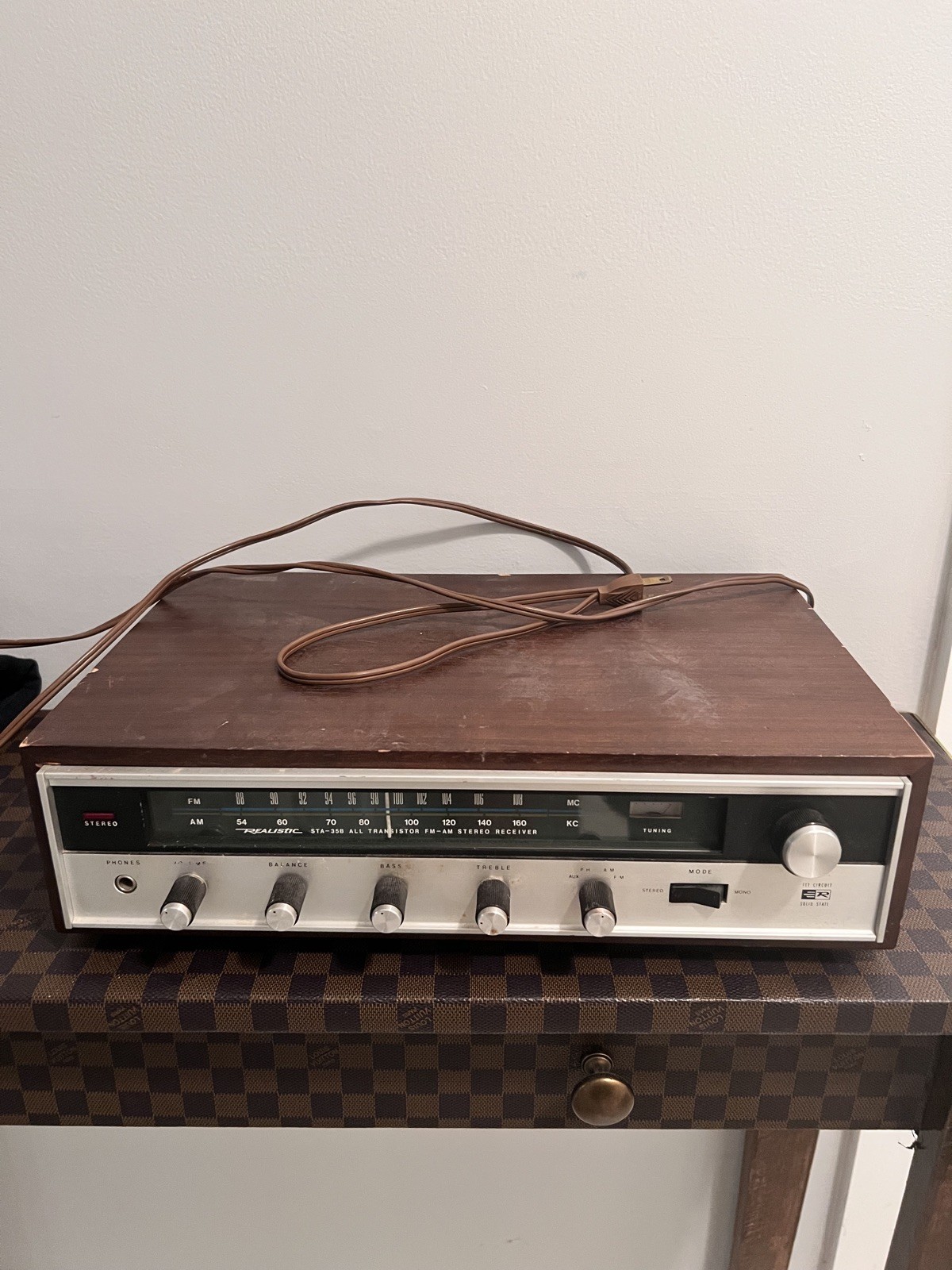
In the golden era of analog audio, when hi-fi systems were becoming household staples, affordability and accessibility were key. Enter the Realistic STA-35B, a modest yet dependable stereo amplifier produced by RadioShack under their house brand, Realistic. Released in the early 1970s—around 1973—the STA-35B was designed for the average consumer who wanted solid stereo performance without the premium price tag of high-end brands like Marantz, Pioneer, or Sansui. While it may not have graced the cover of Stereo Review or competed in the wattage wars, the STA-35B carved out a quiet but lasting legacy as a reliable, no-frills amplifier for entry-level systems.
Part of a broader family of Realistic audio gear that included tuners, tape decks, and speakers, the STA-35B exemplified RadioShack’s mission: to bring electronics within reach of the everyday American. Sold directly through RadioShack stores and catalogs, it was often paired with Realistic speakers like the Concerta or Accu-Stat series, forming the backbone of countless bedroom and dorm room stereo setups.
Technical Specifications
The STA-35B was a solid-state stereo power amplifier, representing the shift from tube-based designs to more compact, efficient transistorized circuits. While not a powerhouse by modern or even contemporary standards, its specifications were competitive for its market segment.
| Specification | Detail |
| Model | Realistic STA-35B |
| Year Introduced | 1973 |
| Manufacturer | Tandy Corporation (RadioShack) |
| Type | Solid-state stereo amplifier |
| Power Output | 18 watts per channel (RMS) |
| Impedance | 8 ohms |
| Total Harmonic Distortion | 0.5% (at full power) |
| Frequency Response | 20Hz – 20kHz (+/-1dB) |
| Input Sensitivity | 250mV for rated output |
| Inputs | 2 line-level (RCA) |
| Outputs | Speaker terminals (binding posts) |
| Dimensions | 14.5" W × 4.5" H × 10" D |
| Weight | 11 lbs |
| Power Requirement | 120V AC, 60Hz |
Notably, the STA-35B lacked a built-in phono preamp or AM/FM tuner—this was purely a power amplifier, meaning it required an external preamp or receiver to function in a complete system. This design choice kept costs down and allowed users to mix and match components, a hallmark of modular hi-fi systems of the era.
Sound Characteristics and Performance
The STA-35B delivers a sound signature typical of modestly powered solid-state amplifiers from the 1970s: clean, neutral, and uncolored, though not particularly dynamic or bass-heavy. With 18 watts per channel, it’s best suited for efficient bookshelf speakers (87dB+ sensitivity) in small to medium-sized rooms. It won’t drive large floor-standing speakers or fill a large living space with high-volume sound, but for casual listening of vinyl, FM radio, or reel-to-reel tapes, it performs admirably.
Treble response is crisp without being harsh, and the midrange is clear—ideal for vocals and acoustic instruments. Bass is present but tight and controlled, lacking the punch or depth of higher-powered amplifiers. Audiophiles seeking a “warm” tube-like character may find the STA-35B a bit lean, but its transparency makes it a good match for speakers with a forward midrange.
Given its modest power output and lack of advanced regulation, the STA-35B is best appreciated as a companion to efficient speakers and low-gain sources. When paired thoughtfully, it can deliver a surprisingly engaging and musical experience—proof that hi-fi enjoyment doesn’t require massive wattage.
Notable Features and Innovations
While the STA-35B wasn’t groundbreaking in terms of technology, it offered several practical features that reflected its utilitarian design:
- Dual RCA Inputs: Allowed connection of two line-level sources, such as a tuner and tape deck.
- Solid-State Reliability: Transistorized design meant less heat, longer life, and no need for tube replacements.
- Simple Front Panel: Clean layout with power switch, channel level controls (left/right), and signal indicator lights—no tone controls, as it was intended to be used with a preamp.
- Binding Post Speaker Terminals: Secure connections for 8-ohm speakers, with clear polarity markings.
- Ventilated Top Panel: Aluminum heat sink design helped dissipate heat from output transistors.
One of the STA-35B’s quiet strengths was its build quality for the price. While not using exotic components, it was assembled with care and featured a sturdy steel chassis and a brushed aluminum front panel that gave it a more upscale appearance than its cost might suggest.
Common Issues and Maintenance
Like any vintage electronics from the 1970s, the Realistic STA-35B can suffer from age-related wear. However, its simple design makes it relatively easy to service.
Common issues include:
- Dried-out electrolytic capacitors: The most frequent problem. Over time, power supply and coupling capacitors can degrade, leading to hum, low output, or channel imbalance. Replacing these (recapping) is often the first step in restoration.
- Noisy potentiometers: The channel level controls may develop crackling or scratching sounds. Cleaning with contact cleaner can help, but replacement may be necessary.
- Failing transistors: While less common, output transistors can fail, especially if the amp was driven hard into low-impedance loads. Testing with a multimeter or transistor checker is recommended.
- Power switch oxidation: Infrequently used units may have a stiff or intermittent power switch. Contact cleaner can restore function.
Because the STA-35B used common, off-the-shelf components, many parts are still available or have modern equivalents. Schematics are occasionally found in RadioShack service manuals or online vintage audio forums, making troubleshooting more accessible.
Current Market Value and Collectibility
The Realistic STA-35B is not a high-value collector’s item, but it holds nostalgic appeal for vintage audio enthusiasts, RadioShack memorabilia collectors, and DIY restorers. Units in working condition typically sell for $50–$100, with non-working or cosmetically damaged models going for less. Fully restored examples with recapped internals and cleaned controls may fetch slightly more, especially when sold as part of a matching Realistic system.
While not rare, the STA-35B is increasingly hard to find in good condition, as many were discarded or cannibalized for parts over the decades. Its value lies more in functionality and historical significance than in rarity. For budget-conscious hobbyists, it’s an affordable entry point into vintage solid-state amplification.
Conclusion and Legacy
The Realistic STA-35B may not have been a star of the hi-fi world, but it played an important role in democratizing stereo sound. At a time when quality audio equipment was still out of reach for many, RadioShack offered a viable, trustworthy alternative. The STA-35B delivered honest performance, solid build, and compatibility with other components—hallmarks of a well-designed entry-level amplifier.
Today, it stands as a reminder of an era when electronics were repairable, modular, and accessible. While it won’t compete with modern Class D amps or high-powered receivers, the STA-35B offers a charming slice of 1970s audio history. For the vintage enthusiast, restoring a STA-35B isn’t just about sound—it’s about preserving a piece of America’s audio heritage, one solder joint at a time.
eBay Listings


As an eBay Partner, we earn from qualifying purchases. This helps support our independent vintage technology research.
Related Models
- Realistic STA-16 (1975)
- Realistic STA-7 (1973)
- Realistic STA-800 (1975)
- Realistic STA-850 (1975)
- Realistic STA-235B (1975)
- Luxman L-530 (1975)
- Luxman R-404 (1975)
- Luxman RV-371 (1975)
- Luxman SQ-38U (1975)
- Luxman T-14 (1972)