Realistic STA-21: The Forgotten Modular Workhorse of the 1970s
In the golden era of DIY and modular audio systems, few brands brought high-fidelity aspirations to the average American household quite like Realistic, the private-label brand of Radio Shack. Among its wide catalog of turntables, speakers, cassette decks, and amplifiers, the Realistic STA-21 stands out not for its flash or fame, but for its quiet utility and embodiment of a bygone era in consumer audio: the age of modular components.
Released around 1975, the STA-21 was not a standalone receiver or power amplifier. Instead, it was a modular preamplifier designed to fit into Radio Shack’s proprietary System 21 rack system—a standardized chassis format that allowed users to mix and match components from different Realistic lines. This modular approach was Radio Shack’s answer to high-end separates, offering an affordable, customizable path to a full stereo system without the premium price tag.
Though overshadowed by more powerful or feature-rich contemporaries from brands like Pioneer, Sony, or Sansui, the STA-21 holds a quiet charm for vintage audio enthusiasts and collectors who appreciate its historical significance and clean, utilitarian design.
Technical Specifications
The STA-21 was engineered as a no-frills preamplifier, focusing on core functionality with minimal embellishment. It provided essential signal routing and volume control, serving as the central hub for a modular setup. While not a powerhouse, its specifications reflect the practical engineering priorities of mid-tier consumer audio in the 1970s.
| Specification | Detail |
| Model | Realistic STA-21 |
| Manufacturer | Tandy Corporation (sold under Realistic) |
| Year Introduced | 1975 |
| Type | Modular Preamplifier |
| Chassis Format | System 21 (3.5" H x 14" W) |
| Inputs | 2x Line-level (RCA), 1x Phono (RCA) |
| Outputs | 1x Preamp Out (RCA) |
| Tone Controls | Bass, Treble (±12dB at 100Hz/10kHz) |
| Volume Control | Dual-gang potentiometer |
| Balance Control | Yes |
| Power Source | Internal connection via System 21 chassis |
| Frequency Response | 20Hz – 20kHz (±1dB) |
| Total Harmonic Distortion | <0.1% (1kHz, rated output) |
| Signal-to-Noise Ratio | >70dB (A-weighted) |
| Impedance | Not applicable (preamp) |
| Power Output | Not applicable (preamp) |
| Dimensions (HxWxD) | 3.5" x 14" x 5.5" (chassis only) |
| Weight | ~3 lbs (1.4 kg) |
The STA-21 was typically paired with power amplifier modules such as the AMP-21 or AMP-22, and could be combined with a tuner (TUN-21), cassette deck (REC-21), or turntable—all mounted in a shared System 21 rack enclosure. This modular philosophy was ahead of its time, predating modern rack systems and offering a clean, integrated look long before it became standard.
Sound Characteristics and Performance
The STA-21 was never marketed as a high-end audiophile preamp, and its sonic signature reflects its modest ambitions. It delivers a neutral, clean midrange with decent clarity for its era, though it lacks the depth and dynamic punch of more refined designs. The phono stage—designed for moving magnet cartridges—handles basic vinyl playback adequately, though it can sound slightly compressed with complex passages or low-output cartridges.
Treble response is crisp without being harsh, and the bass control offers usable adjustment, though the overall low-end remains somewhat lean compared to contemporary Japanese receivers. The tone controls are functional but not surgical, typical of consumer-grade circuits of the time.
Where the STA-21 shines is in its cohesiveness within the System 21 ecosystem. When paired with matching components, it provides a balanced, consistent sound signature across sources—ideal for casual listening, background music, or bedroom systems. It won’t rival a Marantz or Harman Kardon of the same era, but for a budget-conscious buyer in the 1970s, it offered surprising fidelity.
Notable Features and Innovations
The STA-21’s most significant innovation was not in circuit design, but in system integration. The System 21 chassis standard allowed users to build a full stereo system piece by piece, adding components as budget allowed. This was revolutionary for Radio Shack’s core audience: hobbyists, students, and young professionals seeking affordable entry into high-fidelity audio.
Key features include:
- Modular hot-swappable design: Components could be inserted or removed without tools.
- Internal power bus: Eliminated the need for individual power cords, reducing clutter.
- Standardized front panel: Uniform styling and controls across all System 21 modules.
- Balanced signal routing: Low crosstalk and clean signal paths for its price point.
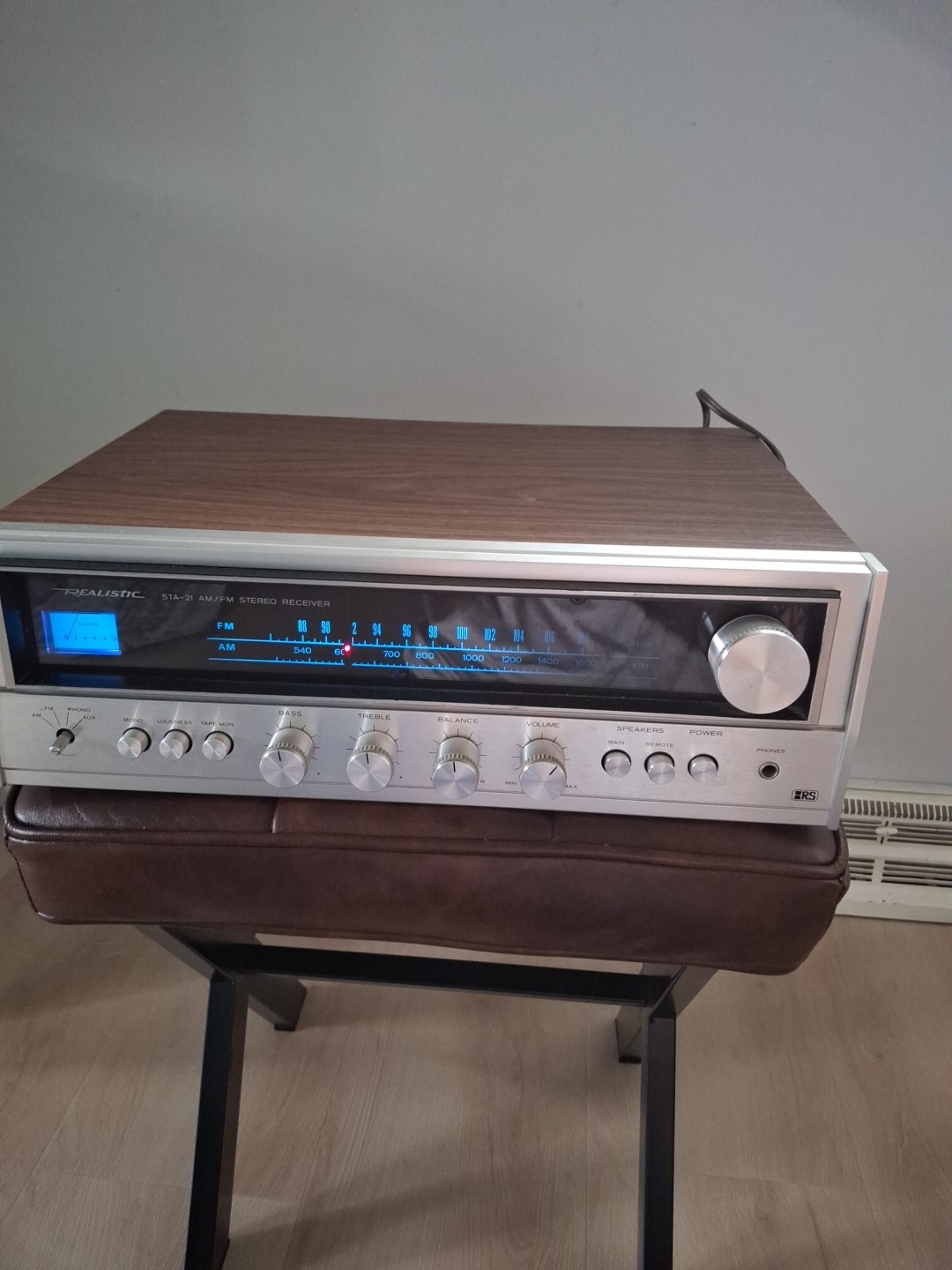
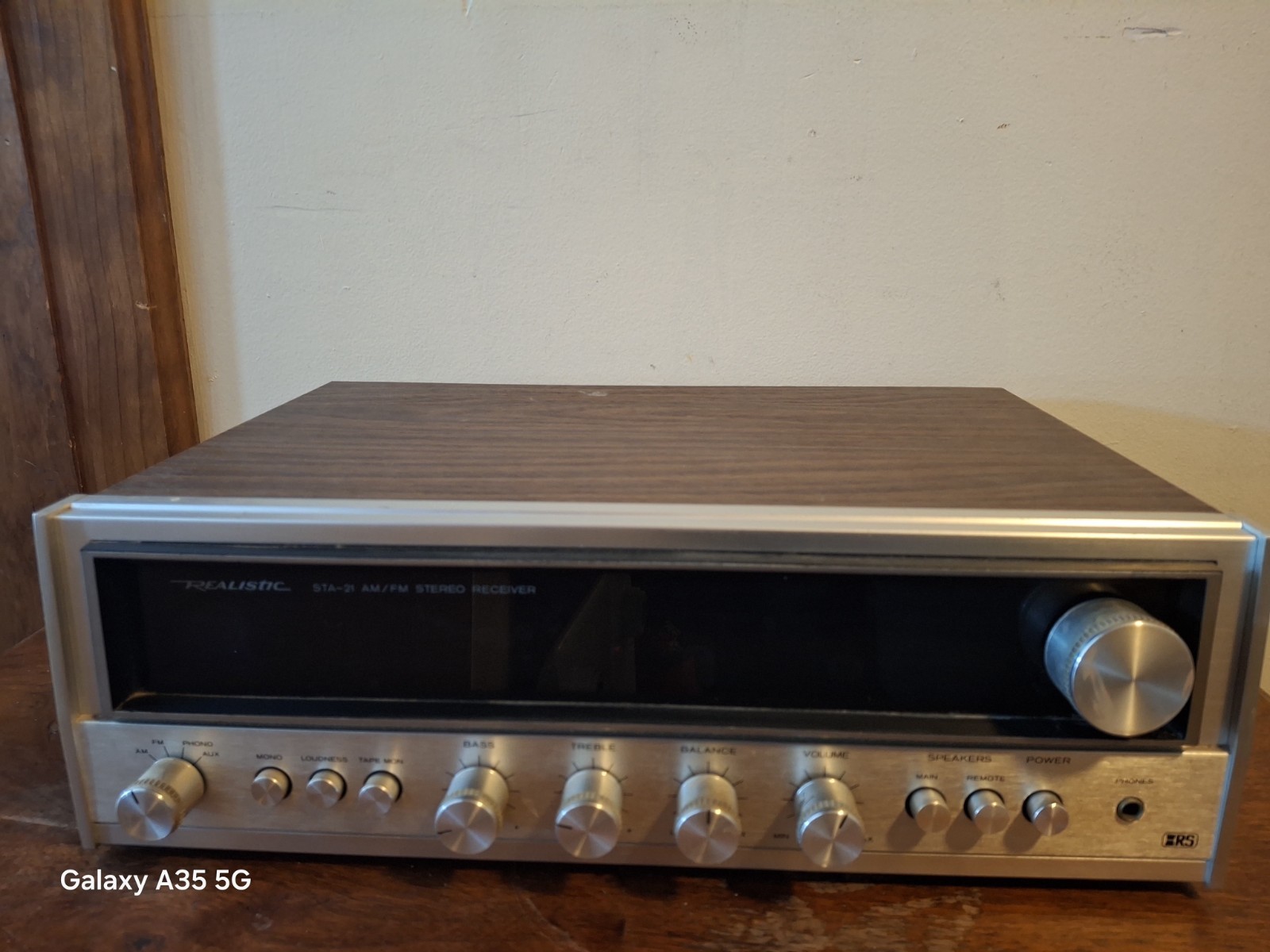
Additionally, the STA-21 included a mono switch, loudness contour, and muted standby, features uncommon in budget preamps of the time. The inclusion of both phono and line inputs made it versatile for mixed-source setups, accommodating turntables, tape decks, or external tuners.
Common Issues and Maintenance
Like many vintage electronics from the 1970s, the STA-21 is prone to age-related wear. Common issues include:
- Crackling or scratchy volume/balance controls: Caused by dried lubricant or oxidation in potentiometers. Cleaning with contact cleaner (e.g., DeoxIT) often resolves this.
- Weak or noisy phono stage: Aging capacitors in the RIAA equalization network can degrade performance. Replacing electrolytic and coupling capacitors can restore clarity.
- Loose chassis connections: The slide-in connectors can become oxidized or misaligned. Cleaning with isopropyl alcohol and ensuring proper seating helps maintain signal integrity.
- Power bus corrosion: In older racks, the internal power rails may corrode, leading to intermittent operation. Inspection and cleaning are recommended.
Fortunately, the STA-21’s circuitry is relatively simple, and service documentation (including schematics) was often available through Radio Shack’s technical manuals. Replacement knobs and faceplates are occasionally found on eBay or audio forums, though original condition units are increasingly rare.
Current Market Value and Collectibility
The Realistic STA-21 is not a high-value collector’s item, but it holds nostalgic and historical value for enthusiasts of vintage consumer electronics. As of 2024, working units in good condition typically sell for $30–$60, with complete System 21 racks (including tuner, amp, and power supply) fetching $150–$300 depending on condition and completeness.
Its collectibility is driven more by modularity enthusiasts and Radio Shack memorabilia collectors than by audiophiles. However, there’s a growing appreciation for the System 21 line as a unique chapter in American audio history—a democratized, modular alternative to the high-end separates market.
Restored STA-21 units are sometimes used in retro-themed setups or as part of vintage office displays, celebrating the aesthetic and ingenuity of 1970s consumer tech.
Conclusion and Legacy
The Realistic STA-21 may not have made audiophile history, but it played a meaningful role in bringing modular, high-fidelity audio to the masses. At a time when full stereo systems were expensive and intimidating, Radio Shack offered an accessible, expandable solution—and the STA-21 was at the heart of it.
Today, it stands as a symbol of practical innovation—a reminder that great audio doesn’t always come from luxury brands, but sometimes from the humble shelves of a local electronics store. For the vintage audio enthusiast, the STA-21 is more than a preamp: it’s a piece of American audio history, quietly humming with the spirit of an era when anyone could build their dream system, one module at a time.
eBay Listings

As an eBay Partner, we earn from qualifying purchases. This helps support our independent vintage technology research.
Related Models
- Realistic OPTIMUS-1 (1976)
- Realistic 42-2108 (1979)
- Realistic 42-2108 Stereo Reverb System (1975)
- Realistic LAB-400 (1977)
- Realistic LAB-420 (1975)
- Akai AM-2850 (1975)
- Akai AP-206 (1975)
- Nakamichi BX-1 (1985)
- Acoustic Research research-ar-17 (1978)
- Acoustic Research AR-19 (1994)