Realistic OPTIMUS-1 (1969)
Warm, detailed, and shockingly alive—these vintage speakers punch far above their weight, even 50 years later.
Overview
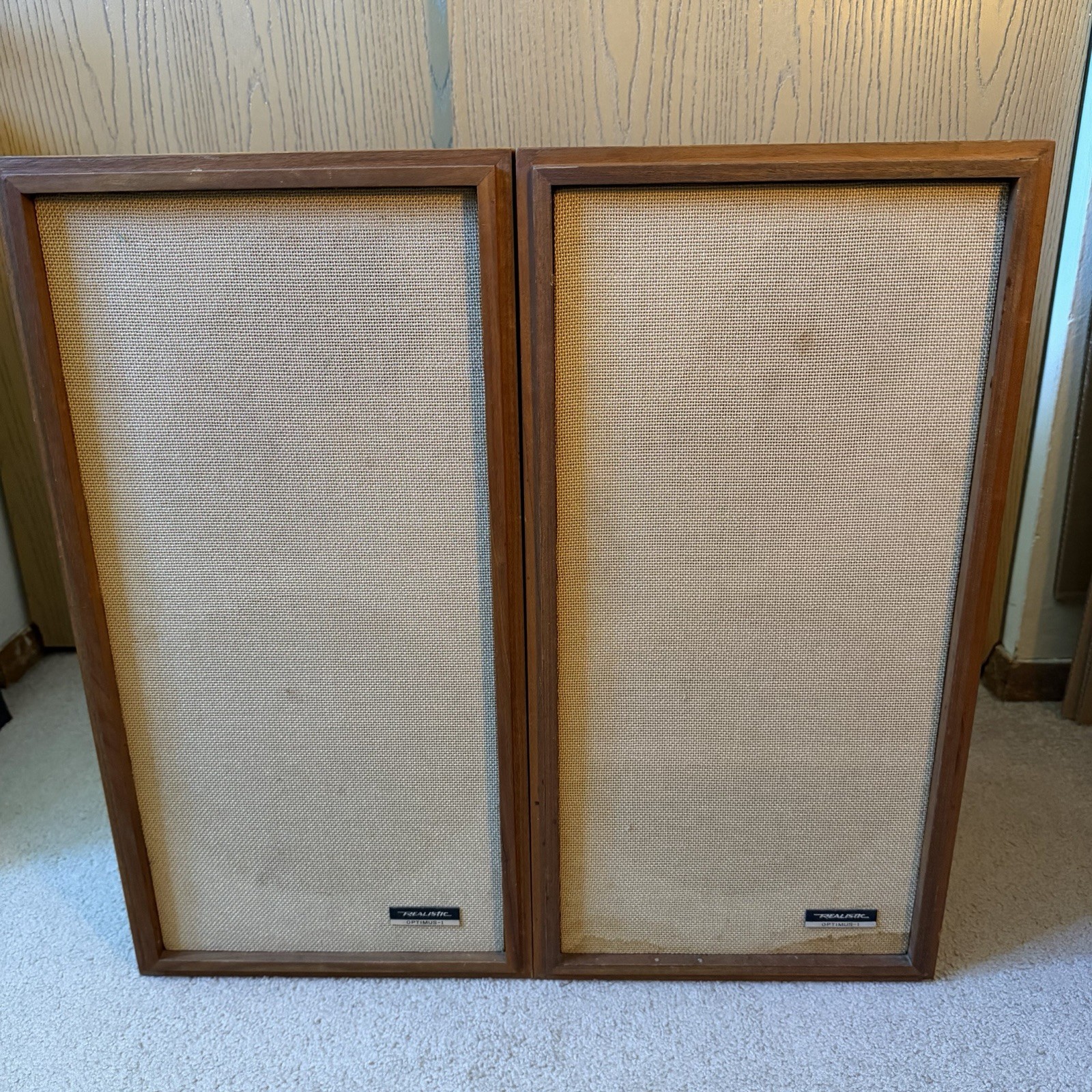
The Realistic OPTIMUS-1 isn’t just another pair of old speakers gathering dust in a basement—it’s a forgotten high-fidelity statement from Radio Shack’s most ambitious era. Built in Japan in 1969 and sold under Tandy Corporation’s Realistic brand, the OPTIMUS-1 was positioned as a “Classic Model” in the Optimus line, which promised “improved styling and performance” over the brand’s standard offerings. At a launch price of $399.99—a serious investment at the time—these were not entry-level bookshelf speakers. They were serious gear for serious listeners who wanted audiophile-grade sound without the boutique price tag.
And based on what owners report, they delivered. One listener admitted being “kind of shocked” when first powering them up, struck by the “great warm enveloping sound… yet very detailed at the same time.” Another called their fully restored pair “amazing,” a testament to the design’s enduring character. These aren’t the words you hear about typical vintage department store speakers. The OPTIMUS-1 stands apart—not just in build, but in sonic presence.
Specifications
| Manufacturer | Realistic (house brand of Radio Shack/Tandy Corporation) |
| Model | OPTIMUS-1 |
| Year Introduced | 1969 |
| Type | 2-way speaker |
| Driver Configuration | Two-way system with three drivers: one 10-inch woofer and two cone tweeters |
| Woofer Type | 10” cast frame woofer with treated fabric surround |
| Enclosure Type | Acoustic suspension system |
| Impedance | 8 ohms |
| Dimensions | 12” x 11” x 23” (per speaker) |
| Features | Treble Hi-Lo-Normal switch pad on the back to adjust output |
| Catalog Number | Cat No. 40-1969A |
| Country of Manufacture | Japan |
Key Features
Handcrafted Aesthetic and Build
Cloaked in oiled walnut veneer and dressed with tweed fabric grills, the OPTIMUS-1 exudes a warmth that goes beyond sound. These are speakers that belong in a well-lived-in room—wood-paneled studies, dimly lit listening dens, or retro-modern lofts. The finish ages gracefully, though collectors note that “the wood is a little dried out with age” on some surviving pairs. That patina, however, only adds to their character.
Three-Driver Two-Way Design
Don’t let the “two-way” label fool you—the OPTIMUS-1 uses three drivers: a single 10-inch cast frame woofer paired with two cone tweeters. This unusual configuration suggests a design focused on dispersion and clarity, not just raw output. The large woofer, with its treated fabric surround, is built for controlled low-end, while the dual tweeters likely help widen the soundstage and smooth out high-frequency response.
Acoustic Suspension for Tight Bass
The use of an acoustic suspension (sealed box) enclosure means these speakers prioritize accuracy over volume. No flabby bass here—just tight, responsive low end that integrates cleanly with the mids and highs. It’s a design philosophy championed by companies like AR in the 1960s, and its inclusion in a Realistic model speaks volumes about the OPTIMUS-1’s engineering pedigree.
On-Board Tone Adjustment
On the back panel, a switch labeled “Low / High frequency response” (also described as a “Treble Hi-Lo-Normal” pad) lets users tailor the output to their room or preference. This kind of user-adjustable EQ was far from standard in consumer speakers of the era, especially at this price point. It’s a thoughtful touch that shows Radio Shack wasn’t just slapping a name on generic hardware.
Historical Context
In 1969, the audio world was shifting. Hi-fi was moving from luxury novelty to household expectation, and companies like Radio Shack were racing to offer quality gear to the growing middle class. The OPTIMUS-1 emerged as part of that push—a “Classic Model” in a line that promised better performance and styling than standard Realistic offerings. Built in Japan, it benefited from the rising reputation of Japanese manufacturing in electronics and speaker design. While no direct competitors or market context is documented, the OPTIMUS-1 clearly aimed to compete with mid-tier audiophile speakers of the day, offering real engineering in a mass-market package.
Collectibility & Value
The OPTIMUS-1 is now “very rare,” according to current listings, and “no longer available” from any official source. On the secondary market, prices vary dramatically: $75.00 at USProElectronics, $199.00 on SpenCertified, and up to $299.99 for other SpenCertified listings. This wide range likely reflects condition, provenance, and whether the speakers have been restored.
Functionally, some units remain in excellent working order—“fully tested and no issues found,” with “outstanding” sound quality. But age takes its toll. One owner reported crackling from a single woofer, while another questioned whether their pair was “due for a recone / recap.” Given their 1969 origins, it’s safe to assume most surviving pairs could benefit from refoaming or reconing, especially with the treated fabric surrounds degrading over decades.
Their rarity, strong sonic reputation, and distinctive design make the OPTIMUS-1 a sleeper hit among vintage audio collectors. They’re not just nostalgic decor—they’re legitimate performers that still “make music pop into life.”
eBay Listings


As an eBay Partner, we earn from qualifying purchases. This helps support our independent vintage technology research.
Related Models
- Realistic 42-2108 (1979)
- Realistic 42-2108 Stereo Reverb System (1975)
- Realistic LAB-400 (1977)
- Realistic LAB-420 (1975)
- Realistic LAB-440 (1976)
- Akai AM-2850 (1975)
- Akai AP-206 (1975)
- Nakamichi BX-1 (1985)
- Acoustic Research research-ar-17 (1978)
- Acoustic Research AR-19 (1994)