Realistic MODULAIRE-969: The Forgotten Pioneer of Modular Audio
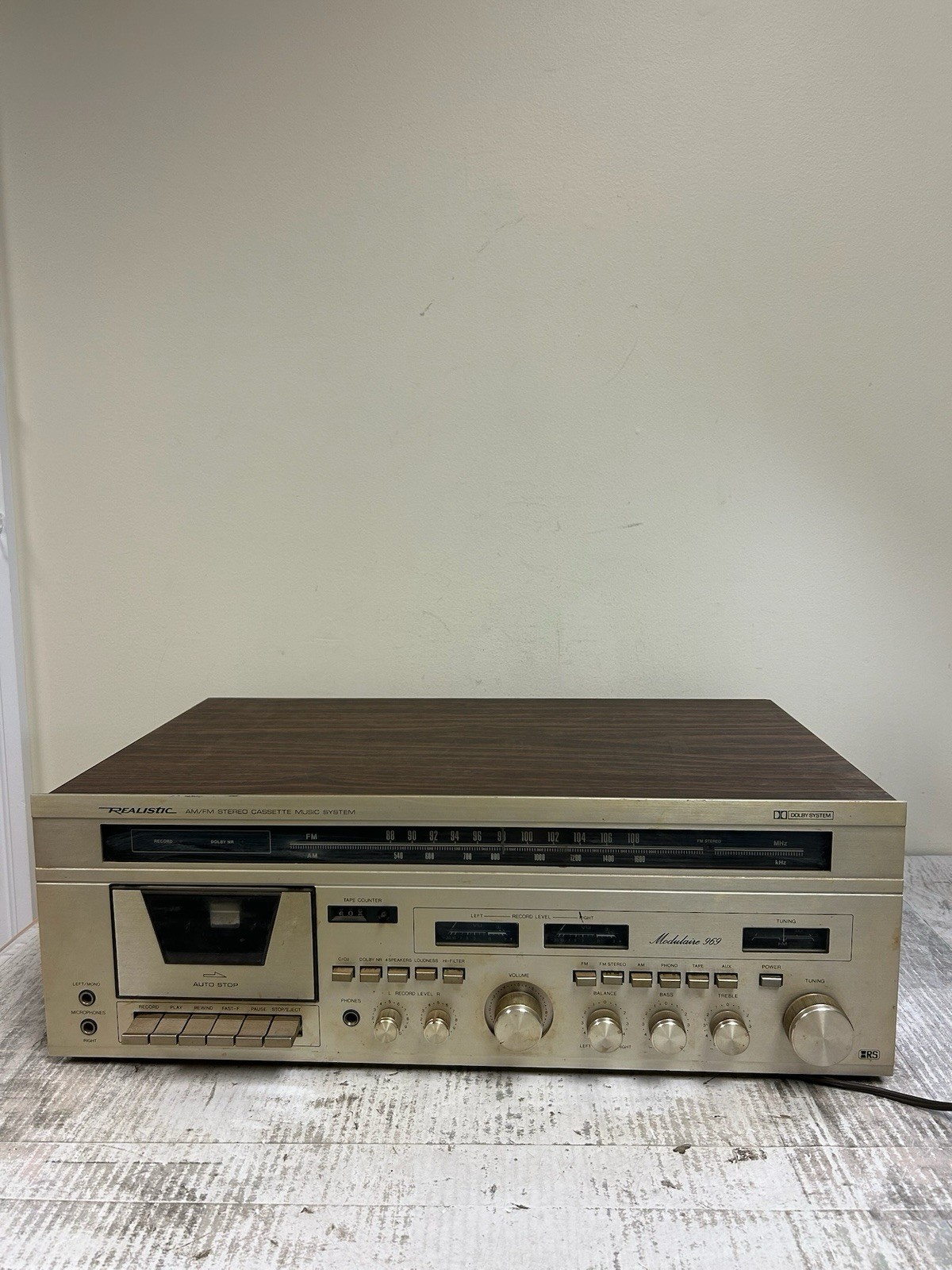
In the mid-1970s, as the high-fidelity audio market exploded with component separates from Japanese and American manufacturers, RadioShack introduced a bold and forward-thinking concept: the Realistic MODULAIRE-969. Not a receiver, amplifier, or tuner in the traditional sense, the MODULAIRE-969 was the centerpiece of a modular audio ecosystem designed to let users build and customize their sound systems piece by piece. Long before the era of smart home integration or plug-and-play digital audio, RadioShack’s MODULAIRE series offered a surprisingly sophisticated approach to personal audio — and the MODULAIRE-969 stood at its heart.
A Vision of Customizable Audio
Launched around 1975, the MODULAIRE-969 was part of RadioShack’s broader MODULAIRE line, a system of interchangeable audio modules that snapped into a shared chassis. The idea was simple but revolutionary for its time: instead of buying a complete receiver or stack of components, consumers could start with a basic setup and expand it over time by adding new modules — a tuner here, a preamp there, or even a tape deck. The MODULAIRE-969 served as the main chassis and power supply, housing up to five individual modules and providing regulated power and internal signal routing.
This modular philosophy was aimed at hobbyists, tinkerers, and budget-conscious audiophiles who wanted flexibility without sacrificing quality. It also reflected RadioShack’s identity as a go-to source for electronics enthusiasts — a place where you could walk in for a resistor and walk out with a complete stereo system.
Technical Specifications
The MODULAIRE-969 itself was not an audio component in the traditional sense, but rather a modular frame and power hub. It did not produce sound or amplify signals directly. Instead, its role was structural and electrical — providing mounting bays, power distribution, and interconnections for the various plug-in modules.
| Specification | Detail |
| Model | MODULAIRE-969 |
| Manufacturer | Realistic (Tandy Corporation) |
| Year Introduced | 1975 |
| Chassis Type | 5-slot modular frame |
| Power Supply | Internal transformer with regulated DC outputs |
| Module Compatibility | All MODULAIRE series modules (e.g., preamp, FM tuner, tape deck, power amp) |
| Input/Output Options | Dependent on installed modules |
| Dimensions (approx.) | 19" width, 7" height, 12" depth |
| Weight | ~12 lbs (without modules) |
| Finish | Brushed aluminum front panel with black trim |
| Power Requirements | 120V AC, 60 Hz |
The system used a standardized 19-inch rack width, making it compatible with other audio gear of the era. Each slot accepted a single-width module, and the internal bus provided both power and signal pathways, reducing the need for external cabling between components. Modules connected via edge connectors, similar to computer cards of the time, ensuring a clean, integrated look.
Sound Characteristics and Performance
Since the MODULAIRE-969 did not process audio directly, its sonic character depended entirely on the modules installed. However, the system was engineered to minimize noise and interference. The internal power supply featured regulated DC outputs, which helped maintain clean power to sensitive circuits like preamps and tuners — a thoughtful touch for a budget-oriented system.
Users could configure their MODULAIRE-969 in many ways:
- A basic setup might include a preamp module, FM tuner, and tape recorder.
- More advanced users could add a dual power amplifier module for full stereo separation.
- Some even integrated external turntables via RCA inputs on the preamp.
While the individual modules were not in the same league as high-end separates from brands like Marantz or Sansui, they delivered solid mid-fi performance — warm, balanced sound with decent clarity and imaging. The FM tuner, for example, offered stereo multiplex reception and reasonable sensitivity, while the tape deck modules featured Dolby B noise reduction on later versions.
Notable Features and Innovations
The MODULAIRE-969’s most significant innovation was its modular expandability. At a time when most consumers bought fixed-function receivers, the ability to upgrade or reconfigure a system was groundbreaking. Key features included:
- Hot-swappable modules (though best done with power off)
- Color-coded module labels for easy identification
- Front-panel status LEDs on some modules
- Internal signal bus to reduce interconnect clutter
- Tool-less installation — modules slid in and locked with a simple latch
The system also encouraged experimentation. A user could start with a simple AM/FM tuner and preamp, then later add a second tape deck for dubbing, or swap in a graphic equalizer for enhanced tone control. This made the MODULAIRE-969 especially appealing to DIYers, students, and educators in electronics and audio technology.
Common Issues and Maintenance
Today, the MODULAIRE-969 is a rare find, and surviving units often require some restoration. Common issues include:
- Dried-out capacitors in the power supply, leading to hum or failure
- Oxidized edge connectors, causing intermittent module connections
- Worn module latches, making modules loose or difficult to install
- Discolored or faded labels due to age and UV exposure
Maintenance is relatively straightforward for those with basic electronics skills. Cleaning the edge connectors with isopropyl alcohol and a soft brush can restore reliable contact. Replacing the electrolytic capacitors in the power supply is highly recommended, especially if the unit has been stored for decades. Since RadioShack no longer supports the line, finding replacement modules can be challenging, though vintage audio forums and eBay occasionally turn up NOS (New Old Stock) parts.
It’s also worth noting that the plastic knobs and faceplates can become brittle over time, so handling should be gentle.
Current Market Value and Collectibility
The MODULAIRE-969 is not a mainstream collector’s item like a vintage Marantz receiver, but it holds a special place among RadioShack enthusiasts, modular system collectors, and retro-tech aficionados. Complete systems with rare modules (such as the dual power amp or graphic equalizer) can fetch $200–$400 in good working condition. Chassis-only units (like the MODULAIRE-969 by itself) typically sell for $50–$100, depending on condition.
Its value lies more in historical significance and uniqueness than in audiophile performance. As a precursor to modern modular electronics and customizable audio systems, the MODULAIRE-969 represents an ambitious — if underappreciated — chapter in consumer audio history.
Conclusion: A Forgotten Visionary
The Realistic MODULAIRE-969 may not have revolutionized home audio in the way its creators hoped, but it remains a fascinating artifact of 1970s innovation. At a time when most audio gear was rigid and monolithic, RadioShack dared to imagine a future where your stereo could grow with you — where you could upgrade your tuner without replacing your amplifier, or add recording capability with a simple swap.
While the MODULAIRE line was eventually phased out in favor of conventional receivers and later digital systems, the MODULAIRE-969 stands as a testament to a bold idea: that audio should be accessible, customizable, and user-driven. For vintage audio collectors, it’s not just a piece of equipment — it’s a glimpse into an alternate path that hi-fi might have taken.
If you’re lucky enough to find one in a thrift store or estate sale, don’t overlook it. With a little care, the MODULAIRE-969 can still serve as a functional, nostalgic centerpiece for a truly unique vintage system.
eBay Listings



As an eBay Partner, we earn from qualifying purchases. This helps support our independent vintage technology research.
Related Models
- Realistic OPTIMUS-1 (1976)
- Realistic 42-2108 (1979)
- Realistic 42-2108 Stereo Reverb System (1975)
- Realistic LAB-400 (1977)
- Realistic LAB-420 (1975)
- Akai AM-2850 (1975)
- Akai AP-206 (1975)
- Nakamichi BX-1 (1985)
- Acoustic Research research-ar-17 (1978)
- Acoustic Research AR-19 (1994)