Realistic MINIMUS-7W (Walnut): The Humble Workhorse of Vintage Stereo Sound
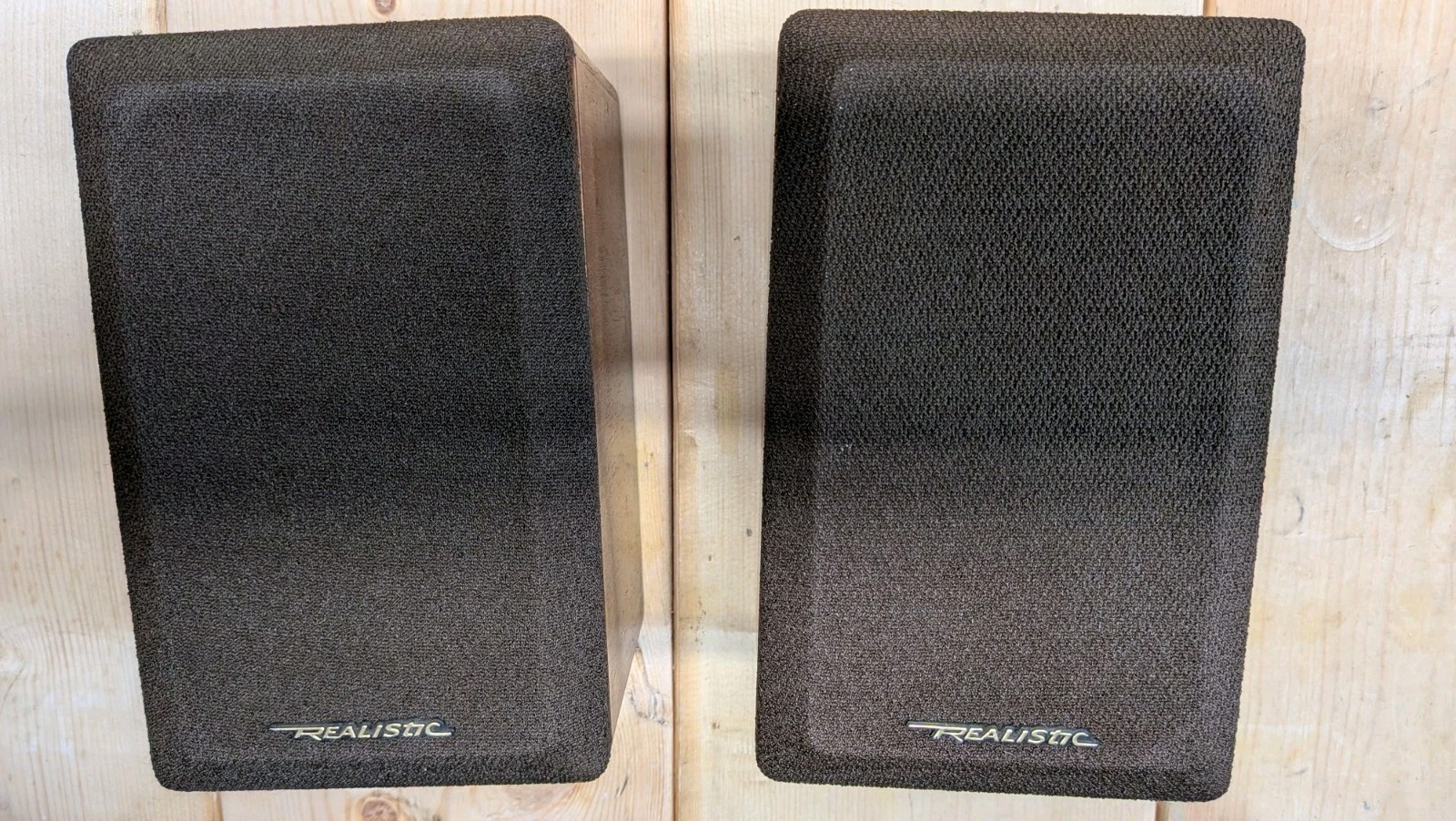
In the world of vintage audio, not every legend comes from high-end boutiques or international audiophile brands. Sometimes, greatness hides in plain sight—on a bookshelf, under a TV, or flanking a turntable in a college dorm. The Realistic MINIMUS-7W (Walnut) is one such unsung hero. Sold through RadioShack stores across America from the late 1970s into the 1980s, this compact bookshelf speaker became a staple of budget-conscious music lovers, dorm-room setups, and first-time stereo owners. Though modest in design and origin, the MINIMUS-7W has earned a loyal following among vintage audio enthusiasts for its surprisingly warm sound, iconic walnut vinyl finish, and nostalgic charm.
A Speaker for the People
Realistic was RadioShack’s private-label brand, offering affordable electronics that brought technology within reach of everyday consumers. During the 1970s and 1980s, RadioShack was a go-to destination for everything from cables to amplifiers—and speakers were no exception. The MINIMUS-7W was part of a broader family of compact speakers designed to pair with entry-level receivers, turntables, and tape decks. The "W" in the model name denotes the walnut vinyl finish, a simulated woodgrain that gave the speaker a tasteful, furniture-like appearance despite its modest construction.
While never marketed as a high-fidelity powerhouse, the MINIMUS-7W was engineered to deliver balanced sound for its size and price point. It became especially popular during the stereo boom of the late 1970s, when more households were investing in home audio systems. Its small footprint made it ideal for apartments, bedrooms, and bookshelves—hence the “bookshelf speaker” classification.
Technical Specifications
| Feature | Specification |
| Model | Realistic MINIMUS-7W |
| Brand | Realistic (RadioShack) |
| Production Era | Late 1970s – Mid 1980s |
| Type | 2-way passive bookshelf speaker |
| Driver Configuration | 5.25" woofer, 3/4" dome tweeter |
| Frequency Response | Approx. 60 Hz – 20 kHz |
| Nominal Impedance | 8 ohms |
| Sensitivity | ~86 dB |
| Crossover Frequency | ~3.5 kHz |
| Enclosure Finish | Walnut vinyl (simulated wood) |
| Dimensions (HxWxD) | 11.5" x 6.5" x 7.5" |
| Weight | ~8 lbs per speaker |
| Recommended Power | 10–50 watts RMS |
The MINIMUS-7W features a simple but effective two-way design. The 5.25-inch woofer handles midrange and bass frequencies, while a small 3/4-inch dome tweeter reproduces the highs. The crossover network, though basic by modern standards, does an admirable job of blending the drivers without harshness. The sealed (acoustic suspension) cabinet design contributes to tighter bass response compared to ported designs of similar size, though deep bass extension is limited—typical for a speaker of this class.
Sound Characteristics and Performance
Don’t expect earth-shaking bass or studio-monitor precision from the MINIMUS-7W. What it lacks in raw power, however, it makes up for in musicality and warmth. The speaker delivers a slightly mid-forward tonal balance, which gives vocals and acoustic instruments a pleasing presence. The tweeter is smooth and non-fatiguing, avoiding the harshness that plagues some budget speakers of the era.
Bass response is modest, rolling off below 60 Hz, but remains tight and well-controlled thanks to the sealed enclosure. With a sensitivity of around 86 dB, the MINIMUS-7W isn’t the most efficient speaker, but it pairs well with low-to-mid-powered vintage receivers (20–40 watts) commonly found in home setups of the time.
When properly matched with a warm-sounding tube amp or a classic solid-state receiver like a Sony STR or Pioneer SX, the MINIMUS-7W can deliver a surprisingly engaging and analog-rich listening experience. Jazz, classic rock, and vocal-centric genres shine on these speakers, making them a favorite among casual listeners and nostalgic audiophiles alike.
Notable Features and Design
The MINIMUS-7W’s design is utilitarian but charming. The MDF (medium-density fiberboard) cabinet is covered in a textured walnut vinyl wrap, complete with fake wood grain and a subtle sheen that catches the light. The front baffle is slightly recessed, and the speaker is front-ported (though not bass-reflex—this is a sealed design). Grilles are fabric-covered and attach magnetically or with pegs, depending on the production batch.
One of the more distinctive features is the gold-plated dual binding posts, which were a step above the plastic screw terminals found on many budget speakers of the era. This allowed for better connectivity and even bi-wiring, though few users took advantage of the latter.
Despite its affordability, the build quality is solid for its time. Corners are cleanly joined, and the overall fit and finish reflect RadioShack’s commitment to reliability, even in entry-level gear.
Common Issues and Maintenance
Like any vintage speaker, the MINIMUS-7W can suffer from age-related wear. The most common issues include:
- Aged foam surrounds: The foam around the woofer can dry out and crumble over time, leading to distorted bass or complete driver failure. Fortunately, foam reconing kits are widely available and relatively easy to install with basic tools.
- Tweeter degradation: While less common, the dome tweeters can become brittle or lose clarity. Replacement tweeters with similar specs are available from audio parts suppliers.
- Crossover component drift: Capacitors and inductors in the crossover may degrade, affecting tonal balance. Replacing these with modern equivalents can restore or even improve performance.
- Cosmetic wear: The walnut vinyl can peel at the edges or become scratched. While not repairable, these flaws add to the speaker’s vintage character for many collectors.
Maintenance is straightforward: keep the speakers away from moisture and direct sunlight, clean the cabinets with a dry or slightly damp cloth, and consider refoaming the woofers if you notice rattling or loss of bass.
Current Market Value and Collectibility
Today, the Realistic MINIMUS-7W is not a high-value collector’s item, but it holds a special place in the hearts of vintage audio fans. Pairs in good condition typically sell for $40–$100, depending on cosmetic state, working order, and whether they’ve been restored.
Their appeal lies in their nostalgia, simplicity, and retro aesthetic. They’re often used in vintage-themed setups, retro gaming rigs, or as secondary speakers in offices or kitchens. Some DIY enthusiasts even modify them with modern drivers or crossovers to enhance performance while preserving the classic look.
While not rare, original, unmodified pairs with intact grilles and binding posts are becoming harder to find—especially in the sought-after walnut finish.
Conclusion: A Legacy of Accessibility
The Realistic MINIMUS-7W (Walnut) may not have the pedigree of a JBL L100 or the cult status of a Bose 901, but it represents something equally important: democratized audio enjoyment. At a time when high-fidelity sound was becoming mainstream, RadioShack brought decent-quality speakers into millions of homes at an affordable price.
Today, the MINIMUS-7W stands as a testament to an era when building a stereo system didn’t require a six-figure budget. It’s a speaker that prioritized musicality over specs, charm over flash, and accessibility over exclusivity.
For the vintage audio enthusiast, the MINIMUS-7W is more than just a pair of old speakers—it’s a piece of American audio history, quietly humming with the warmth of analog memories. Whether you’re restoring a 1980s stereo setup or just love the look of walnut vinyl on your shelf, the Realistic MINIMUS-7W remains a humble classic worth celebrating.
eBay Listings


As an eBay Partner, we earn from qualifying purchases. This helps support our independent vintage technology research.
Related Models
- Realistic OPTIMUS-1 (1976)
- Realistic 42-2108 (1979)
- Realistic 42-2108 Stereo Reverb System (1975)
- Realistic LAB-400 (1977)
- Realistic LAB-420 (1975)
- Akai AM-2850 (1975)
- Akai AP-206 (1975)
- Nakamichi BX-1 (1985)
- Acoustic Research research-ar-17 (1978)
- Acoustic Research AR-19 (1994)