Realistic MINIMUS-7 (Black): The Pocket-Sized Powerhouse of the 1970s
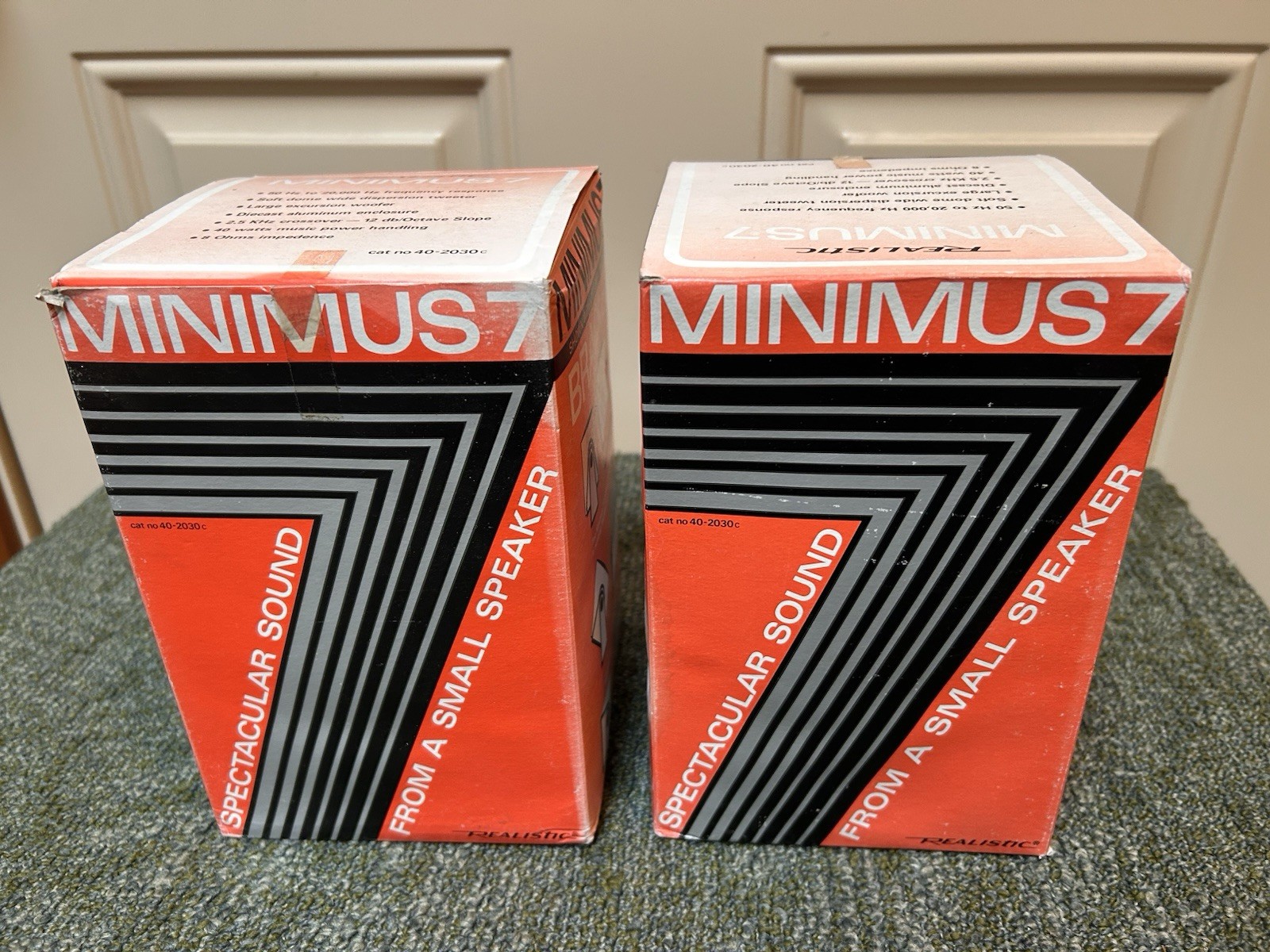
In the late 1970s, when high-fidelity audio was rapidly becoming accessible to the average consumer, RadioShack—through its in-house brand Realistic—introduced a speaker that would quietly become a cult classic: the Realistic MINIMUS-7 (Black). Though modest in appearance and marketed as an affordable bookshelf model, the MINIMUS-7 earned a reputation far beyond its price tag. With its compact cabinet, distinctive black finish, and surprisingly warm, balanced sound, it became a favorite among students, dorm dwellers, and budget-conscious audiophiles. Decades later, the MINIMUS-7 remains a beloved piece of vintage audio history—a symbol of accessible quality during an era when good sound didn’t require a fortune.
A Product of Its Time: The RadioShack Era
Launched in 1978, the Realistic MINIMUS-7 emerged during a golden age for consumer electronics retail. RadioShack was a one-stop shop for everything from transistors to turntables, and its Realistic brand offered reliable, no-frills audio gear that punched above its weight. The MINIMUS-7 was designed to fit small spaces—apartments, bedrooms, dorm rooms—without sacrificing too much in terms of sonic performance. At a time when large floor-standing speakers dominated audiophile setups, the MINIMUS-7 offered a space-saving alternative that still delivered a rich, engaging listening experience.
Sold exclusively through RadioShack stores, the MINIMUS-7 was part of a broader trend toward democratizing high-fidelity sound. It wasn't just a speaker; it was a gateway for a generation of music lovers to experience stereo separation, clarity, and bass response that rivaled more expensive models.
Technical Specifications
The MINIMUS-7 was a compact two-way bookshelf speaker with a simple yet effective design. While not engineered to compete with high-end monitors, its specifications reflect a thoughtful balance between size, cost, and performance.
| Specification | Detail |
| Model | Realistic MINIMUS-7 (Black) |
| Manufacturer | Realistic (Tandy Corporation) |
| Year Introduced | 1978 |
| Type | 2-way bookshelf speaker |
| Driver Configuration | 5.25" woofer, 3/4" dome tweeter |
| Frequency Response | 55 Hz – 18 kHz |
| Impedance | 8 ohms |
| Sensitivity | 86 dB (1W/1m) |
| Crossover Frequency | ~3.5 kHz |
| Enclosure Type | Bass reflex (rear port) |
| Dimensions (HxWxD) | 10.5" x 6.5" x 7.5" (267 x 165 x 191 mm) |
| Weight | 8.5 lbs (3.86 kg) per speaker |
| Finish | Black vinyl wrap with cloth grille |
The 5.25-inch polypropylene woofer handled midrange and bass duties, while the small dome tweeter delivered crisp highs without harshness. The rear-firing port helped extend bass response, giving the speaker a fuller sound than its size would suggest. Despite its modest sensitivity, the MINIMUS-7 performed well with low-to-mid-powered receivers of the era, such as the Realistic STA-48 or Sherwood 4000 series.
Sound Characteristics and Performance
Don’t let the size fool you—the MINIMUS-7 delivered a sound that was remarkably full and balanced for its class. The bass, while not earth-shaking, was tight and present, especially for a speaker under 11 inches tall. The midrange was clear and natural, making vocals and acoustic instruments sound intimate and well-defined. The tweeter offered smooth high-frequency response, avoiding the sibilance or brittleness common in budget speakers of the time.
When properly placed—ideally on stands or elevated shelves with some toe-in—the MINIMUS-7 created a surprisingly wide soundstage. Stereo imaging was precise for such a small cabinet, and the speakers worked particularly well with vinyl records, FM radio, and cassette decks—media formats that defined the late '70s and early '80s audio experience.
While not suited for large rooms or high-volume listening, the MINIMUS-7 excelled in intimate environments. Paired with a decent receiver and a turntable, it offered a complete and satisfying hi-fi experience for under $100 (a fraction of today’s prices).
Notable Features and Design
The MINIMUS-7’s design was all about practicality and clean aesthetics. The black vinyl-wrapped MDF cabinet gave it a professional, understated look, while the cloth grille (attached with hidden magnets) protected the drivers without muddying the sound. The rear port allowed for flexible placement, though optimal performance came from keeping the speakers a few inches away from the wall.
One of the most notable aspects of the MINIMUS-7 was its modular design—a hallmark of RadioShack’s approach. Owners could easily replace drivers or repair crossovers using parts available through RadioShack’s catalog. This repairability contributed to the speaker’s longevity and helped many units survive into the 21st century.
Additionally, the MINIMUS-7 was often sold as part of a system, sometimes bundled with a receiver, turntable, or tape deck. This “complete system” approach made it an ideal starter setup for young music lovers or first-time stereo owners.
Common Issues and Maintenance
Like any vintage speaker, the MINIMUS-7 is prone to age-related wear. The most common issues include:
- Degraded woofer surrounds: The foam surrounds on the 5.25" woofers often dry out and crumble after 40+ years. This results in distorted bass and reduced output. Fortunately, foam replacement kits are widely available and relatively easy to install.
- Tweeter failure: While less common, some dome tweeters fail due to overdriving or age. Replacement units or modern equivalents can restore high-frequency clarity.
- Crossover component drift: The passive crossover may suffer from aging capacitors, which can affect tonal balance. Replacing these with modern film capacitors can rejuvenate the speaker’s performance.
- Grille fabric wear: The original cloth grilles may be frayed or discolored. While cosmetic, replacement grilles or DIY fabric upgrades can refresh the look.
Maintenance is straightforward for those with basic DIY skills. Cleaning the cabinet with a damp cloth and mild cleaner preserves the vinyl wrap, and checking wiring connections ensures reliable performance.
Current Market Value and Collectibility
Today, the Realistic MINIMUS-7 enjoys a loyal following among vintage audio enthusiasts. While never a high-end product, its reputation for solid sound and nostalgic appeal has elevated its status. Complete, working pairs in good condition typically sell for $75–$150, depending on cosmetic condition and whether they’ve been restored.
Fully restored units—with new foam, upgraded crossovers, and cleaned cabinets—can fetch higher prices, especially when paired with original packaging or documentation. The black finish is the most common, though some rare woodgrain versions exist and are slightly more sought after.
The MINIMUS-7 is not just a speaker—it’s a piece of audio history. It represents an era when RadioShack empowered everyday consumers to build quality stereo systems without breaking the bank. For collectors, it’s a nostalgic artifact; for casual listeners, it’s a charming retro speaker that still holds up in small rooms.
Conclusion: A Legacy of Accessible Hi-Fi
The Realistic MINIMUS-7 (Black) may not have the pedigree of a JBL or the prestige of a Klipsch, but it carved out a unique place in audio history. It brought credible sound quality to millions of homes at a time when stereo systems were becoming a cultural staple. Its compact size, honest sound, and rugged build made it a favorite across generations.
Today, the MINIMUS-7 stands as a testament to the idea that great sound doesn’t require a massive price tag. Whether you’re restoring a vintage setup, furnishing a retro-themed room, or simply curious about the roots of affordable hi-fi, the Realistic MINIMUS-7 is a speaker worth seeking out. It’s not just vintage gear—it’s a piece of audio Americana.
eBay Listings


As an eBay Partner, we earn from qualifying purchases. This helps support our independent vintage technology research.
Related Models
- Realistic OPTIMUS-1 (1976)
- Realistic 42-2108 (1979)
- Realistic 42-2108 Stereo Reverb System (1975)
- Realistic LAB-400 (1977)
- Realistic LAB-420 (1975)
- Akai AM-2850 (1975)
- Akai AP-206 (1975)
- Nakamichi BX-1 (1985)
- Acoustic Research research-ar-17 (1978)
- Acoustic Research AR-19 (1994)