Realistic MINIMUS-2: The Pocket-Sized Legend of Vintage Audio
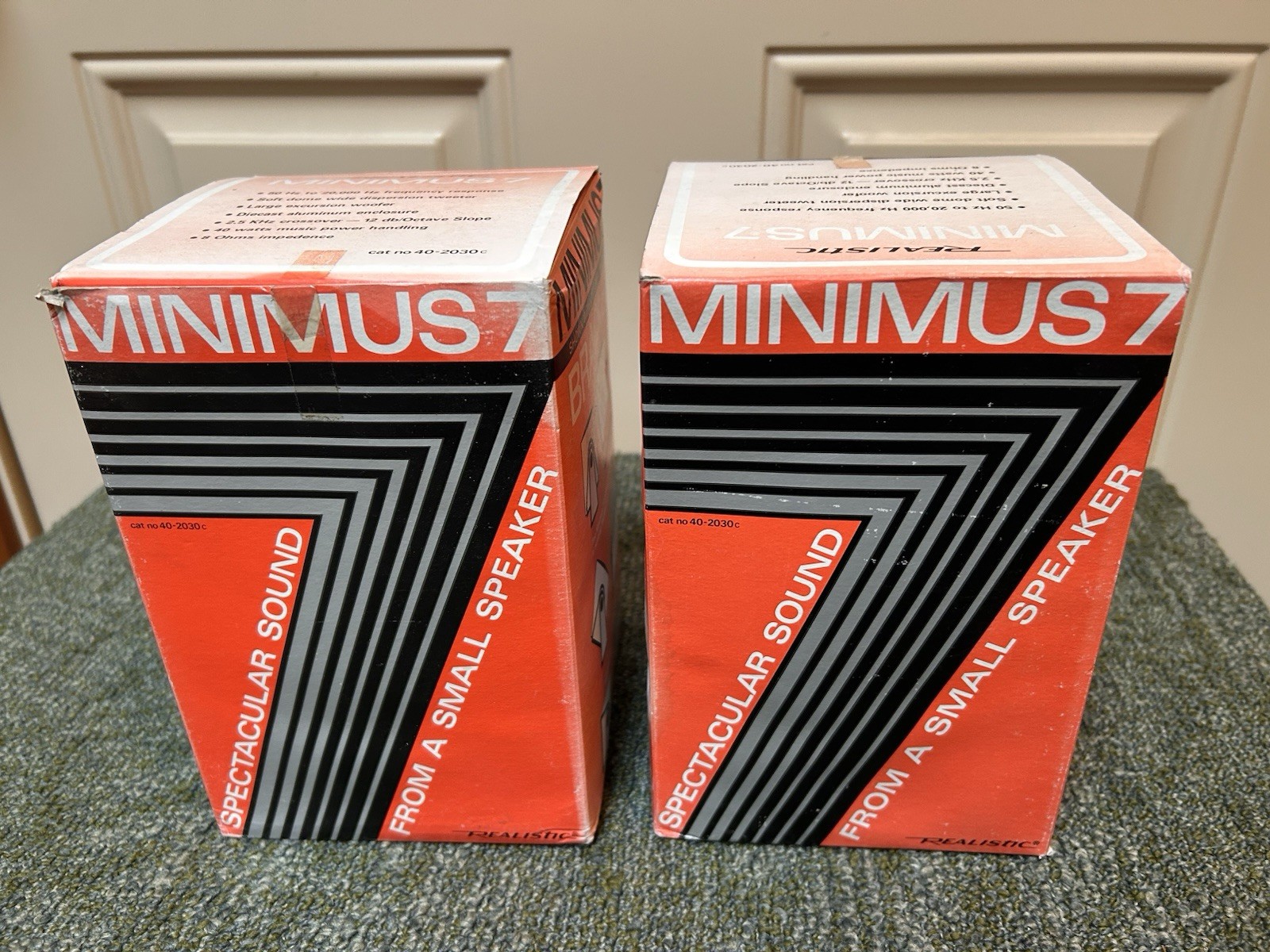
In the late 1970s, when high-fidelity audio was often synonymous with large, expensive components, Radio Shack offered a refreshing alternative: accessible, well-engineered gear under its Realistic brand. Among the most beloved and enduring products to emerge from this era was the Realistic MINIMUS-2, a compact bookshelf speaker that defied its size to deliver surprisingly rich, balanced sound. Though modest in appearance and price, the MINIMUS-2 has earned a cult following among vintage audio enthusiasts, DIY tinkerers, and budget-conscious audiophiles who appreciate its charm, historical significance, and sonic character.
A Speaker for the People
Introduced around 1977, the MINIMUS-2 was part of Radio Shack’s broader push to bring quality audio equipment to the average consumer. At a time when many bookshelf speakers were bulky or overpriced, the MINIMUS-2 stood out for its small footprint and wallet-friendly cost—often retailing for under $30 a pair. Despite its humble origins, it was designed with genuine acoustic principles in mind, making it a favorite among students, apartment dwellers, and anyone with limited space or budget.
The MINIMUS-2 wasn’t just a cheap speaker—it was a smart one. Its design prioritized efficiency and tonal balance, making it an ideal match for the low-to-mid-powered receivers and integrated amps of the era, such as the Realistic STA-25 or Sony STR-V2. Its compact MDF cabinet (rare for budget speakers at the time) helped reduce resonance, while its simple two-way design kept things reliable and easy to service.
Technical Specifications
| Specification | Detail |
| Model | Realistic MINIMUS-2 |
| Manufacturer | Tandy Corporation (Radio Shack) |
| Year Introduced | 1977 |
| Type | Passive, two-way bookshelf |
| Driver Configuration | 3" woofer, 3/4" dome tweeter |
| Frequency Response | 70 Hz – 18 kHz (approximate) |
| Impedance | 8Ω |
| Sensitivity | ~86 dB |
| Crossover Frequency | ~4 kHz |
| Enclosure Type | Bass-reflex (rear port) |
| Dimensions (H×W×D) | 7.5" × 4.5" × 5" |
| Weight | ~3.5 lbs per speaker |
| Finish | Woodgrain vinyl (walnut or oak) |
The MINIMUS-2 featured a modest 3-inch paper-cone woofer paired with a small 3/4-inch cloth dome tweeter. The rear-firing bass port helped extend low-frequency response, giving the speaker a surprising amount of bass for its size. While not designed for high SPLs or deep sub-bass, it excelled in near-field listening and small-room setups.
Sound Characteristics and Performance
Don’t let the size fool you—the MINIMUS-2 delivers a warm, inviting sound that many modern micro-speakers still struggle to match. Its tonal balance leans slightly toward the midrange, giving vocals and acoustic instruments a natural, intimate quality. The tweeter is smooth and non-fatiguing, avoiding the harshness that plagues some vintage budget speakers.
Bass response is limited by physics, of course, but the ported design allows the MINIMUS-2 to produce usable low end down to around 70 Hz, especially when placed near a wall or corner. With proper placement—ideally on stands or shelves at ear level—they create a surprisingly wide soundstage for such small enclosures.
These speakers shine with genres like folk, jazz, classic rock, and vocal-centric music. They’re not meant for booming electronic music or home theater explosions, but in their intended context—paired with a tube amp or vintage receiver in a cozy living room—they offer a charming, analog warmth that many seek in vintage audio.
Notable Features and Innovations
While not technically groundbreaking, the MINIMUS-2 incorporated several thoughtful design choices:
- Efficient 8Ω design: Made it compatible with nearly all receivers of the era, including lower-powered models.
- Compact MDF cabinet: Unusual for budget speakers at the time, helping reduce cabinet resonance.
- Rear porting: Enhanced bass response without increasing cabinet size.
- Simple crossover: A first-order design using minimal components, contributing to reliability and ease of repair.
- Affordability and availability: Sold in thousands of Radio Shack stores, making high-quality sound accessible nationwide.
The MINIMUS-2 was also a favorite among DIY audio hobbyists. Its simple construction and widely available replacement drivers (such as those from Peerless or Eminence) made it a popular candidate for upgrades—new tweeters, improved crossovers, and even cabinet modifications are common in enthusiast circles.
Common Issues and Maintenance
Like any vintage speaker, the MINIMUS-2 can suffer from age-related wear. The most common issues include:
- Aged foam surrounds: The original foam on the woofer can dry out and crumble over time, leading to distorted bass or complete failure. Replacement foam kits are widely available and relatively easy to install.
- Tweeter degradation: Cloth domes can become brittle, though many original tweeters still perform well if not exposed to high volumes or moisture.
- Crossover component drift: While simple, the capacitor in the crossover can degrade, affecting treble clarity. Replacing it with a modern metal-film capacitor can improve performance.
- Cosmetic wear: The woodgrain vinyl can peel or discolor, especially on edges. Careful restoration with contact cement or replacement vinyl is possible.
Maintenance is straightforward for those with basic soldering skills. Re-foaming a pair of MINIMUS-2s is a weekend project that can restore them to like-new performance.
Current Market Value and Collectibility
Today, the Realistic MINIMUS-2 enjoys a steady following in the vintage audio community. While never a high-end product, its reputation for value and charm has made it a sought-after item on platforms like eBay, Audiogon, and Facebook Marketplace.
- Working condition: $30–$60 per pair
- NOS (New Old Stock): $80–$120 per pair
- Restored or upgraded: $70–$100 per pair
Collectibility is driven more by nostalgia and utility than rarity. Many buyers seek them for retro setups, dorm rooms, or as affordable near-field monitors. Their compact size also makes them ideal for desktop audio or secondary systems.
Conclusion and Legacy
The Realistic MINIMUS-2 may not have the prestige of a JBL L100 or the engineering pedigree of a BBC monitor, but it holds a special place in audio history. It represents a time when quality sound wasn’t reserved for the wealthy—when a teenager could walk into their local Radio Shack and leave with a complete, capable stereo system.
More than just a speaker, the MINIMUS-2 symbolizes accessibility, simplicity, and the joy of music. It proved that good sound doesn’t require big boxes or big budgets. Decades later, it continues to win over new fans with its honest, unpretentious performance.
For vintage audio enthusiasts, the MINIMUS-2 is more than a curiosity—it’s a reminder that sometimes, the smallest speakers leave the biggest impression. Whether you’re restoring a classic setup or just want a pair of charming little speakers for your desk, the Realistic MINIMUS-2 remains a timeless choice from the golden age of consumer audio.
eBay Listings


As an eBay Partner, we earn from qualifying purchases. This helps support our independent vintage technology research.
Related Models
- Realistic OPTIMUS-1 (1976)
- Realistic 42-2108 (1979)
- Realistic 42-2108 Stereo Reverb System (1975)
- Realistic LAB-400 (1977)
- Realistic LAB-420 (1975)
- Akai AM-2850 (1975)
- Akai AP-206 (1975)
- Nakamichi BX-1 (1985)
- Acoustic Research research-ar-17 (1978)
- Acoustic Research AR-19 (1994)