Quad FM3 FM Tuner (1975)
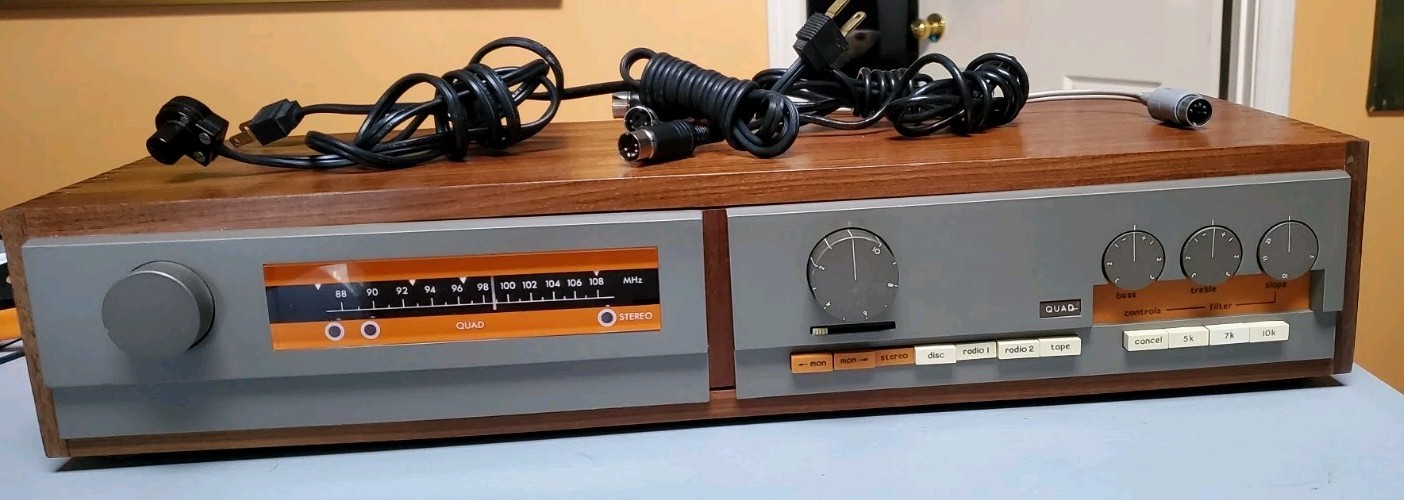
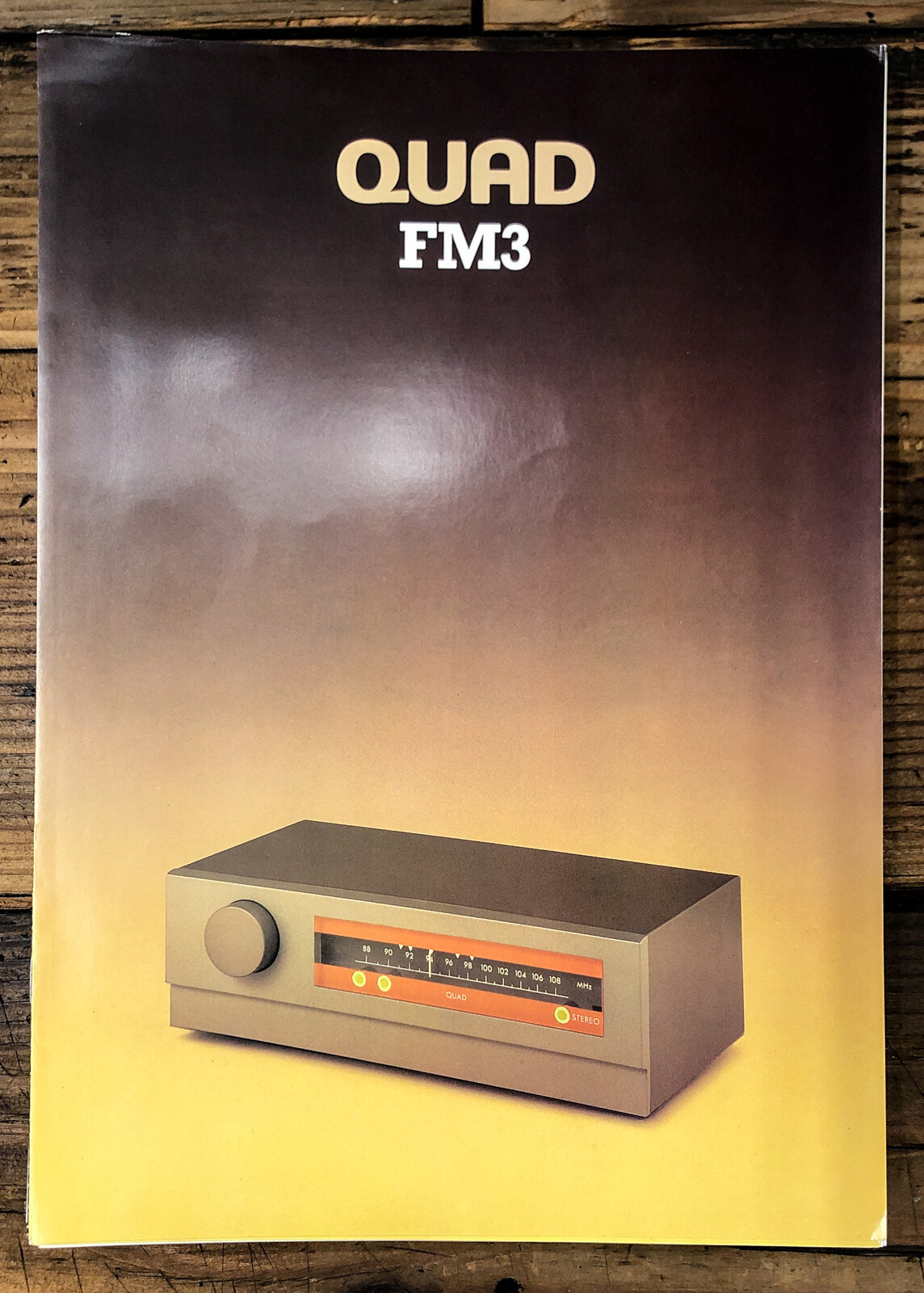
The Quad FM3 is a high-fidelity FM tuner introduced in 1975 as part of Quad’s celebrated '3-series' of audio separates. Renowned for its precision engineering, minimalist aesthetic, and outstanding FM reception capabilities, the FM3 quickly established itself as one of the finest tuners of the 1970s and early 1980s. Built to deliver musical, low-distortion performance, it remains a sought-after component among vintage audio enthusiasts and collectors.
Specifications
| Specification | Detail |
| Model | FM3 |
| Brand | Quad |
| Year of Release | 1975 |
| Production Period | 1975–1982 |
| Category | FM Tuner |
| Tuner Type | Superheterodyne |
| Tuning Method | Flywheel tuning with analog dial |
| Frequency Range | 87.5–108 MHz |
| Sensitivity (Mono) | 1.8 μV for 40 dB S/N |
| Sensitivity (Stereo) | 3.5 μV for 40 dB S/N |
| Stereo Separation | >40 dB at 1 kHz |
| Total Harmonic Distortion | <0.3% (typical) |
| Output Level | 300 mV (nominal) |
| Output Impedance | 1 kΩ |
| Input for Accessories | Decoder link input for use with Quad 303 preamp |
| Key Features | Quadratic detection, PLL stereo decoder, FET front-end, signal strength meter, stereo indicator, muting switch |
| Power Requirements | 230V AC (UK standard), 50 Hz |
| Power Consumption | ~15 watts |
| Dimensions (W×H×D) | 435 × 120 × 310 mm |
| Weight | 8.5 kg |
Key Features
The Quad FM3 was engineered with audiophile performance in mind. Its standout features include:
- Quadratic Detection Circuit: Minimizes distortion and improves signal stability, especially under weak signal conditions.
- Phase-Locked Loop (PLL) Stereo Decoder: Offers superior stereo separation and decoding accuracy compared to conventional systems of the era.
- FET Front-End: Provides high input impedance and low noise for improved signal capture.
- Flywheel Tuning Mechanism: Allows smooth, precise tuning with a weighted knob for fine frequency adjustments.
- Signal Strength Meter: Analog meter displays received signal strength for optimal station alignment.
- Stereo Indicator and Muting Switch: Visual confirmation of stereo lock and optional muting of weak or noisy stations.
Historical Significance
The FM3 was a core component of Quad’s 3-series, which also included the 33 preamplifier and 303 power amplifier. This series represented the pinnacle of British hi-fi design in the 1970s—emphasizing transparency, build quality, and musical integrity over flashy aesthetics or excessive features.
The FM3 was widely praised by audio critics and users alike for its ability to extract clear, detailed sound from FM broadcasts, even in areas with marginal reception. Its rejection of interference and low noise floor made it a favorite among discerning listeners. Reviewers often highlighted its "musical" character—a rare compliment for a tuner—attributing it to the careful circuit design and high-quality components.
Unlike many tuners of the period that prioritized flashy displays or automation, the FM3 embraced a minimalist, functional design philosophy that has aged gracefully. Its all-metal chassis, clean front panel, and mechanical tuning reflect Quad’s commitment to longevity and performance.
Sound Signature
The Quad FM3 delivers a warm, natural, and highly detailed sound. Its low distortion and noise characteristics contribute to a clean and transparent presentation. Stereo imaging is precise, with excellent channel separation that brings FM broadcasts to life with a sense of space and realism. The tuner’s musicality ensures that even compressed or lower-bitrate broadcasts retain a pleasing, analog-like quality.
Maintenance and Tips
While the FM3 is a robustly built unit, age-related issues may arise after decades of use. Proper maintenance ensures optimal performance:
- Capacitor Replacement: Electrolytic capacitors, particularly in the power supply and stereo decoder circuits, should be checked and replaced if necessary. This is the most common restoration task.
- Tuning Meter Bulb: The analog signal strength meter uses a small incandescent bulb that may burn out over time. Replacement bulbs are available and easy to install.
- Cleaning Controls: Over time, the tuning potentiometer and input switches can develop noise. Use a high-quality contact cleaner (non-residue type) to restore smooth operation.
- Antenna Connection: For best reception, use a high-quality outdoor FM antenna with 75-ohm coaxial cable. The FM3 performs exceptionally well with strong, clean signals.
- Ventilation: Ensure adequate airflow around the unit, especially if used in a stacked system, to prolong component life.
Collectibility and Market Value
The Quad FM3 is highly collectible, earning an 8/10 on the collectibility scale due to its reputation, build quality, and status within the 3-series ecosystem. Fully functional or professionally restored units command strong interest in the vintage audio market.
- Market Value: $300–$600 USD, depending on condition, originality, and restoration quality.
- Restoration Potential: Units that have undergone recapping and servicing often sell at the higher end of the range.
- Rarity: While not extremely rare, fully operational, clean examples are becoming harder to find.
Conclusion
The Quad FM3 remains a benchmark in analog FM tuner design. Its combination of technical innovation, elegant simplicity, and superb sound quality ensures its enduring appeal. Whether used as part of a vintage 3-series stack or integrated into a modern system, the FM3 continues to deliver a listening experience that few tuners—vintage or modern—can match. For those who appreciate the art of radio reception, the FM3 is nothing short of a classic.
eBay Listings


As an eBay Partner, we earn from qualifying purchases. This helps support our independent vintage technology research.
Related Models
- Quad quad-fmii (1970)
- Quad quad-am (1971)
- Quad quad-am3 (1971)
- Quad quad-amii (1973)
- Quad quad-fm (1975)
- Aiwa CS-250 (1978)
- Denon TU-1500RD (1995)
- Denon TU-280 (1976)
- Denon TU-501 (1977)
- Denon TU-550 (1978)