Quad FM2 FM Tuner (1969)
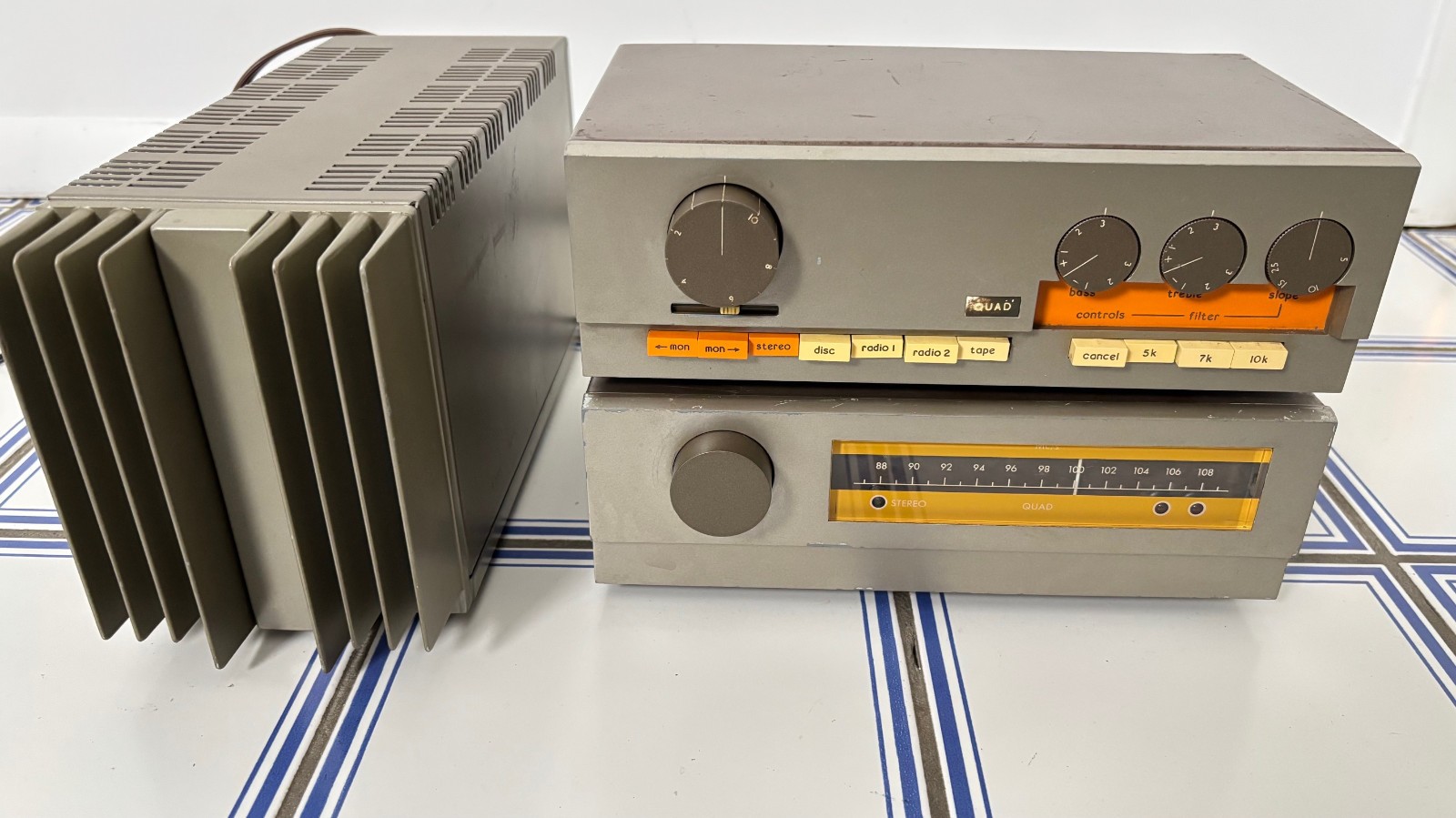
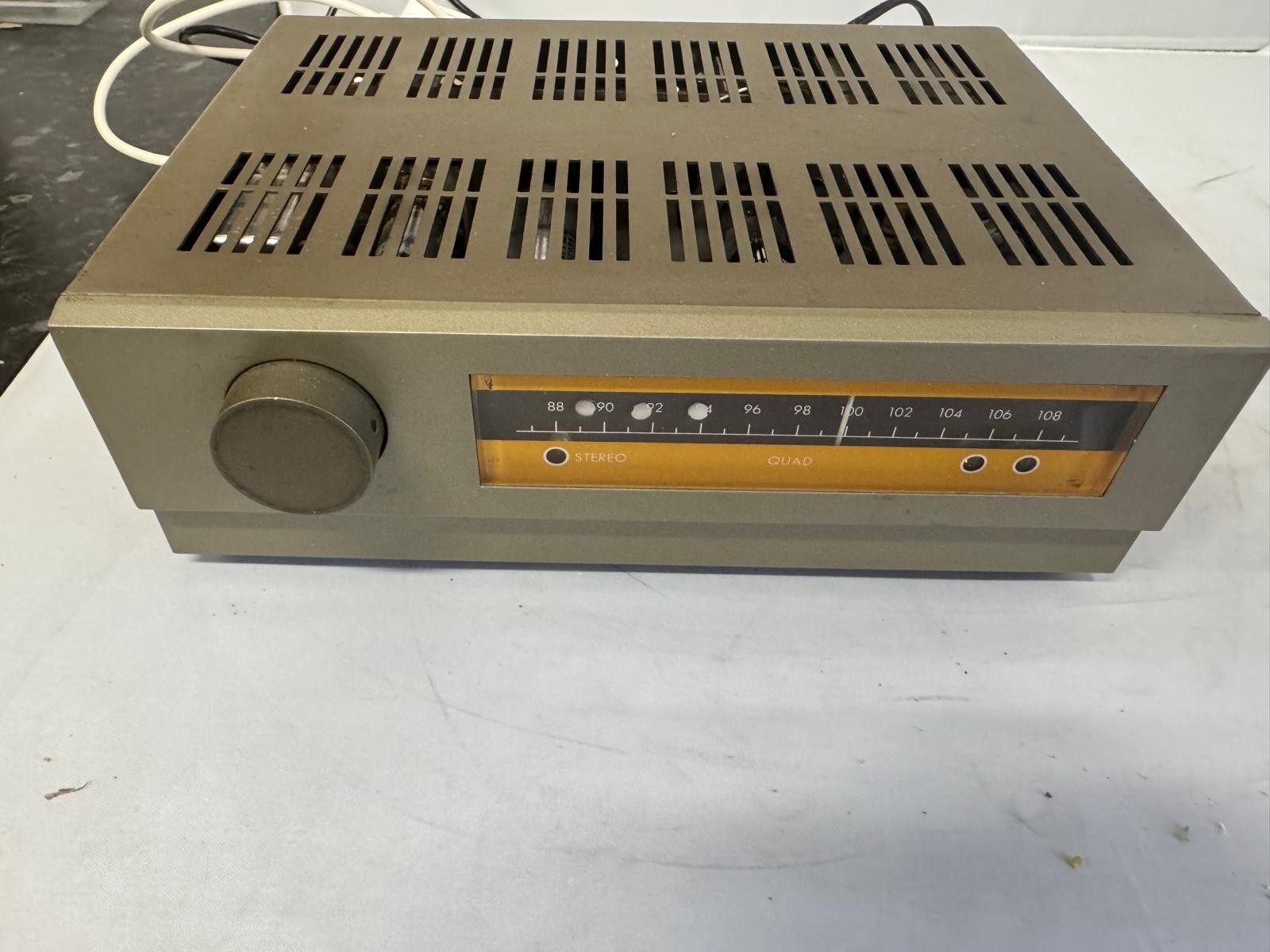
The Quad FM2, introduced in 1969, is a landmark FM tuner that helped define high-fidelity radio reception in the 1970s. Renowned for its precision engineering and advanced circuitry, the FM2 was one of the first tuners to employ a phase-locked loop (PLL) stereo decoder, setting a new standard for stereo separation, noise rejection, and overall signal stability. Built by the British company Quad (known for their no-nonsense, performance-first philosophy), the FM2 remains a sought-after component among vintage audio enthusiasts and collectors.
Key Specifications
| Specification | Detail |
| Year of Production | 1969–1978 |
| Type | FM Stereo Tuner (no amplification) |
| Output Impedance | 600 ohms (balanced), 47k ohms (unbalanced) |
| Sensitivity (Mono) | 2μV for 30dB S/N ratio |
| Sensitivity (Stereo) | 40μV for 50dB S/N ratio |
| Stereo Decoder | Phase-Locked Loop (PLL) |
| Front-End | FET with dual-gate MOSFETs |
| IF Bandwidth | Switchable (Normal/Wide) |
| Features | Multipath indicator, stereo/mono switch, balanced/unbalanced outputs |
| Power Requirements | N/A (tuner only) |
| Dimensions (approx.) | 435 mm (W) × 140 mm (H) × 340 mm (D) |
| Weight | 11.5 kg |
Historical Significance
The Quad FM2 emerged during a golden era of analog audio innovation. At a time when many tuners struggled with stereo crosstalk and decoding instability, the FM2’s use of a phase-locked loop (PLL) stereo decoder was revolutionary. This technology provided superior synchronization between left and right channels, resulting in tighter stereo imaging and reduced distortion—especially under weak signal conditions.
Its FET front-end and dual-gate MOSFETs contributed to extremely low noise and high input sensitivity, while the switchable IF bandwidth allowed users to optimize reception based on signal strength and interference. The inclusion of a multipath indicator helped users fine-tune for minimal signal reflection, a common issue in urban environments.
The FM2 was often paired with other Quad components, such as the QA12 preamp and Quad 33/40 series amplifiers, forming part of a cohesive, high-performance system. It earned a reputation for exceptional selectivity and sensitivity, becoming a benchmark against which other tuners were measured throughout the 1970s.
Sound Signature
The Quad FM2 delivers a clean, neutral, and highly detailed sound. Its low distortion and excellent channel separation ensure that music is reproduced with remarkable accuracy and spatial clarity. The PLL decoder contributes to a stable stereo image, while the tuner’s superior noise rejection preserves the quiet passages in music.
Listeners often praise the FM2 for its musicality and transparency, making it ideal for classical, jazz, and vocal performances where timing and tonal balance are critical. Even by modern standards, its performance on strong local stations is impressive.
Common Issues and Maintenance Tips
While the Quad FM2 is robustly built, age-related issues are common after decades of use. Proper maintenance can restore it to excellent working condition.
Common Problems:
- Aging capacitors: Especially in the power supply and stereo decoder circuits. Electrolytics dry out over time and should be replaced during restoration.
- Failing indicator lamps: The dial and status lamps may burn out or discolor. LED replacements are available for improved longevity.
- Selector switch wear: The band and function switches can become noisy or intermittent. Cleaning with contact cleaner may help, but worn switches may need replacement.
- Alignment drift: Over time, IF and RF stages may drift, reducing sensitivity. A professional alignment is recommended after servicing.
Maintenance Recommendations:
1. Recap the unit: Replace all electrolytic and critical coupling capacitors.
2. Clean controls and switches: Use high-quality contact cleaner on tuning and function switches.
3. Check power supply: Ensure stable voltages, especially if paired with other vintage gear.
4. Antenna connection: Use a balanced 300-ohm antenna or a high-quality 75-ohm coaxial feed for best results.
5. Professional servicing: For optimal performance, have the tuner aligned by a technician familiar with vintage Quad equipment.
Collectibility and Market Value
The Quad FM2 is considered a classic of British hi-fi engineering and scores 8/10 for collectibility. Its innovative use of PLL technology, build quality, and sonic performance ensure strong demand among vintage audio collectors.
- Market Value: $300–$600 USD, depending on condition, originality, and restoration quality.
- Restored units with fresh capacitors and clean controls command higher prices.
- Original, unmodified examples in good working order are particularly prized.
Conclusion
The Quad FM2 is more than just a tuner—it’s a milestone in FM reception technology. Its blend of advanced engineering, superb sound quality, and elegant design makes it a standout component of the late 1960s and 1970s hi-fi era. For audiophiles who appreciate precision and musicality in equal measure, the FM2 remains a compelling choice and a worthy centerpiece in any vintage audio system.
eBay Listings


As an eBay Partner, we earn from qualifying purchases. This helps support our independent vintage technology research.
Related Models
- Quad quad-fmii (1970)
- Quad quad-am (1971)
- Quad quad-am3 (1971)
- Quad quad-amii (1973)
- Quad quad-fm (1975)
- Aiwa CS-250 (1978)
- Denon TU-1500RD (1995)
- Denon TU-280 (1976)
- Denon TU-501 (1977)
- Denon TU-550 (1978)