Polk Audio Monitor 7A (1977–1982): A Vintage Bookshelf Legend
In the late 1970s, as the high-fidelity audio movement surged in American homes, Polk Audio emerged as a beacon of accessible, high-performance loudspeaker design. Among their most enduring early offerings was the Monitor 7A, a compact bookshelf speaker introduced in 1977 and produced through the early 1980s. Though not as widely documented as some of its larger siblings like the Monitor 10B or the legendary LSiA series that followed, the Monitor 7A carved out a loyal following for its clear midrange, solid imaging, and remarkable value. It stands today as a quiet classic—a speaker that helped define Polk’s reputation for engineering integrity and musical transparency during a golden era of analog audio.
Historical Context: Polk in the Late 1970s
Founded in 1972 by audio engineers Matthew Polk, George Klopfer, and Sandy Gross, Polk Audio began in a Baltimore basement with a mission: to deliver accurate, dynamic sound without the exorbitant price tags of high-end European imports. By the mid-to-late 1970s, the company had gained traction with its Monitor series, a line of speakers designed for both stereo and emerging quadraphonic systems. The Monitor 7A arrived during this formative period, positioned as a compact, versatile speaker suitable for small to medium-sized rooms, rear-channel duties in surround setups, or as a high-quality secondary system.
The late 1970s also saw a boom in component stereo systems—turntables, receivers, and bookshelf speakers were staples in suburban living rooms. The Monitor 7A fit perfectly into this ecosystem, offering solid performance with modest amplification and pairing well with popular receivers from brands like Pioneer, Sony, and Yamaha.
Technical Specifications
The Monitor 7A was a two-way, bass-reflex bookshelf speaker designed for wide-ranging musical fidelity. While original spec sheets are scarce today, surviving units and user reports confirm the following technical profile:
| Specification | Detail |
| Model | Monitor 7A |
| Production Years | 1977–1982 |
| Type | 2-way bass-reflex bookshelf speaker |
| Driver Configuration | 1" dome tweeter, 6.5" polypropylene woofer |
| Frequency Response | 55 Hz – 20 kHz (±3 dB) |
| Crossover Frequency | ~3.5 kHz |
| Nominal Impedance | 8 ohms |
| Sensitivity | 88 dB (1W/1m) |
| Recommended Power | 15–100 watts |
| Enclosure Finish | Woodgrain vinyl wrap (oak or walnut) |
| Dimensions (H×W×D) | 12" × 7.5" × 8.5" (30.5 × 19 × 21.6 cm) |
| Weight | 12 lbs (5.4 kg) per speaker |
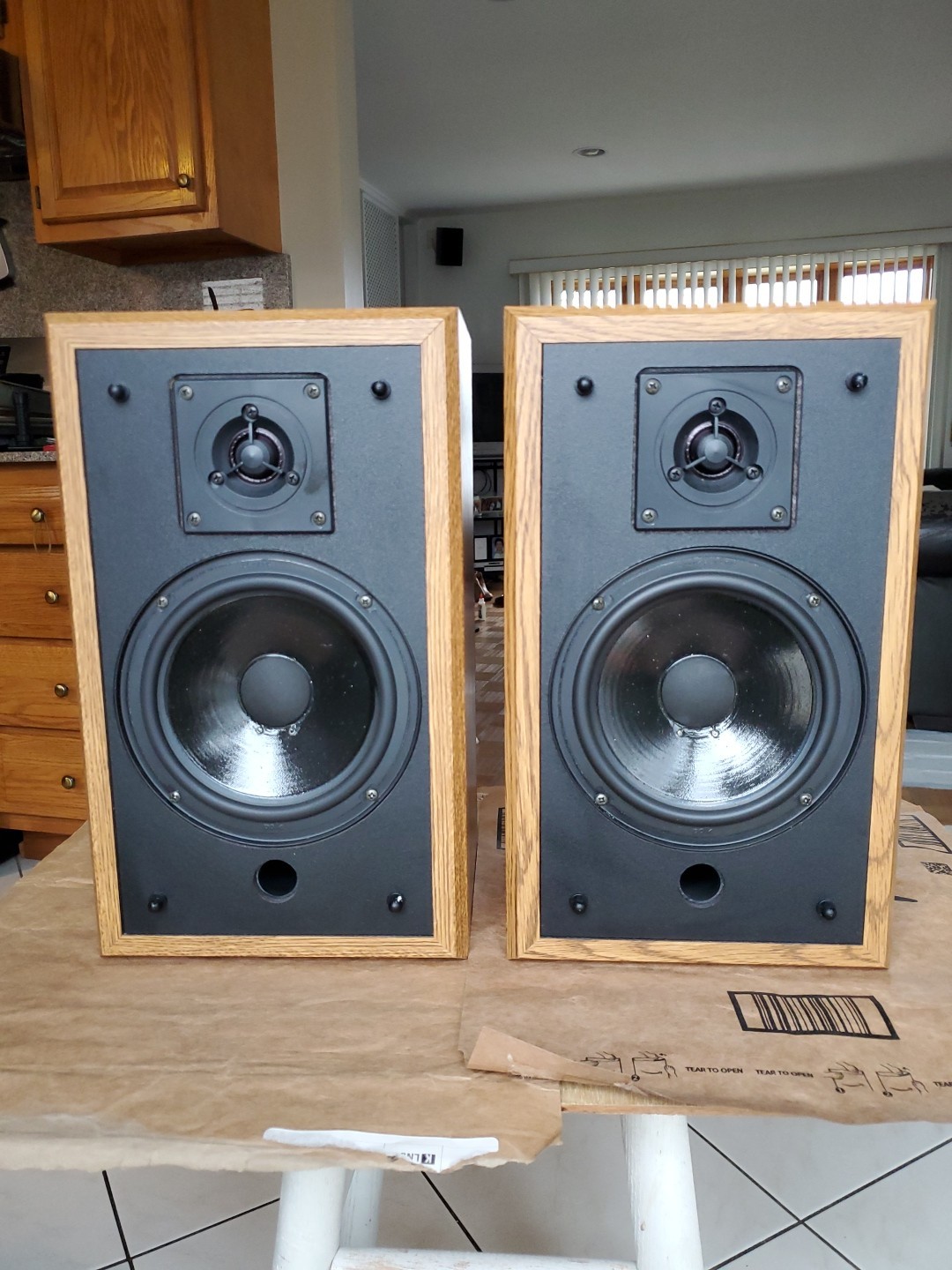
The speaker featured a front-firing port for enhanced bass response in small enclosures, a common design choice of the era. The tweeter used a soft dome diaphragm, likely ferrofluid-cooled, mounted in a shallow waveguide to improve dispersion. The woofer was a doped polypropylene cone with a rubber surround—durable materials that have aged well in surviving examples.
Sound Characteristics and Performance
The Monitor 7A was engineered for a neutral, balanced sound signature—remarkable for a budget-conscious speaker of its time. Its frequency response avoided the exaggerated bass or overly bright treble common in many mass-market models, instead emphasizing clarity and coherence.
- Midrange: The heart of the Monitor 7A’s appeal lies in its midrange. Vocals and acoustic instruments are rendered with natural timbre and excellent presence. This made it a favorite for jazz, folk, and vocal-centric recordings.
- Treble: The soft dome tweeter delivers smooth, non-fatiguing highs. While not as extended as modern tweeters, it avoids harshness and sibilance, even with bright source material.
- Bass: With a lower limit around 55 Hz, the 7A provides respectable bass for its size. The ported design adds punch and warmth, though deep bass extension requires room gain or supplementation with a subwoofer.
- Imaging and Soundstage: The speaker offers surprisingly wide and stable stereo imaging, especially when properly positioned. Its phase-coherent crossover design (a Polk hallmark) contributes to a cohesive soundfield that belies its compact cabinet.
Paired with a quality tube amplifier or a clean solid-state receiver, the Monitor 7A reveals its strengths: musicality, detail retrieval, and a forgiving nature that makes it compatible with a wide range of source material.
Notable Features and Innovations
While not a flagship model, the Monitor 7A incorporated several design philosophies that became synonymous with Polk’s identity:
- Time-Align Crossover Concept (Early Iteration): Though the full Time-Aligned® driver array debuted later in models like the LSiA, the Monitor 7A used a vertically aligned driver layout with a sloped baffle, an early nod to time-coherent wavefront delivery.
- Durable Materials: The use of polypropylene for the woofer cone offered excellent damping and resistance to environmental changes—uncommon in budget speakers of the era.
- Modular Design: The crossover components were mounted on a removable board, simplifying repairs and upgrades—a thoughtful touch for DIY enthusiasts.
- Aesthetic Simplicity: The modest woodgrain finish and clean grille design reflected the understated style of 1970s audio gear, blending into home environments without drawing attention.
Common Issues and Maintenance
As with any vintage speaker, age-related wear is a concern. However, the Monitor 7A is generally robust, and many units remain functional today.
- Woofer Surrounds: The most common failure point is the rubber surround on the woofer, which can dry out and crack after 40+ years. Replacement surrounds or full reconing kits are available from specialty restoration shops.
- Crossover Components: Electrolytic capacitors in the crossover may degrade over time, leading to muffled highs or imbalance. Replacing these with modern film capacitors can restore clarity and improve performance.
- Grille Fabric: The original cloth grilles often fade or tear. Reproduction grilles or custom replacements are available from vintage audio suppliers.
- Binding Posts: The original plastic terminal cups can become brittle. Upgrading to modern five-way binding posts enhances connectivity and reliability.
Restoration is typically straightforward, and the Monitor 7A’s simple design makes it a favorite among vintage audio hobbyists.
Current Market Value and Collectibility
The Monitor 7A is not a high-value collector’s item like some rare British or Japanese speakers, but it holds steady appeal among vintage audio enthusiasts. Pairs in good cosmetic and working condition typically sell for $100–$200, depending on finish, originality, and geographic location. Fully restored units with upgraded crossovers or modernized terminals may command slightly higher prices.
Its collectibility stems more from nostalgia and performance than rarity. Audiophiles appreciate its honest sound and historical significance as part of Polk’s foundational lineup. It’s also popular in retro-themed setups, vintage dorm systems, or as a secondary speaker for vinyl listening in small spaces.
Conclusion: A Humble Classic with Lasting Appeal
The Polk Audio Monitor 7A may not have the fame of the Monitor 10B or the technological flair of later Polk models, but it represents something essential: a well-engineered, no-nonsense speaker built to deliver real musical enjoyment. In an era when many budget speakers sacrificed accuracy for flash, the 7A stood out for its transparency, durability, and thoughtful design.
Today, it serves as a reminder of Polk’s early commitment to value and performance—a philosophy that continues to define the brand. Whether you’re restoring a vintage stereo system, seeking a compact speaker with vintage charm, or simply curious about the roots of American speaker design, the Monitor 7A deserves a listen. It’s not just a relic of the past—it’s a small speaker with a big heart, still capable of delivering music with warmth, clarity, and soul.
eBay Listings


As an eBay Partner, we earn from qualifying purchases. This helps support our independent vintage technology research.
Related Models
- Polk Monitor 10 Series II (1990)
- Polk Monitor 10A (1979)
- Polk Monitor 4.6 Series 2 (1990)
- Polk Monitor 4A (1984)
- Polk Monitor 5B (1984)
- Akai AM-2850 (1975)
- Akai AP-206 (1975)
- Nakamichi BX-1 (1985)
- Acoustic Research research-ar-17 (1978)
- Acoustic Research AR-19 (1994)