Polk Audio Monitor 4.6 Series 2 (1990): A Compact Classic with Big Sound
In the late 1980s and early 1990s, Polk Audio established itself as a leader in accessible high-fidelity audio, crafting speakers that delivered exceptional performance without the premium price tags of high-end European brands. Among their most enduring lines was the Monitor series, a family of compact, bookshelf-friendly loudspeakers designed for both stereo and emerging home theater applications. The Polk Audio Monitor 4.6 Series 2, introduced in 1990, stands as a refined evolution of this popular model, embodying Polk’s engineering philosophy of sonic accuracy, durability, and value.
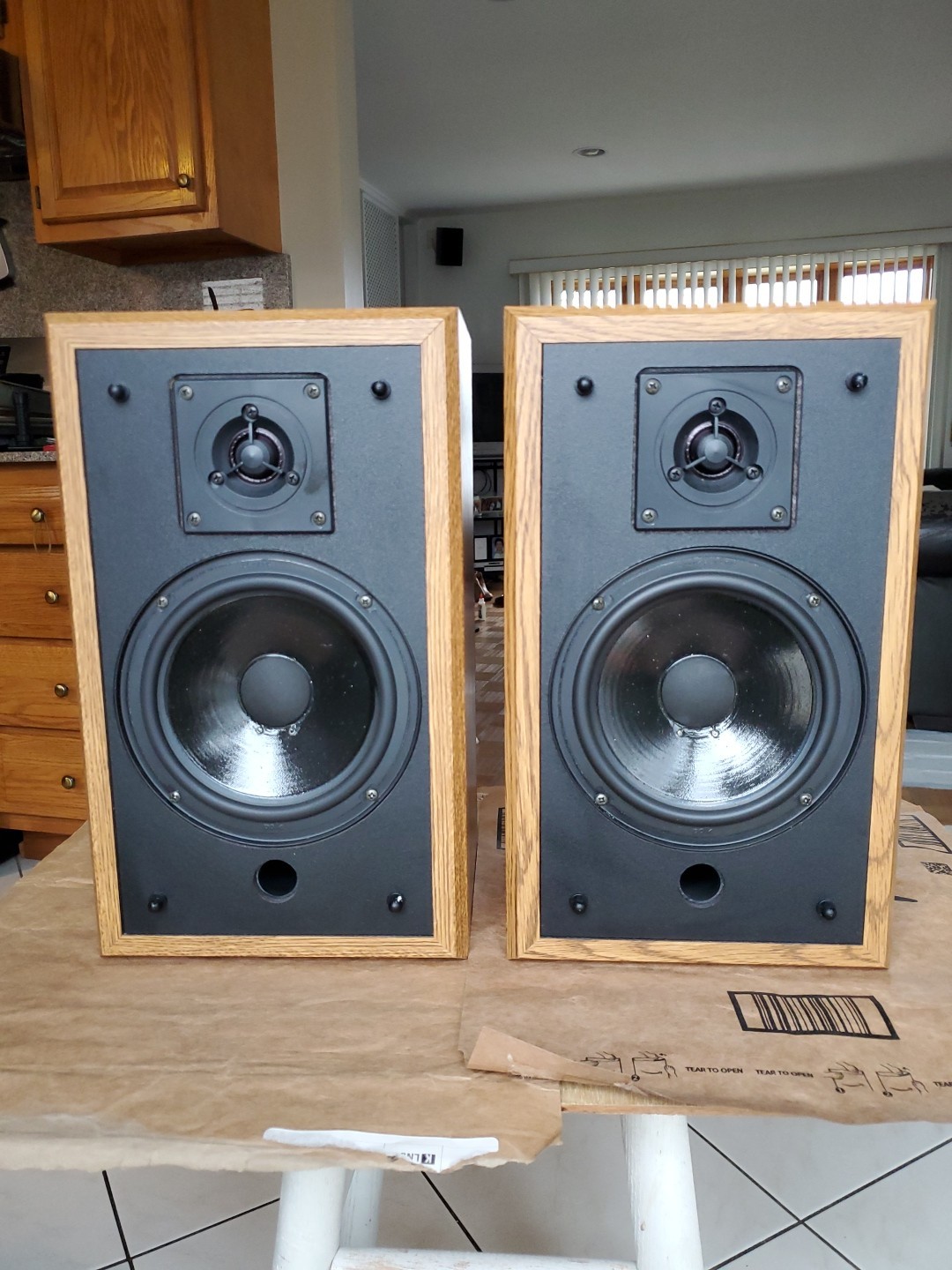
While not as large or powerful as floor-standing towers, the Monitor 4.6 Series 2 was engineered to punch well above its weight. It found a loyal following among audiophiles with limited space, college students building their first serious systems, and early adopters of surround sound setups. Its compact size and neutral tonal balance made it ideal for near-field listening, desktop audio, and as rear or surround speakers in a 5.1 configuration—long before such setups became mainstream.
Technical Specifications
The Monitor 4.6 Series 2 is a two-way, bass-reflex bookshelf speaker that combines thoughtful driver design with a tuned enclosure for extended low-end response. While exact crossover points and sensitivity figures are not widely documented in public archives, the speaker’s construction reflects Polk’s attention to detail during this era.
| Specification | Detail |
| Model | Monitor 4.6 Series 2 |
| Year Introduced | 1990 |
| Type | 2-way, bass-reflex bookshelf speaker |
| Driver Configuration | 1" soft-dome tweeter, 4.5" mineral-filled polypropylene woofer |
| Frequency Response | Approximately 60 Hz – 20 kHz (±3 dB) |
| Impedance | 8 ohms (nominal) |
| Sensitivity | ~86 dB (estimated, 1W/1m) |
| Crossover Frequency | ~3.5 kHz (estimated) |
| Enclosure Material | Medium-density fiberboard (MDF) |
| Finish Options | Black ash vinyl, simulated wood grain |
| Dimensions (H×W×D) | 13.5" × 7.25" × 8.5" (343 × 184 × 216 mm) |
| Weight | ~10 lbs (4.5 kg) per speaker |
| Recommended Amp Power | 10–60 watts |
The soft-dome tweeter provided smooth, non-fatiguing high-frequency reproduction, a hallmark of Polk’s design approach during this period. Paired with the mineral-filled polypropylene woofer, the speaker offered a balanced midrange and surprisingly articulate bass for its size. The bass-reflex port on the rear panel helped extend low-frequency response, allowing the 4.6 to deliver a fuller sound than many similarly sized competitors.
Sound Characteristics and Performance
The Monitor 4.6 Series 2 was never intended to be a room-shaking powerhouse, but it excelled in clarity, imaging, and tonal neutrality. Its sound signature leaned toward the accurate and uncolored, making it well-suited for critical listening across genres—from acoustic jazz and classical to rock and pop.
The tweeter delivered crisp but never harsh highs, with good dispersion that made the sweet spot forgiving for casual listening. Cymbals and string overtones were rendered with natural decay, avoiding the “etched” or “sibilant” character found in some budget speakers of the era. The midrange was clean and transparent, allowing vocals to sit forward without being overly bright.
Where the 4.6 truly surprised was in its bass performance. Thanks to the ported design and well-tuned cabinet, it could reach down to around 60 Hz, which meant it could handle the lower registers of piano, double bass, and kick drum with reasonable authority—especially when paired with a subwoofer. In small to medium-sized rooms, the 4.6 could function as a full-range speaker without feeling thin or anemic.
Stereo imaging was solid, with a well-defined soundstage and good instrument separation. While not as expansive as larger monitors or floorstanders, the 4.6 created a convincing spatial presentation that belied its compact footprint.
Notable Features and Innovations
Though modest in appearance, the Monitor 4.6 Series 2 incorporated several design elements that reflected Polk’s engineering ethos:
- Mineral-Filled Polypropylene Cones: This material offered a favorable balance of stiffness and damping, reducing cone breakup and coloration. It was a cost-effective alternative to more exotic materials while still delivering high performance.
- Soft-Dome Tweeter with Ferrofluid Cooling: The tweeter used ferrofluid to improve heat dissipation, allowing for higher power handling and reduced distortion at high volumes.
- Tuned Bass-Reflex Port: The rear-firing port was carefully sized and flared to minimize port noise and turbulence, a common issue in small enclosures.
- Magnetic Shielding: Important for placement near CRT televisions, this feature made the 4.6 a practical choice for early home theater systems.
- Grille Design: The removable cloth grille used a simple, low-profile frame that didn’t interfere with sound dispersion.
Polk also emphasized durability and reliability in this generation. The cabinets were well-braced internally, and the vinyl wrap finish held up well over time, resisting peeling and scuffing better than many contemporaries.
Common Issues and Maintenance
After more than three decades, surviving pairs of the Monitor 4.6 Series 2 may show signs of age. The most common issues include:
- Tweeter Fatigue: The soft-dome tweeters can degrade over time, especially if exposed to high volumes or poor amplifier matching. Symptoms include dull highs or distortion at high frequencies. Replacing the tweeter with a modern equivalent is possible but requires careful matching.
- Woofer Surround Deterioration: The foam surrounds on the woofers may dry out and crumble, leading to a loss of bass and “rubbing” sounds. Foam replacement kits are available from specialty audio restoration suppliers.
- Binding Post Corrosion: The original plastic-covered binding posts can oxidize or loosen over time. Upgrading to metal five-way posts improves connectivity and appearance.
- Cabinet Damage: While the MDF construction is sturdy, the vinyl finish can peel at the edges, especially on older units. Careful restoration with contact cement can reattach loose areas.
Regular cleaning with a soft, dry cloth and avoiding direct sunlight will help preserve both appearance and performance.
Current Market Value and Collectibility
The Polk Monitor 4.6 Series 2 is not a high-value collectible in the traditional sense, but it holds nostalgic and functional appeal for vintage audio enthusiasts. Pairs in good working condition typically sell for $50–$120, depending on cosmetic condition and whether they include grilles.
They are particularly sought after by:
- DIY audio tinkerers looking to restore or upgrade classic speakers.
- Budget-conscious listeners wanting vintage Polk sound without investing in rare models.
- Home theater retro-builders recreating early 1990s surround systems.
While not as iconic as the larger Monitor 7 or the flagship L15, the 4.6 Series 2 represents a solid, no-frills performer from a golden era of American speaker design.
Conclusion and Legacy
The Polk Audio Monitor 4.6 Series 2 may not have made headlines, but it quietly earned a reputation as a reliable, well-balanced, and honest-sounding speaker. In an age when many budget speakers colored the sound to appear “lively,” the 4.6 stayed true to the source, offering a window into the music rather than a colored filter.
Its legacy lies in its accessibility and consistency—a speaker that brought high-fidelity sound to everyday listeners without compromise. For those discovering vintage audio today, the Monitor 4.6 Series 2 offers a taste of early 1990s Polk engineering: practical, musical, and built to last. Whether used as a secondary system, a desktop setup, or a restored classic, it remains a worthy ambassador of its era.
eBay Listings


As an eBay Partner, we earn from qualifying purchases. This helps support our independent vintage technology research.
Related Models
- Polk Monitor 10 Series II (1990)
- Polk Monitor 10A (1979)
- Polk Monitor 4A (1984)
- Polk Monitor 5B (1984)
- Polk Monitor 7 Series II (1990)
- Akai AM-2850 (1975)
- Akai AP-206 (1975)
- Nakamichi BX-1 (1985)
- Acoustic Research research-ar-17 (1978)
- Acoustic Research AR-19 (1994)