Polk AUDIO-MONITOR 5JR (1984–85): A Compact Classic with Big Sound
In the mid-1980s, Polk Audio had already established itself as a leader in delivering high-performance loudspeakers at accessible price points. The AUDIO-MONITOR 5JR, introduced between 1984 and 1985, was a refined, compact offering in the revered AUDIO-MONITOR series—a lineup that included larger floor-standing models like the AM-4 and AM-5. Designed as a smaller, more affordable alternative, the 5JR brought Polk’s signature sonic clarity and engineering rigor to budget-conscious audiophiles and casual listeners alike. Though not as widely documented as its bigger siblings, the 5JR earned a loyal following for its balanced sound, solid build, and elegant styling typical of Polk’s design language during that era.
Historical Context and Design Philosophy
The early to mid-1980s were a golden period for bookshelf speakers. With the rise of component stereo systems and the growing popularity of home audio among middle-class households, manufacturers like Polk, AR, KLH, and Advent competed fiercely to deliver speakers that combined performance, value, and aesthetic appeal. Polk Audio, founded in 1972 by audio engineers Matthew Polk, George Klopfer, and Sandy Gross, had already built a reputation for innovation—particularly in time-aligned driver design and efficient cabinet construction.
The AUDIO-MONITOR 5JR was part of this evolution. Positioned as a junior model in the AM series, the "JR" (Junior) designation indicated a downsized version of the larger AM-5, but not a compromise in philosophy. Polk maintained its focus on time-coherent design, using carefully positioned drivers to ensure that sound waves from the tweeter and woofer reached the listener’s ears simultaneously. This contributed to a more natural, spacious soundstage—a hallmark of Polk’s high-end models, now accessible in a compact form.
Technical Specifications
| Specification | Detail |
| Model Name | Polk AUDIO-MONITOR 5JR |
| Production Years | 1984–1985 |
| Type | 2-way bass reflex bookshelf speaker |
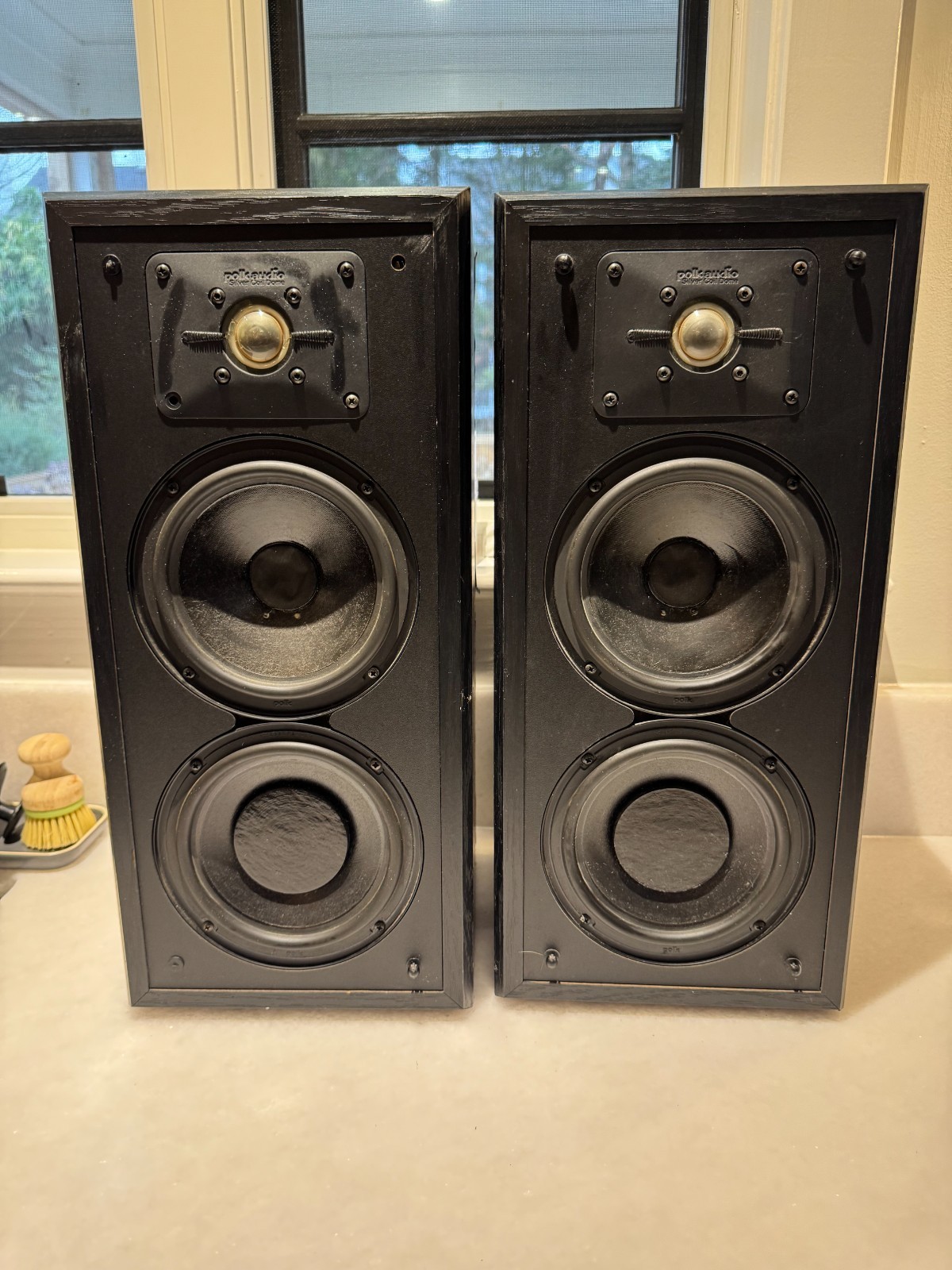
| Driver Complement | 1" soft dome tweeter, 5.25" polypropylene woofer |
| Frequency Response | 55 Hz – 20 kHz (±3 dB) |
| Impedance | 8 ohms (nominal) |
| Sensitivity | 88 dB (2.83V/1m) |
| Crossover Frequency | ~3.5 kHz |
| Cabinet Design | Front-ported, medium-density fiberboard |
| Dimensions (H×W×D) | 13.5" × 7.5" × 8.5" (34.3 × 19.1 × 21.6 cm) |
| Weight | 12 lbs (5.4 kg) per speaker |
| Finish Options | Black ash vinyl wrap, simulated woodgrain |
| Recommended Amp Power | 15–100 watts |
The 5JR featured a compact, rectangular cabinet with a slightly flared front baffle and a modest footprint, making it ideal for shelves, stands, or small living rooms. The front-firing port helped extend bass response in a small enclosure, while the soft dome tweeter provided smooth high-frequency reproduction without the harshness sometimes found in budget speakers of the era.
Sound Characteristics and Performance
The Polk AUDIO-MONITOR 5JR delivered a remarkably balanced and coherent sound for its size and price. Its 5.25-inch polypropylene woofer offered tight, controlled midbass—surprisingly capable down to 55 Hz, especially when paired with room gain or a modest subwoofer. The soft dome tweeter provided clear, non-fatiguing highs, ideal for extended listening sessions. While not as airy or detailed as some electrostatic or metal-dome competitors, the tweeter’s smooth roll-off avoided sibilance and harshness, making the 5JR a forgiving speaker with less-than-ideal recordings.
The crossover was well-executed for the time, with a clean transition around 3.5 kHz. The time-aligned driver array contributed to a focused stereo image and a wider sweet spot than many contemporaries. Vocals were rendered with clarity and presence, and acoustic instruments like guitar and piano retained their natural timbre. In a well-set-up stereo pair, the 5JR could produce a surprisingly immersive soundstage—especially for a speaker under 14 inches tall.
Though not designed for high-decibel home theater use (a concept still in its infancy in 1984), the 5JR excelled in two-channel music reproduction. It paired beautifully with tube amplifiers and vintage solid-state receivers from brands like Marantz, Sony, and Yamaha, offering a warm yet articulate presentation that flattered jazz, rock, and classical genres alike.
Notable Features and Innovations
While the 5JR wasn’t a radical departure from Polk’s design principles, it incorporated several smart engineering choices:
- Time-Aligned Drivers: The tweeter was mounted slightly behind the woofer on a sloped baffle, ensuring phase coherence and improved imaging.
- Polypropylene Woofer: This material offered good stiffness-to-weight ratio and damping, reducing cone breakup and coloration.
- Front-Firing Port: Allowed for easier placement near walls (with caution), enhancing bass response in smaller rooms.
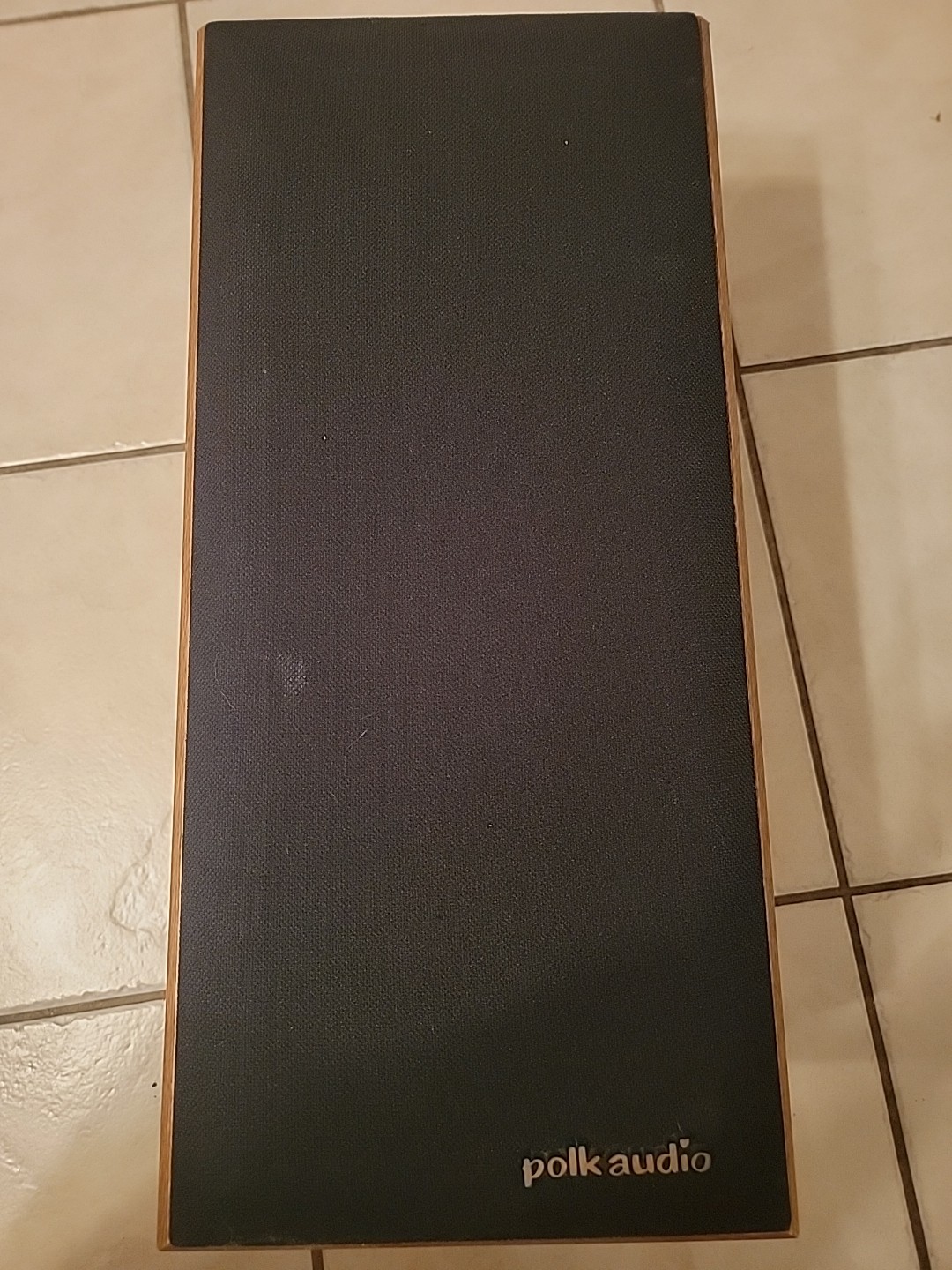
- Minimalist Grille: A simple black fabric grille with a foam backing protected the drivers without muddying the sound.
The 5JR also reflected Polk’s attention to value. At a time when many budget speakers used paper cones and basic crossovers, the 5JR offered thoughtful materials and design touches that elevated it above entry-level offerings.
Common Issues and Maintenance
Today, surviving pairs of the AUDIO-MONITOR 5JR are relatively rare but can still be found on the used market. Common issues include:
- Aging Foam Surrounds: The most frequent problem. The original foam on the woofer can dry out, crack, or disintegrate after 30+ years. Replacement with modern butyl rubber surrounds is a common and effective fix.
- Tweeter Degradation: Soft domes can become brittle or lose damping fluid, leading to distorted highs. Some users report success with gentle cleaning or professional reconing.
- Crossover Components: Electrolytic capacitors in the crossover may degrade over time, causing imbalance or loss of output. Replacing these with modern equivalents can restore performance.
- Cabinet Wear: The vinyl wrap may peel or discolor, especially on edges. While cosmetic, refinishing or rewrapping can restore appearance.
Maintenance is straightforward for DIY enthusiasts. Replacement foam kits and crossover parts are available from specialty audio restoration suppliers. Given the 8-ohm impedance and moderate sensitivity, the 5JR is easy to drive and unlikely to stress vintage amplifiers.
Current Market Value and Collectibility
The Polk AUDIO-MONITOR 5JR is not a high-profile collector’s item like the larger AM-4 or AM-5, but it holds quiet appeal among vintage audio enthusiasts who appreciate understated performers. A working pair in good cosmetic condition typically sells for $75–$150, depending on condition and whether they’ve been refurbished.
Value increases significantly if the speakers have been professionally restored—especially with new surrounds and updated crossovers. Original, unmodified pairs with intact labels and packaging are rare but not highly sought after, as the 5JR was a mass-market product rather than a limited edition.
That said, the 5JR is increasingly recognized as a smart buy for those building a vintage system on a budget. Its compact size, 8-ohm compatibility, and musical character make it a practical and enjoyable choice.
Conclusion and Legacy
The Polk AUDIO-MONITOR 5JR may not have the fame of its larger siblings, but it embodies the spirit of 1980s American speaker design: honest performance, smart engineering, and great value. It brought Polk’s time-aligned philosophy to a broader audience and served as a reliable, musical companion in countless living rooms and dorms.
Today, the 5JR stands as a testament to Polk Audio’s commitment to making high-fidelity sound accessible. While modern speakers may surpass it in raw specs, few match its charm, coherence, and vintage appeal. For the budget-minded audiophile or the nostalgic listener, the AUDIO-MONITOR 5JR remains a worthy addition to any classic audio setup—a small speaker with a big legacy.
eBay Listings


As an eBay Partner, we earn from qualifying purchases. This helps support our independent vintage technology research.
Related Models
- Polk Audio Model 9 (1973)
- Polk Audio AUDIO-MONITOR 15T (Military) (1991)
- Polk Audio SDA-2B (Studio) (1988)
- Polk Audio RTA-12 (1979)
- Polk Audio RTA-12C (1984)
- Akai AM-2850 (1975)
- Akai AP-206 (1975)
- Nakamichi BX-1 (1985)
- Acoustic Research research-ar-17 (1978)
- Acoustic Research AR-19 (1994)