Polk Audio Model 9 (1973) – The Speaker That Started It All
In the world of American hi-fi, few brands have achieved the lasting impact and widespread recognition of Polk Audio. And it all began in 1973 with a modest yet revolutionary bookshelf speaker: the Polk Audio Model 9. As the very first product released by the company founded by audio engineers Matthew Polk, George Klopfer, and Sandy Gross, the Model 9 wasn’t just a speaker—it was a declaration of intent. It embodied a philosophy that would define Polk for decades: high-fidelity sound at an accessible price.
Born in a Baltimore garage during a golden era of audio innovation, the Model 9 emerged at a time when hi-fi was transitioning from the domain of wealthy audiophiles to a broader consumer market. Competing against established names like AR, KLH, and Advent, Polk Audio entered the scene with a fresh approach—leveraging scientific design principles, rigorous testing, and a commitment to value. The Model 9 was their proof of concept, and it worked.
Though modest by today’s standards, the Model 9 was a technical standout in its class. It offered a balanced, natural sound that belied its compact size and affordable price, quickly earning praise from both critics and early adopters. More than just a commercial product, the Model 9 laid the foundation for one of the most enduring speaker brands in American history.
Technical Specifications
| Specification | Detail |
| Model | Polk Audio Model 9 |
| Year Introduced | 1973 |
| Type | 2-way bookshelf speaker |
| Driver Configuration | 1 x 8" woofer, 1 x 1" dome tweeter |
| Crossover Frequency | ~2,500 Hz (estimated) |
| Frequency Response | 45 Hz – 20 kHz (approx.) |
| Nominal Impedance | 8 ohms |
| Sensitivity | ~86 dB (1W/1m) |
| Recommended Power | 10–50 watts |
| Enclosure Type | Bass-reflex (ported) |
| Dimensions (H×W×D) | 17" × 10" × 9" (approx.) |
| Weight | ~22 lbs per speaker |
| Finish | Walnut veneer |
Note: Exact specifications for the original Model 9 are scarce due to its age and limited documentation. The above data is based on period catalogs, user recollections, and historical analysis of early Polk designs.
Sound Characteristics and Performance
The Polk Model 9 was designed to deliver a balanced, transparent sound with a focus on vocal clarity and midrange accuracy—hallmarks that would become synonymous with the Polk brand. Its 8-inch polypropylene woofer (a relatively advanced material for the time) provided solid bass extension for a speaker of its size, while the soft dome tweeter offered smooth, non-fatiguing highs.
Listeners of the era praised the Model 9 for its natural tonality and ability to reproduce music with a sense of realism that outperformed many competitors in the same price range. It excelled with vocals, acoustic instruments, and FM radio broadcasts—popular listening formats in the early 1970s. While not a high-sensitivity speaker, it performed well with the tube and early solid-state amplifiers of the time, particularly when paired with 30–40 watts of clean power.
The bass-reflex design helped extend low-frequency response, giving the Model 9 a fuller sound than sealed-box rivals. However, purists noted that the port could introduce slight resonance in certain room placements—a common trade-off of the era. Overall, the speaker was celebrated for its musical coherence and ability to create a surprisingly wide soundstage from a compact cabinet.
Notable Features and Innovations
While the Model 9 may seem simple by modern standards, it introduced several design philosophies that set Polk apart:
- Scientific Design Approach: Unlike many speaker builders of the time who relied on trial and error, Polk employed anechoic chamber testing and frequency response measurements—a methodology influenced by the work of Dr. Floyd Toole at NRC Canada. This data-driven approach ensured more consistent performance.
- Focus on Value: The Model 9 was priced aggressively to bring high-fidelity sound to the average consumer. It offered performance close to more expensive models without the premium cost, establishing Polk’s reputation for affordable excellence.
- Modular Cabinet Construction: The cabinet used quality particleboard with real walnut veneer, offering rigidity and attractive aesthetics. The internal bracing, while not as extensive as in later models, was more thoughtful than many budget competitors.
- User-Friendly Design: The front-ported design allowed for easier placement near walls—a practical consideration for apartment and suburban living rooms of the 1970s.
The Model 9 also featured Polk’s early acoustic suspension-inspired tuning, though it used a ported design to maximize bass output from a compact enclosure. This balance of efficiency and accuracy became a signature of the brand’s early years.
Common Issues and Maintenance
As with any vintage speaker from the 1970s, surviving Model 9 units today may require restoration:
- Aging Foam Surrounds: The most common issue is deteriorated foam on the woofer. Over time, the foam breaks down into dust, leading to distorted bass or complete failure. Replacement with modern butyl rubber surrounds is a common and effective fix.
- Tweeter Degradation: The soft dome tweeters are generally durable, but some units may suffer from oxidized ferrofluid or damaged diaphragms. Cleaning or replacement with period-correct or modern equivalents can restore clarity.
- Crossover Components: Capacitors and inductors in the crossover may have drifted in value over 50 years. Replacing electrolytic capacitors and checking resistors can improve performance and reliability.
- Cabinet Wear: The walnut veneer may show scratches, fading, or edge damage. Gentle cleaning and polishing can revive the finish, though refinishing should be done carefully to preserve vintage value.
For collectors and restorers, finding original parts can be challenging, but the Model 9’s simple design makes it a rewarding project. Many vintage audio enthusiasts appreciate the historical significance of owning the first Polk speaker ever made.
Current Market Value and Collectibility
The Polk Model 9 is rarely seen on the vintage market, and when it does appear, it’s often of interest to audio historians and brand enthusiasts rather than mainstream collectors. Complete, working pairs in good condition can fetch $200–$400, depending on restoration quality and originality.
Its collectibility is more historical than sonic—few would use it as a primary speaker today, but its importance as the foundation of Polk Audio gives it a special place in American hi-fi history. It’s the equivalent of the Ford Model T of American speaker design: not the most advanced, but the one that started a revolution.
Conclusion and Legacy
The Polk Audio Model 9 (1973) may not have had the flashy specs or celebrity endorsements of some contemporaries, but its impact was profound. It proved that great sound didn’t have to come with a great price tag. More than just a speaker, it was the first step in a journey that would lead to iconic models like the Monitor series, the RTA line, and Polk’s dominance in home theater.
Today, the Model 9 stands as a symbol of American audio ingenuity—born in a garage, built on science, and driven by passion. For vintage audio enthusiasts, it’s a piece of living history: the original voice of Polk Audio. Whether restored to glory or preserved as a museum piece, the Model 9 reminds us that sometimes, the most important innovations start small.
eBay Listings

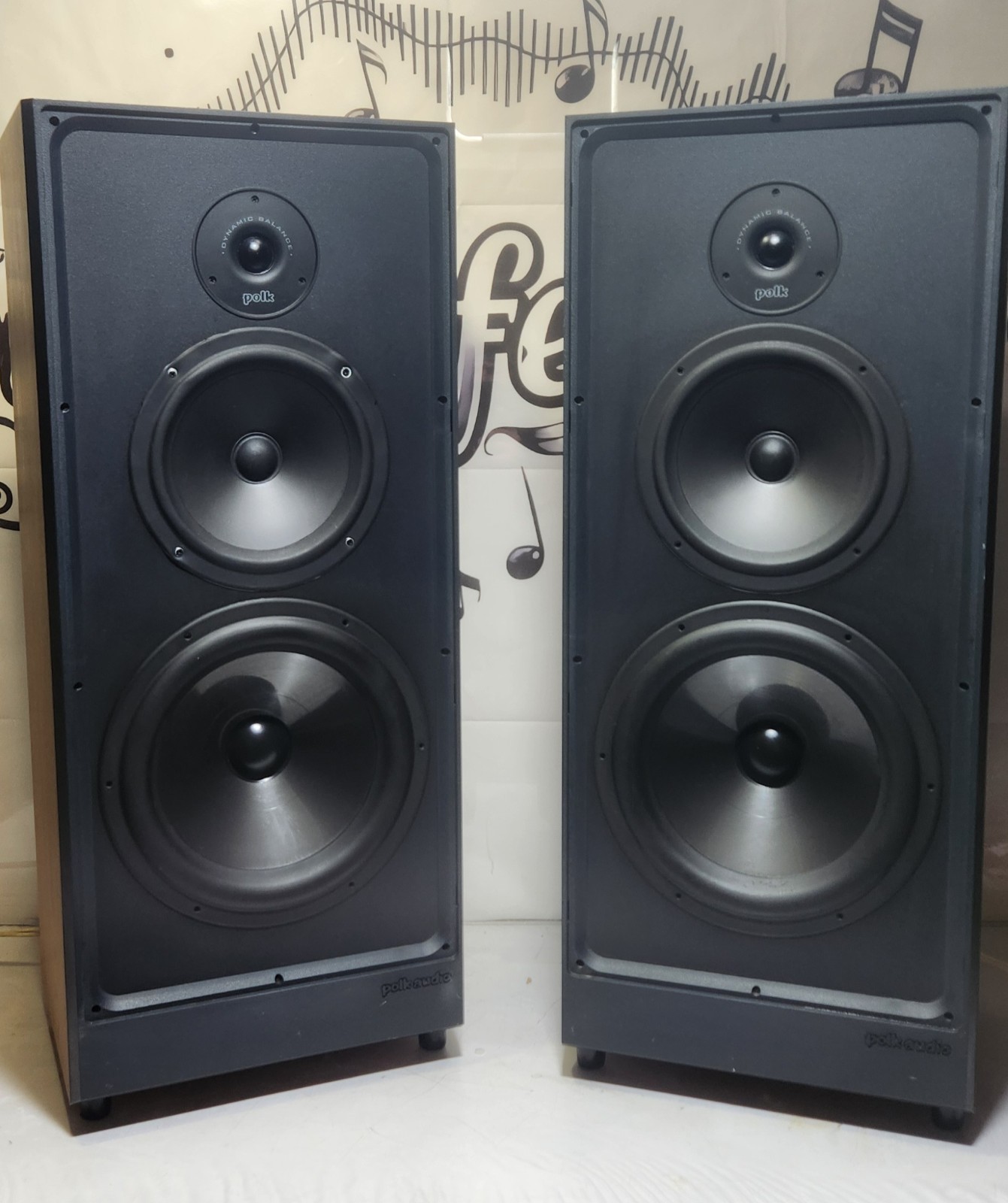


As an eBay Partner, we earn from qualifying purchases. This helps support our independent vintage technology research.
Related Models
- Polk Audio AUDIO-MONITOR 15T (Military) (1991)
- Polk Audio AUDIO-MONITOR 5JR (1984)
- Polk Audio SDA-2B (Studio) (1988)
- Polk Audio RTA-12 (1979)
- Polk Audio RTA-12C (1984)
- Akai AM-2850 (1975)
- Akai AP-206 (1975)
- Nakamichi BX-1 (1985)
- Acoustic Research research-ar-17 (1978)
- Acoustic Research AR-19 (1994)