Pioneer CS-V11 (1980)
The Pioneer CS-V11 is a compact bookshelf speaker introduced in 1980 as part of Pioneer’s CS (Classic Series) lineup, a collection of speakers designed to deliver high-fidelity audio performance with elegant styling suitable for home audio enthusiasts of the era. Though not one of Pioneer’s flagship models, the CS-V11 carved out a niche for itself as a reliable and sonically competent speaker during a period when Japanese audio manufacturers were rapidly gaining global recognition for quality and innovation.
Design and Build
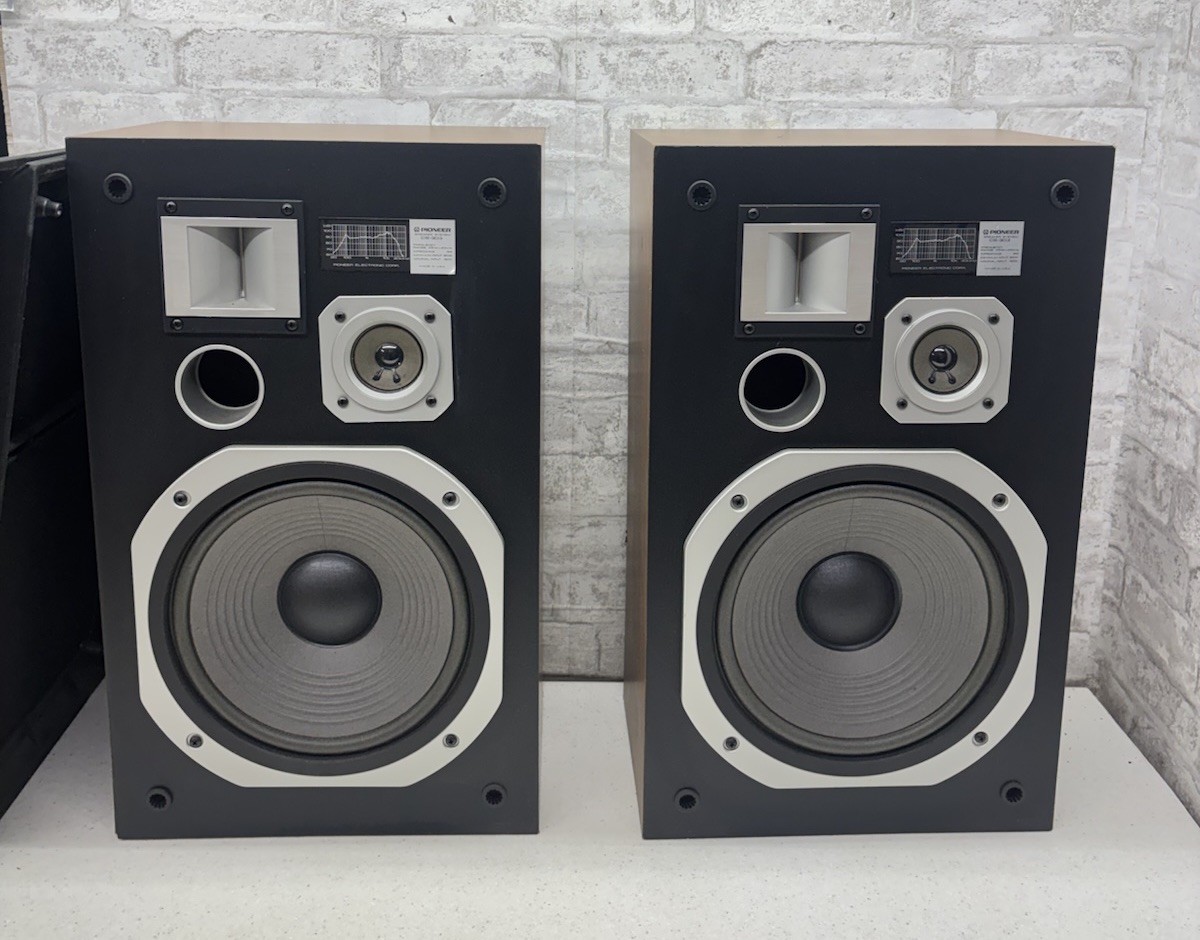
The CS-V11 features a two-way speaker configuration, housing a 13 cm (5.1 inch) woofer and a 2.5 cm (1 inch) dome tweeter. The cabinet is constructed from medium-density fiberboard (MDF), a common material for quality speakers of the time, helping to reduce unwanted resonances and coloration. The enclosure is front-ported, allowing for improved bass response despite its relatively compact dimensions—measuring approximately 270 mm (H) × 160 mm (W) × 170 mm (D). The speaker weighs around 3.5 kg per unit, making it lightweight enough for shelf or stand mounting without sacrificing structural integrity.
The front baffle is flat and minimal, with a removable black cloth grille that covers the drivers. The design is typical of early 1980s audio equipment—functional, understated, and focused on acoustic performance rather than flashy aesthetics. The cabinet finish was typically a wood grain vinyl wrap, available in finishes such as walnut or black ash, giving the speaker a warm, home-friendly appearance that blended well with period furniture.
Terminals are located on the rear panel and consist of standard spring clip connectors, suitable for bare wire or pin connectors. While not as robust as modern binding posts, these terminals were standard for consumer-grade speakers of the era and sufficient for typical home use.
Acoustic Performance
Pioneer rated the CS-V11 with a nominal impedance of 8 ohms, making it compatible with a wide range of amplifiers and receivers from the late 1970s and early 1980s. The speaker has a frequency response range of 60 Hz to 20,000 Hz, which was competitive for a compact bookshelf model at the time. While not designed for deep sub-bass reproduction, the CS-V11 delivers a surprisingly full low end for its size, thanks in part to its bass-reflex (ported) design.
The 13 cm woofer is constructed with a polypropylene cone, a material favored for its rigidity and low distortion characteristics. The dome tweeter is made of soft fabric, contributing to a smooth and non-fatiguing high-frequency response. Pioneer employed a passive crossover network to manage the signal distribution between the drivers, tuned to a crossover frequency of approximately 3.5 kHz. This ensures a coherent transition between the mid-bass and treble ranges, minimizing phase issues and maintaining tonal balance.
Sensitivity is rated at 88 dB (1W/1m), which is moderate by modern standards. This means the CS-V11 benefits from a well-matched amplifier with sufficient clean power—Pioneer recommended an amplifier output between 10 and 120 watts. While the speaker can handle up to 120 watts peak power, sustained high-volume operation with modern high-powered amplifiers may risk driver damage, especially given the age of surviving units.
Placement and Usage
As a bookshelf speaker, the CS-V11 performs best when elevated to ear level and positioned away from walls to minimize bass buildup. The front-firing port requires some clearance from rear walls—ideally at least 10–15 cm—to allow proper bass tuning. When properly placed, the CS-V11 offers a clear stereo image with good center focus and a surprisingly wide soundstage for a speaker of its era and size.
These speakers were commonly paired with Pioneer’s own receivers from the early 1980s, such as the Pioneer SX series, but they also worked well with equipment from Yamaha, Kenwood, and Sony. Their 8-ohm impedance and moderate sensitivity made them a versatile choice for stereo systems in small to medium-sized rooms.
Historical Context
The early 1980s marked a golden era for home audio, with rapid advancements in speaker design, amplifier technology, and recording formats. Pioneer was one of the leading Japanese audio companies during this time, known for both innovation and value. The CS series was positioned as a mid-tier line, offering solid performance without the premium price of high-end models like the HPM or S series.
The CS-V11 was not a widely advertised or flagship model, which contributes to the relative scarcity of detailed documentation today. However, it shares design philosophies and components with other CS series speakers of the period, such as the CS-V71 and CS-V51, suggesting a consistent engineering approach across the range.
Legacy and Collectibility
Today, the Pioneer CS-V11 is considered a vintage audio curiosity rather than a high-performance classic. It does not command the same collector interest as some of Pioneer’s more renowned models, but it remains a favorite among enthusiasts who appreciate period-correct systems or are restoring vintage audio setups.
Finding a working pair of CS-V11 speakers can be challenging, as many have suffered from foam surround degradation—a common issue with speakers from this era. The foam used in the woofer surrounds tends to dry out and crumble after 30–40 years, leading to loss of bass and distorted sound. Fortunately, replacement foam kits are available from specialty audio restoration suppliers, allowing owners to refurbish the speakers and restore them to full performance.
For those seeking a nostalgic listening experience or a period-accurate addition to a vintage stereo system, the CS-V11 offers a window into the sound and style of early 1980s audio engineering. While not as powerful or detailed as modern bookshelf speakers, they deliver a warm, balanced sound that many find pleasing for jazz, rock, and vocal recordings.
Conclusion
The Pioneer CS-V11 may not be a legendary speaker, but it represents the solid engineering and accessible design that characterized much of Pioneer’s output in the 1980s. As a compact, 8-ohm bookshelf speaker with a frequency response that covers most of the audible range, it was well-suited to the home audio market of its time. Its combination of MDF construction, polypropylene woofer, and soft dome tweeter reflects the technological standards of the era, delivering reliable performance with minimal coloration.
Though overshadowed by more famous models, the CS-V11 remains a testament to Pioneer’s commitment to quality across its product range. For vintage audio collectors and restorers, it offers an affordable and authentic piece of audio history—ready to be revived with a little care and attention. Whether used in a retro stereo setup or appreciated as a design artifact, the CS-V11 continues to resonate with those who value the craftsmanship of analog audio’s golden age.
eBay Listings


As an eBay Partner, we earn from qualifying purchases. This helps support our independent vintage technology research.
Related Models
- Pioneer CS-811 (1979)
- Pioneer KH-3500 (1979)
- Pioneer CS-53 (1978)
- Pioneer CS-545 (1979)
- Pioneer CS-66 (1979)
- Akai AM-2850 (1975)
- Akai AP-206 (1975)
- Nakamichi BX-1 (1985)
- Acoustic Research research-ar-17 (1978)
- Acoustic Research AR-19 (1994)