Pioneer SX-1000TD ()
One of Pioneer’s first all-solid-state receivers, built like a tank and still kicking decades later—if you can find the right speaker plugs.
Overview
The Pioneer SX-1000TD isn’t just another vintage receiver—it’s a time capsule from the moment Pioneer committed fully to solid-state design. Unlike its hybrid sibling, the SX-1000TA, which clung to tubes and Nuvistors in the tuner section, the SX-1000TD went all-in on transistors, marking a clean break from the past. Built for the European market and later rebadged as an Allied receiver for the U.S., this machine carries the DNA of Pioneer’s early high-fidelity ambitions. It’s not flashy, but under the hood, it’s a serious piece of engineering: 50 watts per channel, a robust FM tuner with FET front-end and a 4-gang air-variable capacitor, and a clean single-ended push-pull audio stage that owners still praise for its punch and clarity.
What you get with the SX-1000TD is no-nonsense performance wrapped in classic late-'60s styling. It’s not trying to impress with gimmicks—just solid power, excellent tuner specs, and a straightforward layout that rewards those who know how to tweak a tone control or flip the loudness contour at low volumes. And yes, it cranks. One owner still uses theirs daily, 48 years on, proving these things were built to last. But be warned: those special speaker adapter plugs? Lose them, and you’re hunting eBay for $20+ replacements. And short those outputs for even a second? One user put it bluntly: “oops bye bye outputs.”
Specifications
| Manufacturer | Pioneer |
| Power output | 50 watts per channel at 8 ohms (RMS) |
| Dimensions | 15 5/16" (Width) x 5 3/16" (Height) x 13 3/4" (Depth) |
| Weight | 23 lbs. / 10.6 kg |
| FM Frequency Range | 87-108 MHz |
| FM IHF Usable Sensitivity | 1.7 uV |
| FM Signal-to-Noise Ratio | 65 dB (IHF rating) |
| FM Capture Ratio | 1 dB (at 98 MHz) |
| AM Frequency Range | 525-1605 kHz |
| AM IHF Usable Sensitivity | 20 uV |
| Frequency Response | +/-1 dB from 20 Hz to 50 kHz (Over-all) |
| Harmonic Distortion | Less than 0.5% (at 1 kHz rated output) |
| Damping Factor | 25 (8 ohms, 1 kHz) |
| Power Consumption | 200 watts (Max) |
Key Features
All-Solid-State Pioneer
The SX-1000TD stands out in Pioneer’s lineup as one of their first fully solid-state receivers. That’s a big deal. The earlier SX-1000TA still used a tube and two Nuvistors in the tuner, a holdover from the valve era. But with the TD, Pioneer made the leap—no tubes, no Nuvistors, just transistors and ICs doing the work. This wasn’t just a cost-saving move; it was a reliability and consistency upgrade. The FM front-end uses a FET and a 4-gang variable air capacitor, a combination that delivers strong reception and stability. The IF amplifier relies on four ICs, a design choice that streamlined manufacturing and improved signal path uniformity.
Speaker Adapter Quirks
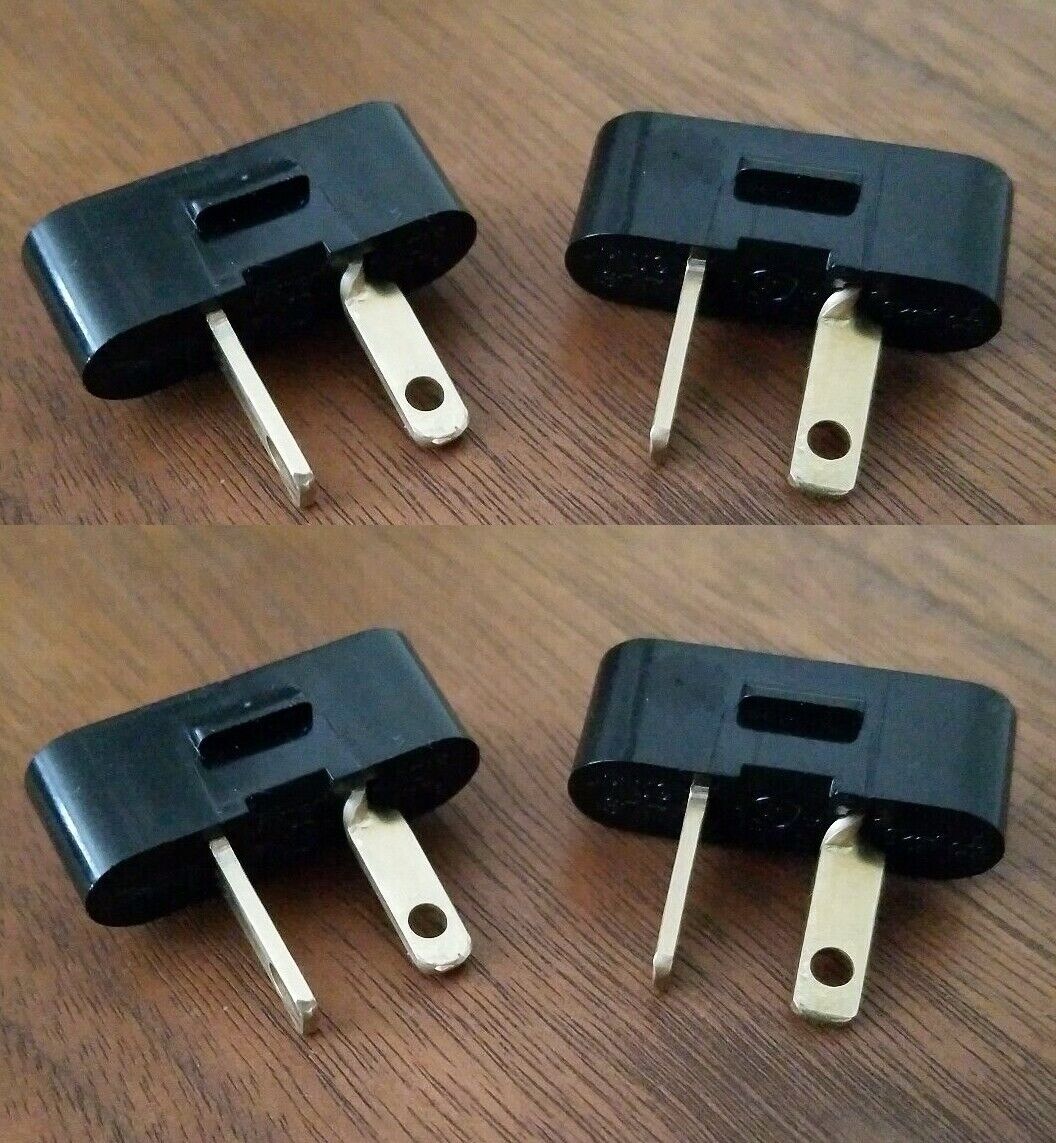
One of the first things you’ll notice—especially if you’re trying to hook it up—is the speaker terminals. They don’t take bare wire. Instead, they require special adapter plugs, a design choice that was either clever engineering or a long-term parts racket. These plugs are frequently lost, and replacements run over $20 each on eBay. Some owners bypass them by jamming 16-gauge wire into the slots—a tight fit, but it works. Just don’t short them out. As one owner warned, “Don’t short the speaker wires not even for a second or oops bye bye outputs.”
Tone and Loudness Controls
The tone controls are serious business: ±14 dB bass cut, +12 dB boost at 50 Hz, and ±11.5 dB treble adjustment at 10 kHz. That’s more range than most modern gear, letting you tailor the sound to your room or taste. And the loudness contour? Flip it on when listening at low levels, and it boosts 12 dB at 50 Hz and 6.5 dB at 10 kHz when the volume is set to -40 dB. It’s not subtle, but it works—especially with less efficient speakers. The audio circuit itself uses a single-ended push-pull design, a topology known for clean midrange and solid bass control, backed by a damping factor of 25 at 8 ohms.
Historical Context
The SX-1000TD was a European release, part of a small family of closely related models that included the SX-1000TW and the tube-equipped SX-1000TA. The TW was sold in the U.S., while the TD found its way stateside under the Allied brand. Visually, the TD and TW are nearly identical, but the TA looks different—likely because of its hybrid tube/solid-state design. Once Pioneer committed to solid-state, they phased out the TA and focused on the TW and TD. This shift wasn’t just technical—it reflected a broader industry move toward transistorized reliability and mass production. The SX-1000TD, then, sits at a pivot point: the end of tubes, the rise of ICs, and the dawn of the modern receiver era.
Collectibility & Value
All SX-1000 variants are in demand, but the TD isn’t the most expensive. A fully working SX-1000TW in excellent condition might fetch around $250, which seems to be the ceiling for this family. One person picked up a SX-1000TD and two speakers for $200, suggesting these don’t command sky-high prices—yet. There’s talk of a $299.50 eBay sale, and one forum user noted, “If they're going for $300, it's definitely a sellers' market!” But most are still affordable. The real cost comes in maintenance: lost speaker plugs, blown fuses (“main fuse blowing for no good reason”), and failed display lamps (6.3V, 0.25W—replacements available as LED kits). The muting switch is another known failure point. Overall, these receivers “need a little TLC to be in tip-top condition,” but owners agree: when they’re working, the sound is outstanding—warm, powerful, and gloriously analog.
eBay Listings


As an eBay Partner, we earn from qualifying purchases. This helps support our independent vintage technology research.
Related Models
- Pioneer SX-1500TD (1978)
- Pioneer C-77 (1977)
- Pioneer EXCLUSIVE-C3 (1983)
- Pioneer CT-3030E (1983)
- Pioneer CT-F4141A (1983)
- Sony TC-2050SD (1978)
- Aiwa AD-F990 (1993)
- Kenwood KX-3060 (1982)
- Sony TC-2130A (1974)
- Sony TC-2220 (1972)