Pioneer SE-4 (1980–1983)
Open-back comfort with a cult following—and a few quirks you’ll want to check before buying
Overview
You pull these on, and it’s like stepping into a time machine set to 1982: the soft pleather cushions seal just enough to feel cozy, but the open-air design keeps the sound from ever feeling claustrophobic. The Pioneer SE-4 isn’t flashy, but it’s got presence—both in how it sounds and how it’s built. Made in Japan between 1980 and 1983, these supra-aural open-type stereo headphones were part of a small family of models that included the SE-2, SE-6, and later SE-450 series. They weren’t mass-market earbuds-for-the-masses gear; they were aimed at listeners who wanted clarity without fatigue, and a sound that stayed honest across long sessions.
And honest it is. Owners report a flat response curve—tight, controlled bass that doesn’t boom, sweet mids and mid-highs, and an overall non-fatiguing character that makes them perfect for late-night listening. Some call them “an open-air version of the Monitor 10,” while others say they’re even better, with a wider soundstage and more forgiving low end. But here’s the catch: bass performance varies. One user swears they’re “bassy headphones,” while another ran test tones and found bass dropping off severely at 150Hz. What gives? Turns out, the SE-4 is picky about amplification. Certain tube amps—like the Little Dot 1+—can struggle to drive them with full bass, while solid-state gear, like a Xenos amp, brings out their full potential. So if you’re pairing these with vintage tube gear, be ready to experiment.
They’re not perfect. The drivers are fused into the housing—no easy swaps—and the baffles just loosely sit in the cups, with about a 1/8 inch (0.33 cm) gap between driver and baffle. It’s not a flaw, exactly, but it does mean the internal acoustics are more open and less controlled than closed-back designs. That contributes to the airy, laid-back sound, but also means they leak sound like a sieve. Not ideal for shared spaces.
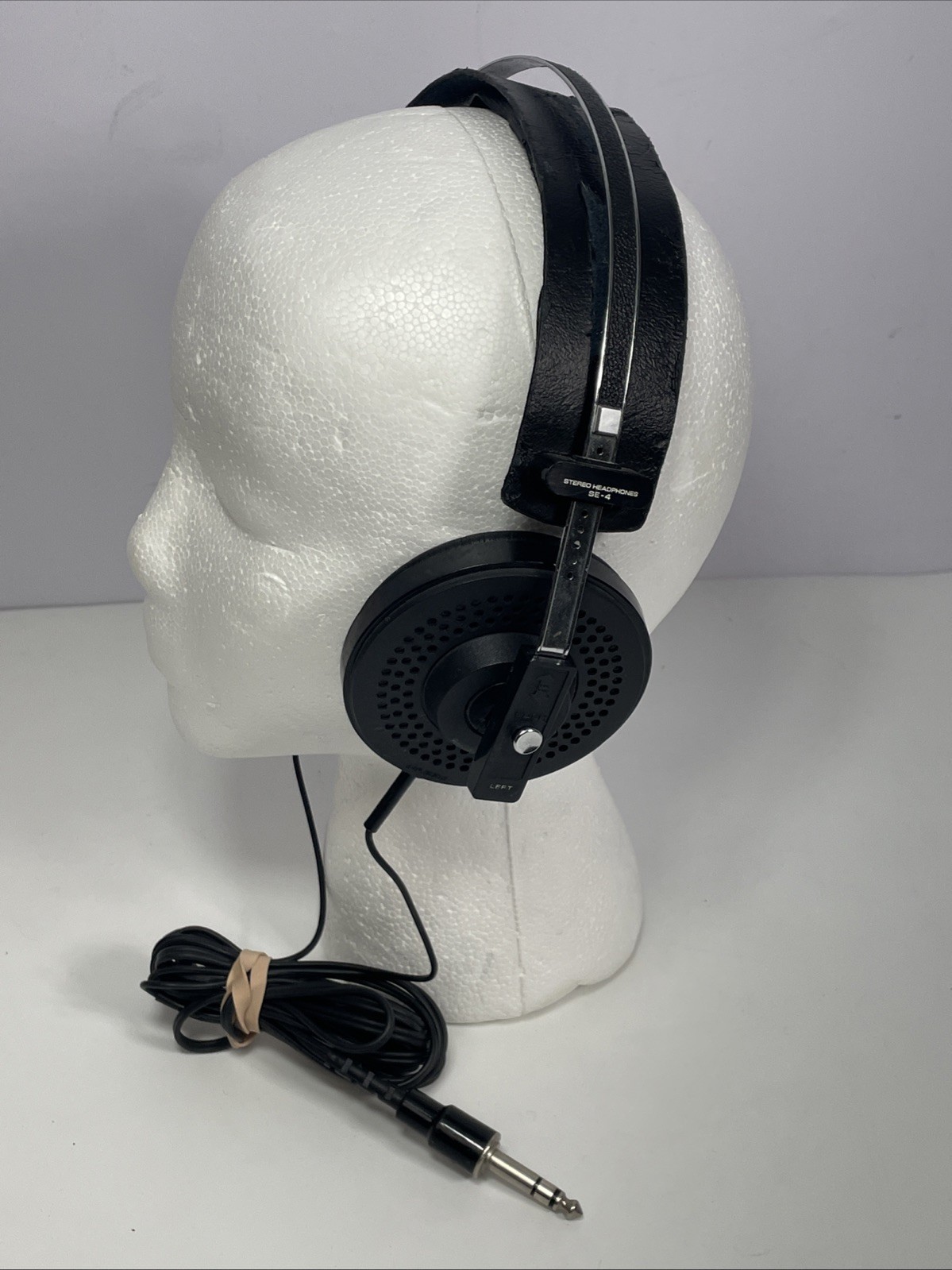
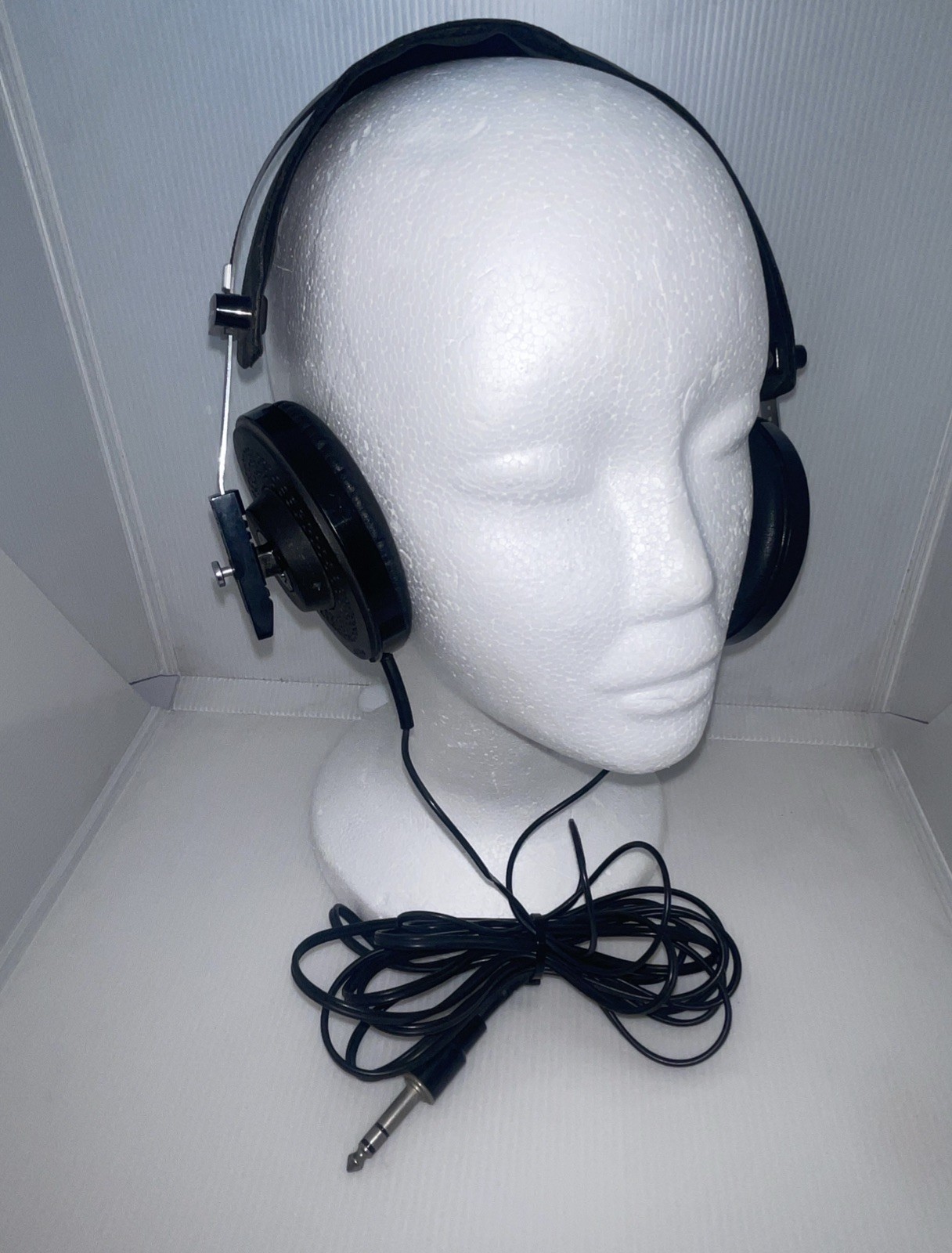
Still, for a headphone of its era, the build is thoughtful. The headband and earpads use faux leather (or “leather-like vinyl,” as one source puts it), and the slide assemblies are two-piece metal, held together by a tiny screw—though those screws have a habit of going missing over time. And yes, the pads wear out. Almost all surviving pairs do. Replacement? One owner mentioned trying generic 80mm pads from AliExpress, but fit isn’t guaranteed. So check the condition carefully.
Specifications
| Manufacturer | Pioneer Corporation |
| Model | SE-4 |
| Type | Open Type Stereo Headphones |
| Years of Manufacture | 1980–1983 |
| Made in | Japan |
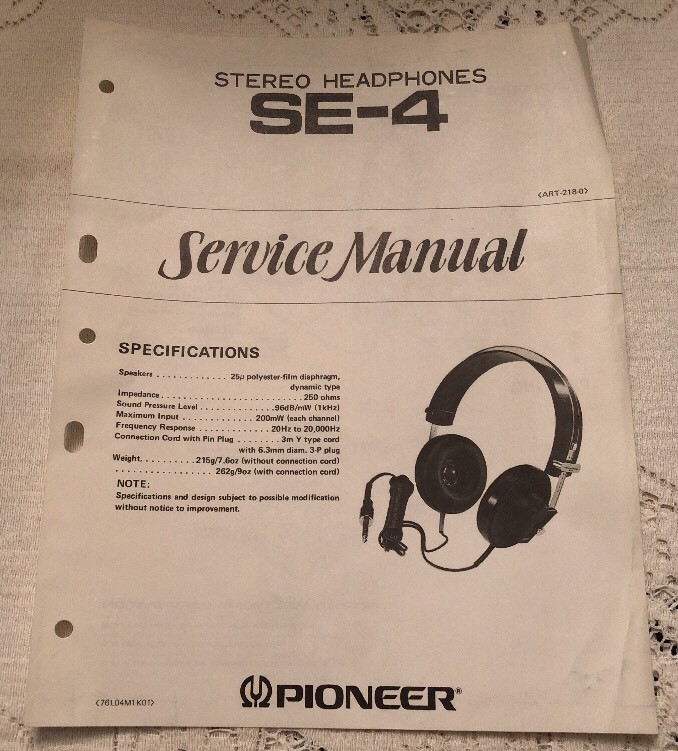
| Frequency Response | 20–20k hertz |
| Impedance | 150 ohms |
| Weight | 215 g |
| Cable Length | 2.4 m |
| Connectivity | 3.5mm Jack |
| Color | Black |
Key Features
Open-Air Design for Natural Sound
The SE-4’s open-back construction lets air move freely behind the driver, reducing cabin pressure and eliminating the “boxed-in” feeling common in closed headphones. That translates to a more natural, spacious presentation—especially in the mids and highs. It’s why so many describe the sound as “vintage-y” and “high-end laid-back.” You’re not getting hyped bass or sparkly treble; you’re getting what’s on the tape. This makes them excellent for critical listening, especially with jazz, classical, or vocal recordings where clarity matters more than punch.
Faux Leather Comfort with a Caveat
The pleather pads are soft and comfortable, often compared to those on the popular Monitor 10. But time hasn’t been kind to most. Decades of use and storage have left many pairs with cracked or disintegrating pads. Replacement is possible with 80mm generic pads, but fit isn’t assured—some users report needing to modify them slightly. The headband uses the same faux leather, so check both earpads and headband cushion when buying.
Driver and Baffle Layout: Simple, But Not Serviceable
Inside each earcup, the driver is glued directly to the back of the housing, and the baffle (the front plate) just sits loosely in place. There’s a noticeable 1/8 inch (0.33 cm) gap between driver and baffle—unusual by modern standards, but not uncommon in 1980s open-back designs. This layout likely contributes to the diffuse, airy sound. But don’t expect to upgrade or repair the drivers. They’re fused into the housing—permanently. If one fails, the whole cup is likely done.
Slide Assembly: Functional, But Fragile
The headband sliders are made of two metal pieces held together by a small screw. Over time, those screws can loosen or vanish entirely—leaving the sliders wobbly or stuck. It’s a common issue noted by owners, so inspect them closely. A missing screw isn’t a dealbreaker (they’re standard size), but it’s one more thing to fix before daily use.
Collectibility & Value
The SE-4 is a niche collectible—valued more for its cult sound and vintage Japanese build than mainstream recognition. Prices reflect that: a used pair once listed for $39.99, while another on Etsy went for €74.75 (tested and working). More recent listings show a pair at PLN 90 (Dec 24, 2025) and DKK 350 (Dec 21, 2025). These aren’t high prices, but they’re not throwaways either. Condition is everything. A pair with original pads intact and sliders intact will command more than one held together with tape and rubber bands.
The original price was around $50 USD (or 110 DM), which puts them in the mid-tier bracket for their time—not budget, not flagship. Today, they’re sought after by vintage headphone enthusiasts, especially those building period-correct setups or chasing that elusive “non-fatiguing” analog sound. Just remember: test the drivers, check the pads, and make sure the sliders still have their screws. And if you’re using a tube amp, bring a solid-state backup—just in case the bass goes missing.
eBay Listings

As an eBay Partner, we earn from qualifying purchases. This helps support our independent vintage technology research.
Related Models
- Pioneer CS-811 (1979)
- Pioneer KH-3500 (1979)
- Pioneer CS-53 (1978)
- Pioneer CS-545 (1979)
- Pioneer CS-66 (1979)
- Akai AM-2850 (1975)
- Akai AP-206 (1975)
- Nakamichi BX-1 (1985)
- Acoustic Research research-ar-17 (1978)
- Acoustic Research AR-19 (1994)