Pioneer SE-21: The Forgotten Studio Workhorse of the Late 1970s
In the late 1970s, as the personal audio revolution began to take shape with the rise of portable cassette players and home recording, Pioneer quietly introduced a pair of headphones that would become a cult favorite among engineers, broadcasters, and audiophiles: the Pioneer SE-21. Released in 1979, the SE-21 was part of Pioneer’s professional monitoring lineup, designed to deliver accurate, fatigue-free sound for extended listening sessions. Though overshadowed at the time by more prominent names like Sennheiser and Sony, the SE-21 has since earned a reputation as a hidden gem in the world of vintage headphones—praised for its balanced sound, rugged build, and exceptional comfort.
Historical Context and Release
The Pioneer SE-21 emerged during a pivotal moment in audio history. The Walkman had just been introduced in 1979, fueling consumer demand for high-quality personal listening gear. At the same time, broadcast studios, radio stations, and early home recording enthusiasts needed reliable, closed-back headphones that could provide isolation and accurate monitoring. Pioneer, already known for its high-fidelity receivers and speakers, expanded into professional audio with a series of studio-grade headphones, including the SE-20, SE-21, and SE-22.
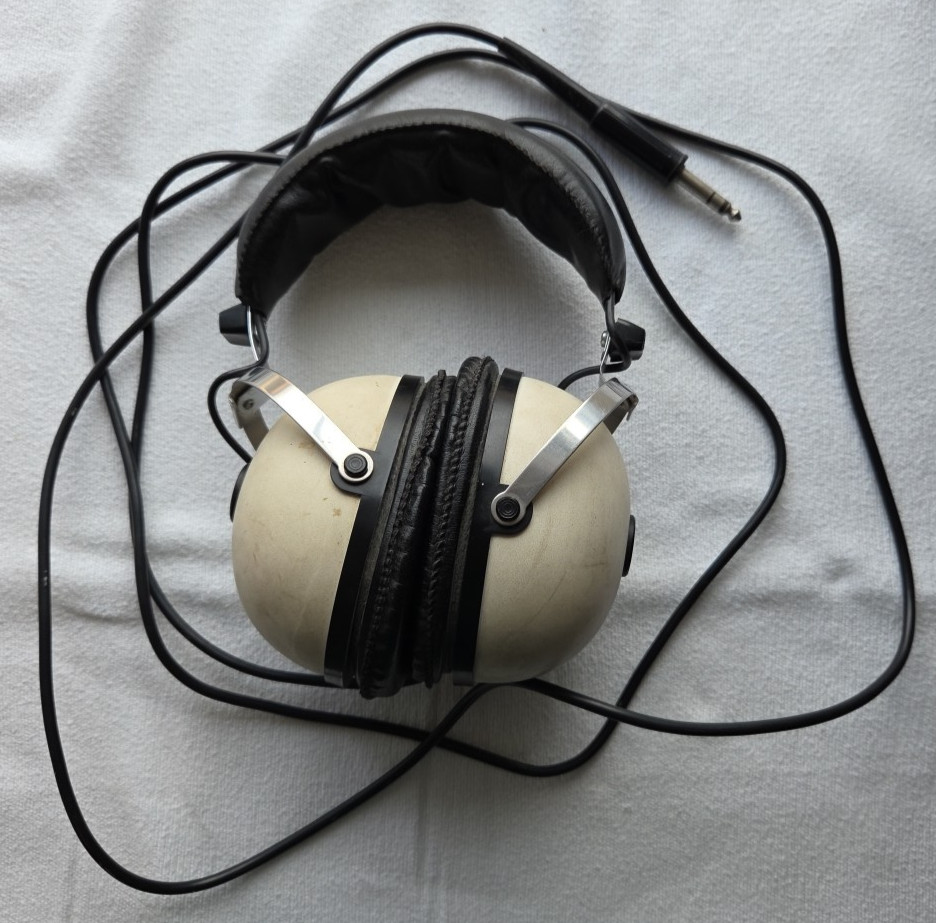
The SE-21 was positioned as a mid-tier circumaural (over-ear) model, bridging the gap between entry-level and high-end monitoring gear. Its closed-back design made it ideal for voiceover work, DJing, and tracking in live environments where sound leakage and external noise were concerns. While not as widely advertised as consumer models, the SE-21 found a loyal following in Japan and Europe, particularly in radio and television production studios.
Technical Specifications
| Feature | Specification |
| Model | Pioneer SE-21 |
| Year of Release | 1979 |
| Type | Closed-back, circumaural |
| Impedance | 32 ohms |
| Sensitivity | 100 dB/mW |
| Frequency Response | 20 Hz – 20 kHz |
| Driver Size | 40 mm dynamic |
| Connector | 3.5 mm stereo mini-plug (with 6.3 mm adapter) |
| Cable Length | 2.0 m, straight, non-detachable |
| Weight | 180 g (without cable) |
| Earpad Material | Soft vinyl over foam |
| Headband | Padded, self-adjusting metal frame |
The 32-ohm impedance and high 100 dB/mW sensitivity made the SE-21 exceptionally easy to drive—perfect for the low-output devices of the era, including early cassette decks, boomboxes, and tube amplifiers. The 40 mm drivers were engineered for linear response, avoiding the exaggerated bass common in consumer headphones of the time.
Sound Quality Characteristics
The Pioneer SE-21 delivers a neutral, studio-monitor-like sound signature that remains impressive even by modern standards. Unlike many vintage headphones that emphasize bass or treble for consumer appeal, the SE-21 was designed for accuracy.
- Bass: Tight, controlled, and well-extended down to 20 Hz. Not overly emphasized, but present and articulate—ideal for monitoring kick drums and basslines without coloration.
- Midrange: Clear and transparent, with excellent vocal reproduction. The mids are slightly forward, making them excellent for voice and dialogue work.
- Treble: Smooth and detailed without harshness. Cymbals and high frequencies are rendered naturally, avoiding the sibilance that plagues some vintage designs.
- Soundstage: Modest by today’s open-back standards, but impressive for a closed-back design of its era. Imaging is precise, with good instrument separation.
The closed-back design provides about 20–25 dB of passive isolation, making it suitable for noisy environments. However, this also results in a slightly "boxed-in" feel compared to open-back models—a trade-off inherent to the design.
Notable Features and Innovations
The SE-21 was ahead of its time in several key areas:
- Self-Adjusting Headband: A spring-loaded metal headband automatically conforms to the user’s head size, eliminating the need for manual adjustment. This was rare in 1979 and contributed to the SE-21’s legendary comfort.
- Ventilated Earcups: Despite being closed-back, the earcups feature subtle internal baffling and rear venting to reduce pressure buildup and improve bass response.
- High-Sensitivity Design: At 100 dB/mW, the SE-21 could achieve high volume levels even from low-powered sources—a major advantage in the pre-amplified headphone era.
- Broadcast-Grade Cable: The 2.0 m straight cable was reinforced with flexible PVC and featured strain relief at both ends, reducing breakage in professional use.
Common Issues and Maintenance
While the SE-21 is built to last, age-related issues are common in surviving units:
- Earpad Deterioration: The original vinyl earpads often crack or disintegrate after 40+ years. Replacement pads are available from third-party vendors, typically made from synthetic leather or memory foam.
- Cable Fatigue: The non-detachable cable can fray near the plug or housing. Some users retrofit the SE-21 with modern detachable cables for improved longevity.
- Driver Oxidation: In humid environments, the copper voice coils may oxidize, leading to crackling or channel imbalance. Gentle cleaning and deoxidizing can sometimes restore function.
- Headband Spring Fatigue: The self-adjusting mechanism can lose tension over time. Lubricating the pivot points with silicone grease often restores smooth operation.
Regular maintenance—cleaning the earcups, checking solder joints, and storing in a dry place—can extend the life of an SE-21 indefinitely. Many units from the early 1980s still function perfectly today.
Market Value and Collectibility
The Pioneer SE-21 is moderately collectible, with growing interest among vintage audio enthusiasts. While not as rare as the Sennheiser HD 414 or Koss SP/3, the SE-21’s reputation for sound quality and comfort has driven demand in recent years.
- Working Condition: $80–$150 USD
- Mint/Unopened: $200–$300 USD (rare)
- With Original Box and Accessories: +$30–$50 premium
Values are highest in Japan and Western Europe, where the SE-21 saw the most professional use. Collectors prize units with original earpads and unmodified cables.
Comparison to Similar Models
| Model | Impedance | Sound Signature | Key Difference |
| Sennheiser HD 25 (1989) | 600 ohms | Bright, analytical | Later release, higher impedance, more isolation |
| Sony MDR-7506 (1991) | 63 ohms | Slight bass boost | More modern, but less neutral than SE-21 |
| Koss Porta Pro (1980) | 60 ohms | Warm, fun | Open-back, less isolation, more colored |
| Pioneer SE-22 | 32 ohms | Slightly warmer mids | Successor model, less precise treble |
The SE-21 stands out for its neutral tuning and exceptional comfort, outperforming many later professional models in long-term wearability. While the Sony MDR-7506 dominates modern studio use, the SE-21 offers a more natural tonal balance—particularly in the midrange.
Final Thoughts
The Pioneer SE-21 may not have been a commercial blockbuster in its day, but it was a quiet achiever—a workhorse headphone built for accuracy, durability, and comfort. Today, it represents a fascinating intersection of late-1970s Japanese engineering and professional audio philosophy. For collectors, restorers, or anyone seeking a vintage headphone with genuine studio pedigree, the SE-21 is a rewarding find.
Its combination of neutral sound, self-adjusting fit, and high sensitivity makes it not just a nostalgic artifact, but a genuinely usable headphone—even with modern gear. In a world where vintage audio often trades authenticity for hype, the Pioneer SE-21 remains a humble classic, waiting to be rediscovered.
eBay Listings



As an eBay Partner, we earn from qualifying purchases. This helps support our independent vintage technology research.
Related Models
- Pioneer CS-811 (1979)
- Pioneer KH-3500 (1979)
- Pioneer CS-53 (1978)
- Pioneer CS-545 (1979)
- Pioneer CS-66 (1979)
- Akai AM-2850 (1975)
- Akai AP-206 (1975)
- Nakamichi BX-1 (1985)
- Acoustic Research research-ar-17 (1978)
- Acoustic Research AR-19 (1994)