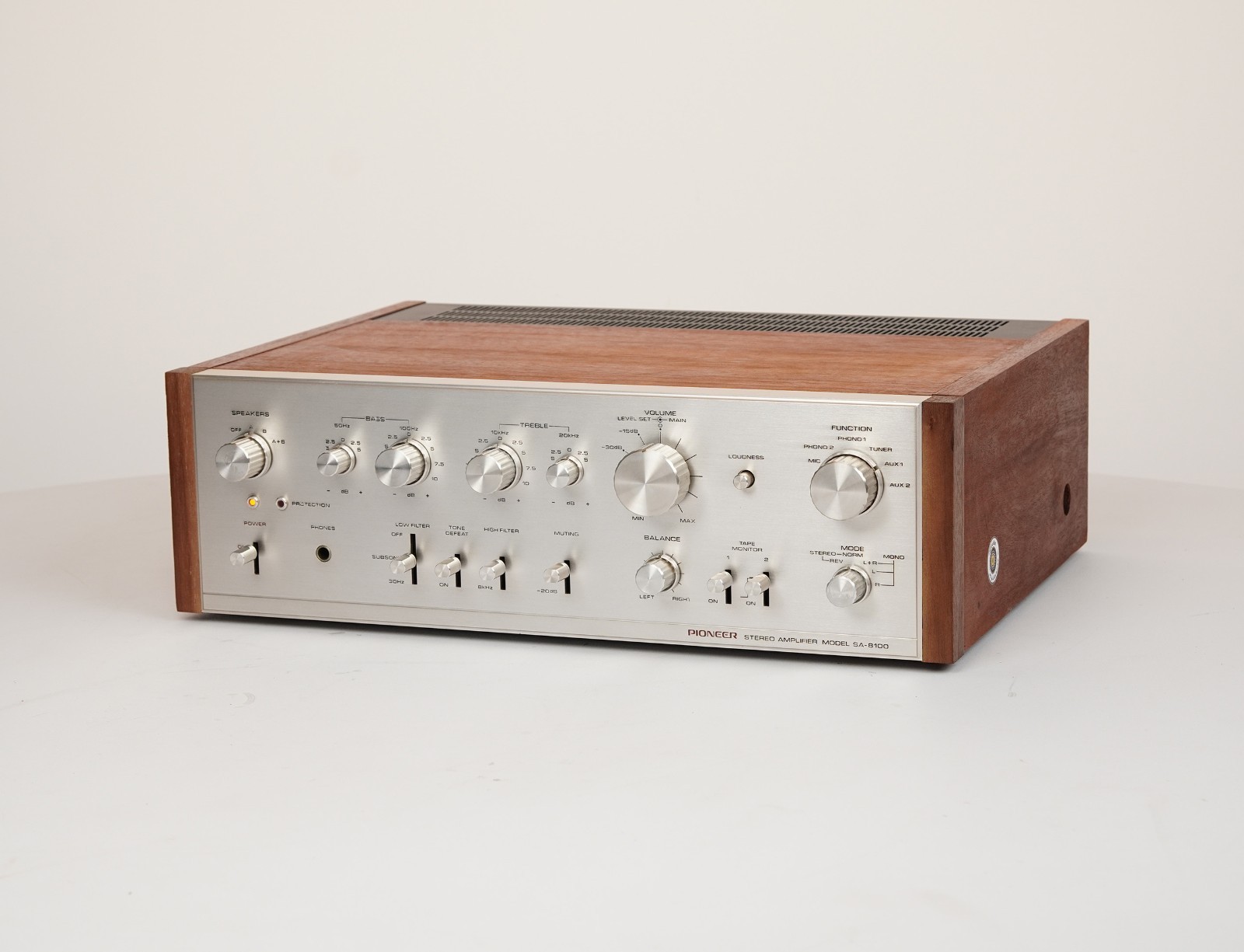
Pioneer SA 8100 (1976-1978)
Specifications
| Feature | Specification |
| Year of Production | 1976-1978 |
| Power Specifications | 40W per channel (8Ω), 45W per channel (4Ω), stereo |
| Impedance | 4-16Ω |
| Sensitivity | Unknown |
| Key Features | DC amplifier design, direct-coupled OCL circuitry, non-switching output stage, dual power supply, phono MM/MC selector, tone defeat switch, loudness control, pre-out/main-in jacks |
Historical Significance
The Pioneer SA 8100 wasn't just another integrated amp—it was a statement. Released during the golden age of high-fidelity, this model stood at the forefront of Pioneer’s 'Series 20' lineup, marking the brand’s bold leap into DC-coupled amplifier design. Built with surgical precision and housed in the iconic silver faceplate that defined late-'70s audiophile gear, the SA 8100 delivered what mattered most: transparency, speed, and rock-solid reliability. It was engineered for those who demanded more than power ratings—this was about musical truth.
Sound Signature
Expect clarity that cuts through the mix without harshness. The SA 8100 renders sound with a clean, neutral balance—detailed highs, a transparent midrange, and bass that’s tight and controlled, never bloated. Its DC-coupled OCL circuitry eliminates coupling capacitors from the signal path, resulting in lightning-fast transient response and a dynamic punch rare for its era. Compared to the warm haze of tube gear, it’s refreshingly honest. Yet it avoids the clinical sterility some solid-state amps fall into, retaining a subtle musicality that keeps you listening long after the first track ends.
Maintenance and Restoration Tips
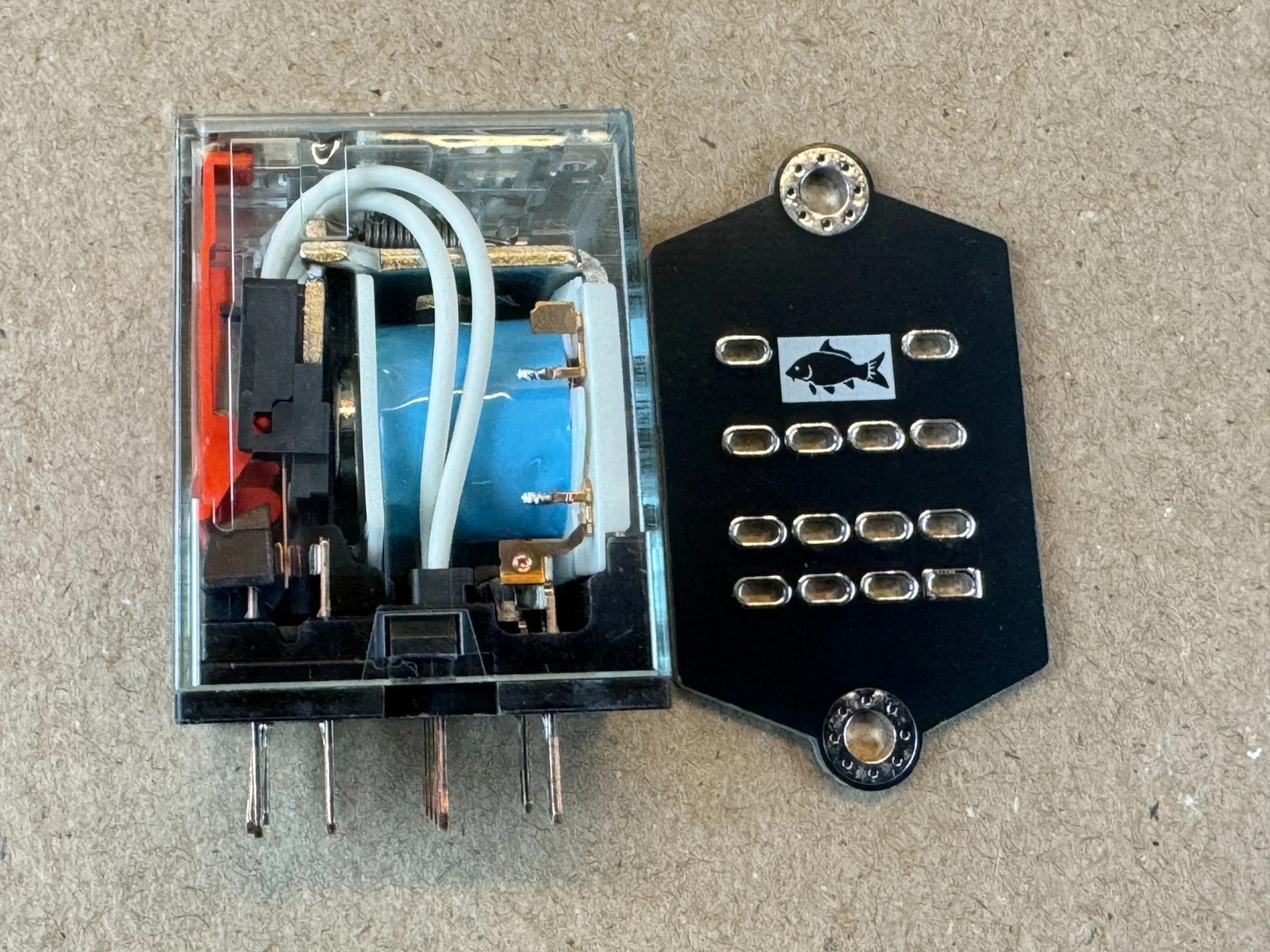
After nearly five decades, these units need attention—but the payoff is worth it. Electrolytic capacitors dry out over time and should be replaced to restore performance and prevent damage. DC offset often drifts, so calibration is essential for speaker safety. Pots and switches accumulate grime; a thorough cleaning brings back smooth operation. Watch for failing relays in the protection circuit, and don’t overlook the small dial lights—replacing dim or burnt bulbs revitalizes that classic Pioneer glow.
Collectibility and Market Value
- Market Value: $300-$600 depending on condition and restoration status
- Collectibility Rating: 7/10
eBay Listings


As an eBay Partner, we earn from qualifying purchases. This helps support our independent vintage technology research.
Related Models
- Pioneer CS-811 (1979)
- Pioneer KH-3500 (1979)
- Pioneer CS-53 (1978)
- Pioneer CS-545 (1979)
- Pioneer CS-66 (1979)
- Akai AM-2850 (1975)
- Akai AP-206 (1975)
- Nakamichi BX-1 (1985)
- Acoustic Research research-ar-17 (1978)
- Acoustic Research AR-19 (1994)