Pioneer JB-21: The Unsung Connector of Vintage Audio Systems
In the golden era of high-fidelity audio during the 1970s, Pioneer built a reputation not only for its powerful receivers, tuners, and amplifiers but also for a comprehensive ecosystem of supporting components—many of which are now overlooked by collectors. Among these supporting players is the Pioneer JB-21, a modest yet functional passive junction box designed to simplify connectivity in complex audio setups of the time.
While not a standalone audio component like an amplifier or turntable, the JB-21 played a crucial role in streamlining signal routing for audiophiles who owned multiple Pioneer components. It’s a perfect example of how manufacturers once created complete, integrated systems—where even the smallest accessories contributed to a seamless user experience.
What Is the Pioneer JB-21?
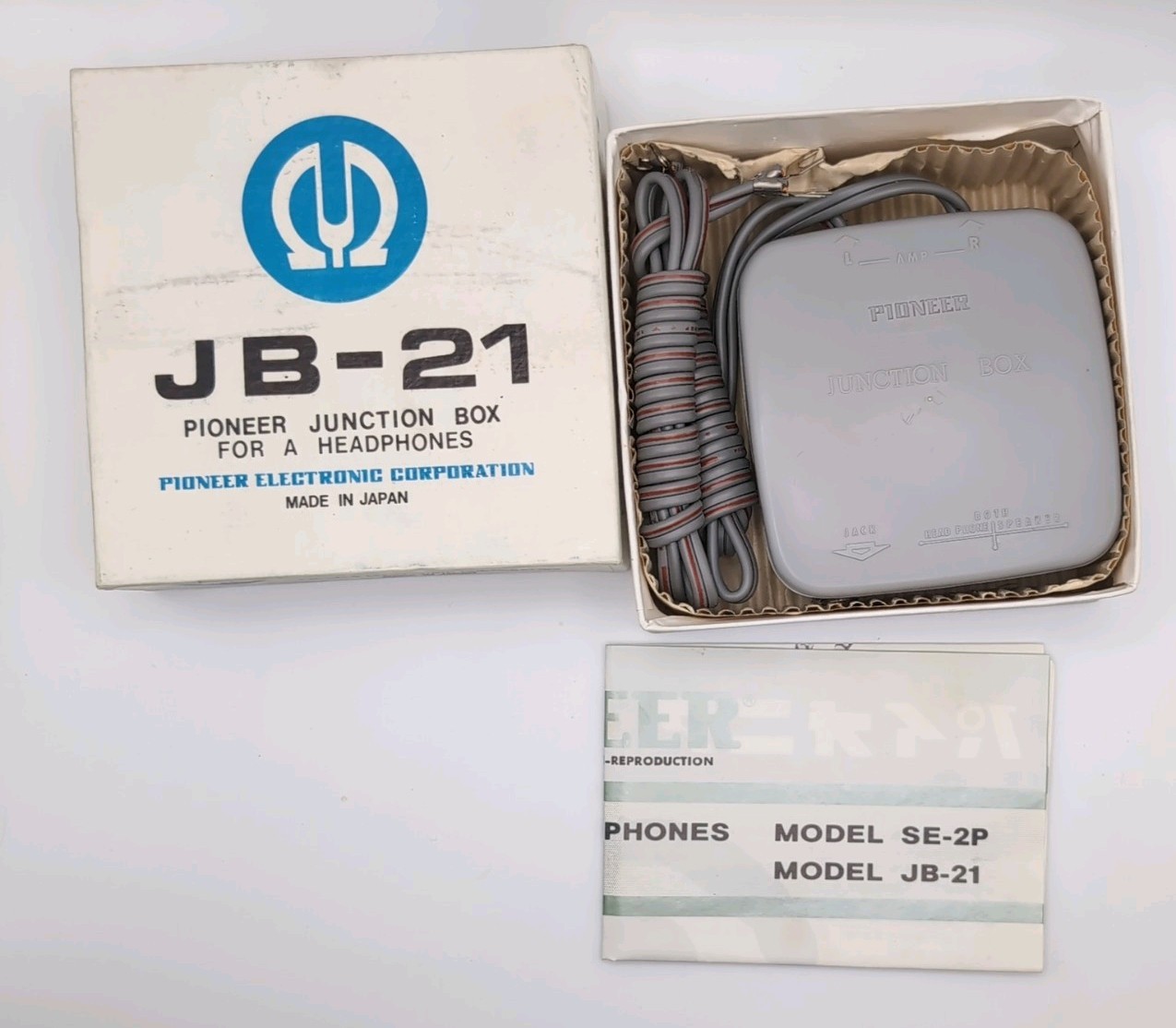
The Pioneer JB-21 is a passive audio junction box introduced in the mid-1970s, around 1975, to complement Pioneer’s lineup of receivers, preamplifiers, and source components. It was not an active device—meaning it contained no amplification circuitry, power supply, or signal processing—but rather served as a centralized patch point for audio signals.
Designed primarily for use with Pioneer’s “Control Compatible” series of components (a precursor to modern system integration), the JB-21 allowed users to connect multiple audio sources—such as turntables, tape decks, and tuners—and route them efficiently to a central amplifier or receiver. It functioned much like a basic patch bay, reducing cable clutter and simplifying system expansion.
Though unassuming in appearance—a small, brushed-metal enclosure with multiple input and output jacks—the JB-21 reflected Pioneer’s philosophy of system cohesion during an era when modular audio components were at their peak.
Technical Specifications
| Specification | Detail |
| Model | JB-21 |
| Manufacturer | Pioneer Corporation |
| Year Introduced | 1975 |
| Type | Passive audio junction box |
| Inputs | 3 pairs (RCA phono: 2x line, 1x tape) |
| Outputs | 3 pairs (RCA phono: 2x line, 1x tape) |
| Impedance | Not applicable (passive) |
| Power Requirement | None |
| Dimensions (W×H×D) | Approx. 140 × 50 × 85 mm |
| Weight | ~0.6 kg |
| Color | Black (matches Pioneer’s 1970s styling) |
| Construction | Steel chassis, aluminum front panel |
The JB-21 features high-quality RCA (phono) jacks arranged in clearly labeled banks: two line-level inputs and one tape input, with corresponding outputs. Its passive design means it relies entirely on the connected components for signal strength, making it suitable only for line-level signals—not phono-level (which requires preamplification).
Internally, the JB-21 uses simple, direct-wired connections with no switches or relays. This minimalist approach ensures signal integrity and reliability, though it limits functionality compared to modern switching solutions.
Role in a Vintage Audio System
In a typical 1970s audio rack, the JB-21 would be mounted behind or beside a receiver like the Pioneer SX-3800 or SA-7800, acting as a hub. For example:
- A turntable would connect to the receiver’s dedicated phono input.
- A cassette deck, FM tuner, and auxiliary source (like a reel-to-reel) would plug into the JB-21’s inputs.
- The JB-21’s outputs would then feed into the receiver’s line and tape inputs.
This setup allowed users to keep their sources permanently connected while minimizing the need to reach behind the receiver to swap cables. While not a remote-controlled switcher, the JB-21 reduced wear on the receiver’s jacks and made reconfiguring signal paths easier.
It was especially useful in dual-tape setups (for tape dubbing), where the JB-21 could route the tape monitor loop between components without manual rewiring.
Sound Characteristics and Performance
As a passive, unamplified junction box, the JB-21 does not color or alter the audio signal under normal conditions. Its performance hinges entirely on the quality of its internal wiring and connectors.
Pioneer used decent-grade copper wiring and gold-plated RCA jacks (on later production runs), which helped minimize signal loss and oxidation. In well-maintained units, the JB-21 introduces negligible resistance or capacitance, preserving the original tonal balance and dynamics of the source components.
However, due to its age, original JB-21 units may suffer from degraded internal insulation, loose solder joints, or corroded connectors—issues that can introduce noise, hum, or intermittent signal dropouts. When in good condition, though, the JB-21 performs its job transparently.
Notable Features and Design Philosophy
The JB-21’s design reflects Pioneer’s system-oriented approach in the 1970s:
- Modular Integration: It was part of a broader ecosystem where components “talked” to each other via control buses (though the JB-21 itself had no control logic).
- Build Quality: Despite its simplicity, it shares the rugged construction of other Pioneer gear from the era—thick metal chassis, durable jacks, and clean labeling.
- Aesthetic Consistency: Its black finish and brushed aluminum faceplate match the styling of Pioneer’s flagship receivers, making it visually cohesive in a rack.
While not innovative in an electronic sense, the JB-21 exemplifies thoughtful industrial design—solving a real-world problem (cable management) with elegance and reliability.
Common Issues and Maintenance Tips
Given its age, surviving JB-21 units may require some attention:
- Oxidized RCA Jacks: Clean with electronic contact cleaner and a soft brush. Avoid abrasive tools.
- Frayed or Brittle Cables: The original internal wiring can become stiff or cracked. Replacing with modern shielded cable improves longevity.
- Loose Connections: Resolder any suspect joints, especially at the RCA terminals.
- Dust and Corrosion: Open the unit carefully (it’s typically secured with screws on the bottom) and inspect for signs of moisture damage.
Because it has no active electronics, the JB-21 is relatively easy to restore. Replacement RCA jacks are still available, and the wiring diagram is straightforward.
Collectibility and Market Value
The Pioneer JB-21 is not a high-value collectible in the traditional sense. It rarely appears on auction sites, and when it does, prices typically range from $20 to $50, depending on condition and completeness.
However, it holds niche appeal among:
- Pioneer system completists restoring full 1970s setups.
- Vintage audio enthusiasts who appreciate original accessories.
- DIY modders repurposing the chassis for custom patch bays or preamp projects.
Its value lies more in authenticity than performance. For someone restoring a vintage Pioneer system to factory condition, the JB-21 is a charming and functional detail that enhances the overall experience.
Legacy and Final Thoughts
The Pioneer JB-21 may never headline a vintage audio showcase, but it represents an important chapter in audio history—the era of modular, expandable hi-fi systems. Before digital integration and HDMI switching, audiophiles relied on clever analog solutions to manage their gear. The JB-21 was one such solution: simple, effective, and built to last.
Today, it serves as a reminder that great audio systems aren’t just about amplifiers and speakers—they’re about how all the pieces work together. The JB-21 may be a small part of that story, but for those who appreciate the full vintage experience, it’s a meaningful one.
If you stumble upon a JB-21 at a flea market or in a forgotten rack, don’t dismiss it as obsolete. With a little cleaning and care, it can still serve as a tidy, nostalgic hub for your classic audio setup—connecting the past, one cable at a time.
eBay Listings



As an eBay Partner, we earn from qualifying purchases. This helps support our independent vintage technology research.
Related Models
- Pioneer CS-811 (1979)
- Pioneer KH-3500 (1979)
- Pioneer CS-53 (1978)
- Pioneer CS-545 (1979)
- Pioneer CS-66 (1979)
- Akai AM-2850 (1975)
- Akai AP-206 (1975)
- Nakamichi BX-1 (1985)
- Acoustic Research research-ar-17 (1978)
- Acoustic Research AR-19 (1994)