Pioneer CS-J825Q (1982)
The Pioneer CS-J825Q is a vintage bookshelf loudspeaker introduced by Pioneer in the early 1980s, specifically around 1982. As part of Pioneer’s CS (Compact Speaker) series, the CS-J825Q was designed to deliver high-fidelity audio performance in a compact enclosure, making it ideal for smaller listening environments or as part of a space-conscious stereo setup. Though not as widely documented as some of Pioneer’s flagship speaker models from the era, the CS-J825Q holds a quiet reputation among vintage audio enthusiasts for its balanced sound signature, solid build quality, and classic aesthetic.
Design and Build
The CS-J825Q features a two-way driver configuration housed in a compact MDF (medium-density fiberboard) enclosure. The cabinet is typically finished in a walnut wood veneer, a hallmark of 1980s speaker design that emphasized both durability and visual appeal. The front baffle is flat and minimalist, with a removable black cloth grille that covers the drivers. The overall dimensions are modest, making the speaker suitable for bookshelf placement, small stands, or even desktop use.
The enclosure is internally braced to reduce resonance and coloration, a design consideration that was becoming more common in mid-tier speakers during this period. The rear panel includes a single set of gold-plated binding posts, allowing for secure connections with bare wire, spades, or pins. There is no bi-wiring or bi-amping capability, consistent with the design philosophy of cost-effective yet performance-oriented speakers of the era.
Driver Configuration and Acoustics
The CS-J825Q employs a two-way speaker system consisting of a 13 cm (5.1 inch) polypropylene cone woofer and a 2.5 cm (1 inch) soft-dome tweeter. The woofer is designed for mid-bass reproduction, with a rubber surround that enhances durability and linearity. The soft-dome tweeter is mounted slightly off-axis to improve stereo imaging and reduce direct reflection from the baffle.
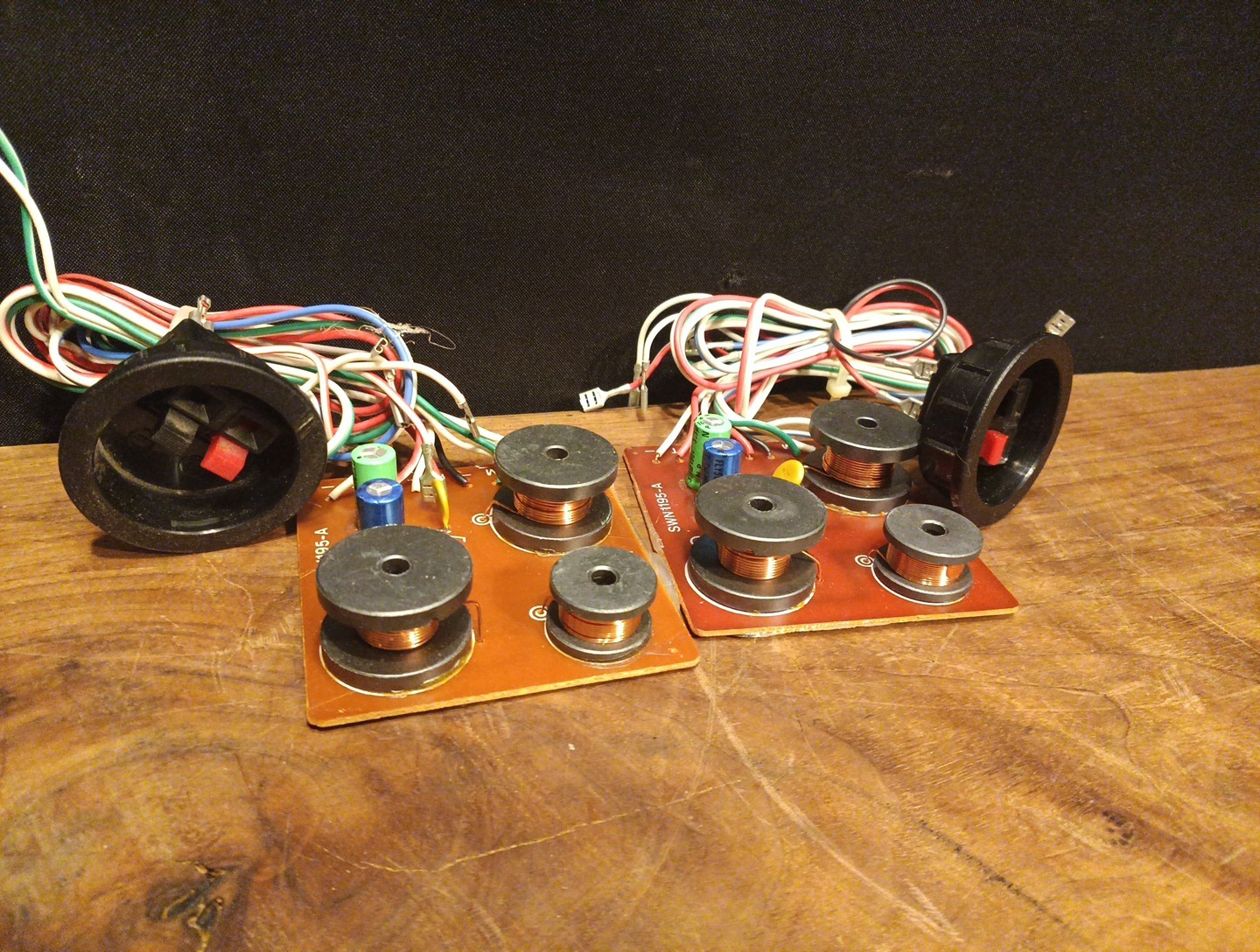
The crossover network, located inside the cabinet, is a passive 2nd-order design (12 dB/octave for the tweeter and 12 dB/octave for the woofer), tuned to a crossover frequency of approximately 3.5 kHz. This allows for a smooth transition between drivers and minimizes phase distortion. The crossover components are basic but effective for the price point, using film capacitors and air-core inductors where necessary.
Frequency response for the CS-J825Q is rated from 60 Hz to 20 kHz (±3 dB), which is respectable for a speaker of its size in the early 1980s. While it does not produce deep bass on its own, it delivers clear midrange and detailed highs, making it well-suited for vocal-centric music, acoustic recordings, and jazz. Bass response can be augmented with a subwoofer or by placing the speakers near room boundaries to take advantage of boundary gain.
Performance and Sound Characteristics
The sonic signature of the CS-J825Q leans toward neutrality with a slight warmth in the lower mids, a characteristic often associated with Pioneer speakers of this era. The midrange is articulate and natural, making vocals and stringed instruments sound lifelike. The tweeter delivers crisp but not harsh highs, avoiding the sibilance that plagued some contemporary designs. Overall, the speaker offers a coherent and balanced soundstage with good imaging for a compact two-way design.
Sensitivity is rated at 87 dB (2.83V/1m), which is average for bookshelf speakers of the time. This means the CS-J825Q pairs well with low-to-mid-powered amplifiers, including vintage receivers from the 1970s and 1980s that typically output 40–80 watts per channel. The nominal impedance is 8 ohms, making it a relatively easy load for most amplifiers to drive.
While not designed for high-volume playback or home theater applications, the CS-J825Q excels in intimate listening environments. Its compact size and balanced response make it ideal for bedroom setups, office listening, or secondary systems where space is limited.
Historical Context and Market Position
The early 1980s marked a period of rapid innovation in consumer audio. Pioneer was a major player in both the receiver and speaker markets, competing with brands like Sony, Kenwood, and Yamaha. The CS-J825Q was positioned as a mid-tier offering, sitting below larger floor-standing models like the CS-99A or CS-2000 but offering better performance than entry-level bookshelf speakers.
It was often sold as part of a matched system with Pioneer receivers such as the SA-7800 or SA-530, creating a cohesive audio chain. Advertisements from the era highlight the speaker’s “accurate sound reproduction” and “elegant design,” appealing to consumers who valued both performance and aesthetics.
Compatibility and Modern Use
Today, the Pioneer CS-J825Q is sought after by vintage audio collectors and those building retro stereo systems. Its 8-ohm impedance and moderate sensitivity make it compatible with a wide range of amplifiers, including modern integrated amps, tube amplifiers, and even some higher-end receivers.
While not ideal for surround sound or home theater due to its limited bass and modest output, the CS-J825Q can serve as excellent front or rear speakers in a vintage-inspired setup. Some users have successfully paired them with small subwoofers to extend bass response, creating a compact 2.1 system.
Restoration of these speakers is feasible, as replacement drivers and crossover components from similar-era Pioneer models are sometimes available through specialty audio parts suppliers. Re-foaming kits for the woofer surrounds can also be found, allowing for refurbishment of aging units.
Conclusion
The Pioneer CS-J825Q may not be the most famous speaker from Pioneer’s extensive catalog, but it represents a solid example of early 1980s speaker engineering. With its balanced sound, durable construction, and classic design, it remains a functional and enjoyable option for listeners who appreciate vintage audio gear. Whether used as part of a period-correct stereo system or integrated into a modern minimalist setup, the CS-J825Q delivers a listening experience that is both nostalgic and musically satisfying.
For collectors and audiophiles alike, the CS-J825Q stands as a testament to Pioneer’s commitment to accessible high-fidelity audio during a transformative era in consumer electronics.
eBay Listings



As an eBay Partner, we earn from qualifying purchases. This helps support our independent vintage technology research.
Related Models
- Pioneer CS-811 (1979)
- Pioneer KH-3500 (1979)
- Pioneer CS-53 (1978)
- Pioneer CS-545 (1979)
- Pioneer CS-66 (1979)
- Akai AM-2850 (1975)
- Akai AP-206 (1975)
- Nakamichi BX-1 (1985)
- Acoustic Research research-ar-17 (1978)
- Acoustic Research AR-19 (1994)